On June 15 1985, Madonna’s Angel peaked at #5 on the Canadian Top 100 Singles Chart (RPM magazine).
Angel was written by Madonna and Stephen Bray and produced by Nile Rodgers for the Like A Virgin album.

On June 15 1985, Madonna’s Angel peaked at #5 on the Canadian Top 100 Singles Chart (RPM magazine).
Angel was written by Madonna and Stephen Bray and produced by Nile Rodgers for the Like A Virgin album.


On June 22 1985, Angel/Into The Groove spent its second week at #1 on the Hot Maxi-Single Sales chart (then titled 12 inch Single Sales). It also inched its way closer to the top of the Hot Dance/Club Play chart (then titled simply Club Play), moving from #3 to #2.
Mainly driven by the popularity of Into The Groove (which was available exclusively on the Angel maxi-single in North America) with its heavy rotation on MTV, in clubs and its prominent appearance in the hit film Desperately Seeking Susan, the release would spend a total of twelve weeks in the top-5 of the Hot Maxi-Single Sales chart, including seven non-consecutive weeks at #1. Being a niche format that rarely generated enough mainstream interest to earn certification-level sales, Angel/Into The Groove has the distinction of being only the fourth maxi-single in history be certified Gold in the U.S.
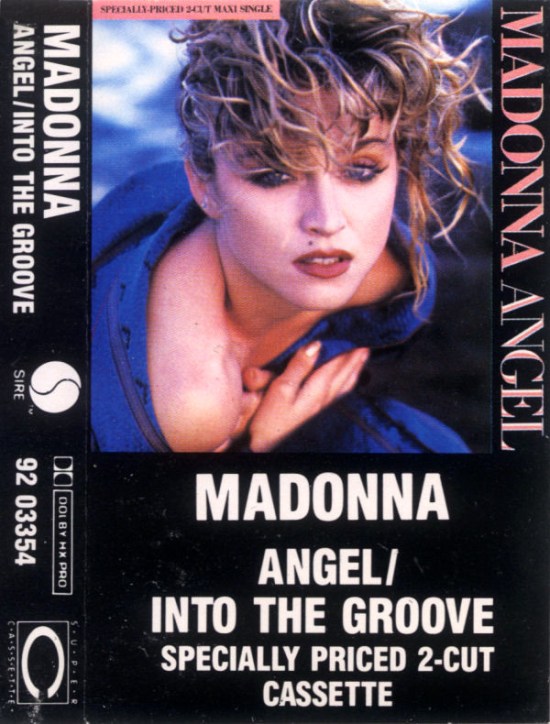
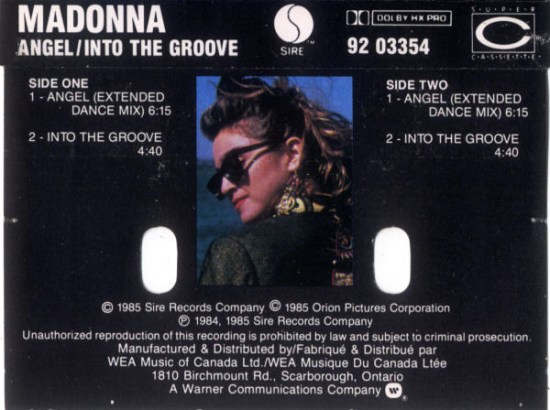
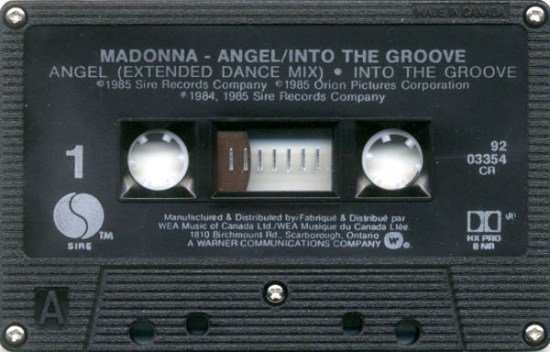
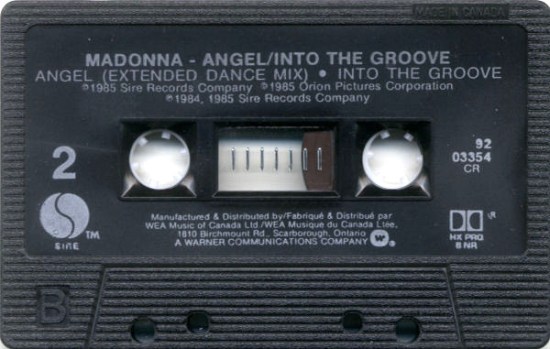
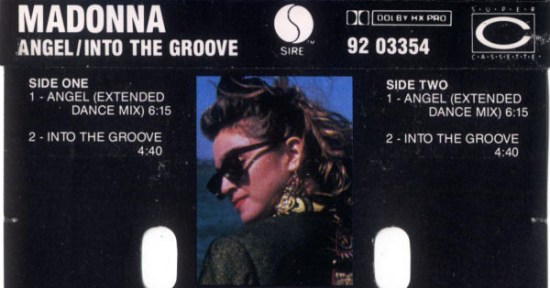
In Canada, interest in Into The Groove prompted Warner Music Canada to issue Madonna’s first North American cassette maxi-single in addition to the standard 12 inch vinyl. The experiment clearly proved successful, as Warner Music Canada would continue to offer her subsequent releases in both formats several years before the U.S. followed suit.

On June 1 1985, Warner Bros. and Sire Records took out a centerfold ad in Billboard magazine to celebrate the resounding success of Madonna’s first concert trek, The Virgin Tour.
Featuring the cover image from her current hit single Angel as its backdrop, the spread cheekily alluded to Madonna’s “virgin” moniker with its caption:
“You were wonderful! We’re proud of you. Congratulations on your first tour.
– Warner Bros. and Sire Records.”
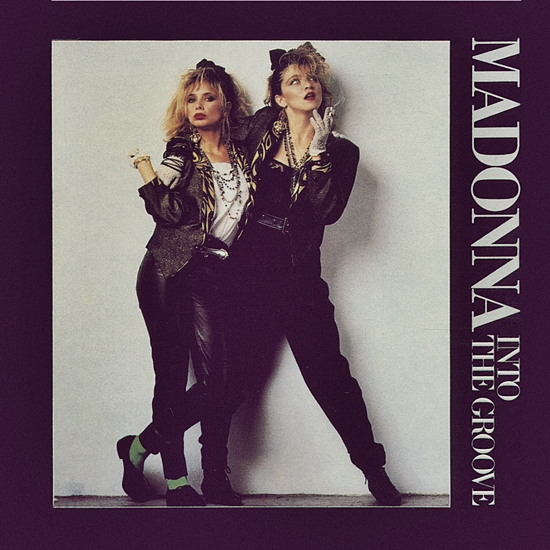
On July 23 1985, Into The Groove was released as a single in the UK.
Not wanting to draw more attention away from the Like A Virgin album following the release of the soundtrack hit Crazy For You, Sire/Warner notoriously relegated Into The Groove to the b-side of the Angel 12″ single in North America & Australia, although they eventually ceded to issuing it as an A-side in most other international territories.
Into The Groove was written & produced by Madonna & Stephen Bray and was their first released co-production to not be reworked by an outside producer (the pair had already been producing their own demos for years). The original demo version was used over the closing credits of Desperately Seeking Susan (seemingly dubbed from an actual cassette copy of the demo–granted, DAT’s were still a few years away), and although the commercially released mix featured a slightly beefed-up and more polished-sounding musical backing track, it kept Madonna’s original demo vocals intact.
In the UK, and throughout most of Europe, the single was backed by the Madonna-penned ballad Shoo-Bee-Doo, while the original album version of Everybody (another song credited to her alone) rounded out the 12″ single…it would be fair to assume that Madonna likely earned some of the biggest single-generated songwriting royalty cheques of her career thus far with this release. It’s interesting to note that despite being one of Madonna’s most enduring dance floor classics, no remixes were produced for Into The Groove at the time of its release. It wasn’t until 1987’s You Can Dance remix compilation that the song finally received an official extended remix treatment.

On June 15 1985, Madonna’s Angel peaked at #5 on the Canadian Top 100 Singles chart (RPM).
When Billboard reviewed the Like A Virgin album at 30, here’s what they had to say about Angel:
Madonna never made an Angel video, so there are no candy-colored MTV memories to taint this underrated single, which she co-wrote with ex-boyfriend Steve Bray. It plays like a straightforward dance-pop love song, but when this lapsed Catholic starts singing about angels, you know there’s some religious subtext. The laughter up front and midway through is a reminder that Madonna is no wretch incapable of saving herself. When heaven sends her an angel, it’s game respecting game.
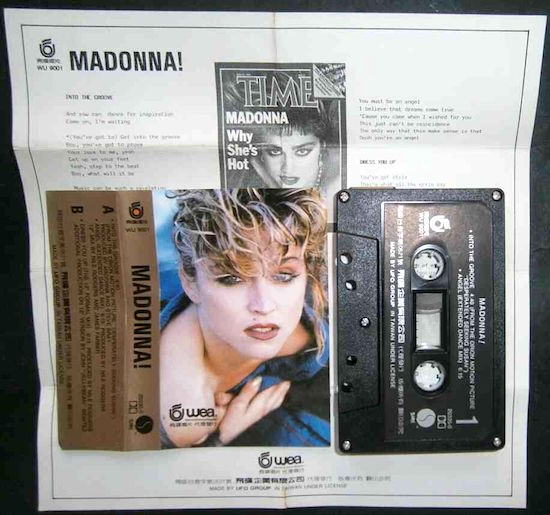


On August 13 1985, Madonna’s Angel/Into the Groove single spent a 6th week at #1 on the Hot Dance Music/Maxi Single Sales chart in the USA.
Check out the rare Into the Groove/Angel releases from the Philippines we’ve included above!


On July 6 1985, Angel/Into The Groove reached number-one on the Billboard Hot Dance Club Play chart in the U.S., where it spent a single week. It was Madonna’s fourth release to top the Dance chart.
Due to the fact that both sides of the commercial single received a substantial amount of club play, the release charted as Angel/Into The Groove on the Hot Dance Club Play chart. This is despite the fact that Sire/Warner had actually promoted the single to clubs without Into The Groove, as the official U.S. promotional 12-inch single contained Angel on both sides.
In spite of the label’s apparent attempts to downplay Into The Groove, in the end its inclusion on the commercial single unquestionably helped to propel the release to the top of the Dance chart.

