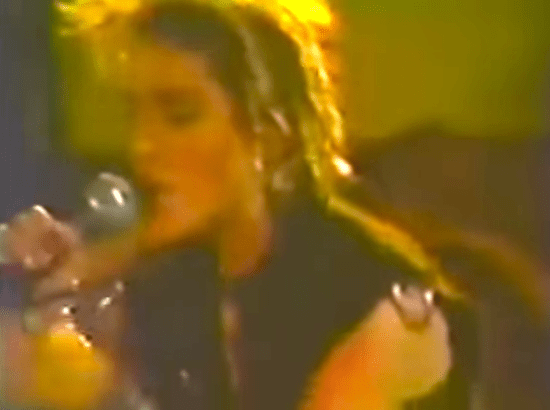


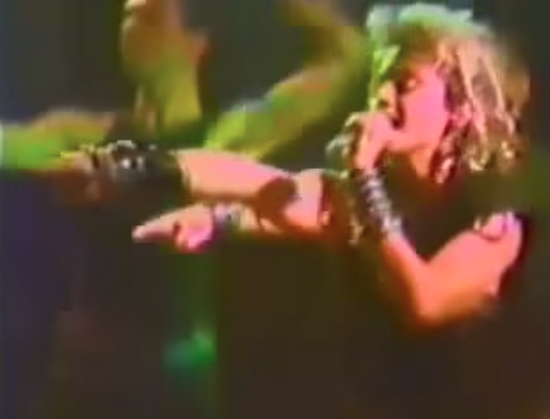


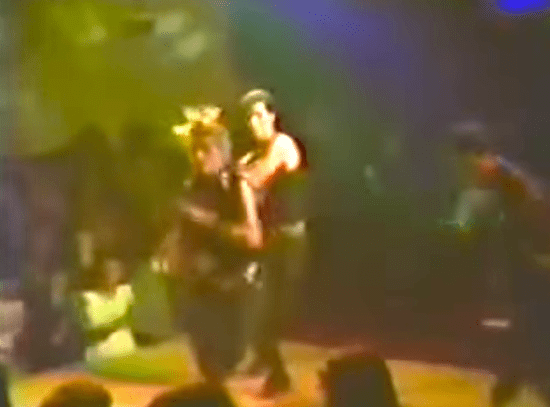
On September 24 1983, Madonna performed Physical Attraction, Everybody, Holiday and Burning Up at Uncle Sam’s Club in Levittown, New York.


On September 24 1983, Madonna performed Physical Attraction, Everybody, Holiday and Burning Up at Uncle Sam’s Club in Levittown, New York.


On July 27 1983, Madonna’s eponymous debut album was released by Sire Records. The record was renamed Madonna: The First Album for the 1985 international re-release of the album. When a remastered version of the album was issued on CD in 2001 (with bonus tracks) and later on vinyl (without bonus tracks), the original artwork was restored and the album title reverted to simply Madonna across all markets.
The album included 8 tracks (produced by Reggie Lucas, *John “Jellybean” Benitez & **Mark Kamins):
Five singles were issued from the album (the release chronology of some singles varied by market/country):
“Madonna was unhappy with the whole album, so I went in and sweetened up a lot of music for her, adding some guitars to ‘Lucky Star’, some voices, some magic… I just wanted to do the best job I could do for her. When we would playback ‘Holiday’ or ‘Lucky Star’, you could see that she was overwhelmed by how great it all sounded. You wanted to help her, you know? As much as she could be a bitch, when you were in a groove with her, it was very cool, very creative.”
— John “Jellybean” Benitez talking about Madonna and the album.
“I’ve refrained over the years in addressing aspects of Madonna’s career because I’m not a person who likes negative discussions. But what I will say is that in Madonna’s ascent to fame and fortune, there’s been a pretty vicious competition for credit in being involved. In other words, someone will say, ‘I launched Madonna.’ If I talk to a lot of people today, I will say I was Madonna’s first producer. I produced six of the eight tracks on her first record. I would say nine times out of 10, their response will be, ‘Oh yeah, I thought Jellybean did that.’ But Jellybean didn’t do that. Jellybean was a remixer, and we didn’t have time to remix records. It wasn’t something that I was interested in doing. Somewhere in this process of publicists and personal relationships, somehow he came out as the guy. Just for the record, one tires in a lifetime of hearing someone taking credit for something that you’ve done. Jellybean produced ‘Holiday’ and he remixed a couple of tracks, but remixing tracks for radio isn’t the same thing as producing one of the major breakout pop stars of the 1980s…it’s almost like I was fired or something. I wasn’t fired. I finished the record…and they put it out and sold a bunch of records. And everybody else ran around trying to take credit for it because it was so big that they couldn’t help themselves. … I must say, Madonna was great to work with in the studio. She really put in the work. She was a creative person.”
— Reggie Lucas, producer of Madonna’s first album.

Although its authenticity is unconfirmed, this is said to be an early track list of the album.

On May 21 1983, Madonna’s Burning Up/Physical Attraction hit #3 on USA Hot Dance Music/Club Play chart.
Burning Up was written by Madonna and Physical Attraction was written by Reggie Lucas. Both were produced by Lucas with additional remixing by Jellybean Benitez on the latter.
Interestingly, the original copyright claim filed for the song Physical Attraction, which remains on file at the U.S. Library Of Congress, lists Madonna as its sole writer and Only Child Music (who handled Madonna’s songwriting publishing prior to the creation of Webo Girl) as its publisher, with no mention of Lucas or his publishing company, Likasa Music.
Burning Up went through several incarnations both before and after its official release. The earliest recording of the song to have surfaced is a live performance by Madonna with her band Emmy, likely from 1980. Although the lyrics underwent only minor revisions in later years, its initial guitar-driven arrangement and melody were relatively loose – if not underdeveloped. A more focused beat-driven version was recorded by Madonna with Stephen Bray in early 1982 and was featured on the four-track demo tape that brought her to the attention of Sire Records. In addition to the originally released version that appeared on the 12″ single, there are also two noticeably different album mixes of Burning Up. Early vinyl pressings of her debut LP featured a longer version with alternate guitar and synth parts and more prominently mixed backing vocals. This alternate album mix resurfaced in 1985 as the b-side to the Angel single in the UK, but it has never been officially released in digital or CD format.
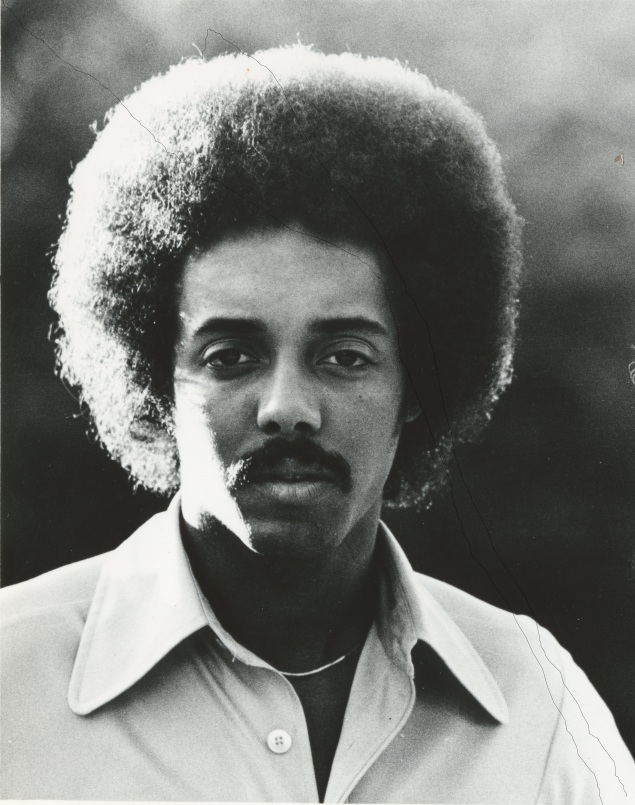

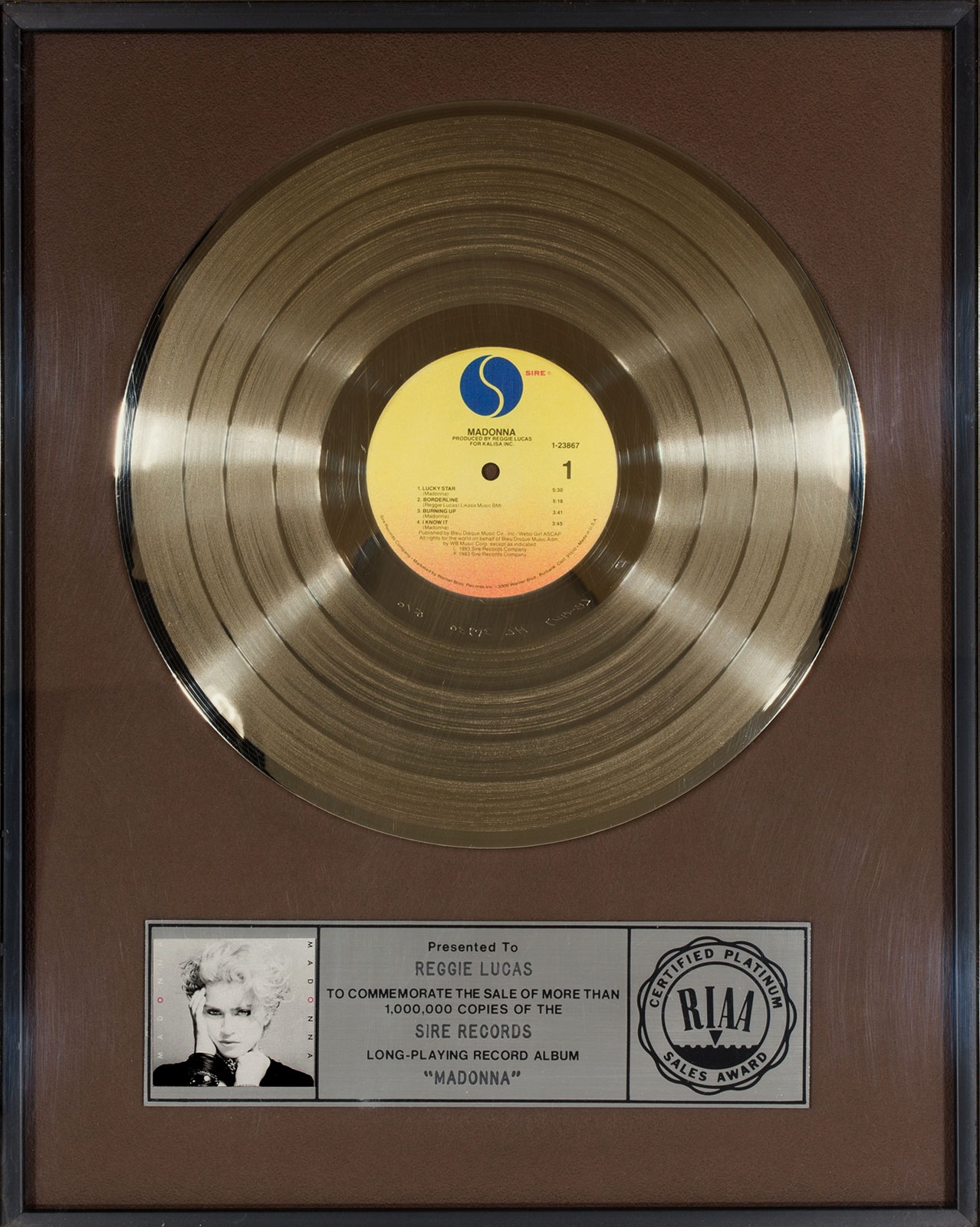
On May 19 2018, musician, songwriter and producer of Madonna’s first album, Reggie Lucas, passed away at the age of 65.
Lucas’s professional career began at 18 years of age when Miles Davis selected the guitarist to join his band. This eventually evolved into songwriting and production duties for vocalists Roberta Flack and Stephanie Mills. However, he is most frequently cited for his work with Madonna, beginning with her second single, the double-A side Burning Up/Physical Attraction recorded in late 1982, and her subsequent self-titled debut album.
In addition to producing the bulk of the album, Lucas also wrote two songs for project: the hit single Borderline, and the carnal club classic, Physical Attraction.
Chris Williams interviewed Lucas for TheAltantic in 2013 to mark the 30th anniversary of Madonna’s debut. Below are some excerpts:
Your background was primarily as an R&B and jazz artist. How did that influence you creating the songs for Madonna? Because she was a different kind of artist.
Well, she was a white artist wasn’t she? [laughs] It was the main thing that made her different. When I came to the Madonna record, I came with two things. The first thing was I brought a lot of success and a solid background as a hit producer and songwriter within the R&B world, but it was also with the skill as a composer and rock and roll guitarist. Madonna was simply the first opportunity that I had to play around with other musical interests that I had. You couldn’t make the first Madonna record for Phyllis Hyman. I couldn’t make Miles Davis music for Roberta Flack. Miles was the one place where I got it all out of my system, and that was the beauty of Miles.As a producer, you understood that your first job was to support people to achieve that end. You challenged the artist just enough to bring out the best in them and introduce them to audiences that they normally wouldn’t be introduced to. When I did “Physical Attraction,” that was just it. She was a little different. Madonna was wilder in terms of her look and image; I don’t know if her music was that much wilder than anyone else back then. I think her music was sexually freer and it predicted what was going to happen in the future. She was definitely an innovator when it became to being more suggestive, which was pretty cool. I thought it was great.So–mixing that with my musical background, Madonna’s first album was really a hybrid of her interests and mine. “Physical Attraction” was our starting point with that style. It did pretty well and she began to move forward with her career and sound.
How did that dynamic work in the studio?
She had a lot of material that she had written and collaborated with other people on in the course of being signed to a record label. When she met me, “Everybody” was about to come out and she had written “Lucky Star.” My role had been as a creative songwriting record producer. [Musician James] Mtume and I typically wrote a good percentage of the material we produced for Stephanie Mills, Phyllis Hyman, and those artists. So that’s what I ended up doing for Madonna. I would write songs and ask her, “What do you think of this?” “Physical Attraction” and “Borderline” were done specifically during the production process and for her. They weren’t demo songs that I was shopping around.
Madonna and I had an enormous amount of freedom. They would tell us to make the record and we went and made the record. I think, in retrospect, we were happy to come up in an era where the record company played a very small role in creative supervision. Our creative process was very independent.
Did you guys have a set routine that you followed every day coming into the studio?
She was diligent, it was a pretty good experience. She wasn’t the type of artist that you had to go and look for. She wanted to be successful. She was always there when she needed to be. I was used to being in charge of things so I was always there at the studio ready. I made sure everything moved smoothly for her so that the process surrounding being in the studio was fairly transparent to her. She had to come in focused on her music and performing as an artist and it helped my focus as well. The musicians I worked with were guys I had worked with for years. We worked out of Sigma Sound Studios, a studio I worked out of for years as well. She brought some very good people into the situation. It was very comfortable making the record.
We made usage of synthesizers and drum machines. That was the first record that I ever recorded where I used a drum machine. It was one of the big transitions for me. We used Moog and Arp synthesizers, and that was relatively new technology back then. It gave the music a new sound. Madonna was an artist that knew what she wanted, but she wasn’t a record producer. So it was my responsibility to create a sound for her. She would be there interactively. If she didn’t like something she heard, she would say so and I would change it. The funny thing that happened on this record is when we got into the studio together we established this mini-Moog bass sound for her as her key sound. And she stuck with it for a long time.
Were there any challenges in working with a low-budget and trying to break a new artist on a new label, Sire Records?
It wasn’t really difficult at all. Sire wasn’t a new label. It was an independent record label that was acquired by Warner Brothers. It had an enormous amount of success with the English punk sound and dance music. Sometimes things just have a flow to them. Madonna’s record had a flow to it. Michael Rosenblatt was always there and I worked with him from the label. He was great, he was a real pro. He knew how to be an A&R person for a record. He didn’t interfere, but he wasn’t so distanced from it that he didn’t have an idea of what was going on.
Michael is probably an unsung hero of launching Madonna’s career. If you can believe it, Warner Brothers had very limited interest in Madonna when she was first signed. You know what they thought? They said that Madonna is this new white artist that wants to sing black–so what they did was send her to the black radio stations when her first record came out, and that’s how they promoted her at first. They just treated her as a black artist. I guess they kind of envisioned her as Teena Marie. Madonna had an intense interest in black music, but she wasn’t Teena Marie. She was something different. But she did it and she went to the black radio stations and held her own. Frankie Crocker was playing her records in New York.
When you bring up the fact that Madonna was pushed toward a black audience, it would explain why “Physical Attraction” and songs like that were at top of the Billboard Black Singles Charts.
You can’t make this stuff up. Warner Brothers really didn’t know what to do with her. See, there was a subtext to Madonna that had to do with her personality. She looked like a punk rocker to a lot of people. When people at record companies, law offices, and managerial places first saw Madonna before she became an established artist, a lot of people were put off by her. They thought she was too crazy and too weird. Being a music person and a human being, I don’t operate that way. I thought she was cool and different. I didn’t really know if she was going to become a big star, but I thought she had something valid to say and I could help her with it. Warner Brothers didn’t get it right away, but Michael Rosenblatt did.When she took off, there was an immediate, massive shift to move in and establish business relationships with her. In the beginning, she was just this little dance artist that Frankie Crocker gave a few spins to, and some DJs out in San Francisco, and she starts creating this buzz. Then, people at the record label started putting two and two together and got five. They immediately did a 360 and welcomed her with open arms.
Talk me through the process of making some of the songs you were involved with on the album.
I’d write songs and put them on a little cassette player with me singing, and I can’t sing. I’d ask Madonna if she liked them, and she said, “Yeah, it sounds cool. Let’s do it.” I did the demos for “Physical Attraction” and “Borderline” and she brought in her demos for her songs to the studio. And we did what we did to them. Probably the most interesting one was “Lucky Star.” If you heard the original demo for “Lucky Star” and you heard what it came out like, they’re the same song, but barely. We really put a lot of creative energy into that one and it came out beautifully.
I must say, Madonna was great to work with in the studio. She really put in the work. She was a creative person. And it was one of the many reasons why it was disappointing not to be involved in subsequent projects. It’s just one of those things. Look, she picked one of my good buddies, Nile Rodgers, to do the next record. She couldn’t have picked a better person. I always had a pretty casual process of making songs, but with some formality. I kind of inherited how Miles Davis used to operate. So we would come in and the songs were simple they didn’t require a lot in the way of charts. I would write out a little chord sheet, but the musicians were so good they would learn these things. They were really used as templates to try to find in the studio what we wanted to do with the songs. I’d make a lot of creative decisions and creative additions and subtractions to whatever was going on in the studio. We didn’t spend a lot of time messing around either. I think that’s the trick.When you make a pop record, you don’t want it to sound sterile. You want to bring some of the improvisational excitement of jazz, but without the actual 15-minute saxophone solo. You can’t have a 15-minute saxophone solo on a Madonna record. You have to find a way to build in this excitement in a way that just works. Being a member of rhythm sections as a guitarist was always helpful to me in terms of understanding how music works from a production-quality standpoint. When you’re a member of a rhythm section, you know when the music is a dud because you’re right there as it happens. I always felt that I was always in tune to the level of energy, precision, and crispness of rhythm section performances. And I think that’s the key to so many records.
As you look back 30 years later, how do you feel about the impact the album made on popular culture after it was released? It’s regarded as one of the most important pop albums from the 1980s.
Well, I don’t know. I think everybody involved in the arts has a tendency to take themselves a little bit too seriously. I made a great record, and I and a lot of people liked it. It sold a lot of copies and launched careers and created opportunities for people. And that’s what you want to do. That is supposed to be the outcome of your good work. I don’t think it changed the nature of life in America or anything like that. [laughs] It was just a good record.

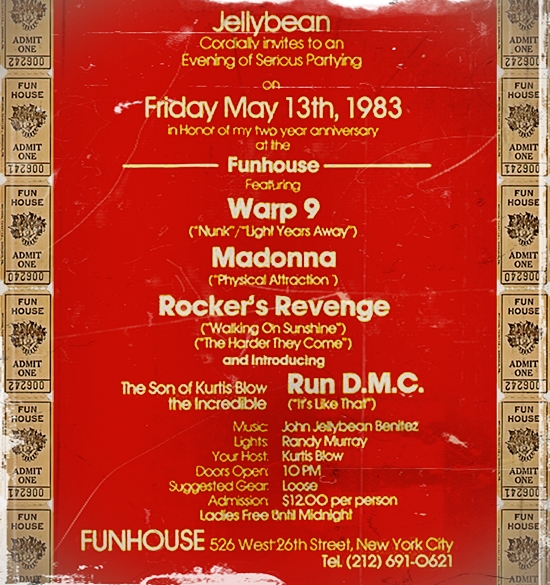
On May 13 1983, Madonna performed Physical Attraction during a track date at the FunHouse in New York City.
Located at 526 West 26th St, the FunHouse (1979-1985) was a breeding ground for the new electronic sounds of the street and helped to make its resident disc jockey, Jellybean Benitez, one of dance music’s first superstar DJ’s.
Of course, Jellybean’s close association with Madonna certainly didn’t hinder his growing popularity either. His first working collaboration with Madonna was to remix Physical Attraction, the b-side to her sophomore single on Sire Records, Burning Up/Physical Attraction, which may explain why it was chosen over the more frequently performed lead track for her performance at the FunHouse. The same remix of Physical Attraction was later used on her debut album, together with new remixes Jellybean provided for Burning Up and Lucky Star alongside his first full production for Holiday.


On May 4 2022, Warner Bros. issued the press release for Finally Enough Love: 50 Number Ones:
Madonna made history once again when she topped the Dance Club Songs chart for the 50th time, making her the first and only recording artist to have 50 #1 hits on any single Billboard chart.
To celebrate this historic milestone, Madonna curated two new collections: FINALLY ENOUGH LOVE: 50 NUMBER ONES, a new 50-track collection that includes her favorite remixes of those chart-topping dance hits that have filled clubs worldwide for four decades, and an abridged 16-track version, simply titled FINALLY ENOUGH LOVE.
These new collections will mark the first album releases to be part of the newly announced partnership between Madonna and Warner Music Group, which will feature an extensive series of catalog releases across her groundbreaking career.
50 NUMBER ONES spans her entire dance club chart reign with dozens of remixes by the world’s top producers. In addition to fan favorites, the collection also includes a selection of rare remix recordings, with more than 20 being officially released for the first time or making their commercial/digital debut. The collection will be available digitally on August 19, along with a 3-CD ($29.98) version. A limited edition, 6-LP version on red and black vinyl ($149.98) will also be available, exclusively at Madonna’s official store and Rhino.com. Pre-order now.
The 16-track version, FINALLY ENOUGH LOVE, will be available for streaming on June 24, with 1-CD ($14.98) and 180-gram 2-LP ($34.98) versions coming on August 19. Pre-order and Pre-save now.
As a first listen to these collections, the “You Can Dance Remix Edit” of “Into The Groove” is available today digitally for the first time. Listen Now.
Boasting more than 220 minutes of remixes, FINALLY ENOUGH LOVE: 50 NUMBER ONES flows in mostly chronological order, showcasing the many musical reinventions that made Madonna an international icon, from 1983’s “Holiday” to 2019’s “I Don’t Search I Find,” with remixes by some of the biggest and most influential DJs of all time including Shep Pettibone, William Orbit, Honey Dijon, and Avicii.
On several songs, Madonna is joined by other incredible artists, including Britney Spears (“Me Against The Music”); Justin Timberlake and Timbaland (“4 Minutes”); and Nicki Minaj (“Bitch I’m Madonna.”) Each remix was newly remastered for the collection by Mike Dean, who produced Madonna’s two most-recent studio albums, Rebel Heart (2015) and Madame X (2019).
Both of these new collections also highlight You Can Dance, Madonna’s first ever remix collection. Celebrating 35 years this year, You Can Dance has sold more than five million copies worldwide and is still the second best-selling remix album of all time. The collection also pays homage to “Everybody,” Madonna’s first single, celebrating its 40th Anniversary on October 6. Madonna redesigned the album’s chronology by picking three edits from You Can Dance, including “Into The Groove”, “Everybody” and “Physical Attraction,” which reflects the underground club vibes that inspired her first recordings as a Sire artist.
Along with those rarities, these albums also introduce versions that are seeing their first ever official release, including the “Alternate Single Remix” of “Keep It Together,” the “Offer Nissim Promo Mix” of “Living For Love,” and more.
In advance of the debut of FINALLY ENOUGH LOVE in June, one of the 50 chart toppers – “Causing A Commotion” – was spotlighted early as an exclusive release for this year’s Record Store Day on April 23. Three remixes of the track appeared on the limited edition, five-track, red vinyl 12” EP Who’s That Girl Super Club Mix.
Expect more surprises to be revealed later this year around the celebration of Madonna’s 40 years in music.
FINALLY ENOUGH LOVE
16-Track Album
Streaming June 24
1-CD, 2-LP & Digital Download Versions Out August 19
Track Listing
1. “Everybody” (You Can Dance Remix Edit) +#
2. “Into The Groove” (You Can Dance Remix Edit) +#
3. “Like A Prayer” (Remix/Edit)
4. “Express Yourself” (Remix/Edit)
5. “Vogue” (Single Version) +
6. “Deeper And Deeper” (David’s Radio Edit) +#
7. “Secret” (Junior’s Luscious Single Mix)
8. “Frozen” (Extended Club Mix Edit)
9. “Music” (Deep Dish Dot Com Radio Edit)
10. “Hollywood” (Calderone & Quayle Edit) +#
11. “Hung Up” (SDP Extended Vocal Edit)
12. “Give It 2 Me” (Eddie Amador Club 5 Edit) °+
13. “Girl Gone Wild” (Avicii’s UMF Mix)
14. “Living For Love” (Offer Nissim Promo Mix) *+
15. “Medellín” (Offer Nissim Madame X In The Sphinx Mix) – Madonna and Maluma
16. “I Don’t Search I Find” (Honey Dijon Radio Mix)
FINALLY ENOUGH LOVE: 50 NUMBER ONES
50-Track Album
3-CD, 6-LP, Streaming & Digital Download Versions Out August 19
Track Listing
1. “Holiday” (7” Version) +
2. “Like A Virgin” (7” Version)
3. “Material Girl” (7” Version)
4. “Into The Groove” (You Can Dance Remix Edit) +#
5. “Open Your Heart” (Video Version) +
6. “Physical Attraction” (You Can Dance Remix Edit) +#
7. “Everybody” (You Can Dance Remix Edit) +#
8. “Like A Prayer” (Remix/Edit)
9. “Express Yourself” (Remix/Edit)
10. “Keep It Together” (Alternate Single Remix) *+
11. “Vogue” (Single Version) +
12. “Justify My Love” (Orbit Edit)
13. “Erotica” (Underground Club Mix)
14. “Deeper And Deeper” (David’s Radio Edit) +#
15. “Fever” (Radio Edit) +
16. “Secret” (Junior’s Luscious Single Mix)
17. “Bedtime Story” (Junior’s Single Mix)
18. “Don’t Cry For Me Argentina” (Miami Mix Edit)
19. “Frozen” (Extended Club Mix Edit)
20. “Ray Of Light” (Sasha Ultra Violet Mix Edit) +#
21. “Nothing Really Matters” (Club 69 Radio Mix) +
22. “Beautiful Stranger” (Calderone Radio Mix)
23. “American Pie” (Richard ‘Humpty’ Vission Radio Mix)
24. “Music” (Deep Dish Dot Com Radio Edit)
25. “Don’t Tell Me” (Thunderpuss Video Remix) +#
26. “What It Feels Like For A Girl” (Above And Beyond Club Radio Edit)
27. “Impressive Instant” (Peter Rauhofer’s Universal Radio Mixshow Mix) +#
28. “Die Another Day” (Deepsky Radio Edit) +#
29. “American Life” (Felix Da Housecat’s Devin Dazzle Edit) *+
30. “Hollywood” (Calderone & Quayle Edit) +#
31. “Me Against The Music” (Peter Rauhofer Radio Mix) + – Britney Spears feat. Madonna
32. “Nothing Fails” (Tracy Young’s Underground Radio Edit) *+
33. “Love Profusion” (Ralphi Rosario House Vocal Edit) +#
34. “Hung Up” (SDP Extended Vocal Edit)
35. “Sorry” (PSB Maxi Mix Edit) +#
36. “Get Together” (Jacques Lu Cont Vocal Edit) +
37. “Jump” (Axwell Remix Edit)
38. “4 Minutes” (Bob Sinclar Space Funk Edit) + – feat. Justin Timberlake & Timbaland
39. “Give It 2 Me” (Eddie Amador Club 5 Edit) +#
40. “Celebration” (Benny Benassi Remix Edit)
41. “Give Me All Your Luvin’” (Party Rock Remix) – feat. LMFAO & Nicki Minaj
42. “Girl Gone Wild” (Avicii’s UMF Mix)
43. “Turn Up The Radio” (Offer Nissim Remix Edit) *+#
44. “Living For Love” (Offer Nissim Promo Mix) *+
45. “Ghosttown” (Dirty Pop Intro Remix)
46. “Bitch I’m Madonna” (Sander Kleinenberg Video Edit) +# – feat. Nicki Minaj
47. “Medellín” (Offer Nissim Madame X In The Sphinx Mix) – Madonna and Maluma
48. “I Rise” (Tracy Young’s Pride Intro Radio Remix)
49. “Crave” (Tracy Young Dangerous Remix) – feat. Swae Lee
50. “I Don’t Search I Find” (Honey Dijon Radio Mix)
* previously unreleased
+available digitally for the first time
# available commercially for the first time

On April 30 1983, Madonna’s second single – the double A-side Burning Up/Physical Attraction – moved into the Top 10 on Billboard’s Dance/Disco Top 80 chart (now known as Hot Dance/Club Play), leaping from #18 to #9.
Interestingly, the release charted as Physical Attraction/Burning Up throughout its run on the Dance chart. When two songs are promoted together to dance clubs, Billboard will generally position the track that earns the higher number of spins first in its Dance chart entry.
The same Billboard issue also saw some early radio support for Madonna, as New York City’s WKTU-FM featured Physical Attraction among their top playlist adds for the week.

