Today in Madonna History: March 22, 2017

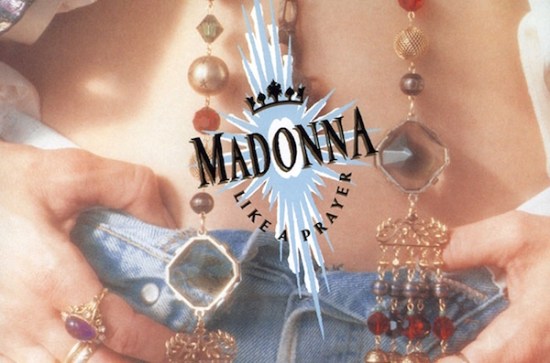
On March 22 2017, The Huffington Post published an article titled, “Why Madonna’s Like A Prayer Is The Most Important Album Ever Made By A Female Artist.”

Here are some of the highlights from the article:

28 years ago this week, Madonna released what is not only her best album to date, but also what could be the most important release ever by a female artist. That’s not to say that Like a Prayer is the best album ever by a female artist, but it’s pretty close. After six years of being considered pop fluff and a disco dolly, Madonna was finally taken seriously by most music critics in 1989. Still, Like a Prayer deserved even more than bewildering critical acclaim.

If Madonna and misogyny weren’t practically synonyms, Like a Prayer would have not only won several Grammys in 1990 (it didn’t even earn any major nominations), but it would be widely praised for its songwriting and production 28 years later. If a man delivered the same type of vocals Madonna did on Like a Prayer, critics would note that his voice isn’t technically perfect, but distinct, melodic, and full of emotion. When it comes to Madonna, who certainly could never hit the notes of Aretha Franklin or Whitney Houston, it’s just easier for people to say that she “can’t sing.”

For people (especially millennials) to understand how important Like a Prayer is to culture and music, they have to comprehend the repressive environment Madonna’s album arrived to in March of 1989. The late 1980s was ruled by the religious right, who believed AIDS was a curse God gave to the gay community. Women who were outspoken or wore revealing clothes were referred to as sluts, whores, bitches, etc. Police brutality among African Americans was still widely accepted without much of a backlash. And interracial dating was still considered a taboo.

The pamphlet on AIDS Madonna included with each copy of Like a Prayer alone proves that the notion of Madonna being a bad role model and having a bad influence on Generation X (especially women and teenagers) just isn’t true. Madonna educated many about AIDS and safe sex at a time when schools, the media, and religious institutions stayed away from the topic. A move like this in 1989 could have hurt a showbiz career, but Madonna survived and thrived by doing the right thing and, possibly, helping to save lives at the same time.

Today in Madonna History: January 22, 2017

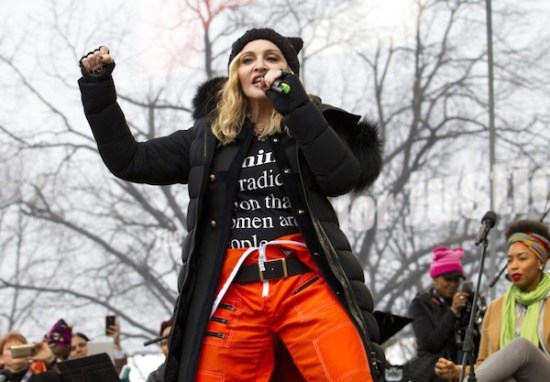
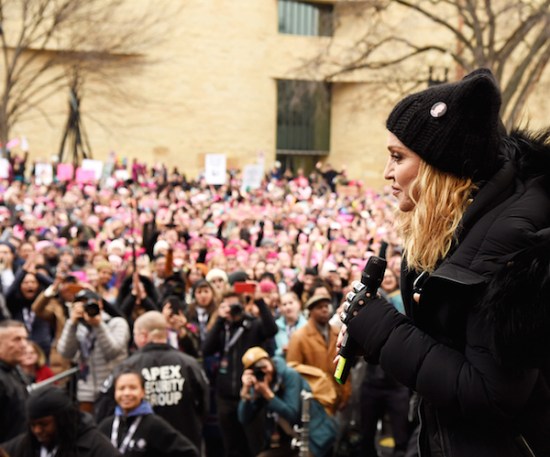
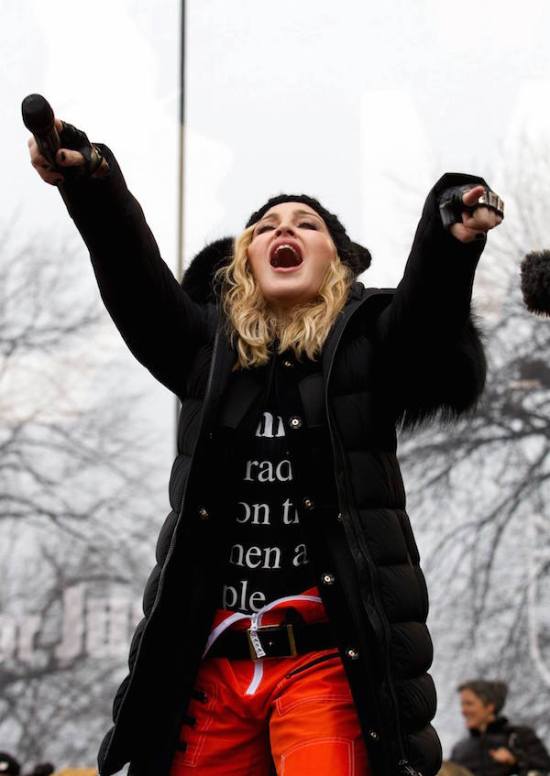
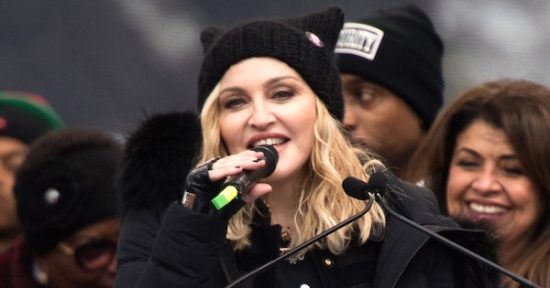
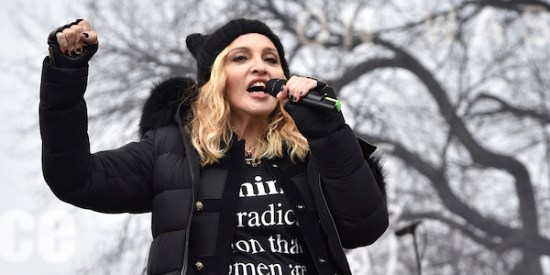
On January 22 2017, Madonna released this statement in response to her controversial statements made during her speech at the Women’s March on Washington:

“Yesterday’s Rally was an amazing and beautiful experience. I came and performed Express Yourself and thats exactly what i did.

However I want to clarify some very important things. I am not a violent person, I do not promote violence and it’s important people hear and understand my speech in it’s entirety rather than one phrase taken wildly out of context.

My speech began with ” I want to start a revolution of love.” ♥️  I then go on to take this opportunity to encourage women and all marginalized people to not fall into despair but rather to come together and use it as a starting point for unity and to create positive change in the world.

I spoke in metaphor and I shared two ways of looking at things — one was to be hopeful, and one was to feel anger and outrage, which I have personally felt. However, I know that acting out of anger doesn’t solve anything. And the only way to change things for the better is to do it with love.

It was truly an honor to be part of an audience chanting we choose love.”

Madonna

Today in Madonna History: January 8, 2017

harpersbzaar2017-0 harpersbzaar2017-1

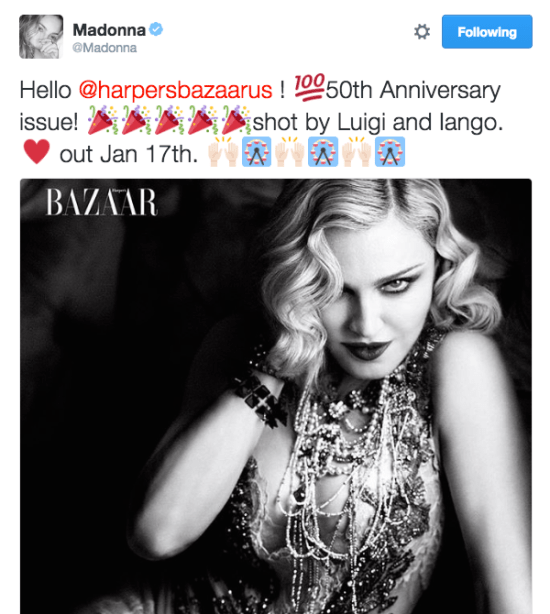
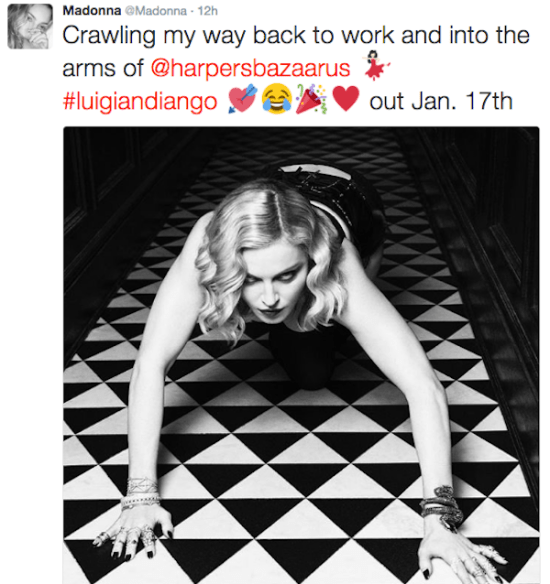
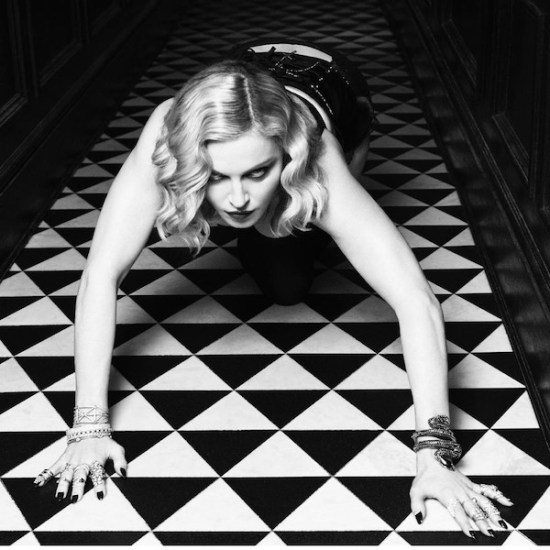
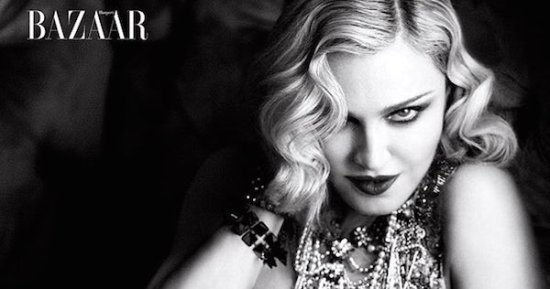
On January 8 2017, Madonna announced through her social media channels that she would appear on the cover of the 150th Anniversary Issue of Harper’s Bazaar, shot by Luigi and Iango.

harpersbzaar2017-3 harpersbzaar2017-end

Today in Madonna History: September 16, 2017

On September 15 2017, Madonna spoke to Mark Savage (BBC) about how after a career of huge production shows, she’s thinking about a smaller scale residency style show in the future.

“I’ve done so many shows – world tours, stadiums, sports arenas, you name it – that I feel like I have to reinvent that now too. I like doing intimate shows and being able to talk directly to the audience. This is something I’m exploring right now: the idea of doing a show that doesn’t travel the world, but stays in one place and utilizes not only humour and the music in a more intimate setting but other people’s music, as well, and other entertainment. Kind of a revolving door of amazing, gifted, unique talent – dancers, musicians, singers, comedians, me, humour. I don’t know! Like, I’m trying to come up with all those ideas now.”

Here’s part of their interview:

Before we start, there’s one thing I need to know: Did your FedEx package ever arrive?

Ha ha! Yes, it has. FedEx is blaming customs, customs is blaming FedEx and we’ll never know what happened. But I have it now.

So, I saw the Rebel Heart tour when you were in London and the DVD does a really good job of capturing what it was like to be in the audience. How do you go about that?

I was there every step of the way, every day for months and months. It’s really hard to capture the true feeling of the excitement and the passion and the heat and the blood, sweat and tears. I’m pleased with the way it came out.

There’s a particularly touching sequence during True Blue, where everybody in the audience embraces each other.

I know, it’s a very sweet, emotional moment in the show. I didn’t expect it to be, but when I look back at the DVD it almost brings a tear to my eye because everyone seems so in love.

How do you put a show like this together? Where do you get the ideas?

Everything’s based around my song choice. So first, I go through my catalogue of songs with my band and I start working on things that excite me and inspire me in the moment. Some songs I’m sick of doing and I don’t want to do them. Other songs I say, “No, I did that on the last tour, I don’t want to do it again.”

So I try to rotate things and I also try to reflect my current mood and what I’ve been feeling, and what’s been inspiring me artistically or filmically, politically, philosophically. I try to put songs together in groups that have thematic connection, and then I try to tell a story. And then I do the visuals. It’s quite a process.

What are the songs you don’t want to do again?

Well, I tend to not want to do the songs I did on the tour before. That’s what I mean. So if I did Material Girl on the tour before, or Express Yourself on the tour before, then I’ll say, “OK, I did that for 88 shows. I can’t do it again.”

How do you keep a healthy balance between new songs and your back catalogue?

It’s just playing in rehearsal. It’s really hard for me, especially with my older songs, to do them with the original arrangement. Because 33 years later, after doing it for so long, you just have to reinvent things. Well, I do.

And it’s fun for me to take an ’80s pop song and turn it into a salsa song, or turn it into a samba, or make an uptempo song into a ballad.

The DVD also includes the Tears of a Clown show you did in Melbourne. Was that a one-off or a trial run for a different type of Madonna concert?

I like doing intimate shows and being able to talk directly to the audience; to play with them and use humour and pathos and truth, and share my life – and also make up stories. I like the freedom of it and I like the intimacy of it, and I would like to explore doing it more in the future.

Maybe a residency?

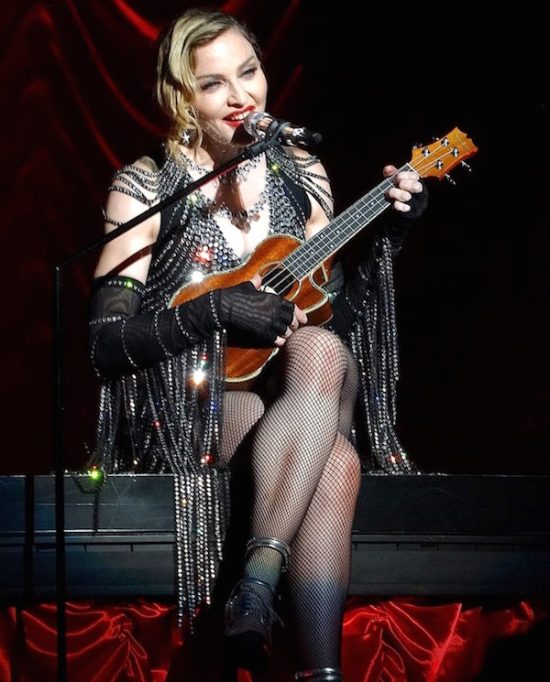
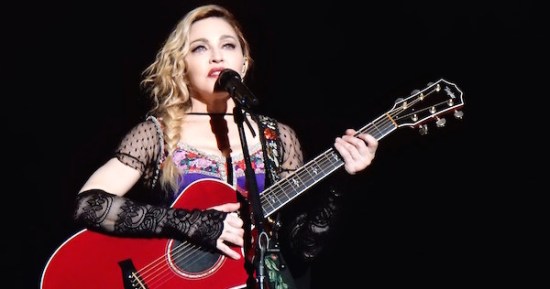
Yeah, a residency. If I look back at the Rebel Heart tour, my favourite part was really the last section where I got to just sit on the stage and play my ukulele and sing La Vie en Rose and talk to the audience. [It was] just more intimate. More audience participation and connecting to human beings – I feel I’m craving that more and more.

Did it feel like there was more room for improvisation in that section?

Yeah, I have freedom and I can make mistakes. That’s another thing I do in Tears of a Clown – if I start a song off wrong and I make a boo-boo, I just turn around and go “Stop! Let’s start again!”

When you’re doing a sports arena show, you’re linked up to video, you can’t stop. Once the train leaves the station, you have to keep going.

There’s a certain kind of adrenalin rush to that – but there’s no room for error. So I like the idea of mistakes and free-styling. Free-falling, really. It’s more exciting to me right now.

You can read the full interview here.
Today in Madonna History: June 5, 2017

On June 5 2017, Madonna showed support to her friend Ariana Grande for organizing the One Love Manchester Benefit concert to raise money for the victims of the terrorist attack on her concert in May.

Congratulation to my brave and beautiful friend Ariana 🏅 for organizing the benefit concert in Manchester! Last night 🙏🏻. Gathering so many great artists and bringing everyone together in the spirit of ❤️ and Peace and not bowing down to F.E.A.R. Im so Proud of you! 💘💕and I would like to make a donation along with my manager Guy Oseary and encourage others to do the same!! 😂🎉💯♥️🙏🏻 We ♥️Manchester Www.Welovemcrcharity.org

We encourage all of our readers to make a donation for this great cause, thank you.

Today in Madonna History: March 2, 2017

madonna-vogue-germany-2017-1 madonna-vogue-germany-2017-2 madonna-vogue-germany-2017-3

On March 2 2017, Madonna announced that starting March 7 she would appear on three different covers of Vogue Germany, with new photos taken by Luigi and Iango.


Today in Madonna History: February 11, 2017

immaculate2017-1 immaculate2017-2 immaculate2017-3 immaculate2017-4 immaculate2017-5 immaculate2017-6

For the week ending February 11 2017, the Rhino reissue of Madonna’s first greatest hits collection, The Immaculate Collection, charted at #9 on the Billboard Vinyl Albums Chart in the USA.

The double vinyl reissue was printed on blue/white marble and gold vinyl, limited to 6500 copies in the USA and Canada.