Today in Madonna History: July 9, 2026

On July 9, 2026, Madonna was announced as the cover star of upcoming issues of Japan’s INROCK and the UK’s Classic Pop.

The August 2026 issue of INROCK, Volume 512, was set to include a 16-page Madonna special, a centre-bound photo feature and a collectible pin-up. The feature examined Madonna’s feminist influence and the way it continued to shape a younger generation of artists.

For the cover, Madonna appeared with Sabrina Carpenter in a black-and-white image connected to the “Bring Your Love” visual campaign. It marked Madonna’s first INROCK cover in 18 years.

The double-cover issue, with Ariana Grande appearing on the reverse, was scheduled to reach Japanese newsstands on July 15, 2026. The announcement also arrived ahead of the Japanese domestic release of Confessions II on July 29, 2026 through Warner Music Japan.

Madonna also led Classic Pop Issue 107, dated August 2026. The issue featured a world-exclusive interview exploring her relationship with music, creativity and live performance.

Stuart Price also appeared in the issue, looking back on writing and producing Confessions on a Dance Floor with Madonna and sharing behind-the-scenes memories from the album’s creation.

The issue also included features on Dionne Warwick, Natalie Imbruglia, A Flock of Seagulls, The Specials, Laura Nyro, Kim Wilde, T’Pau and Marc Almond.

Today in Madonna History: July 2, 1990

19900702-750-0
19900702-750-79
19900702-750-80

On July 2 1990, Madonna was featured on the cover of People Magazine with Warren Beatty to promote Dick Tracy.

“Tell me you want me,” Breathless Mahoney implores to Dick Tracy in the wide-screen moonlight. “Tell me you want it all.”

Today in Madonna History: May 9, 1985

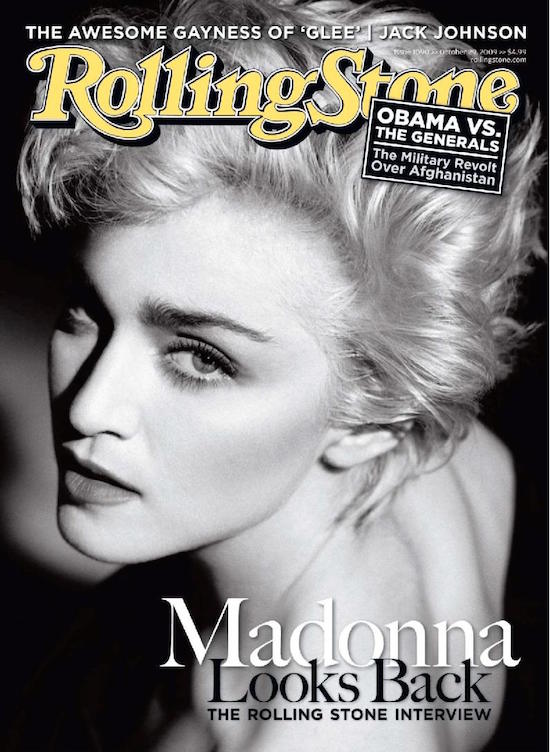
On May 9 1985, Madonna and Rosanna Arquette appeared on the cover of Rolling Stone magazine, promoting their film, Desperately Seeking Susan, with photos by Herb Ritts.

Here’s a snippet from the interview featured in the magazine:

Rosanna has expressed resentment over the insertion into the movie of a Madonna song backing a quickly rewritten scene in which the Susan character gyrates around a New York club. A video clip using the unreleased tune, “Into the Groove,” spotlights Madonna. “It does take things out of context a bit,” says Madonna, “kinda calls attention to another facet, but…” What that “but” means is, it sells tickets, chumps. Still, it’s become an issue…

“Yeah, really?” says Madonna. “Who’s it become an issue with – besides Rosanna?” Her laugh is quick and not unkind. Insiders say the song found its way into the film on its own virtues. “Susan Seidelman was not out to make a pandering rock & roll movie,” says executive producer Michael Peyser, 31, who worked on Susan after serving as associate producer on Woody Allen’s film The Purple Rose of Cairo. One of the music coordinators, Danny Goldberg, had no time to compile a soundtrack LP when the film’s release date was pushed up, but in talks with MTV execs, he paved the way for “Into the Groove” to air, even though the song might never show up on vinyl.

Madonna is not naive about the studio’s gambit: “I have a big audience of kids for my music, and you know how they use soundtracks to push movies – I think they’re using me in the same way, and it’s really a drag, because I’m trying to establish myself as an actress, not as a singer making movies. But I’ll be happy if it becomes a commercial success, simply because it’s a different kind of movie than most of what’s out now. There are a few formulas people have been using the past five years, with Flashdance and Breakin’ and all that stuff; this movie is like a return to those simple, straightforward caper comedies Claudette Colbert and Carole Lombard made in the Thirties. They give you a taste of real life, some poignance, and leave you feeling up at the end – none of that adolescent-fantasy bullshit.”

Today in Madonna History: March 27, 2015

Layout 1

On March 27 2015, Madonna graced the cover of New York gay magazine Next.  The magazine included a four-page spread with an interview to the Queen of Queens by John Russell.

Here’s a snippet of the interview between Russell and Madonna:

I counted at least 13 different producers in the album’s liner notes, but it was never Madonna’s intention to work with so many different people on the album. The same health concerns that forced Avicii to cancel his tour in September also threw a wrench into his work on Rebel Heart. Madonna was forced to find other producers to work with on many of the songs they’d started writing together. Meanwhile, Diplo’s touring schedule and other projects meant that his time was limited as well.

“I ended up working with a lot of DJs—young DJs—and I naively didn’t think it through. Oh, it’s summertime, it’s the festivals, and they’re on tour, and I’ll be lucky if I get them for three days, so a lot of that had to factor in. OK, I can’t wait for three months for this dude to come back. I have to find somebody else.”

Of course, art never gets made in a vacuum, something Madonna knows and accepts. “I had to bend my knees and ride the waves.”

The result is an album that, at first, seems all over the map. But it’s tough to judge an album by an artist like Madonna after just one listen. Even if you’re only familiar with her hits, those past gems loom large in comparison to the new material. You’re listening for her next step and at the same time hoping she’ll retain whatever lighting in a bottle quality her early hits had. On first listen, Rebel Heart has its moments, sure. But it’s not until a week after hearing the full album, when I find myself humming Unapologetic Bitch and Ghosttown on the subway, that it really feels like the album clicks into place. Will anyone but diehard Madonna fans—and that’s not an insignificant demographic within her fanbase—listen to the whole album, start to finish, more than once or twice? Probably not. But I’m not sure that matters. Every pop album has to include some forgettable filler tracks—although with the way we consume music these days a la carte, who knows how much longer that model will last. But even at a whopping 19 tracks—23, plus two Living for Love remixes on the Super Deluxe edition—there’s not much fat to trim on Rebel Heart. As a whole, it’s probably Madonna’s most listenable since Confessions on a Dance Floor.

“I didn’t set out to write certain kinds of songs. I just set out to write good songs,” she says. There are dark turns on the album, also a bit of soul searching. And the ballads are particularly strong. Apparently, Madonna set out to write songs that, stripped of all their production, could also work on an acoustic level.

“When we run out of oil and we don’t have electricity, I can just light a candle and strum my guitar and sing you a song.”

Today in Madonna History: February 10, 1998


On February 10 1998, Madonna appeared on the March cover of Vanity Fair, with incredible photos by Mario Testino.

Today in Madonna History: February 1, 1999

On February 1 1999, a geisha-inspired Madonna was featured on the cover of Harper’s Bazaar magazine in the USA, with photos by Patrick Demarchelier.

Today in Madonna History: January 13, 2001

instyle-january_2001-1 instyle-january_2001-2 instyle-january_2001-3 instyle-january_2001-4 instyle-january_2001-5 instyle-january_2001-6 instyle-january_2001-7 instyle-january_2001-8 instyle-january_2001-9 instyle-january_2001-10 instyle-january_2001-12 instyle-january_2001-13 instyle-january_2001-14

On January 13 2001, Madonna graced the cover of InStyle magazine.  Inside included new photos by Regan Cameron (some were later used to promote the Drowned World Tour) and an interview by Tim Allis.

instyle-january_2001-end