Today in Madonna History: November 11, 1989

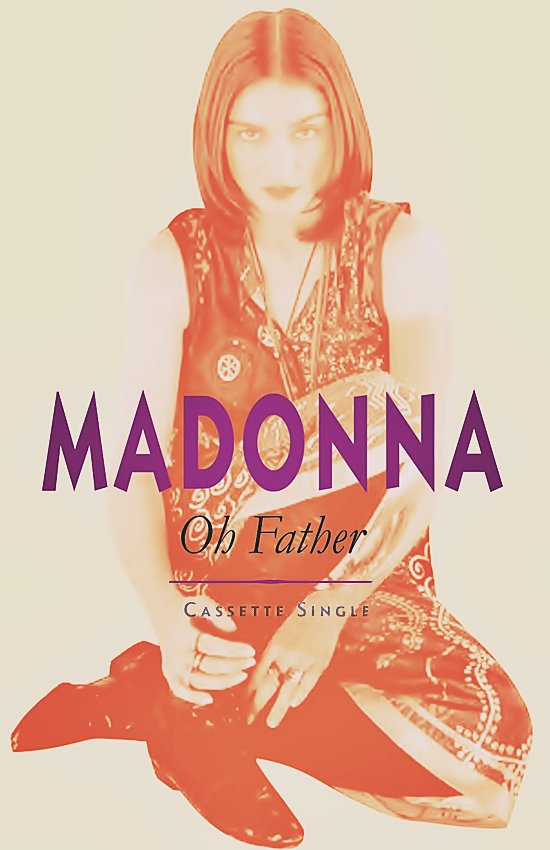
Oh Father [Cassette Single] 550oh father set 4 2oh father set 7oh father set 3oh father set 5oh father set 6 oh father 3 550

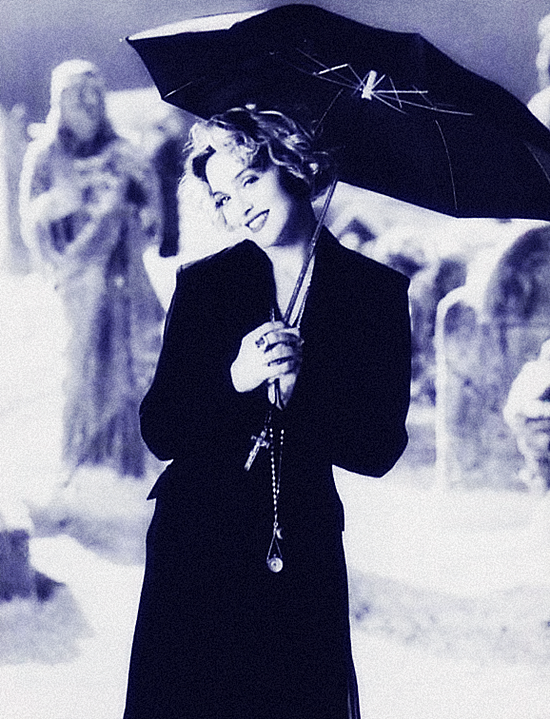
On November 11 1989, the music video for Oh Father premiered on MTV in the US. Filmed at Culver Studios, California in late October, 1989 by director David Fincher, the black & white clip drew cinematic influence from the 1941 Orson Welles film, Citizen Kane. Its narrative expanded on darker elements from Madonna’s life – focusing on the death of her mother, her relationship with her father and the recurring effects of childhood trauma in her adult life. The clip’s icily detached symbolism and heavy subject matter are counter-balanced by overarching themes of forgiveness and inner-strength.

In a 2009 interview with The Guardian, Fincher recalled:

“I had kinda talked Madonna into releasing Oh Father as a single and we did this video and were very happy with the video – but nobody ever saw it because the song wasn’t a hit.”

Although the video was put into rotation on MTV, the channel had requested that Madonna remove a scene that displayed a close-up of the deceased mother’s lips sewn shut – a request that she refused to consider. Compounded by a tepid response to the song from radio, where its bleak overtones clashed with playlists of the day, the single stalled at number twenty in the US – her lowest peak on the Hot 100 at the time (excluding her first two singles, neither of which broke into the Hot 100). In Canada the video was put into heavy rotation and the release fared slightly better on the charts, peaking at number fourteen.

Despite its relative lack of commercial appeal, the song and video are frequently cited as a creative triumph for Madonna by fans and critics alike.
Today in Madonna History: September 26, 1988

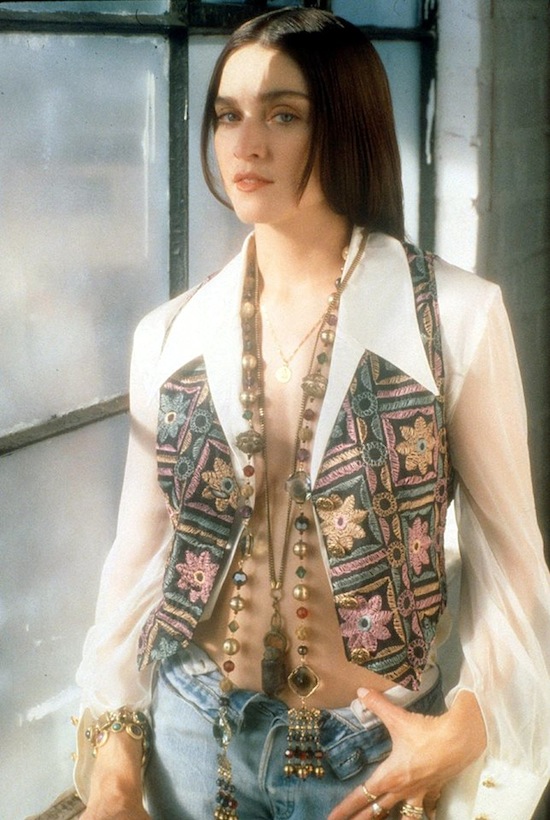
On September 26 1988, Madonna began recording the Like A Prayer album in Los Angeles, California with collaborators Patrick Leonard and Stephen Bray.

Madonna had begun writing for the album during the down time of her Broadway run in David Mamet’s Speed-The-Plow, for which she gave her final performance in late August. With her marriage to Sean Penn on the rocks, Madonna found herself at a personal and creative crossroads – with plenty to express.


Today in Madonna History: August 19, 1989

On August 19 1989, Cherish entered the Billboard Hot 100 at #37 in the U.S.

Today in Madonna History: April 22, 1989

like-a-prayer-april-22-1989-1 like-a-prayer-april-22-1989-2

On April 22 1989, Madonna’s Like A Prayer album and single reached #1 simultaneously in the USA.

The album stayed at the top of the charts for 6 weeks, while the single stayed at the top of the Hot 100 for 3 weeks.

Today in Madonna History: April 15, 1989

lap-single-1

On April 15 1989, Madonna’s Like A Prayer became the number one dance single on the Billboard Hot Dance Club Play chart.

Like A Prayer remained number one for the week of April 22.

Today in Madonna History: April 11, 1990

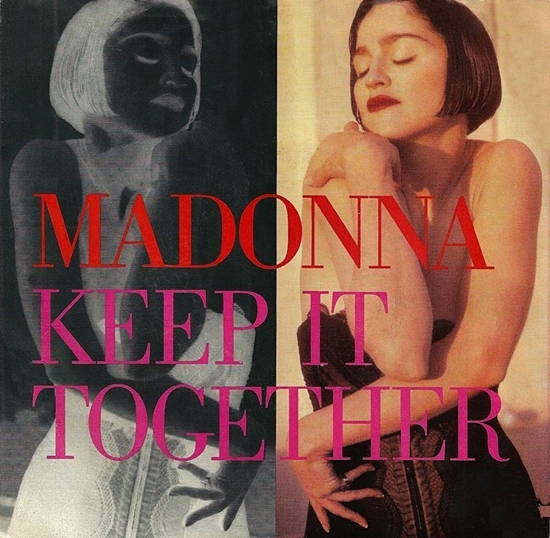
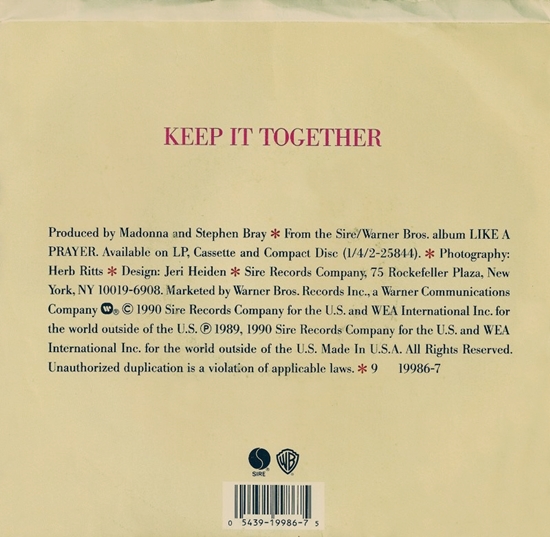
keep-it-together-single-US-7inch-sleeve-front 550 keep-it-together-single-US-7inch-sleeve-back 550

On April 11 1990, Madonna’s Keep It Together single was certified Gold by the RIAA for shipment of over 500,000 units in the U.S.

Keep It Together was Madonna’s last 7-inch single to be issued with a picture sleeve by Warner Bros. Records in the U.S. until the release of a 4 Minutes/Give It 2 Me double 7-inch set eighteen years later.

Today in Madonna History: March 22, 2017

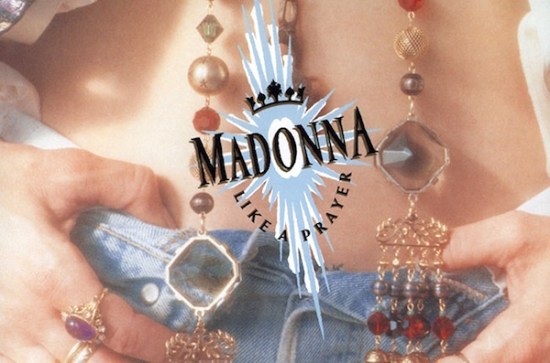
On March 22 2017, The Huffington Post published an article titled, “Why Madonna’s Like A Prayer Is The Most Important Album Ever Made By A Female Artist.”

Here are some of the highlights from the article:

28 years ago this week, Madonna released what is not only her best album to date, but also what could be the most important release ever by a female artist. That’s not to say that Like a Prayer is the best album ever by a female artist, but it’s pretty close. After six years of being considered pop fluff and a disco dolly, Madonna was finally taken seriously by most music critics in 1989. Still, Like a Prayer deserved even more than bewildering critical acclaim.

If Madonna and misogyny weren’t practically synonyms, Like a Prayer would have not only won several Grammys in 1990 (it didn’t even earn any major nominations), but it would be widely praised for its songwriting and production 28 years later. If a man delivered the same type of vocals Madonna did on Like a Prayer, critics would note that his voice isn’t technically perfect, but distinct, melodic, and full of emotion. When it comes to Madonna, who certainly could never hit the notes of Aretha Franklin or Whitney Houston, it’s just easier for people to say that she “can’t sing.”

For people (especially millennials) to understand how important Like a Prayer is to culture and music, they have to comprehend the repressive environment Madonna’s album arrived to in March of 1989. The late 1980s was ruled by the religious right, who believed AIDS was a curse God gave to the gay community. Women who were outspoken or wore revealing clothes were referred to as sluts, whores, bitches, etc. Police brutality among African Americans was still widely accepted without much of a backlash. And interracial dating was still considered a taboo.

The pamphlet on AIDS Madonna included with each copy of Like a Prayer alone proves that the notion of Madonna being a bad role model and having a bad influence on Generation X (especially women and teenagers) just isn’t true. Madonna educated many about AIDS and safe sex at a time when schools, the media, and religious institutions stayed away from the topic. A move like this in 1989 could have hurt a showbiz career, but Madonna survived and thrived by doing the right thing and, possibly, helping to save lives at the same time.