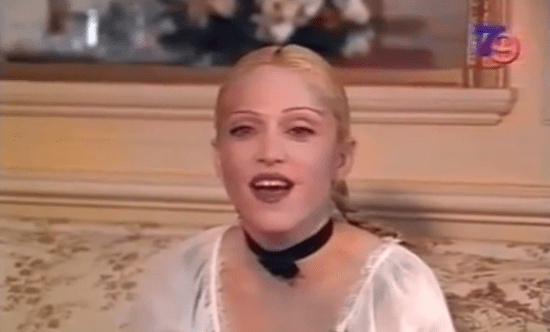
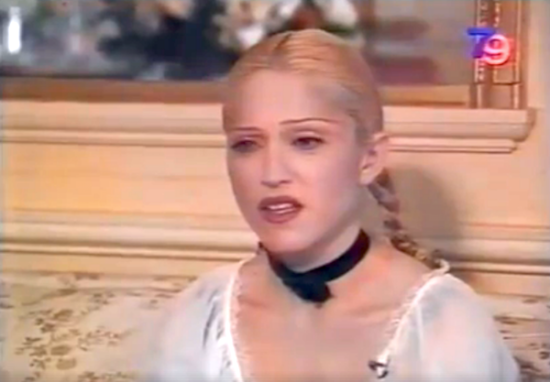
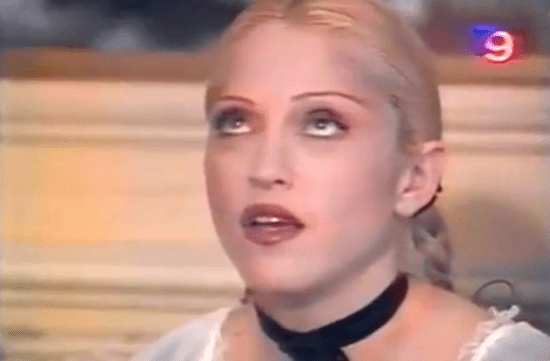
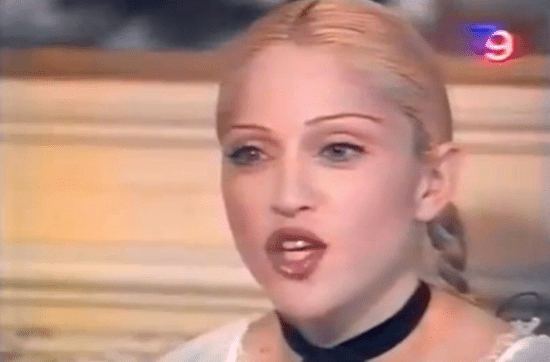
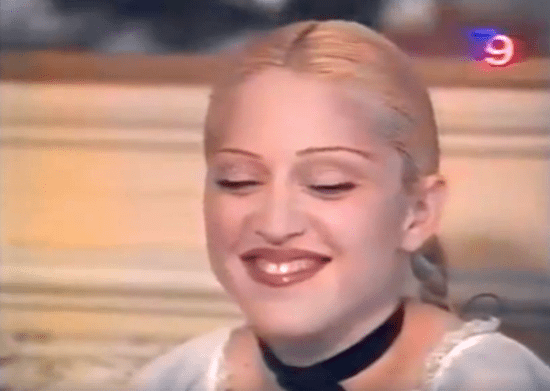
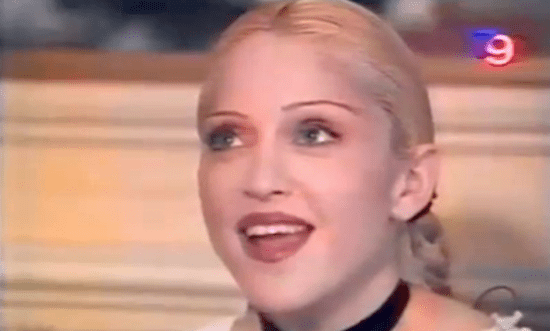
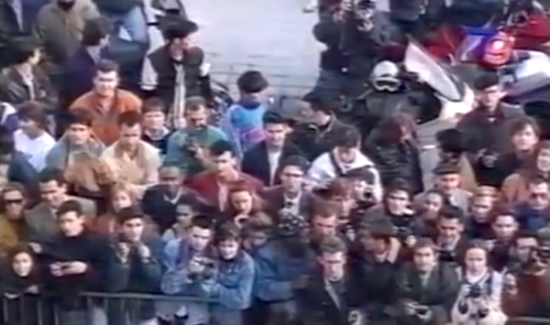
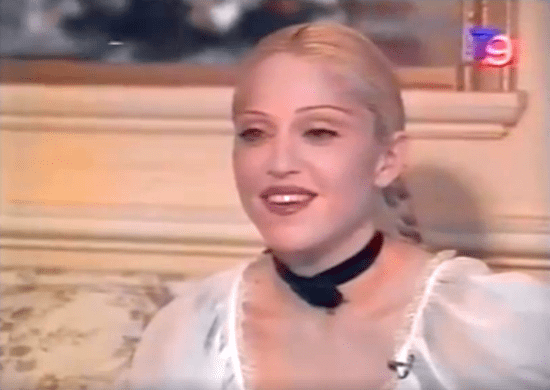
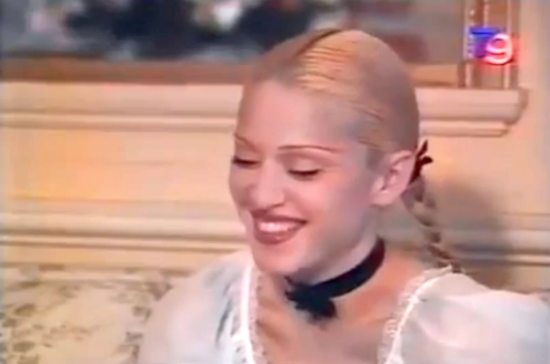
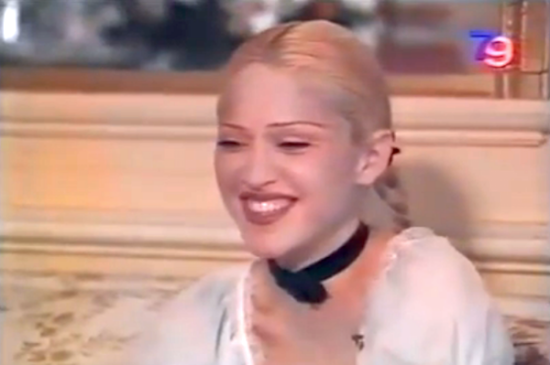
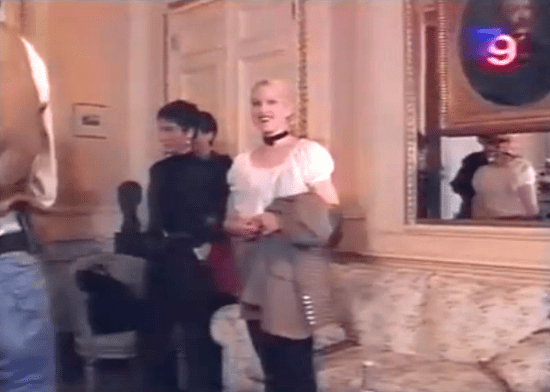
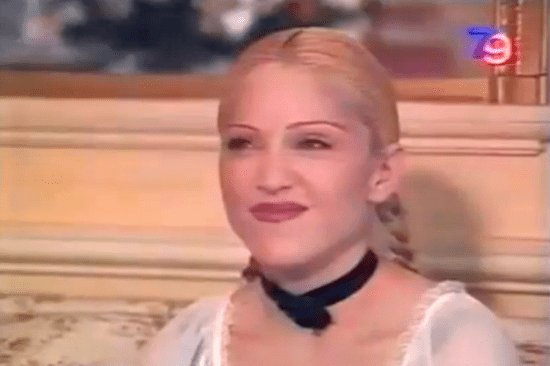
On October 11 1992, Madonna was interviewed at The Ritz Hotel in Paris for Swedish TV (7 Till 9). The interview was part of the European Erotica promotional tour. During the interview she calls Abba “boring” and Elvis “sexy”.

On October 11 1992, Madonna was interviewed at The Ritz Hotel in Paris for Swedish TV (7 Till 9). The interview was part of the European Erotica promotional tour. During the interview she calls Abba “boring” and Elvis “sexy”.
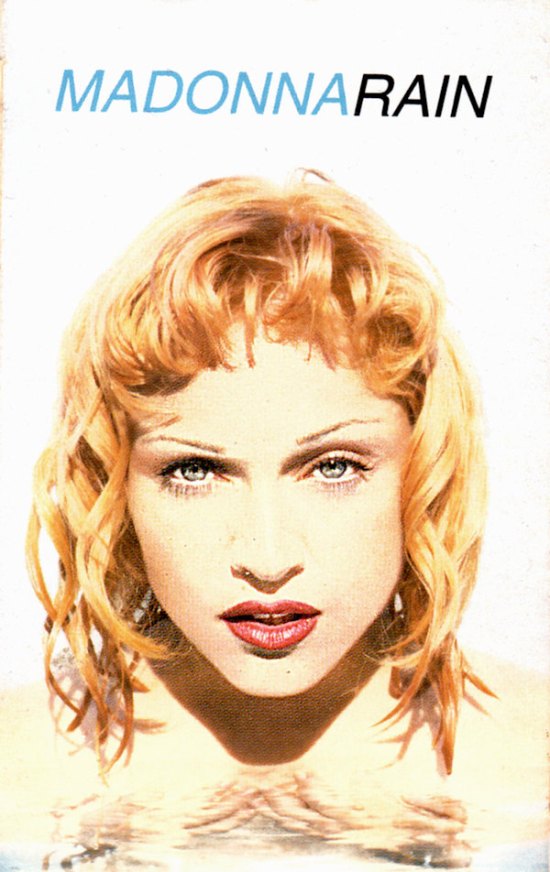
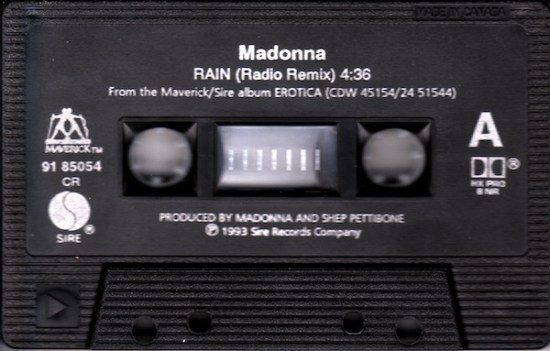
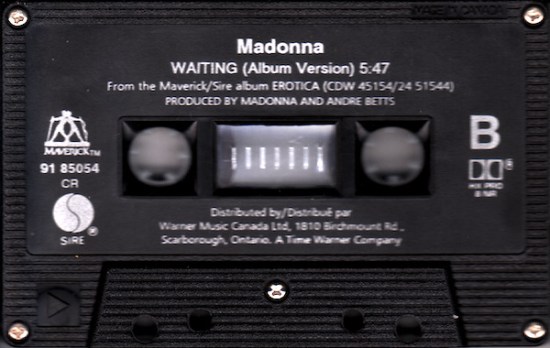
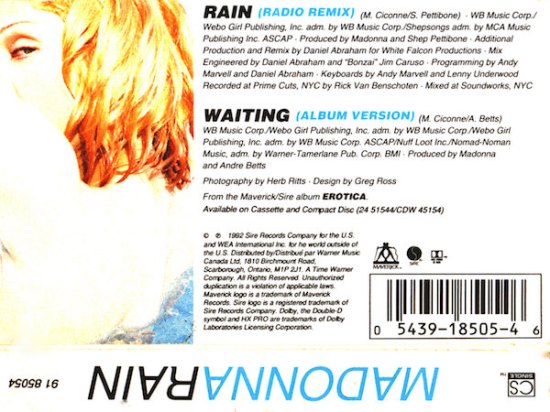
On September 18 1993, Madonna’s Rain peaked at #2 on the Canadian Top 100 Singles Chart, matching Deeper & Deeper as the highest charting single in Canada from the Erotica album.
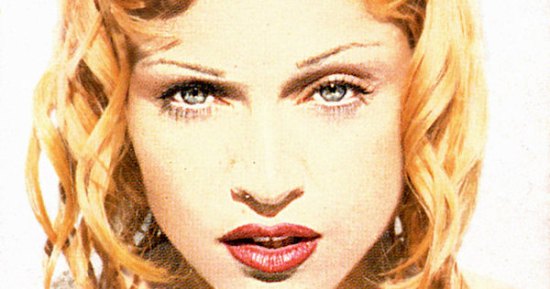
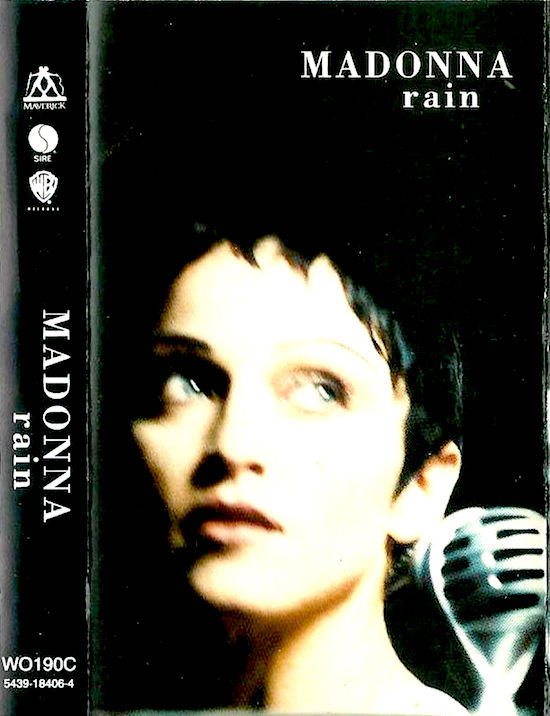


On September 4 1993, Madonna’s fifth single taken from her Erotica album, Rain, moved to #17 on the Billboard Hot 100 in the USA (after 7 weeks on the chart).
“Rain is a gorgeous romantic moment from Madonna’s sorely under-appreciated Erotica opus. A slow and seductive rhyme base surrounded by cascading, sparkling, synths inspires a sweet and charming vocal…A wonderfully constructed, memorable tune that deserves as much attention (and airplay) as it can garner.”
– Billboard Magazine
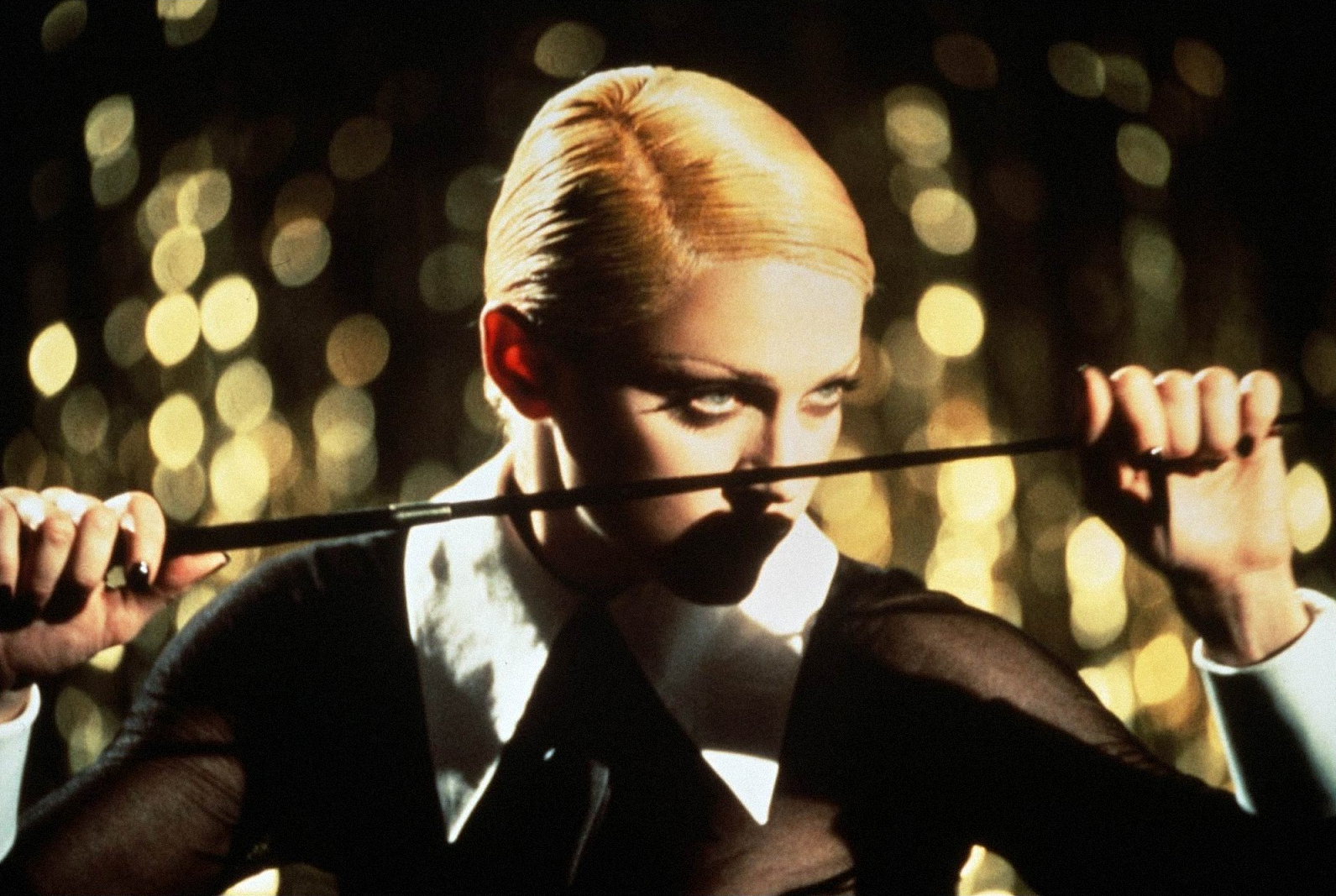 On August 22 1992, Madonna filmed scenes for the Erotica music video at The Kitchen in New York City with fashion photographer/director/designer Fabien Baron. The scenes filmed consisted of Madonna in the character of her Sex book alter-ego, Dita, miming the lyrics to the song. The remainder of the video consisted of a selection of 8mm footage previously shot by Baron during the making of the Sex book.
Baron also served as art director for the Sex book, the Erotica album and single, and later for the Bedtime Stories album and its singles Secret and Take A Bow. He also directed the commercial for her fragrance, Truth Or Dare by Madonna, in 2012.
“She put that book out at the best moment. She timed it very well. She knows what she’s doing. And such drive. Some people want to lift stones and see what’s under it. She’ll be on a beach with millions of stones and want to lift every one of them.” – Fabien Baron
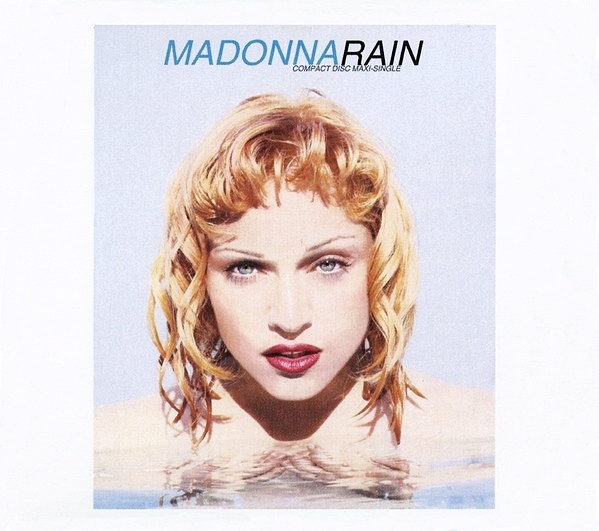
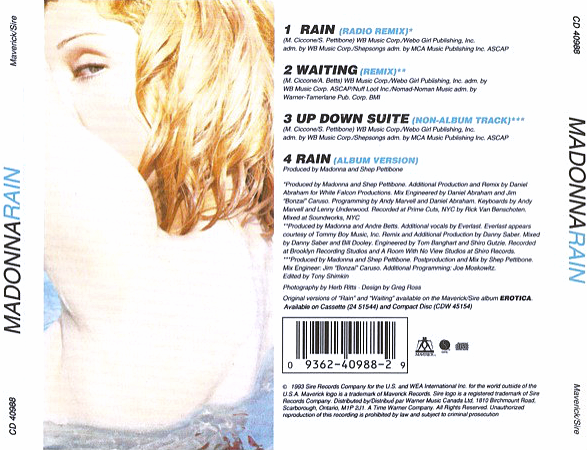
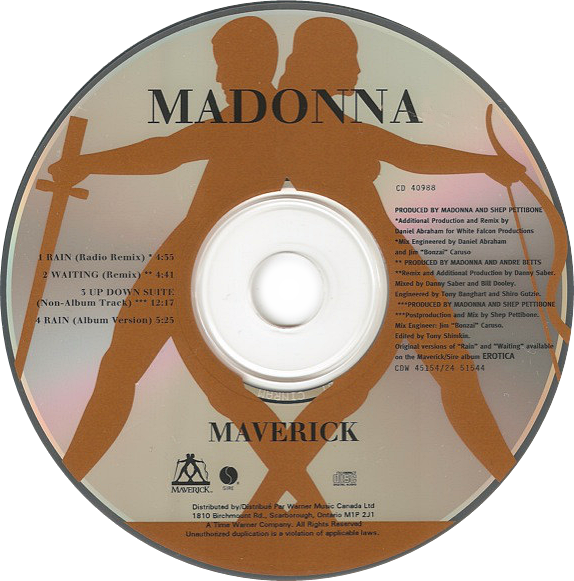
On July 17 1993, Rain was released as a single in North America. It was the fourth and final North American single from the Erotica album.
Following a cold reception to Madonna’s previous North American single – the bleak-but-beautiful Bad Girl – Rain was given a glossy makeover by French record producer Daniel Abraham (who had recently completed a similar assignment with the video remix of Fever) to help ensure that it would receive a warmer welcome from radio programmers. The U.S. promotional CD that was serviced to radio by Maverick/Warner offered the choice between the sweetened “Radio Remix” (in full-length and edited form) or an edited album version, the latter of which was fittingly used in the song’s gorgeous music video.
As her label had correctly predicted, radio indeed favored the smoother sound of the “Radio Remix” over the darker, more dynamic (and in our opinion, more interesting) production-work of the album mix.
While not an all-out smash hit, Rain was the first single from the Erotica album to impact Billboard’s Hot AC chart, where it reached the Top 10, and it is generally viewed as an initial recovery step following the backlash Madonna had faced in the wake of the Sex book.

Written and produced by Madonna & Shep Pettibone (unlike the majority of the tracks from Erotica, Tony Shimkin has not been added as co-writer, according to the Warner-Chappel publishing database), Rain was one of the earliest songs conceived during the Erotica album sessions. It appears as the first track on a two-cassette collection of demos from the album sessions submitted to the U.S. Library Of Congress for copyright registration.
The infamously sought-after set is often referred to by fans as The Rain Tapes because of the song’s prominent placement in its sequencing and also due to the likely unintentional visual prominence of the song’s title in the handwritten sleeve notes that accompanied the tapes.
Shep Pettibone created the song’s interesting use of panning percussion by digitally cutting and splicing samples of percussion breaks from an extended version of Scritti Politti’s 1985 hit, Perfect Way (and no, he was not involved with creating the remix). Although no sample credit was given on the album, considering the royalties the band would have earned for their inclusion on Madonna’s Who’s That Girl soundtrack, perhaps she figured that they owed her one.

The Rain maxi-single was perhaps most notable for its inclusion of a non-album track, Up Down Suite, which was for all intents and purposes a dub remix of album outtake, Goodbye To Innocence (which remained unreleased at the time, aside from some vocal samples used in a promo-only remix of Fever). A new remix (featuring Everlast) of the Erotica album track, Waiting, was also included on the North American maxi-single, while its album version served as the single’s North American b-side.
With its poetically poignant and emotionally charged lyrics, percussive urgency and one of Madonna’s most ambitious uses of layered self-harmonization (not to mention it being accompanied by one of the most beautiful music videos ever created), it isn’t difficult to understand why Rain remains an enduring fan favorite.
“It’s strange
I feel like I’ve known you before
And I want to understand you
More and more and more
When I’m with you
I feel like a magical child
Everything strange
Everything wild
Waiting is the hardest thing
I tell myself that if I believe in you
In the dream of you
With all my heart and all my soul
That by sheer force of will
I will raise you from the ground
And without a sound you’ll appear
And surrender to me, to love”
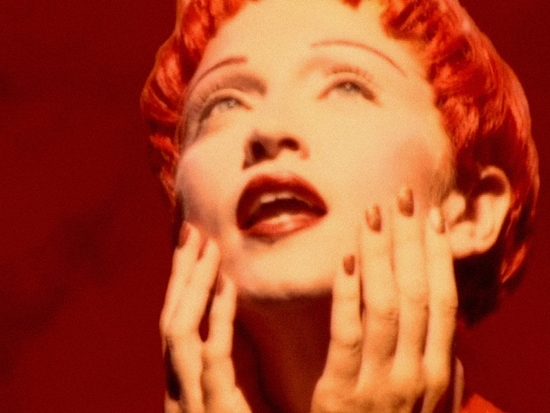
On May 11 1993, the music video for Fever premiered on MTV. The video was directed by Stéphane Sednaoui.


On April 3 1993, Fever entered the UK Singles Chart at its peak position of number-six. Without the support of a proper music video at the time of its release (Warner UK instead issued a rarely seen compilation video of previous clips), the single spent only six weeks on the UK charts, dropping to number-seven the following week.
Strangely, Madonna did eventually decide to film a video for the song in late April – nearly a month after its release in Europe. By the time the video premiered during the second week of May, Fever was spending its final week on the UK Singles Chart.
In North America the remixes for Fever had been issued commercially on Madonna’s previous international single, Bad Girl. Fever was also serviced to clubs as a promotional single in its own right, but it was not promoted to radio despite the video being added to into rotation on MTV and MuchMusic. While the release of the music video managed to coincide with Fever’s single week atop the Hot Dance/Club Play chart, its number-one status had already been confirmed several days prior to the clip’s debut, making the video’s intended purpose and the timing of its release all the more puzzling.

