Today in Madonna History: September 30, 1995

On September 30 1995, Billboard magazine featured an exclusive interview with Madonna in a piece by Timothy White to promote her upcoming ballads collection, Something To Remember.  Focusing primarily on the connection between Madonna’s introspective ballads and the loss of her mother, the article (which appears in an abridged version below) was titled “‘Something’ In the Way She Grieves.”

“Listening to this record took me on my own journey,” says Madonna with a sad smile, shifting on the couch in her apartment overlooking Central Park. “Each song is like a map of my life. I don’t really listen to my records once I’ve done them, I’m onto the next thing. And I think most of the time when my records come out, people are so distracted by so much fanfare and controversy that nobody pays attention to the music. But this is, for the most part, a retrospective, and I just wanted to put it out in a very simple way. The songs, they choke me up, and I wrote them. Isn’t that weird? I can’t tell you how painful the idea of singing Like A Virgin or Material Girl is to me now. I didn’t write either of those songs and wasn’t digging deep then. I also feel more connected emotionally to the music I’m writing now, so it’s more of a pleasure to do it.”

Madonna has included three new songs on Something To Remember: a moody cover of Marvin Gaye’s 1976 hit I Want You, which was suggested and subsequently produced by Nellee Hooper and features Massive Attack, and two bittersweet serenades (You’ll See and One More Chance), co-created with David Foster during the third weekend of September in a whirlwind writing/recording session. Shortly after this talk, she was to leave for London to start recording the music for the film version of Evita, the musical that was the toast of Broadway in 1979–the year Madonna wrote her first song in the basement of a dormant Queens, NY synagogue.

“I remember calling up my father back in Detroit and making him hear it on the tape recorder over the phone,” she confides, blushing. “He said, ‘Oh, that’s very nice.’ I felt proud. The song was called Tell The Truth.”

A self-assessed “roller-coaster Catholic,” Madonna grew up sharing the middle bunk in a three-tier bed with two of her sisters. “I didn’t have any free time as a child,” she says. “My mother died of breast cancer when I was 7, and then my father remarried when I was 10. I had a lot of responsibility, taking care of my younger brothers and sisters.”

Like her siblings, Madonna was obliged to study music, specifically piano. “But I couldn’t sit still, and I begged my father to let me take dance lessons,” which served as a means of escape. Madonna was in the church choir and acted in school musicals, while sharing her mother’s mantra-like habit of idly intoning her favorite tunes. “As a teenager, I loved Aretha Franklin’s A Natural Woman, and in high school I worshiped Joni Mitchell and sang everything from Court And Spark, my coming-of-age record.”

But her pivotal developmental trial was the death of her mother, and as Madonna passes this fall afternoon discussing the themes behind her often acutely wistful ballads, she ultimately says, “My mother is part of a lot of my music.”

Although love songs, such as Live To Tell, One More Chance and I’ll Remember, also invoke the early fever of a failed marriage to Sean Penn, tensions with a stepmother who could not replace her lost parent, or later relationships that fell short, a larger phantom overshadows each mourning of life’s missed linkages.

“I think about my mother and a certain emptiness–a longing–in my songs. There are tragic, traumatic moments where I think ‘I wish that I could call my mother.’ It’s this primal thing that has been a springboard for the work I do.”

How did she learn her mother was gone?

“I was at my grandmother’s house. The phone rang, and it was my father, and he told my grandmother that my mother had died. I’d just seen her in the hospital. The rest of the day I blocked out–I probably went outside and played. I was majorly into denial and didn’t really understand. And it unfortunately wasn’t something that my father ever really prepared us for or discussed afterward. I suddenly developed a strange throwing-up disease, where every time I would leave the house, I would throw up. If I was away from my father, I threw up. It was a nervous condition.”

In recent years, when Madonna was under attack for her frank Erotica album and Sex book, the artist says she drew strength from her late parent’s nonjudgmental “fervor” for fulfilling one’s personal vision: “She had an unbelievable level of tolerance and forgiveness. She was tremendously religious in a really passionate–almost sexual–way, like she was in love with God. If you read the letters she wrote, even when she was sick and dying, she was completely happy about everything. It was frightening, there was just that faith of hers. My mother loved to take care of people. My older brothers and I were sometimes brutal to her, and she never complained.”

It sounds like the materfamilias had an essential serenity. “Exactly,” says her daughter. “And I could probably use more of it in my life.”

A brisk September breeze catches the leafy scent rising from the freshly mowed lawns of Central Park, the tangy end-of-season smell betokening the coming solstice. Madonna shivers slightly as she sips the last of her tea.

“I think my mother made people angry, because they couldn’t shake her beliefs,” she concludes in a near whisper. “And she was just 32 when she died–just a baby, Madonna Louise. So basically, I’m here to take her place.”

Today in Madonna History: September 29, 1992

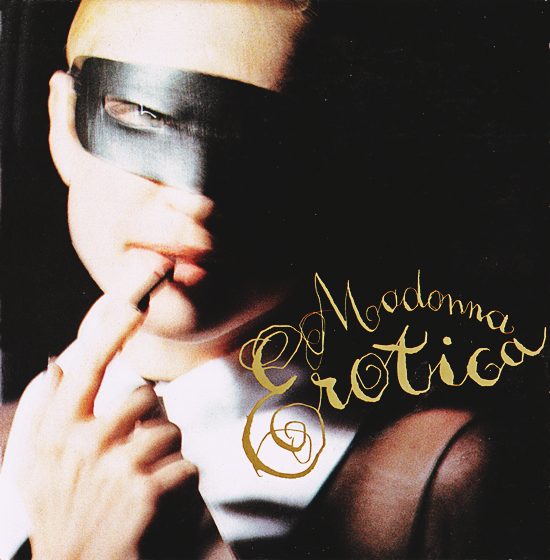
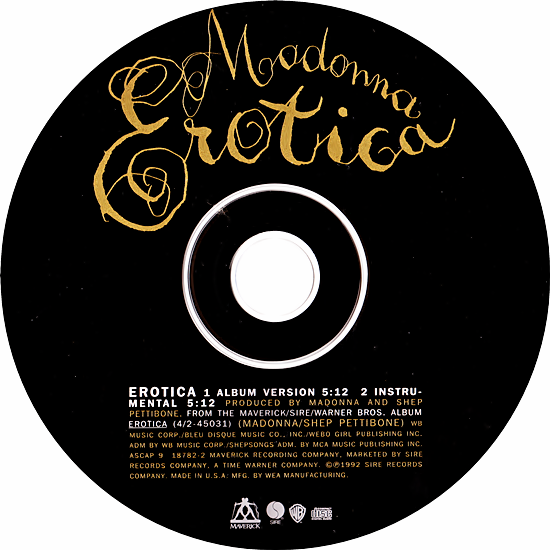
Erotica US CD Single 550Erotica US CD Single Back Sleeve 550Erotica US CD Single Disc 550

On September 29 1992, Madonna’s Erotica single was released to radio. Originally credited to Madonna & Shep Pettibone, Pettibone’s partner Tony Shimkin was later granted co-writing credit for nearly all of the Pettibone collaborations on the album, including Erotica. The debut release to feature the imprint of Maverick Records, the song was produced by Madonna & Pettibone.

As several leaked demo versions of the song can now attest, the track had gone through numerous incarnations before Madonna settled on lyrics that positioned her in the perspective of Dita – the alter-ego she had created for her Sex book. The song’s original chorus (“You thrill me…”) was reincorporated into the song when Madonna performed it during her 2006 Confessions Tour. Alternate verses were also used to create the track Erotic, which was included with the Sex book – these lyrics were also featured in a William Orbit remix that was included on the Erotica maxi-single.

French art director and photographer Fabien Baron designed the artwork for the single, the album and the Sex book. He also directed the Erotica music video, which included footage he had shot on Super 8mm during the making of the book. Baron recalled his first meeting with Madonna to discuss their potential collaboration in a 2009 interview with Hint Fashion Magazine:

“I met Madonna at her home on Central Park West to talk about working on her Sex book. It was very comfortable but very uncomfortable at the same time, which is a very interesting feeling. She’s very imposing and knows what she wants. She’s very informed and opinionated, which makes her genius. She takes you in and swallows you up — and you don’t mind it –  you actually enjoy it. There’s an unspoken seduction that goes on. I was young…she was young, too – and beautiful. That was an unforgettable era. She put that book out at the best moment. She timed it very well…she knows what she’s doing. And such drive. Some people want to lift stones to see what’s under them. She’ll be on a beach with millions of stones and want to lift every one of them.”

Today in Madonna History: September 22, 1998

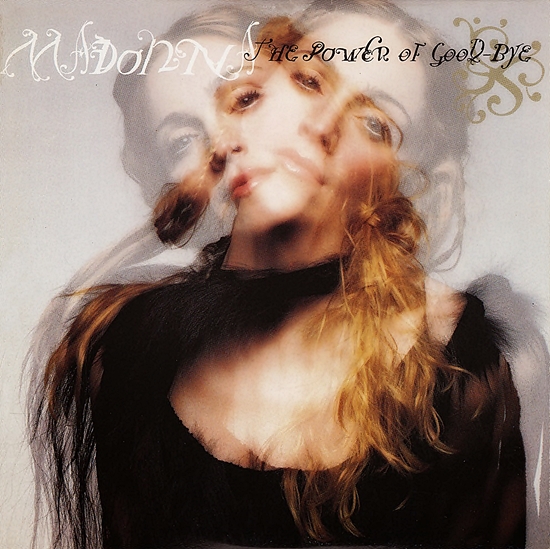
tpog sleeve 550

On September 22 1998, The Power of Good-Bye was released as the third North American single from the Ray Of Light album. It was the fourth single in international markets that opted to release Drowned World/Substitute For Love as the album’s third single.

In the UK, the release was promoted as a double A-side single with Little Star.

The Power Of Good-Bye was written by Madonna & Rick Nowels and was produced by Madonna, William Orbit & Patrick Leonard. An earlier demo version of the track, believed to have been produced by Madonna & Leonard prior to Orbit’s involvement in the project, leaked in 2002.

Today in Madonna History: September 21, 2015

september-21-2015

On September 21 2o15, Sal Cinquemani (of Slant) published an article called, “10 Things I Learned at Madonna’s Rebel Heart Tour.”

Here’s Sal’s list:

Over 30 years into her career, Madonna is still acting like a virgin. “I’ve never performed in Brooklyn before,” she coyly told a sold-out crowd at the Barclays Center in Prospect Heights Saturday night. The Rebel Heart Tour, which kicked off in Montreal two weeks ago and landed in the borough for one night after two performances across the river at Madison Square Garden, is the singer’s 10th stage show. While she’s finally warmed up to her ’80s hits after years of ignoring all but a handful, she still insists on challenging her fans, who, I suppose I shouldn’t have been surprised to see, are still dressing up like her. Only now it’s the men. Here are 10 other things I learned at the show:

1. Yes, Madonna can sing.

As her shows have increasingly required her to be hoisted, flung, and swung around in the air for close to two hours every night, Madonna has in recent years relied, perhaps too heavily, on lip-synching. But she can carry a tune far better than she’s typically given credit for. Despite a mouthful of those pesky gold-and-diamond-encrusted grillz, she flawlessly serenaded old pal Debi Mazar, who stood in the audience singing along, with “True Blue,” and delivered an impassioned rendition of the blistering Rebel Heart ballad “HeartBreakCity.” Perched on the edge of a stage platform, playfully swinging her leg, she even belted out “La Vie En Rose” with relative ease.

2. Fifty-seven is the new 27.

At one point, Madonna dabbed her forehead with a towel and joked that sitting down to strum a ukulele was her favorite part of the show, but she barely missed a beat or broke a sweat throughout the 21-song setlist. With her dirty-blond extensions cascading around her shoulders, dark roots exposed, fingerless gloves, and jewel-encrusted blazer and ankle boots, she was the spitting image of the title character from Desperately Seeking Susan, in which she made her big-screen debut an astonishing three decades ago.

3. “Deeper and Deeper” belongs among Madonna’s classics.

With a catalogue as deep and wide as Madonna’s, it would be easy for gems like Erotica’s “Deeper and Deeper” to get lost to pop history. So it was a pleasant surprise to spot this one on the setlist and, aside from some amped-up EDM beats and a simplified flamenco guitar solo, hear it performed so faithfully.

4. Being Madonna (and working for her) is dangerous business.

As they say in Texas, everything is bigger on a Madonna tour…including the liability and personal injury insurance policy. Coverage must include, but isn’t limited to, performers being thrown off spiral staircases and tossed down giant LED screens, scaling and hanging precariously from poles, swinging back and forth from 10-foot stilts, and wearing capes with a recent history of violently yanking superstars to the ground from behind in front of an audience of millions.

5. Madonna really likes “Candy Shop.”

Though the Hard Candy opener was never released as a single, Madonna has a peculiar fondness for the track, having performed it during all of her last three tours. The singer’s tenacity and obvious enthusiasm for the song has practically willed it into becoming a staple, fitting inconspicuously between her signature hits “Music” and “Material Girl.”

6. Madonna really hates “Take a Bow.”

Madge dusted off her ’80s hits “True Blue” and “Who’s That Girl” for the first time in 28 years. But some of her biggest ’90s ballads, from “This Used to Be My Playground” to “I’ll Remember” to “Take a Bow” (her longest running #1 hit ever), have still, to this day, never been performed on tour. Sure, they don’t fit obviously into the pop star’s latter-day dance-floor-driven output, but if the queen of reinvention isn’t willing to find a way to put a new spin on these old chestnuts, there must be a good reason. With songs as timeless as these, it’s just hard to imagine what that could possibly be.

7. You’re never too old to take a “Holiday.”

The only song to be performed during all or part of every Madonna tour aside from one, “Holiday” reclaimed its rightful place as the closing number during the Rebel Heart Tour. Over the years, Madonna’s first bona fide smash has been reimagined as everything from a disco bauble to an ironic military march to an EDM banger, but while a Latin-style medley of “Dress You Up,” “Into the Groove,” and “Lucky Star” proves she isn’t exactly becoming a purist, she refreshingly played it straight for her perennial call for a little celebration.

8. Madonna is more comfortable on stage than ever.

Madonna is a self-proclaimed showgirl, but despite a show clearly choreographed down to each flick of a wrist, she’s never seemed more unscripted. From the call-and-response exchanges with the audience during an acoustic version of “Who’s That Girl” to the addition of a new song to the setlist (a stirring, if pitchy, rendition of shoulda-been-a-sleeper-hit “Ghosttown,” which brought seemingly genuine tears to her eyes, a development that seemed to surprise even her), the Queen of Pop never looked so unguarded and at ease.

9. Madonna might be running out of ideas.

You’d be forgiven for thinking Madonna had already staged a show with scantily clad nuns twerking on cross-shaped stripper poles. From that perhaps too on-the-nose provocation to the multimedia prologue and guitar-wielding riot-grrrl shtick, Madonna seems to be recycling themes and concepts in ways that, while her contemporaries remained dogged in their adherence to formula, she managed to successfully avoid for the first few decades of her career.

10. …But she’s still the greatest performer of our time.

“It’s lonely at the top, but it ain’t crowded,” Madonna quipped, tongue in cheek, during a jazz-infused version of “Music.” As far back as 1990’s iconic, game-changing Blond Ambition Tour, her shows have always been theatrical, blending traditional rock-concert tropes with narrative storytelling; Rebel Heart, though, takes it to another level, equal parts Cirque du Soleil, Broadway musical, and burlesque—an immersive experience that redefines the meaning of maximalism.

Today in Madonna History: September 20, 1986

madonna-commitment-to-life-wiltern-theatre-september-1986-1-550 madonna-commitment-to-life-wiltern-theatre-september-1986-550

On September 20 1986, Madonna attended the Second Annual Commitment to Life Gala to Benefit AIDS Project Los Angeles at the Wiltern Theatre in Los Angeles, California.

Today in Madonna History: September 19, 2000

madonna_music-release-0 madonna_music-release-6 madonna_music-release-8 madonna_music-release-2 madonna_music-release-7 madonna_music-release-1

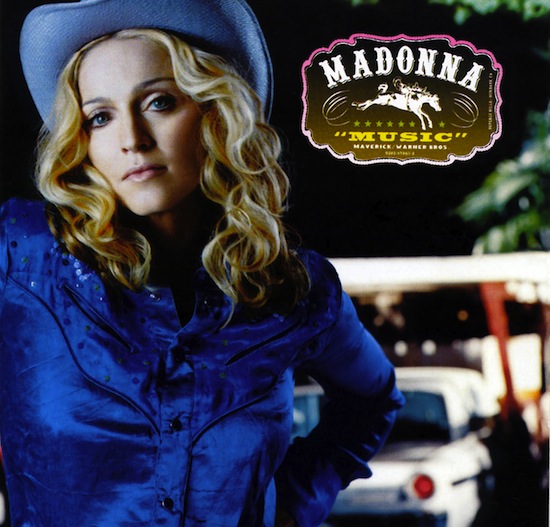
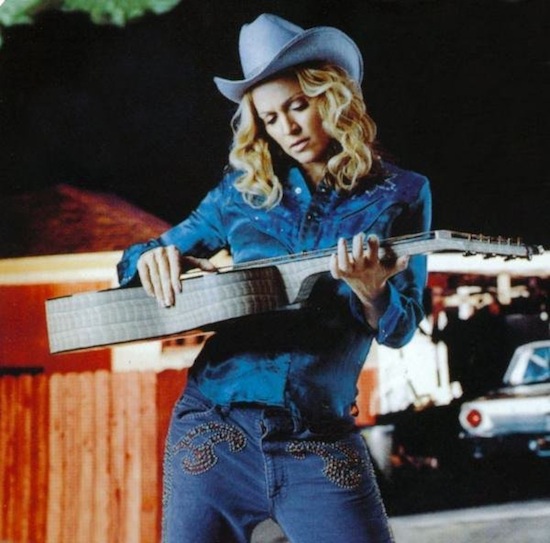
On September 19 2000, Madonna’s eighth studio album Music was released by Maverick Records.  Music was released in some markets on September 18.

In anticipation of the release Madonna made this statement:

“Hey Mr. DJ, put a record on… Hi, it’s Madonna. You’ve probably been hearing about my new record, Music, for a while. Well, I just wanted to make sure you knew that the single is gonna drop very soon. I worked on it with a French guy named Mirwais, and he is the shit. The album will be released worldwide on September 19, and I hope you like my music.”

Today In Madonna History: September 18, 2001

II promo 550II promo 2 550

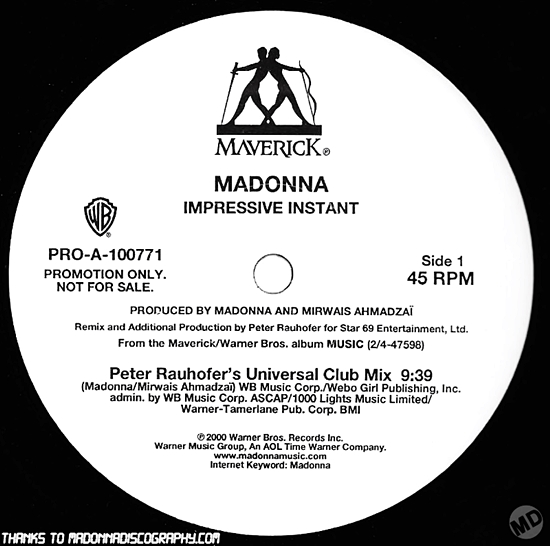
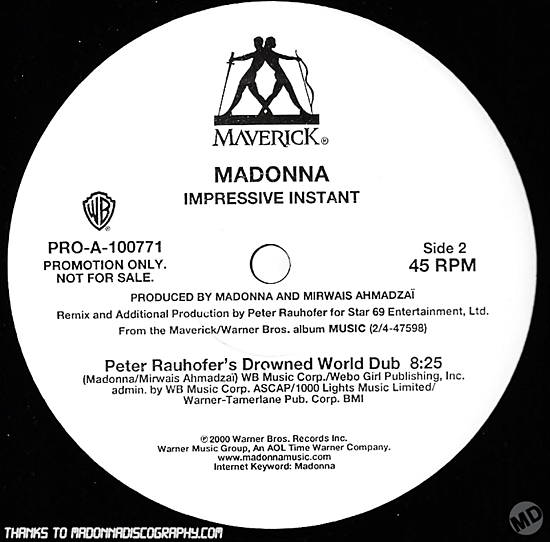
On September 18 2001, Impressive Instant was released as a promotional club single to DJs in the US. Written and produced by Madonna & Mirwais Ahmadzaï, the track is bright and uplifting in its content and composition. Originally intended to be the fourth single of the Music album, a commercial release was cancelled due to a disagreement between Madonna and her recording company.

Potentially fearing the track as being too experimental to garner significant airplay, Warner had instead showed interest in releasing Amazing as the fourth single. If hopes were that it would replicate the airplay success of her similar-sounding summertime hit Beautiful Stranger several years prior, Madonna was reportedly less enthusiastic about repeating herself. Promotional copies of Amazing were issued in Germany, Spain, Columbia and Israel before Warner seemingly pulled the plug on pushing the song – perhaps at Madonna’s insistence. In the end, the rift reportedly resulted in neither track being released commercially, making Music her first studio album (excluding I’m Breathless) to spawn only three commercial singles.

Remixes that had been commissioned for Impressive Instant by the late Peter Rauhofer were finally released to clubs as a promotional single at the tail end of her successful Drowned World Tour.

Official Peter Rauhofer promotional remixes of Impressive Instant :

  • Peter Rauhofer’s Universal Club Mix (aka Remix #1)
  • Peter Rauhofer’s Universal Dub
  • Peter Rauhofer’s Universal Radio Mixshow Mix
  • Peter Rauhofer’s Drowned World Dub
  • Peter Rauhofer’s Drowned World Dub Part 2
  • Remix #2