Today in Madonna History: March 28, 2012

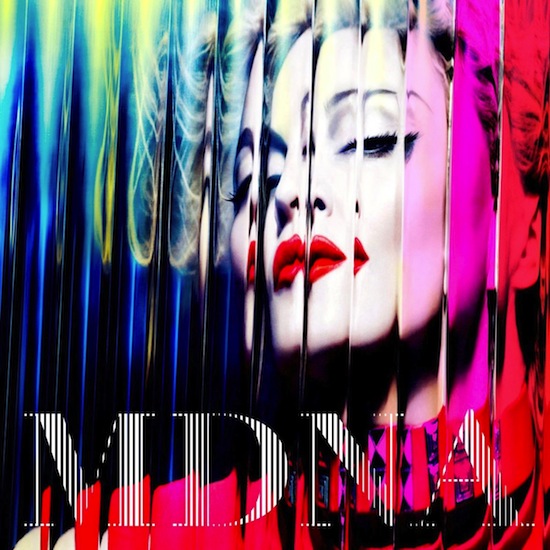
On March 28 2012, Melissa Maerz reviewed Madonna’s MDNA album for Entertainment Weekly and gave it a B-.  Here’s what Melissa had to say about the album:

“Girls, they just wanna have some fun!” From the moment Madonna utters those words on MDNA, it’s clear that she’s trying really freaking hard to have a good time. With dance-music vets William Orbit, Martin Solveig, and Benny Benassi helming her return to the Euro-club stylings of 2005’s Confessions on a Dance Floor, Madge spends nearly half the album insisting that this is the Best Party Ever, from the pom-pom-shaking ”Give Me All Your Luvin”’ to the Mardi-Gras-beads-tossing ”Girl Gone Wild” and stereo-blasting ”Turn Up the Radio.” The album title even suggests that Ecstasy is part of Madge’s DNA.

But while there are a few genuine moments of double-rainbow bliss here (check the ”whoo-ooh!” chorus of ”I’m a Sinner”), there’s also real darkness lurking under the air-popped beats. If Madonna’s sending us a message, it’s this: I spent all year perfecting my cartwheel for the Super Bowl, and now I’m gonna have fun, even if it kills me.

Maybe it’s just that MDNA‘s so hell-bent on showing how much energy the 53-year-old puts into her job. Many songs recap her gold-star résumé referencing her past hits lyrically or musically. ”Girl Gone Wild” shares its sassy legwarmer-disco vibe with 2005’s ”Hung Up,” while ”I’m a Sinner” reunites her with Orbit for a very cool guitar-boosted rave-up that echoes 1998’s ”Ray of Light.”

But all those reminders of her work ethic can feel exhausting. On the ridiculous electro-rap ”I Don’t Give A,” she runs through her insane schedule as a celebrity supermom. Before finishing her power workout, hiring a babysitter, ”tweeting on the elevator,” and riding a helicopter to her divorce lawyers’ office, she has an epiphany: ”Wake up, ex-wife/This is your life.”

Are you listening, Guy Ritchie? Because Madonna’s not done yelling at you. After revealing that she ”didn’t have a prenup,” she gets a decent gold-digger joke into the ABBA-remix-esque strains of ”Love Spent”: ”Frankly, if my name was Benjamin,” she deadpans, ”we wouldn’t be in this mess we’re in.” Less charming is the industrial thumper ”Gang Bang,” where Madonna holds a gun to her lover’s head, demanding, ”Drive, bitch!” True, she also recorded a mea culpa — on ”I F—ed Up” she says ”I’m sorry” in French — but it’s telling that she cut it from the album. Her apology’s just as unconvincing as her Gallic accent.

So it’s surprising that Madonna is at her best on the love songs. The W.E. ballad ”Masterpiece” (which won her a Golden Globe in January) begins with Spanish guitar and a finger-snap rhythm — a refreshing break from the relentless bass throbbing. When she’s singing about a guy who’s as pretty as the Mona Lisa, her voice is lovely. And the synth stomper ”I’m Addicted,” a warm ode to a crush, offers a good excuse to join in when she says, ”I need to dance.” Elsewhere, Nicki Minaj even shows some L-U-V for Lady M, proclaiming, ”There’s only one queen, and that’s Madonna, bitch!” Judging by MDNA, she may be overestimating her idol. But there’s just enough dance-floor bonhomie here to get that catchphrase bedazzled on a few dozen leotards. B-

Best Tracks:
Spiritual electro? Sacrilicious! I’m a Sinner
A flamenco-style ballad Masterpiece

Today in Madonna History: November 28, 1998

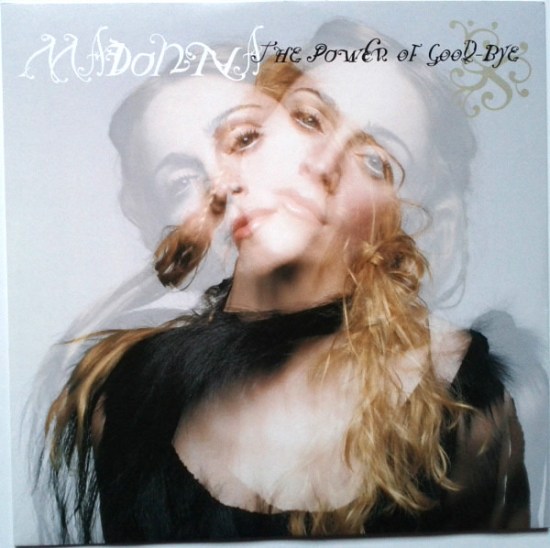
On November 28 1998, Madonna’s The Power Of Good-Bye hit #11 on the Billboard Hot 100 Singles Chart in the USA. The hit single from Ray Of Light was written by Madonna and Rick Nowels; produced by Madonna, William Orbit and Patrick Leonard.

Rick Nowels had this to say about his experience writing the song with Madonna:

It was a career-changing experience for me. Before that I had always done my co-writing with friends. But working with Madonna. It was the first time I had ever written one-on-one with a great artist/writer. After that I changed gears a little, and now I mostly collaborate directly with artists.

Today in Madonna History: June 30, 1997

On June 30 1997, Madonna began recording sessions for what would become her Ray Of Light album at Larrabee North Recording Studios, Universal City, Los Angeles.

Madonna had already spent several months writing songs and producing demos with Patrick Leonard, Rick Nowels and Babyface (although none of the Babyface material would make the final cut) by the time she entered the studio with co-producers William Orbit and Marius De Vries. Leonard would return to the project to assist with arrangements, earning him a co-producer’s credit on four of the album’s tracks. Madonna would add lyrics and melody to at least a half-dozen previously composed Orbit demos during these sessions as well, with six of their songs making the final track list.

Today in Madonna History: March 21, 2012

On March 21 2012, a William Orbit interview by Larry Flick to promote the release of MDNA aired on Sirius radio.

Madonna was also interviewed by Flick, although her spot aired a few days earlier.


Today in Madonna History: August 20, 2001

august-20-2000-1 august-20-2000-2 august-20-2000-3

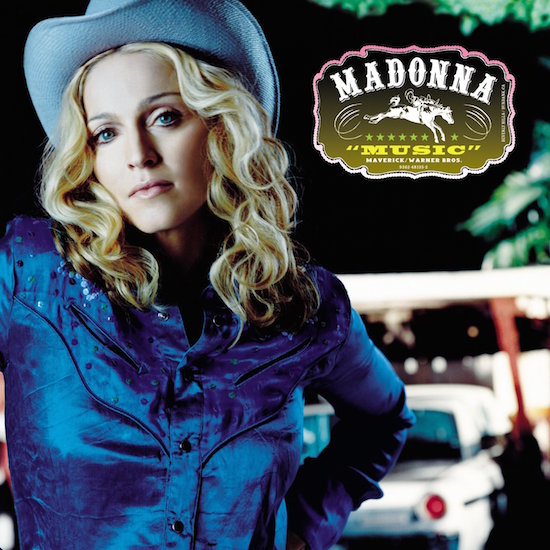
On August 20 2001, Sal Cinquemani published this review of Madonna’s MUSIC album in Slant magazine:

After her hugely successful and critically-lauded Ray Of Light, Madonna could have gone in one of several possible directions: (1) a more hardcore trance route, enlisting a world-class DJ like Sasha (who remixed a few tracks from Ray Of Light and whom Madonna allegedly dismissed after collaborating on several tracks early in the recording process of this new album); (2) staying in safe territory by writing and recording once again with William Orbit, the mastermind behind Ray Of Light; or (3) a weird, more experimental direction, commissioning someone like French electronica guru Mirwais Ahmadzai. Madonna once told producer Shep Pettibone “You can never do the same thing twice…ever,” but two new collaborations with Orbit, “Runaway Lover” and “Amazing,” prove that when you do, it will probably be completely uninteresting. “Runaway Lover” sounds like a Ray Of Light outtake with uninspired couplets like “It doesn’t pay to give away what you lack/You’ll never get your money back.” But amid the clichés, Madonna throws in profound food for thought like “You get your education from your lovers.” “Amazing” is incredibly catchy and has a Supremes-like melody but that’s where it ends. The track borrows the drum loop Orbit used in “Beautiful Stranger” (which was originally the loop from his “Ray Of Light” remix), and proves that he may not have had enough tricks up his sleeve for an entire new album anyway (and perhaps Madonna knew that).

As such, Madonna enlisted Mirwais for most of the rest of the album in question, Music. The title track, a retro hands-in-the-air club song reminiscent of Debbie Deb’s “When I Hear Music” and Madonna’s own “Into The Groove,” is the singer’s best dancefloor-beckoning track since “Vogue.” She sings “Music makes the people come together” like a track off of her debut album, and as an added bonus she uses words like “bourgeoisie” and “acid-rock” with equal abandon. If you can get past the initial horror of hearing Madonna’s voice get the Cher “Believe” treatment on “Nobody’s Perfect,” another Mirwais collaboration, you’ll find a brilliant song full of genuine sorrow. The track opens with an intentionally imperfect and somber “I feel so sad,” and it is indeed believable. Lyrics like “What did you expect? I’m doing my best” are sung with an intriguing juxtaposition of human emotion and mechanically detached vocalizations. Though hard to swallow at first (like most on the album), the track is one of the singer’s best creations. With its distorted vocals and grinding electronic burps, “Paradise (Not For Me)” is another distinctive Mirwais production. At a turning point in the song, Madonna awkwardly struggles to speak the words “There is a light above my head/Into your eyes my face remains” while strings swell and bring the song to a climax. It is at this point that “Paradise” resembles the cinematic grandeur of tracks like “Frozen,” and it is also one of the few moments throughout Music that recalls the spiritual introspection of Ray Of Light.

Two tracks take a striking folk direction. “I Deserve It” finds Madonna once again singing with a warm yet detached voice, but this time her vocals are completely untouched by effects. “Gone” ends the album and is possibly one of Madonna’s best performances. In the vein of “Live To Tell,” the song seems to sum up everything Madonna has tried to tell us about being the most famous woman in the world. Earlier attempts have seemed obvious and sometimes trite (“Goodbye To Innocence,” “Survival,” “Drowned World”), but this song seems to be particularly telling. It is also, perhaps, the most human she has ever been. Self-deprecation and vulnerability have never been Madonna’s strong-suits, but the way she sings “I won’t let it happen again/I’m not very smart” could make you wonder. Music seems more like a collection of songs than a cohesive album, and it is an unexpected answer to Ray Of Light. But strangely, in an attempt to make a “fun,” less-introspective album, Madonna has revealed more of herself than ever. No longer shrouded with pedantic spirituality, she has become even more human, exposing her fears on tracks like “Nobody’s Perfect” and “Paradise,” her soul on “Don’t Tell Me” and “What It Feels Like For A Girl,” and revealing her joys on “Impressive Instant” and “Music.”

Today in Madonna History: April 8, 1999

beautiful-stranger-US-sheet-music 550

On April 8 1999, American TV newsmagazine Entertainment Tonight (aka ET) revealed the title of the new song Madonna had recorded for the Austin Powers: The Spy Who Shagged Me soundtrack: Beautiful Stranger.

Beautiful Stranger launched to radio in mid-May and quickly became a sizeable summertime hit along with the Maverick Records issued soundtrack album which landed in North American record stores on June 1st, 1999.

Today in Madonna History: April 6, 1998

frozen 3 550

On April 6 1998, an exclusive studio performance of Frozen was broadcast during the Hey! Music Awards II on Fuji-TV in Japan. Madonna was also honoured with an award during the ceremony, and offered the taped performance and acceptance speech in lieu of attendance.