Today in Madonna History: April 30, 1983

On April 30 1983, Madonna’s second single – the double A-side Burning Up/Physical Attraction – moved into the Top 10 on Billboard’s Dance/Disco Top 80 chart (now known as Hot Dance/Club Play), leaping from #18 to #9.

Interestingly, the release charted as Physical Attraction/Burning Up throughout its run on the Dance chart. When two songs are promoted together to dance clubs, Billboard will generally position the track that earns the higher number of spins first in its Dance chart entry.

The same Billboard issue also saw some early radio support for Madonna, as New York City’s WKTU-FM featured Physical Attraction among their top playlist adds for the week.

Today in Madonna History: April 25, 1998

For the weeks of April 25, and May 2, 1998, Madonna’s Frozen was the #1 dance single on the Billboard Hot Dance Club Play chart.

Today in Madonna History: April 13, 1995

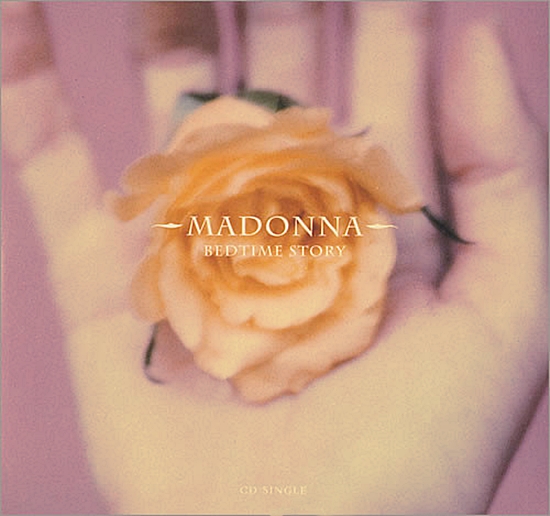
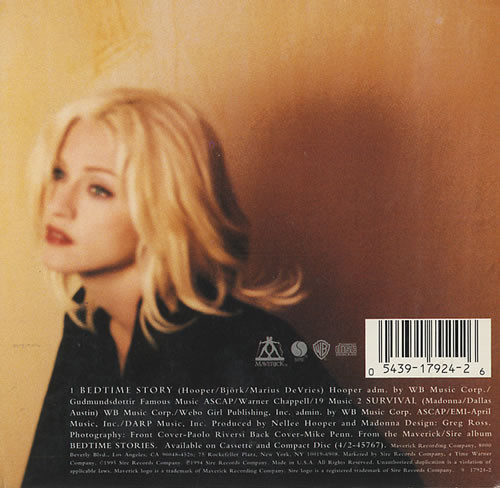
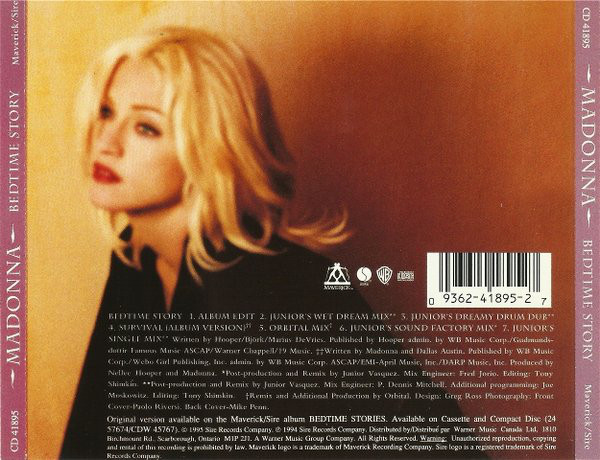
On April 13 1995, Bedtime Story was released by Maverick/Sire as the third single from the album Bedtime Stories in North America. The song was written by Björk, Nellee Hooper & Marius DeVries and produced by Madonna & Nellee Hooper. In both the U.S. and Canada the single and CD maxi-single were backed by the album opener, Survival.

The commercial maxi-single featured remixes by Junior Vasquez and Orbital. Additional promo-only remixes by Mark Picchiotti & Teri Bristol were also later serviced promotionally to clubs.

Bedtime Story was released in the UK in February following a poor reception to the album’s second single, Take A Bow.

It was the opposite situation in North America, where the third single was delayed for several months due to the prolonged chart-topping reign of Bow. Bedtime Story‘s more experimental, minimalist sound failed to gain traction on U.S. radio but did earn Madonna another #1 hit on the Hot Dance/Club chart.

Today in Madonna History: April 8, 1999

beautiful-stranger-US-sheet-music 550

On April 8 1999, American TV newsmagazine Entertainment Tonight (aka ET) revealed the title of the new song Madonna had recorded for the Austin Powers: The Spy Who Shagged Me soundtrack: Beautiful Stranger.

Beautiful Stranger launched to radio in mid-May and quickly became a sizeable summertime hit along with the Maverick Records-issued soundtrack album which landed in North American record stores on June 1st, 1999.

Today in Madonna History: April 3, 1993

fever uk cds fever uk cds inner

On April 3 1993, Fever entered the UK Singles Chart at its peak position of number-six. Without the support of a proper music video at the time of its release (Warner UK instead issued a rarely seen compilation video of previous clips), the single spent only six weeks on the UK charts, dropping to number-seven the following week.

Strangely, Madonna did eventually decide to film a video for the song in late April  – nearly a month after its release in Europe. By the time the video premiered during the second week of May, Fever was spending its final week on the UK Singles Chart.

In North America the remixes for Fever had been issued commercially on Madonna’s previous international single, Bad Girl. Fever was also serviced to clubs as a promotional single in its own right, but it was not promoted to radio despite the video being added to into rotation on MTV and MuchMusic. While the release of the music video managed to coincide with Fever’s single week atop the Hot Dance/Club Play chart, its number-one status had already been confirmed several days prior to the clip’s debut, making the video’s intended purpose and the timing of its release all the more puzzling.

Today in Madonna History: March 18, 2005

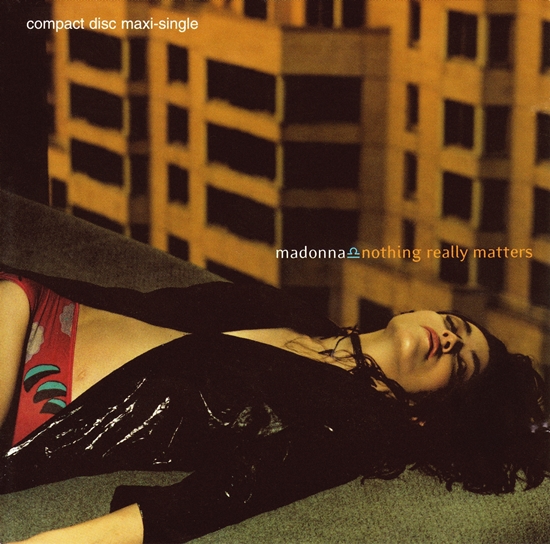
On March 18 2005, a resolution was reached in a UK copyright lawsuit (Coffey v Warner/Chappell Music Ltd. & Others) which alleged that elements of the Madonna & Patrick Leonard composition, Nothing Really Matters, had infringed on the copyright of claimant Elizabeth Coffey and her song, Forever After, performed by Peter Twomey.

The case took almost four years to reach the court and went under a considerable number of amendments by the plaintiff during that time. Coffey eventually alleged that the recording of Forever After included an original musical work, which consisted of the combination of vocal expression, pitch contour, and syncopation of or around the words “does it really matter,” but did not extend to the melody or lyrics surrounding those words.  She pleaded that the words “does it really matter” comprised the song’s lyrical hook and alleged that the copyright in Forever After was infringed by the defendants’ activities in relation to Nothing Really Matters.

In turn, the defendants moved to have the claim struck out as the method the plaintiff had identified the alleged copied elements was contrary to copyright law in general. Another defense offered was that, in any event, no copying had occurred.

The case was dismissed on the legal grounds that, in copyright, one cannot cherry pick the elements of the song that are the most similar in an attempt to build a stronger case. In his findings, the presiding Judge Blackburn, noted:
“The three somewhat elusive features identified by the claimant as her musical work cannot by any stretch of the imagination be said to be sufficiently separable from the remainder of the song as themselves to constitute a musical work. […] What the copyright work is in any given case is not governed by what the claimant alleging copyright infringement chooses to say that it is. Rather, it is a matter for objective determination by the court.”
A summary analysis and MIDI clip of the claimant’s song (which, incidentally, bears no perceivable resemblance to Nothing Really Matters) can be found here. The complete judgement in the lawsuit can be viewed here.

 

Today in Madonna History: March 16, 2004

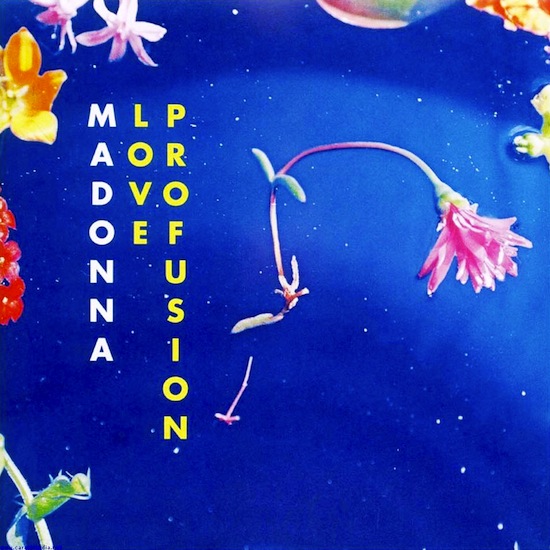
On March 16 2004, Love Profusion was commercially released in North America on CD maxi-single. In the U.S., a double 12″ vinyl edition of the maxi-single was also released one week later, on March 23rd. Written & produced by Madonna & Mirwais Ahmadzaï, Love Profusion was the fourth and final North American single release from the American Life album. In the UK, Warner chose to issue the song instead of Nothing Fails as the album’s third and final single in December, 2003.

Though lack of radio support kept Love Profusion from charting on the Hot 100 in the U.S., it nevertheless managed to top the Hot Dance/Club Play chart. North of the border, the track peaked at #3 on the Canadian singles chart.

North American pressings of the CD maxi-single included a fold-out tester square of the Estée Lauder fragrance Beyond Paradise. The television commercial for the fragrance featured the song Love Profusion – and although Madonna was replaced by supermodel Carolyn Murphy, it used the same computer-generated imagery as the music video’s “daylight” scenes. Both the video and the commercial were created simultaneously by director Luc Besson.