On September 19 2000, Madonna’s eighth studio albumMusic was released by Maverick Records. Music was released in some markets on September 18.
In anticipation of the release Madonna made this statement:
“Hey Mr. DJ, put a record on… Hi, it’s Madonna. You’ve probably been hearing about my new record, Music, for a while. Well, I just wanted to make sure you knew that the single is gonna drop very soon. I worked on it with a French guy named Mirwais, and he is the shit. The album will be released worldwide on September 19, and I hope you like my music.”
On September 18 2000, Madonna’s eighth studio album, Music, was released in the UK by Maverick and Warner Bros. Records.
The album was recorded at The Hit Factory in New York, the Guerilla Beach Studios in Los Angeles and the Sarm East and West Studios in London. The bulk of the album was produced by Madonna and Mirwais Ahmadzaï, with additional production by William Orbit, Guy Sigsworth and Mark “Spike” Stent.
Madonna had begun the project in the late summer of 1999 by resuming her collaboration with Ray Of Light co-producer, William Orbit. While the pair completed nearly an album’s worth of songs during these sessions, only three made the album’s final cut. Two others appeared on the soundtrack of The Next Best Thing, another became the theme of a short-lived TV series, while the rest stayed in the vault (though most, if not all, eventually found its way to the internet). It is clear listening to many of the leaked demos from the sessions that Madonna was ready to receive the shot of inspiration Mirwais would inject into the project.
Her new collaborator retained, and in some ways, expanded on the experimental spirit of Ray Of Light, but in contrast to Orbit’s layered, reverb-drenched warmth, Mirwais offered a cool, stark, less-is-more approach that took the album in a very different sonic direction, certainly matching if not building upon the creative success she had achieved with Orbit. If the previous album was successfully touted as a rebirth of sorts, she managed to avoid the sophomore album curse yet again with Music, offering a sound that was distinct and fresh. So fresh that it cast some shadow over the songs Mirwais didn’t have a hand in creating, although the haunting Orbit-produced album closer, Gone, remains one of her best exits.
While Madonna regrets little, she would rightfully retroactively pooh-pooh her decision to permit record execs to tack on previous UK #1 hit, American Pie, as a bonus track outside North America. The cash-in rang a hollow note, coming in on the heels of soulful lyrics about a refusal to sell out.
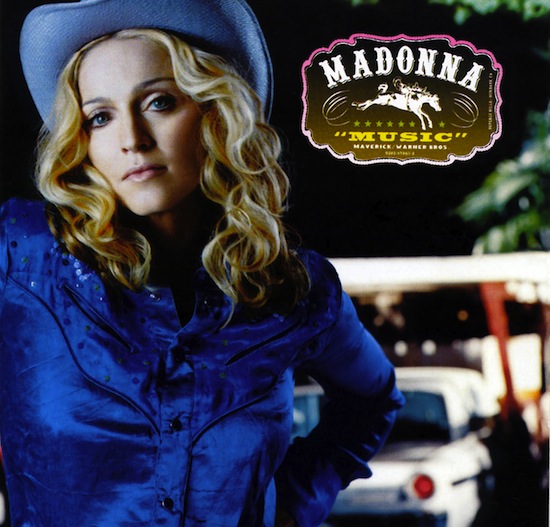
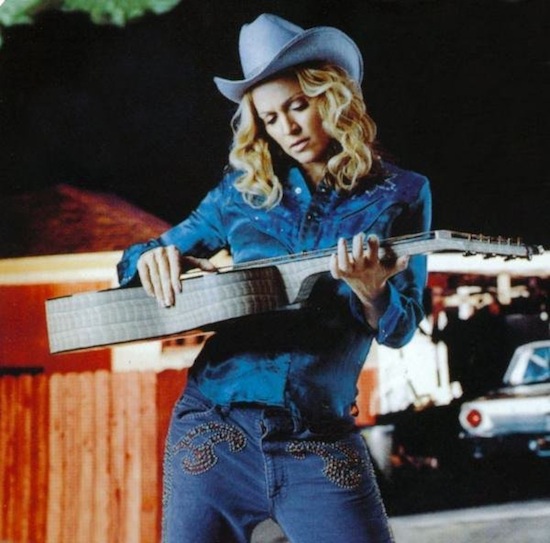
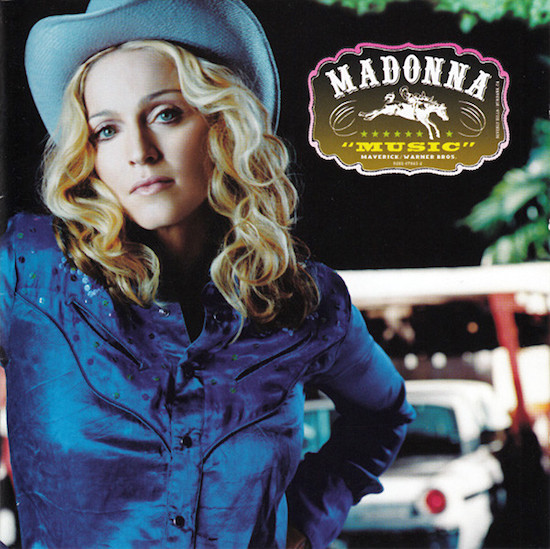
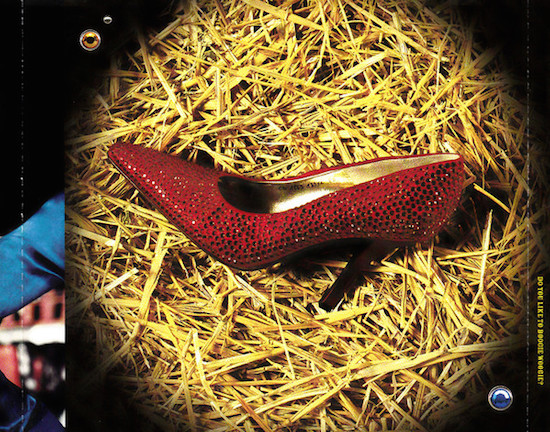
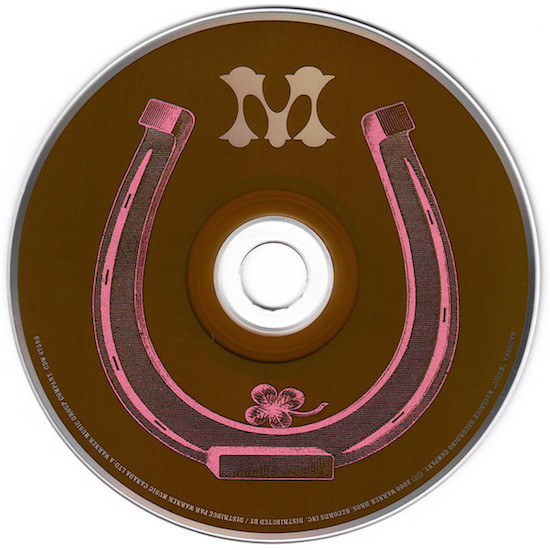
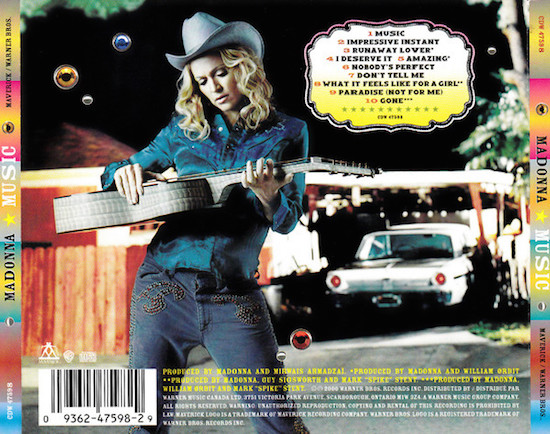
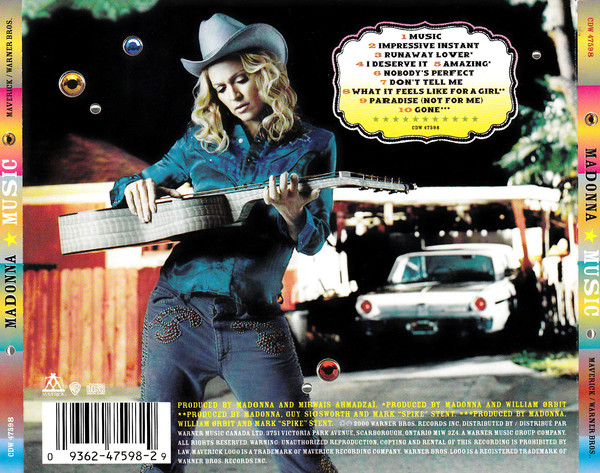
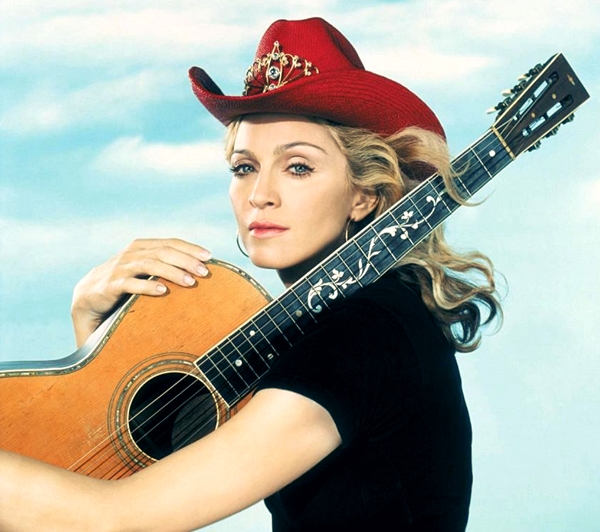
Madonna adopted a cowgirl/country theme for the album, with the album artwork photographed by one of her longtime collaborators, Jean Baptiste Mondino. The photo session took place in the spring of 2000, before the album had been fully completed and mixed, in order to conceal her pregnancy. Madonna has stated in interviews that her goal with album art has remained relatively consistent through the years: it should resonate with the album’s musical/lyrical themes while also capturing an element of timelessness.
North American tracklist for Music:
Music (written & produced by Madonna & Mirwais Ahmadzaï)
Impressive Instant (written & produced by Madonna & Mirwais Ahmadzaï)
Runaway Lover (written & produced by Madonna & William Orbit)
I Deserve It (written & produced by Madonna & Mirwais Ahmadzaï)
Amazing (written & produced by Madonna & William Orbit)
Nobody’s Perfect (written & produced by Madonna & Mirwais Ahmadzaï)
Don’t Tell Me (written by Madonna, Mirwais & Joe Henry; produced by Madonna & Mirwais)
What It Feels Like For A Girl (written by Madonna & Guy Sigsworth; produced by Madonna, Sigsworth & Mark “Spike” Stent)
Paradise (Not For Me) (written & produced by Madonna & Mirwais Ahmadzaï)
Gone (written by Madonna, Damian Le Gassick & Nik Young; produced by Madonna, Orbit & Stent)
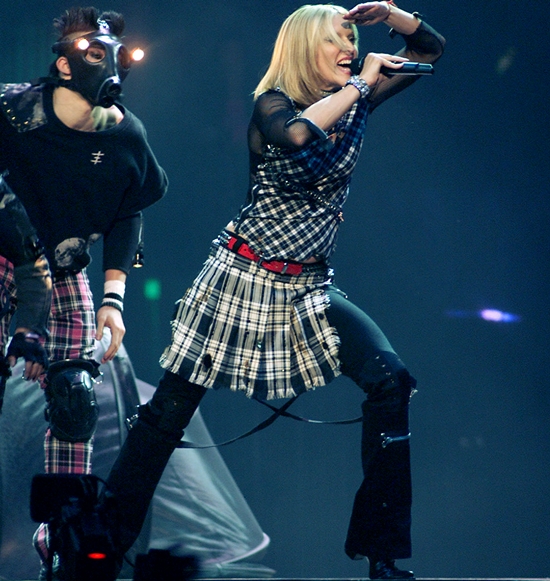
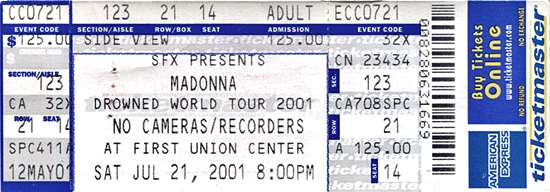
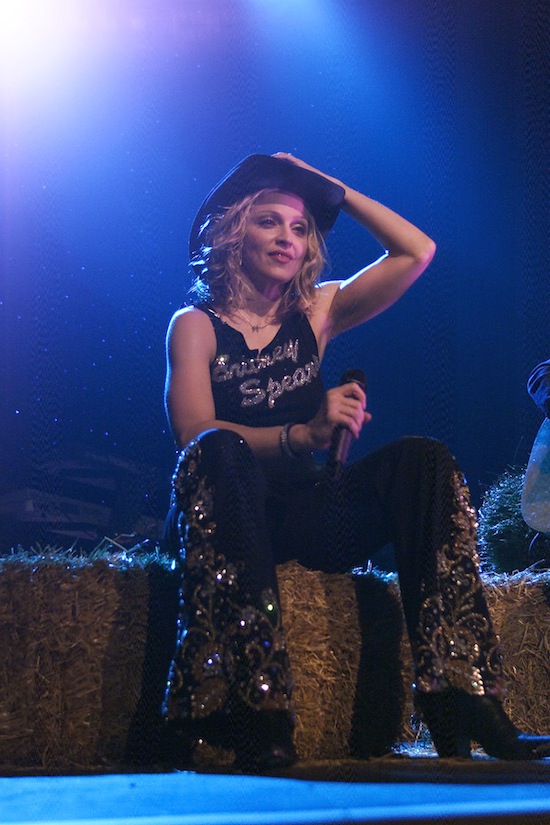
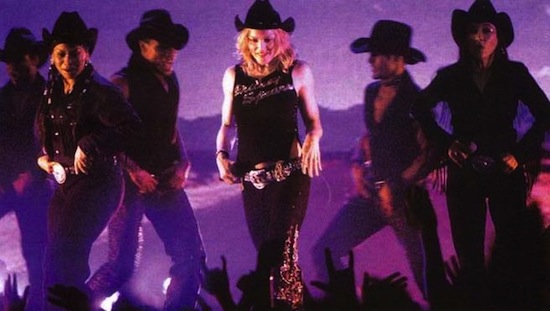
On July 21 2001, Madonna kicked off the U.S. leg of her Drowned World Tour with the first of two sold-out concerts at the First Union Centre (now the Wells Fargo Centre) in Philadelphia.
For the first time in her career, Madonna altered one of her tour set lists by performing You’ll See in the place Gone at select shows during the U.S. leg of the tour. You’ll See made its live debut at the July 21st show in Philadelphia and was performed again the following night. The decision to alter the set list was rumoured to have been made in response to European reviews of the tour, which despite being generally favorable, often lamented the show’s overabundance of new material and lack of hits.
Personally, we were pleased that the Ray Of Light and Music albums were the primary focus of the Drowned World Tour. If she had instead focused on hits, it is likely that these two essential Madonna albums would have been treated similarly to Bedtime Stories–an album from which she has yet to perform anything other than its four released singles.
Were you disappointed at the time by the lack of hits and the focus on recent album cuts during the Drowned World Tour? Have your views shifted at all in retrospect?
On February 21 2001, Kevin Reagan won a Grammy award for Best Recording Package for Music.
Reagan had collected the same award two years earlier for his art direction on Madonna’s Ray Of Light album. He would go on to win it a third time in 2003 for The Dixie Chicks’ Home.
On November 18 2000, Madonna’s Music maxi-single spent its final week at #1 on Billboard’s Hot Dance Music Maxi-Single Sales chart in the U.S. following an amazing eleven consecutive week run at the top of the chart.
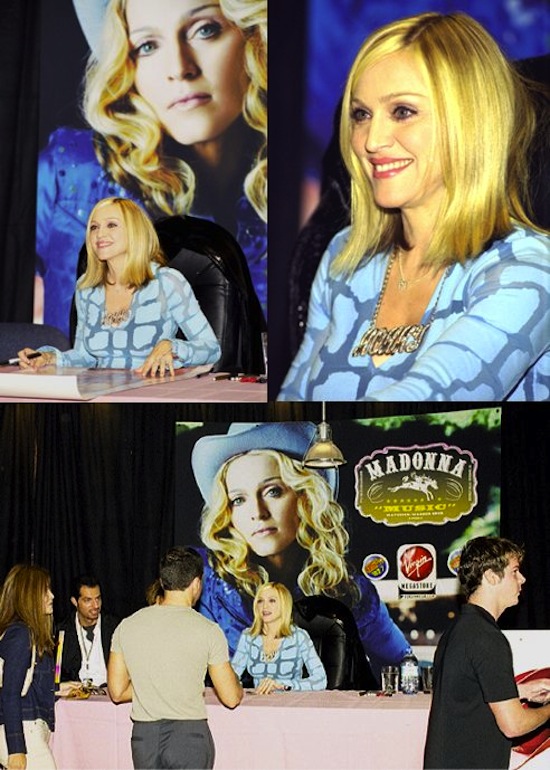
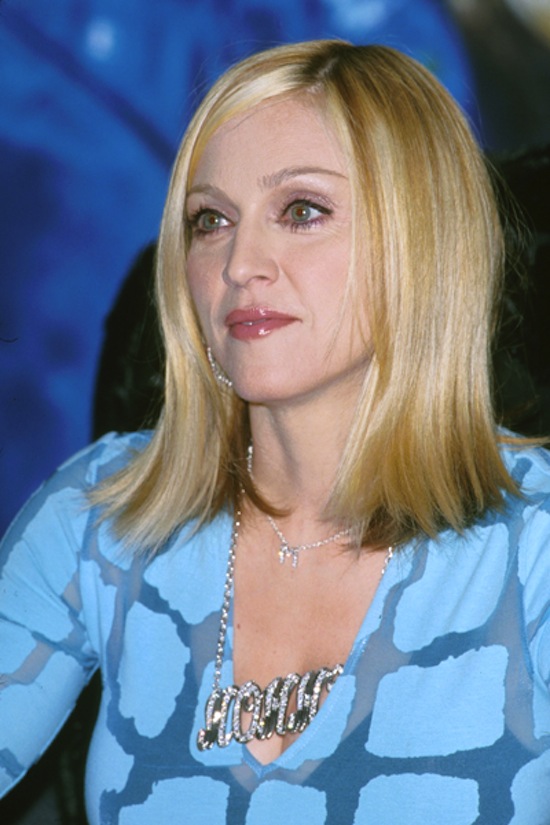
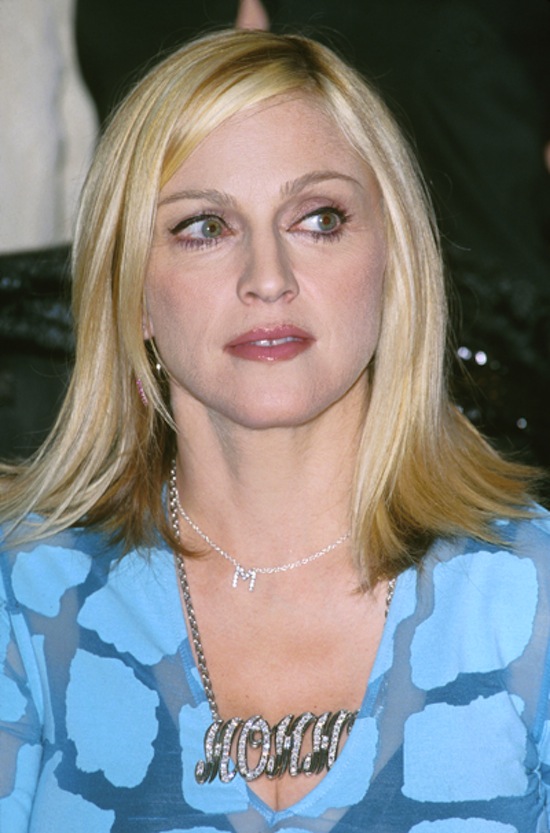
On September 22 2000, Madonna made a surprise in-store appearance at the Virgin Megastore in West Hollywood, California, to sign copies of her Music CD.
Did you attend? Do you have a Madonna autograph? What does it say or look like?












 Today In Madonna History