Today in Madonna History: March 26, 1983

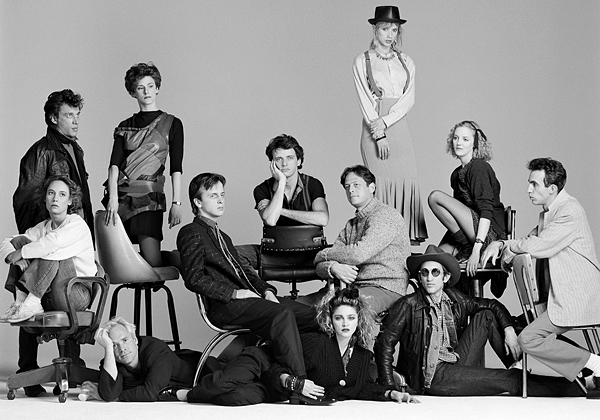
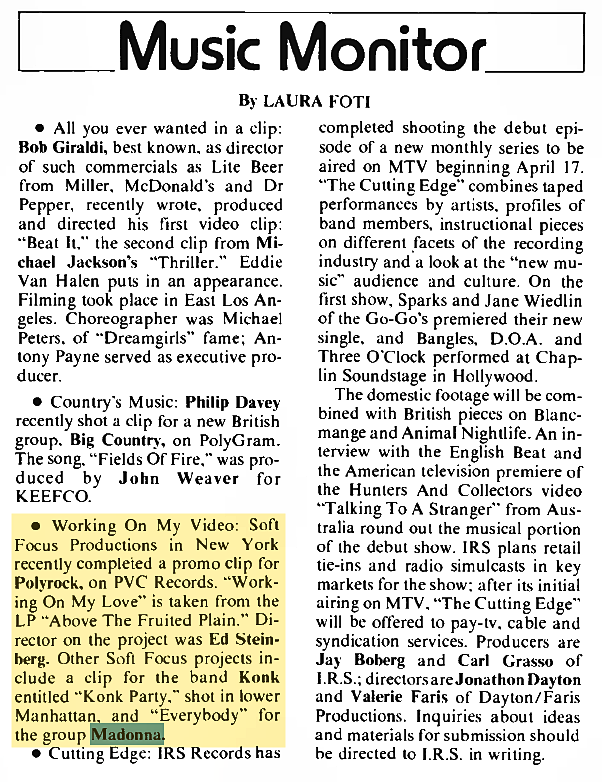
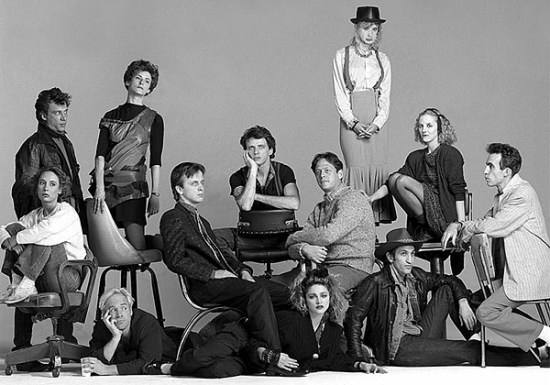
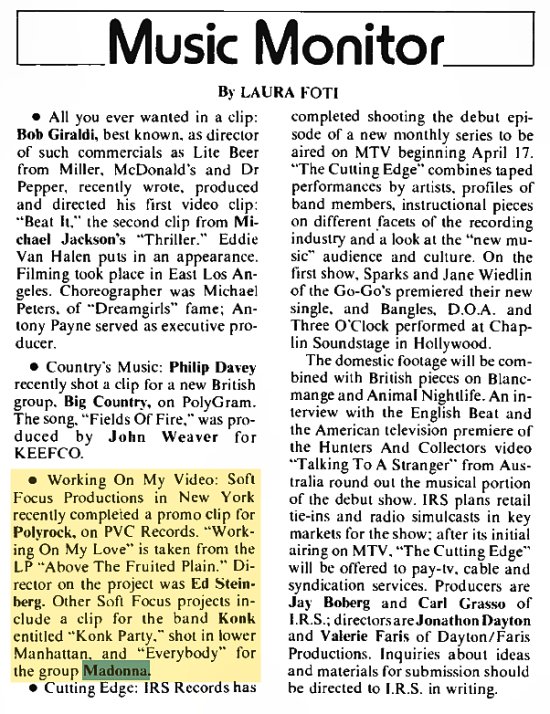
On March 26 1983, the music video for Madonna’s Everybody was briefly mentioned in Billboard magazine along side the music video for Konk’s Konk Party, noting that both videos were directed by Ed Steinberg of Soft Focus Productions. What is not mentioned and likely not known to the columnist (considering they think Madonna is the name of a group!) is that Madonna appears as an extra in Konk Party along with her pals Erika Belle and Martin Burgoyne. Original Sonic Youth drummer and member of Konk, Richard Edson, is also featured in the video. Edson would later appear in the film Desperately Seeking Susan, holding open a newspaper box for Madonna, and is pictured prominently next to Madonna in the film’s cast photo – which is unusual considering the brevity of his time on-screen. He worked with Madonna again in 1988, playing the character of Johnny Crackow in the film, Bloodhounds Of Broadway.

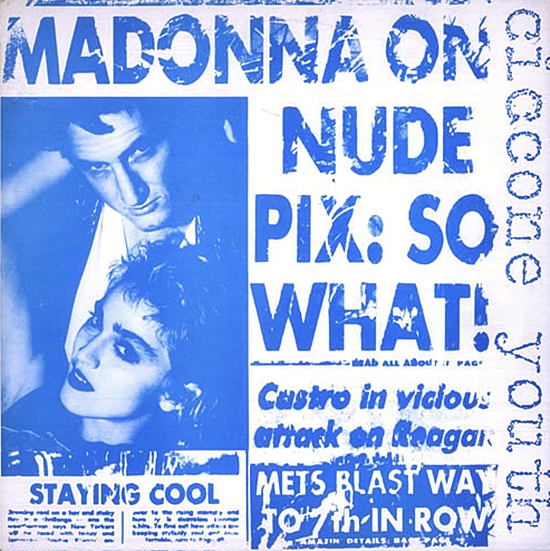
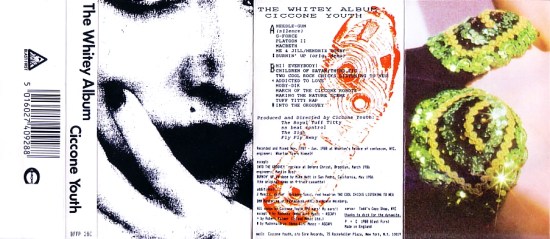
Sonic Youth would explore their own fascination with Madonna with their side project, Ciccone Youth. In liner notes for Sonic Youth’s reissue of their landmark album, Daydream Nation (1988), the band revealed that they had given an advance copy of Ciccone Youth’s The Whitey Album (1988) to Madonna’s sister, who was working in Warner’s art department at the time, seeking Madonna’s approval for the use of her image on the album cover (her songs Into The Groove & Burning Up were also covered & sampled). Word came back that Madonna had no issues with it, adding that she remembered the band from their early days in New York.

Sonic Youth made humourous references to Madonna’s place in popular culture in their promotional artwork throughout the 80’s – typically designed by bassist/vocalist/guitarist and visual artist, Kim Gordon. They were even known to use Madonna’s music as interludes during guitar changes at their shows in the 80’s, bewildering audience members who were not privy to their shared origins as part of the early 80’s underground music scene in NYC.

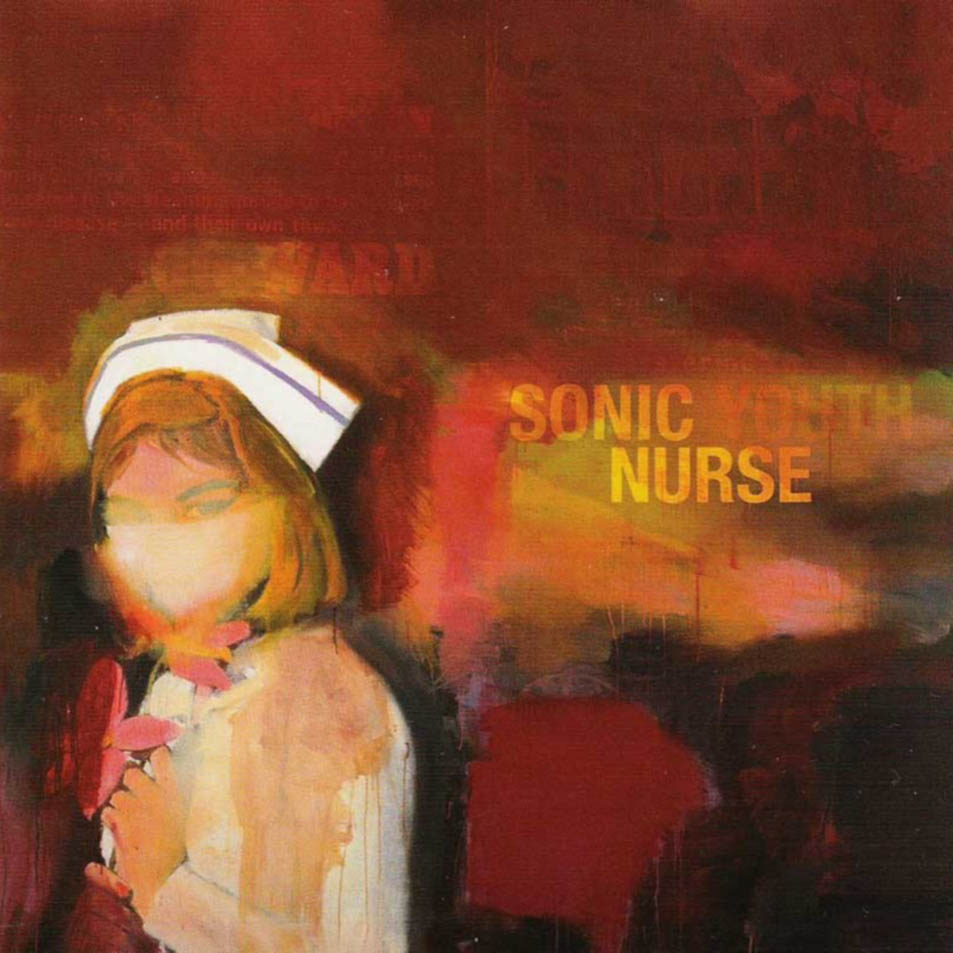
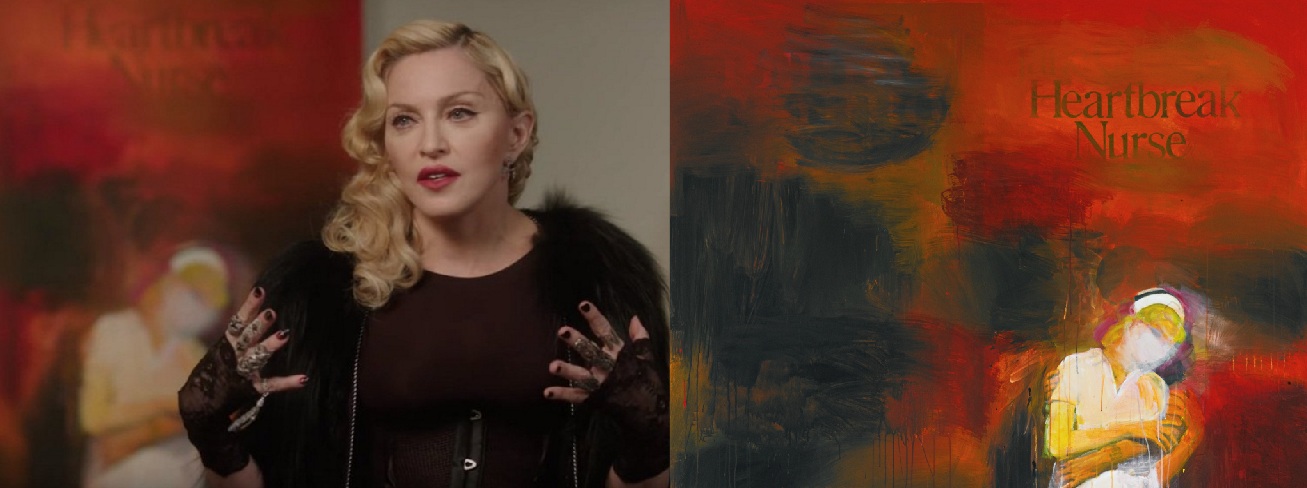
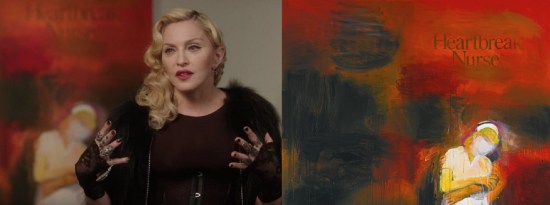
In another connection, Sonic Youth’s 2004 album, Sonic Nurse, featured artwork from Richard Prince’s acclaimed Nurse Paintings series. In 2015, Madonna used a rotating selection of paintings from her own art collection as backdrops for a series of press junket interviews to promote her Rebel Heart album. One of the paintings displayed was Prince’s Heartbreak Nurse from his Nurse Paintings series.

Today in Madonna History: February 13, 1999

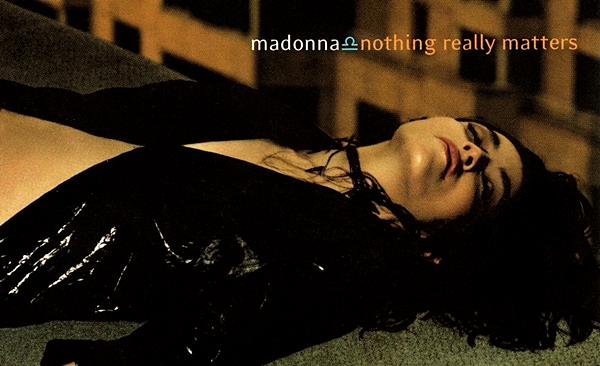
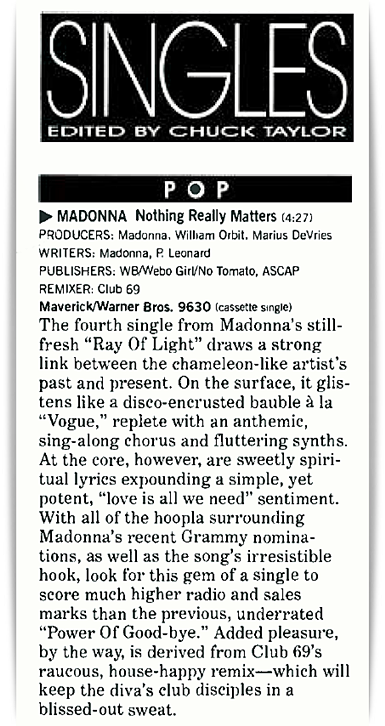
On February 13 1999, Madonna’s Nothing Really Matters single was reviewed by Billboard magazine.

The North American two-track single for Nothing Really Matters included the album version of To Have And Not To Hold as its b-side.

Prior to the release of the Ray Of Light album, it was reported that Madonna had fourteen tracks mastered but wanted to cut one, as she felt that thirteen was a lucky number. According to the article, Madonna’s final selection was between two songs: To Have And Not To Hold or Has To Be.

As we all know, Has To Be ended up being cut from the final track list (except in Japan, where it was included as a bonus track).

If you had to choose between including To Have And Not To Hold or Has To Be on Ray Of Light, which song would you include? Keep in mind, your selection should not simply be which individual track you prefer – Madonna would also have had to consider how her choice would affect the overall flow and emotional arc of the album, both musically and lyrically.

Today in Madonna History: December 16, 1989

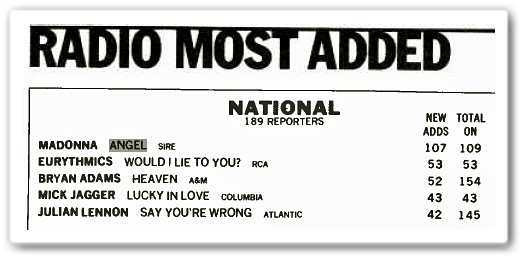
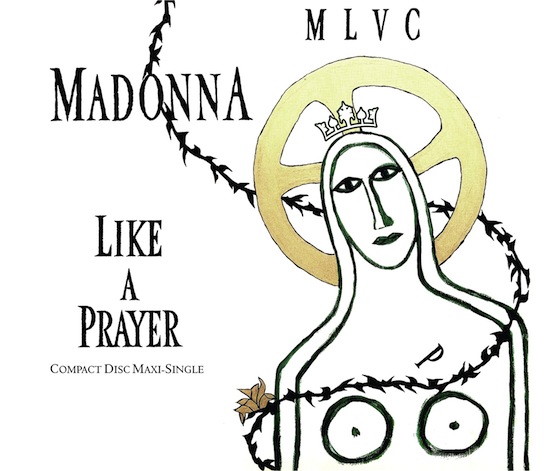
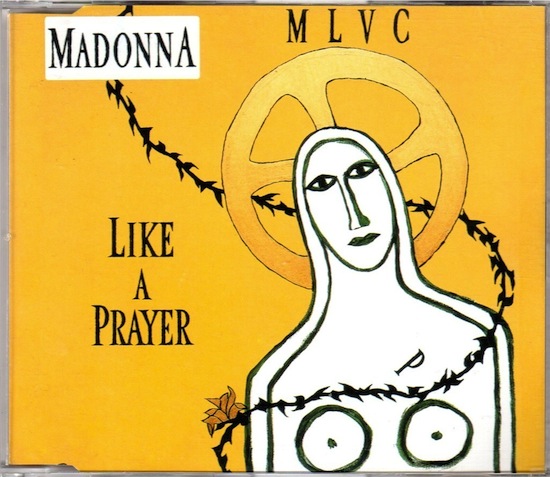
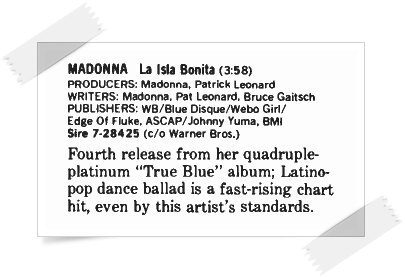
On December 16 1989, Billboard magazine’s dance music section reported that Madonna had written and recorded a new song with Shep Pettibone titled Vogue. The article noted that the track was set to appear on the b-side of Madonna’s next single, Keep It Together.

These plans would soon change when it was decided that Vogue had too much hit potential to be released as a b-side, and it would instead be issued as a single in its own right once Keep It Together had run its course on the charts. In Europe, where Keep It Together was not promoted as a single, it would in fact be used as the b-side to Vogue.

Vogue would go on to become the best-selling physical single of Madonna’s career.

Today in Madonna History: November 6, 1982

billboard-dance-chart-nov-6-1982 billboard-dance-trax-sidebar-nov-6-1982-600

On November 6 1982, Madonna lost her chart virginity with her very first appearance in Billboard magazine, as Everybody made its debut on the Hot Dance/Club chart (then titled Dance/Disco Top 80). Fittingly foreshadowing her long-term, record-shattering success on the Dance chart, it was the week’s highest new entry.

Dance music commentator Brian Chin also gave a favorable nod to the song in the same chart’s editorial sidebar. Considering Sire Records’ initially stunted marketing strategy had its limited bets set on a faceless, imageless Madonna shrouded in mystery, Chin’s miscasting of her as “a young New York duo produced by DJ Mark Kamins” is humourously forgivable, if not ironic in retrospect, considering her destiny to become the inequivical Queen of the dance charts.

We would venture to predict that Madonna was likely less amused by the gaffe. Enter Liz Rosenberg? 😉

everybody-pr

Today in Madonna History: November 4, 1995

On November 4 1995, Madonna’s You’ll See was reviewed by Billboard magazine’s Larry Flick. Written & produced by Madonna & David Foster, the song of self-empowerment served as the lead single from her collection of ballads, Something To Remember.


Today in Madonna History: October 17, 1987

On October 17 1987, Billboard magazine featured a two-page spread taken out by Madonna’s manager, Freddy DeMann, thanking everyone involved with Madonna’s massively successful Who’s That Girl World Tour, which had wrapped up in Europe the month before.

In the same issue of Billboard, Chart Beat columnist Paul Grein marked Madonna’s 13th consecutive top-5 hit as Causing A Commotion moved into the #5 position on the Hot 100. Speculating on how long Madonna’s winning streak could last, he warned of the dangers of over-exposure and artistic complacency. Without the benefit of hindsight, the back-handed compliment and slightly patronizing advice is not altogether unreasonable, and is certainly not unusual for the time.

Less reasonable, however, is his summation that the severity of Madonna’s potential fall from grace would be compounded by the abundance of female singers of the era who “sound like Madonna”.

Because you know, all female singers are only that – female singers. Even though you’re co-writing and co-producing your own songs and radio can’t get enough, neither can your audience or even your peers, you’re breaking records set by top male and female artists alike, you’re selling out stadiums around the world and earning high praise as a live performer – don’t think any of these things should afford you any respect. You may not have entered the business through the back door and you may have paid your dues and then some, but you’ve still just been lucky, that’s all. You couldn’t possibly possess the talent or the drive to evolve or the insight to be able to stay in the game once your luck runs out. Even though you are the one that everyone is copying – you’re still just another female singer, and they’re a dime a dozen.

While we no longer need hindsight to spot the glaring absurdity and blatant sexism of such an argument today, would it be as obvious if Madonna hadn’t stuck around to dispel it?

Today in Madonna History: September 28, 1983

On September 28 1983, Billboard magazine reported that the music video for Madonna’s second single, Burning Up, had been added into MTV rotation during the preceding week. The video marked Madonna’s introduction to MTV audiences, as the channel had not previously aired the low-budget clip produced for Everybody.

Although the Burning Up/Physical Attraction single had already been out for six months by the time a video finally surfaced, it featured a new mix of the song (which differed from both the 12″ single and from the version that appeared on original vinyl pressings of the album) and was seemingly intended to promote her debut album as a whole rather than the song itself, given that Burning Up had not been actively promoted to radio by her label. Just weeks before the video’s release, Sire/Warner had issued promotional 12-inch copies of Lucky Star/Holiday to gauge public interest for her next single release, and were apparently caught off guard by the swift success of the latter track, as no video or remixes had been readied to promote it.

Indeed, the label’s somewhat haphazard early steps in marketing the album gave very little indication of its impending success.