


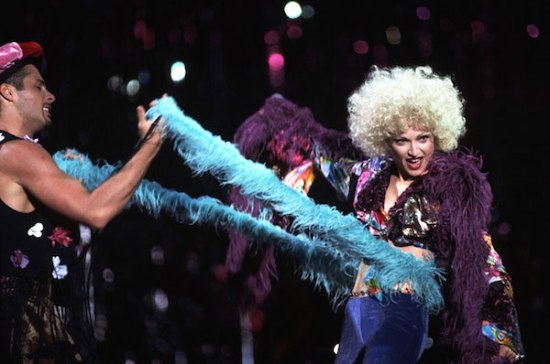

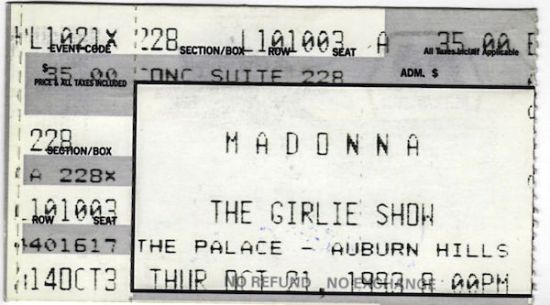
On October 21 1993, Madonna performed The Girlie Show for a sold-out crowd of 15,000 fans at The Palace of Auburn Hills in Auburn Hills, Michigan.
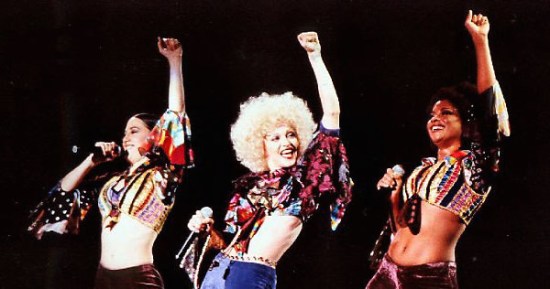

On October 21 1993, Madonna performed The Girlie Show for a sold-out crowd of 15,000 fans at The Palace of Auburn Hills in Auburn Hills, Michigan.
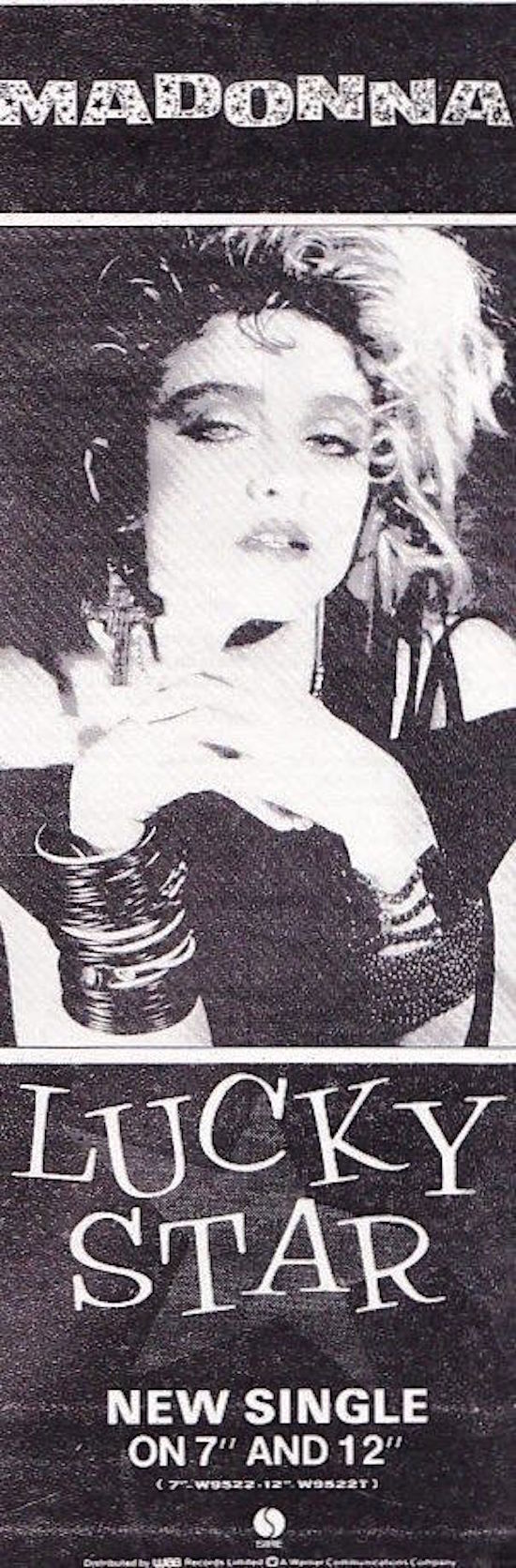
On October 20 1984, Madonna’s Lucky Star hit #4 the Billboard Hot 100 Singles chart in the USA.
Jellybean Benitez said this of the Lucky Star recording session:
“She was unhappy with the whole damn thing, so I went in and sweetened up a lot of music for her, adding some guitars to Lucky Star, some voices, some magic. I just wanted to do the best job I could do for her. When we would play back Holiday or Lucky Star, you could see that she was overwhelmed by how great it all sounded. You wanted to help her, you know? As much as she could be a bitch, when you were in the groove with her, it was very cool, very creative.”

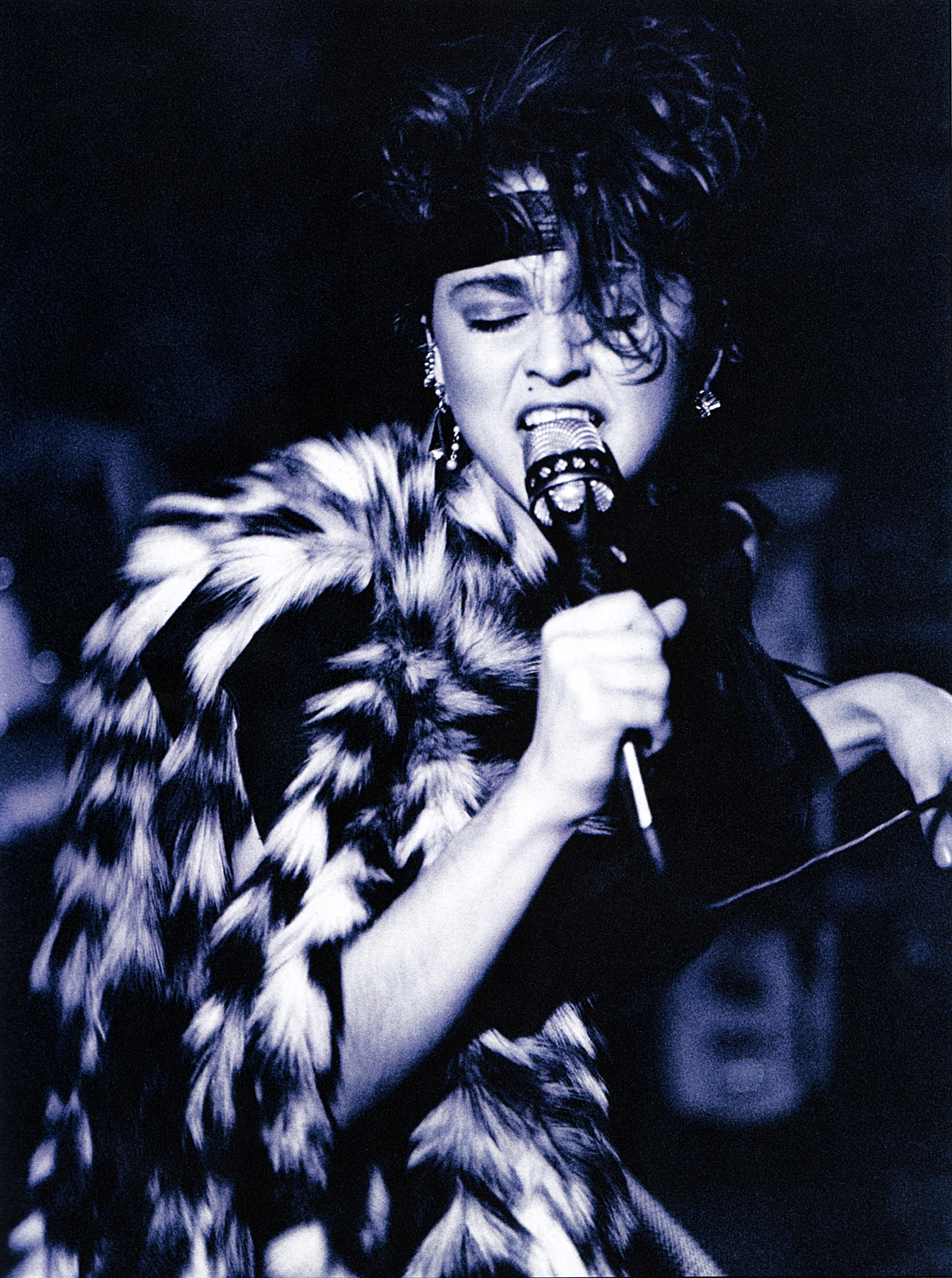
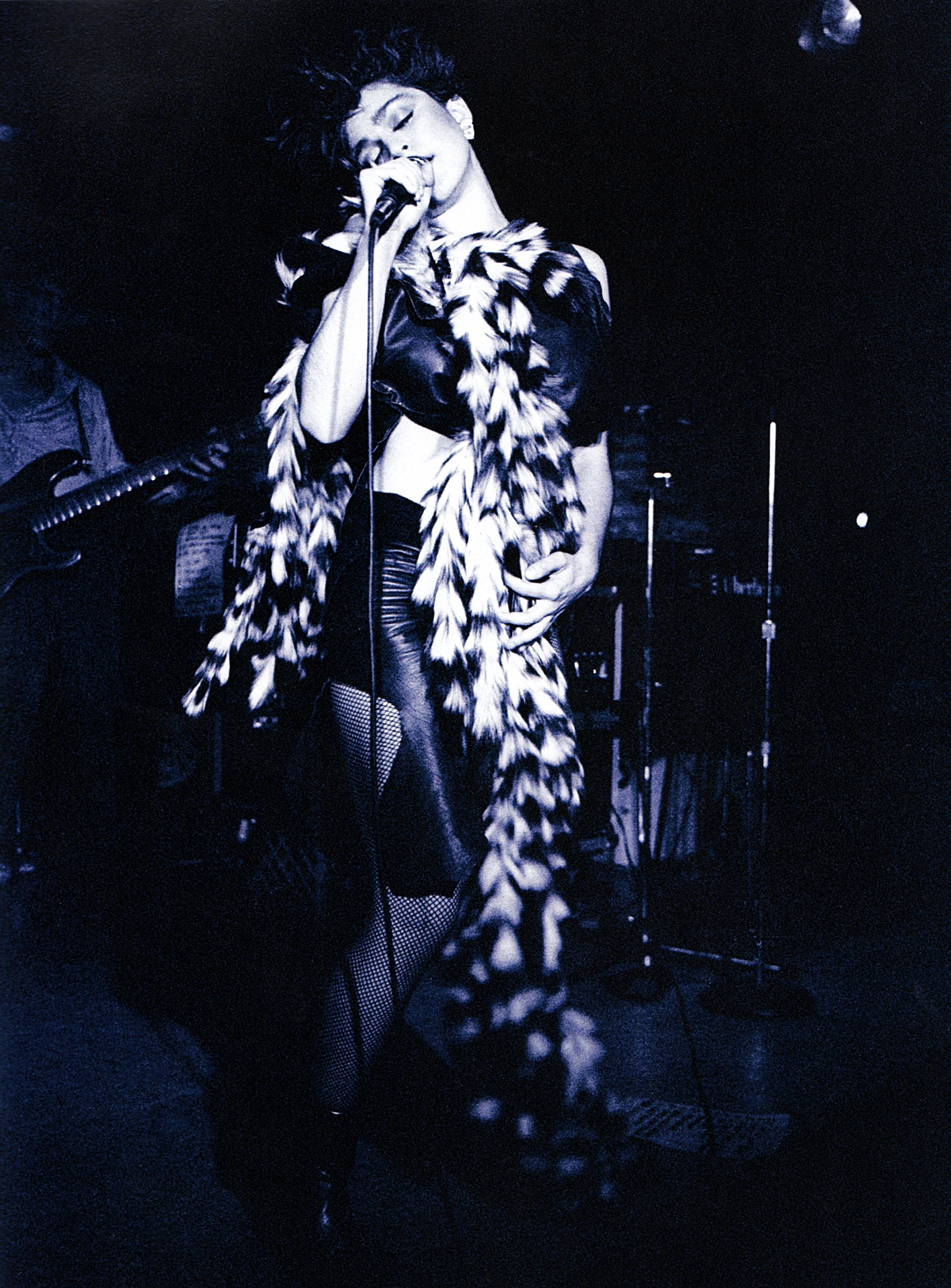
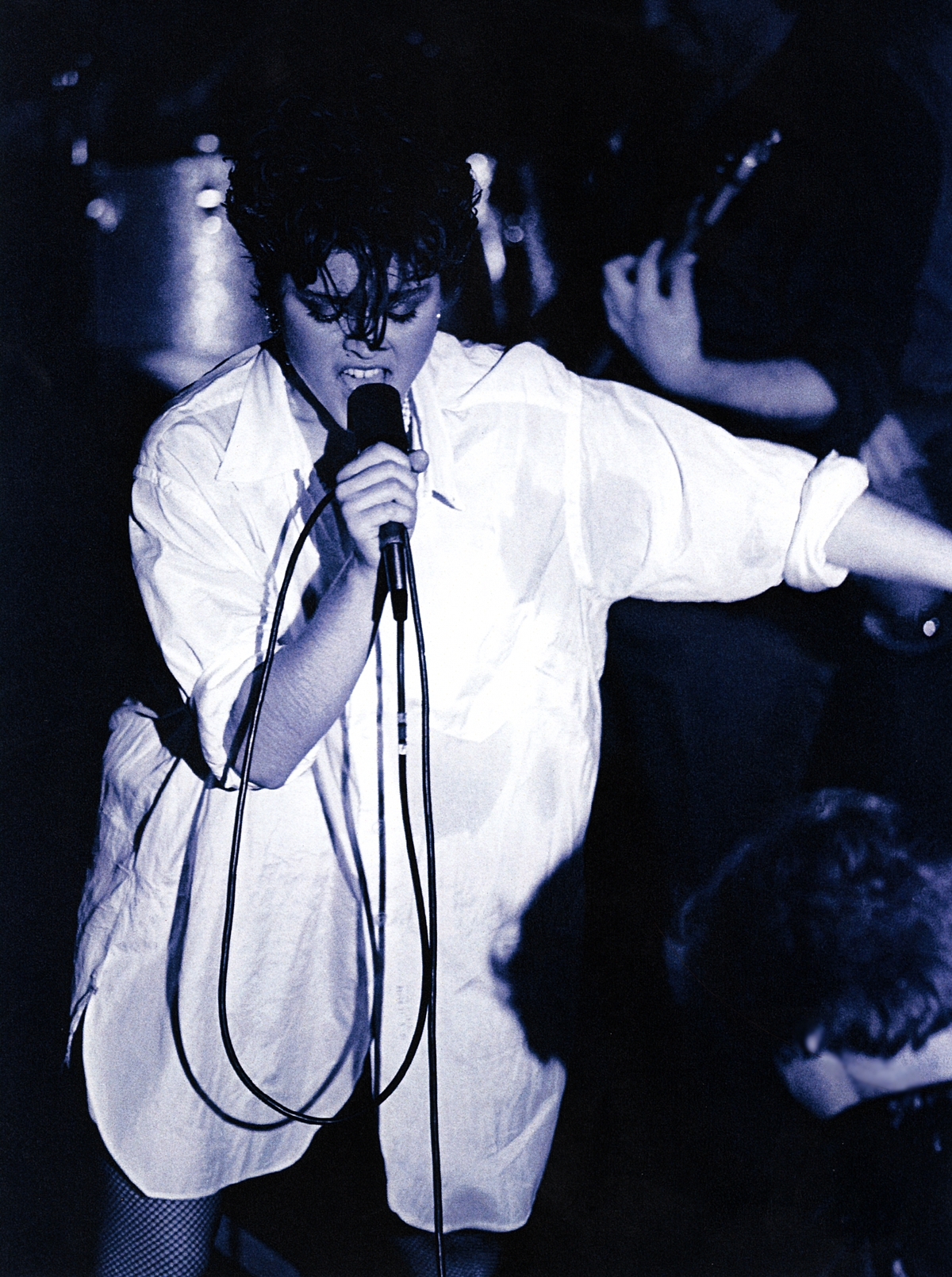
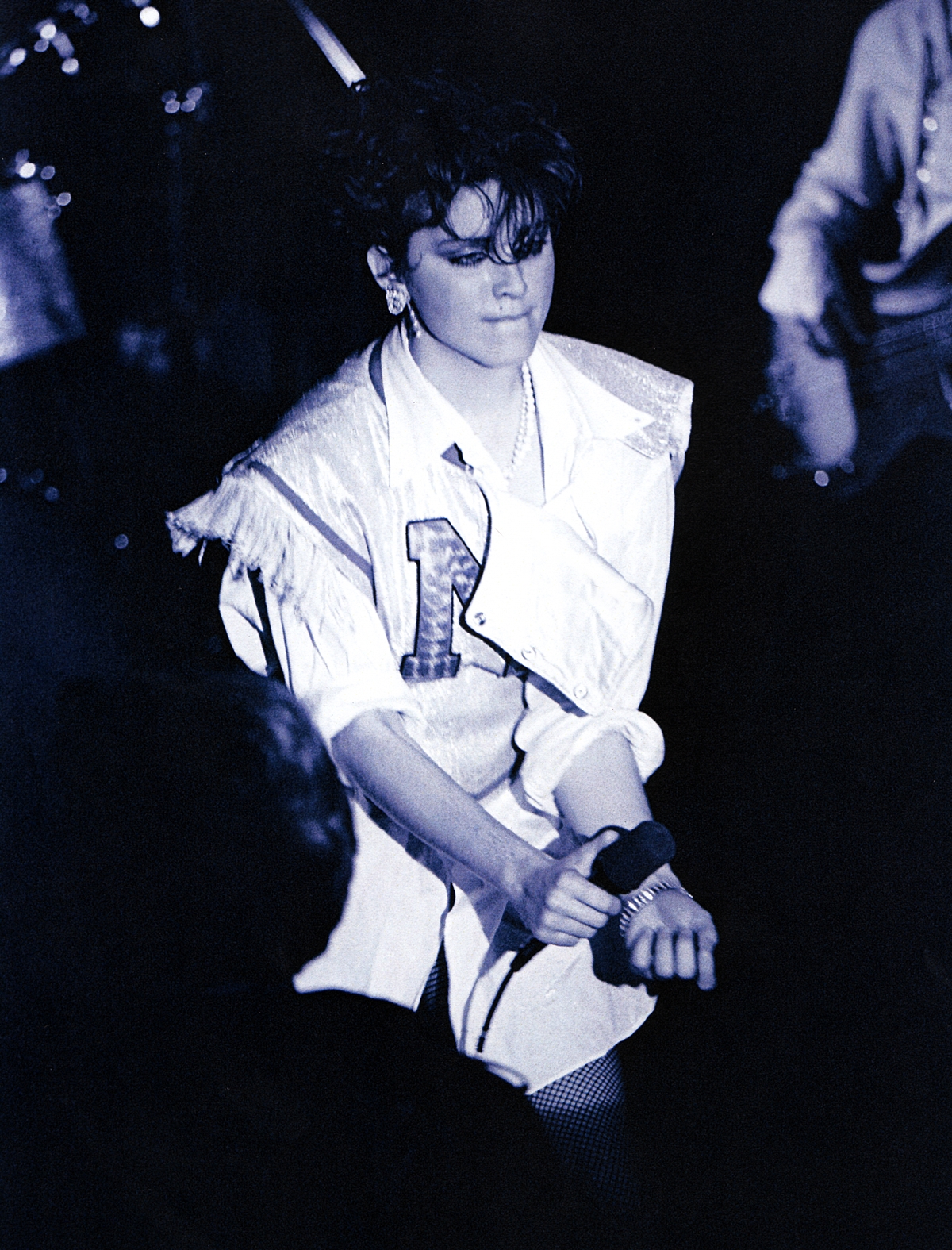
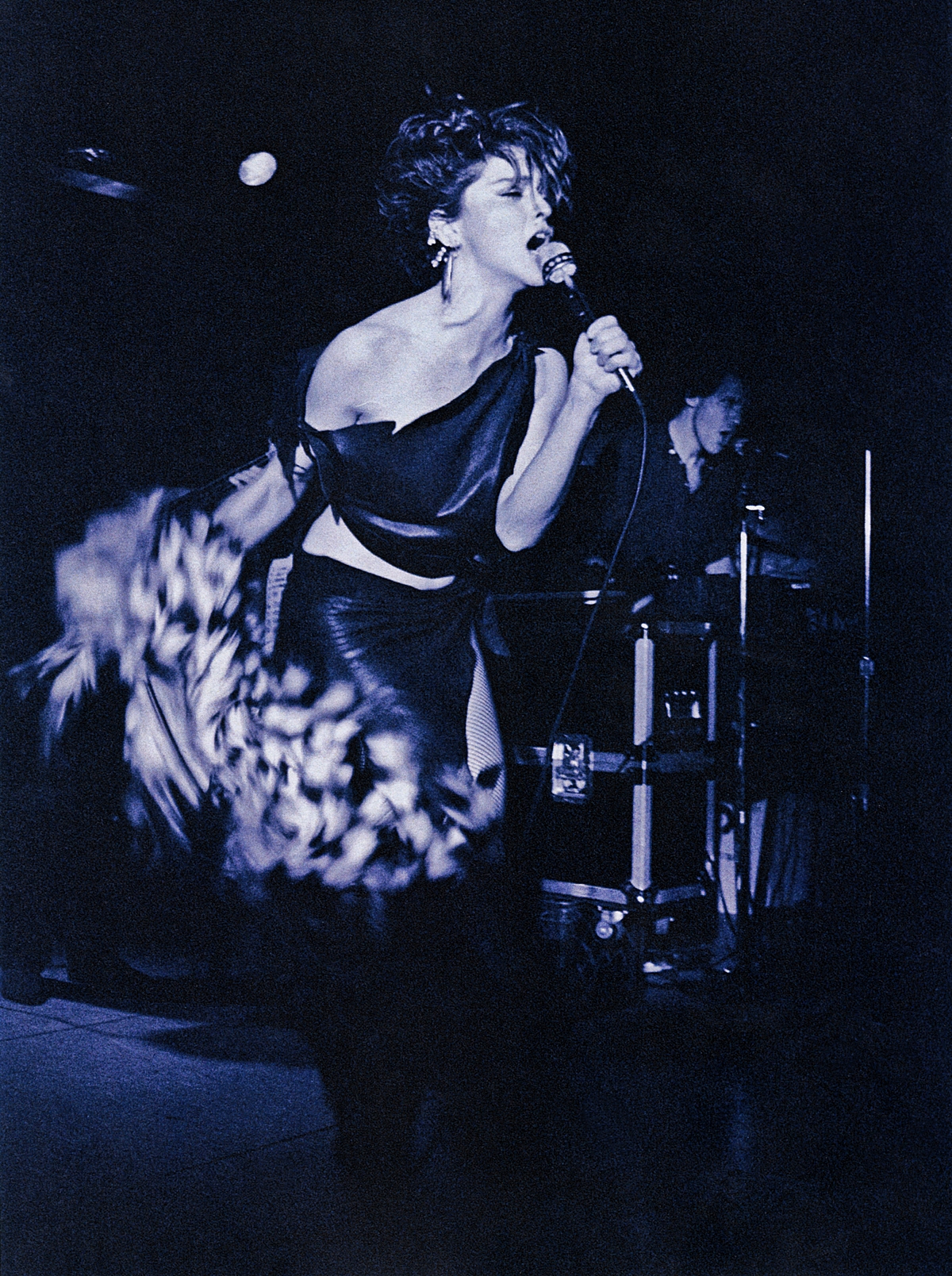
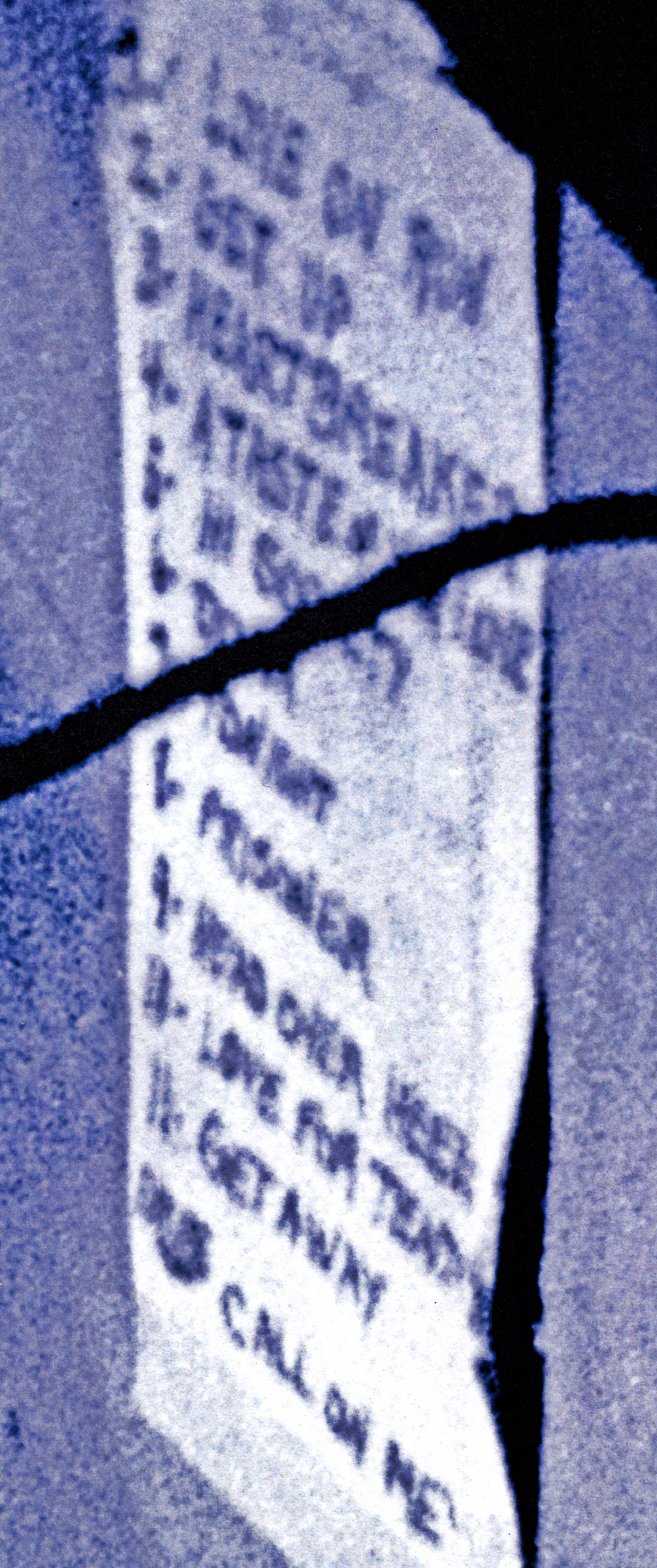


On October 19 1981, Madonna performed at Uncle Sam’s Blues Club in Roslyn, NY. Her manager at the time, Camille Barbone, had hired photographer George DuBose to capture Madonna’s two sets that evening.
Madonna’s band during the show consisted of Bob Riley on drums (later replaced by Steve Bray), John Kumnick on bass, Jon Gordon on guitar (later replaced by Paul Pesco) & David Frank on keyboards. When Madonna terminated her management agreement with Barbone in early 1982, she continued her working relationship with Bray, Pesco & Frank.
Steve Bray would co-write tracks that would appear on Madonna’s demo tape which landed her a recording contract with Sire Records later that year, and their collaboration remained successful throughout the 80’s.
Paul Pesco played guitar (along with Madonna herself) on the aforementioned demo and would also appear on Madonna’s self-titled debut album and her first concert tour, The Virgin Tour. Years later, he played on the Erotica album and joined Madonna’s touring band again for The Girlie Show in 1993.
David Frank, who soon found success as half of the electronic music duo The System, co-wrote an early version of Crimes Of Passion with Madonna before she decided to rewrite the music with Bray. The System’s hit In Times Of Passion is based on his ideas for the song but feature new lyrics from The System’s vocalist, Mic Murphy. Frank was also involved with the mysterious Otto Von Wernherr demos, believed to have been recorded in early 1982 prior Madonna’s deal with Sire, as he is credited for arrangement on the 1986 Japanese 12-inch release of Cosmic Climb (his name was subsequently omitted from Wernherr’s later releases).
Interestingly, The System’s other half, Mic Murphy, co-wrote the unreleased Erotica-era demo Dear Father with Madonna in the early 90’s. Pesco, who may have played guitar on this demo given his involvement during the album sessions, was also the guitarist for The System.

On October 18 1986, Madonna’s True Blue debuted at #27 on the Billboard Hot 100 Single Sales chart. True Blue spent 10 weeks on the chart, eventually peaking at #4 on November 15.
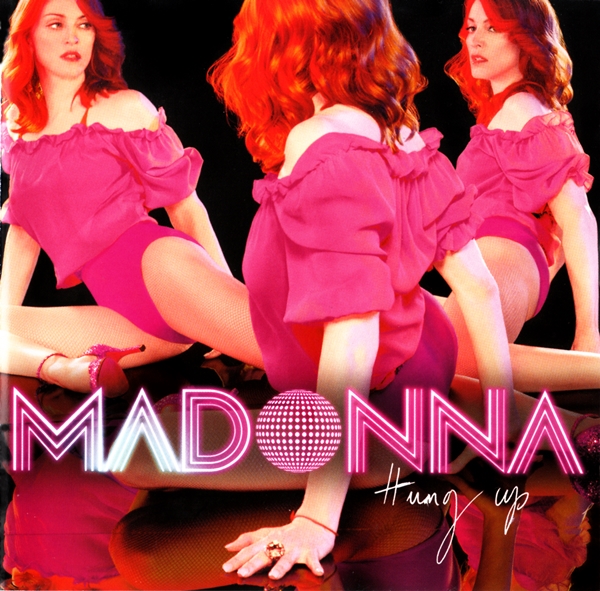
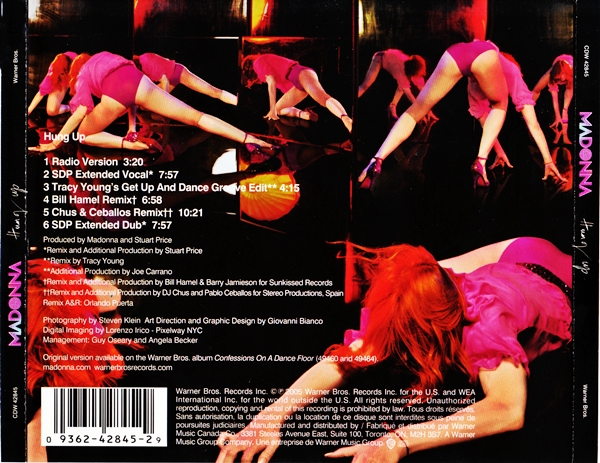
On October 17 2005, Hung Up was released by Warner Brothers Records as the lead single from the album Confessions On A Dance Floor.
Written & produced by Madonna & Stuart Price (with additional sampling credits to ABBA’s Benny Andersson & Björn Ulvaeus), Hung Up had initially been previewed instrumentally in a September 2005 commercial for Motorola’s ROKR mobile phone. Price had also teased a dub remix of the track to unknowing audiences during his DJ sets throughout the previous year.
The single was Madonna’s first to be released digitally through iTunes.
In an interview with The Daily Telegraph from October 2005, Benny Andersson spoke about their decision to allow Madonna to sample ABBA’s 1979 hit, Gimme Gimme Gimme (A Man After Midnight):
We get so many requests from people wanting to use our tracks but we normally say ‘no’. This is only the second time we have given permission. We said ‘yes’ this time because we admire Madonna so much and always have done. She has got guts and has been around for 21 years. That is not bad going.”
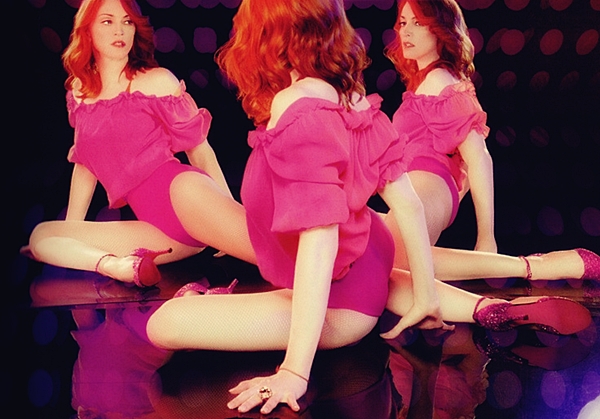

On October 16 2002, Billboard released their review of Madonna’s Die Another Day:
The theme to the latest James Bond instalment, Die Another Day, is certainly a far cry from the melodic musings of Shirley Bassey, Nancy Sinatra, Paul McCartney, and even Duran Duran. Die Another Day in many ways picks up on the heels of Madonna’s inventive, experimental Music — thanks to her reunion with writer/producer Mirwais Ahmadzai — with a predominance of squiggly blips and zaps and enough effects on Madonna’s vocal to render it practically non-human. It’s an odd number, somewhat disjointed, a bit nonsensical, and not so much melodic as a highly stylized jam — but one must never underestimate the motivations of the long-and-lasting Madonna; and sure enough, with repeated listening, there are enough clever goings on and a hook that sinks into the consciousness to make this a captivating journey. James Bond purists may find themselves fitful that the traditional melodrama that marks such theme songs is remiss here, but radio jumped on the track weeks ahead of its official release, which will certainly fan the flames of publicity for the upcoming flick, out Nov. 22 in the U.S. On the horizon: an onslaught of remixes. Score another bull’s-eye for Madonna.


On October 15 1998, an article by Chuck Philips ran in the LA Times regarding a dispute between the principal shareholders of Maverick Records – Freddy DeMann, Guy Oseary and Madonna.
A feud between the founders of Madonna’s Maverick Records, one of the most successful start-up labels of the decade, is threatening to undercut the label’s value if it goes up for sale next year. Sources said Maverick co-Chairman Freddy DeMann might leave the company before January with a buyout package worth more than $20 million. Representatives for Madonna, DeMann and Maverick minority owner Guy Oseary have been meeting regularly in Burbank to resolve the matter with senior brass at Time Warner’s Warner Music Group, which owns 50% of Maverick. None of the principals involved in the discussions would comment, but sources said Madonna and Oseary have wanted DeMann to leave for more than a year and have asked Warner to underwrite his exit. The disagreement is likely to undercut the trio’s bargaining power when its joint-venture deal with Warner runs out in July.
Maverick could command as much as $200 million on the open market if Warner chooses not to exercise its option to buy the company next year, sources said. The label has generated more than $750 million in revenue since 1992 selling music by such acts as Alanis Morissette, Prodigy and Candlebox. Discord among Maverick’s principals, however, has hampered the trio’s ability to attract suitors and has given Warner the upper hand in the negotiations, sources said. Indeed, one proposal on the table calls for Warner to put up the money to finance DeMann’s exit and possibly give Madonna and Oseary a higher stake in the label in exchange for a commitment from them to extend their joint venture with Warner for five to seven years, sources said.
The size of DeMann’s exit package will depend on what value the parties assign Maverick, sources said. DeMann is likely to walk away with at least $20 million to cover his 20% stake in Maverick but could be paid twice that amount before the talks conclude, sources said. DeMann is being represented in the negotiations by financier Jerry Perenchio, a longtime friend. One source said the 59-year-old DeMann is upset because he wants to sell Maverick in July and cash out, but Oseary and Madonna prefer to negotiate for a bigger stake in the company, with plans to sell in six years. Other sources, however, said DeMann is being forced out by Madonna and Oseary–who, until recently, have relied on his expertise to navigate their careers, as well as manage the record label now at the center of the dispute.
Madonna and DeMann launched Maverick in 1992 as a joint venture with Warner, which put up about $10 million to finance the partnership. Initially, the company was viewed as little more than a vanity label–a bargaining chip used by Warner to sweeten its offer during contract renegotiations with Madonna, who is signed to the company as a recording artist. DeMann had pitched the label concept to Madonna, whose career he had managed since her arrival on the pop music scene in the early 1980s. He then built the label from scratch, hired its staff and even came up with the company’s name–a combination of letters culled from Madonna, Veronica (the singer’s middle name) and Frederick (his first name).
One of DeMann’s first hires at Maverick was Oseary, a 19-year-old with virtually no experience in the music business who was a friend of DeMann’s daughter. DeMann took Oseary under his wing and gave him a job as Maverick’s artist and repertoire man, the employee responsible for discovering musical talent. Oseary delivered his first hit in 1993 with the Seattle rock act Candlebox, whose debut album sold 4 million copies. Oseary then came across a tape of Morissette, an unknown Canadian singer whose demo had been rejected by every major record company. He liked what he heard and played it for DeMann, who agreed to sign her to Maverick. The album eventually sold more than 28 million copies worldwide. Following Morissette’s success, Oseary’s profile rose dramatically. The young executive was rewarded with a minority stake in Maverick and tensions soon began to mount within the company, sources said.
In 1996, Madonna dumped DeMann as her manager and ultimately hired Q-Prime’s Cliff Bernstein and Peter Mench to represent her. A friend of Oseary’s is said to have helped facilitate the singer’s move to Q-Prime, sources said. Within a year, representatives for Madonna and Oseary began to lobby Warner for help in financing an exit package for DeMann, sources said. Warner turned the request down last October but resumed discussions with representatives for the trio a few months ago after rumors surfaced that Sony Music might be interested in acquiring Maverick or hiring Oseary and Madonna next year to start a new label, sources said.
It is unclear why Madonna, Oseary and DeMann couldn’t maintain a united front until after their Warner deal runs out in July. The dispute, however, appears to be heating up as Maverick prepares for the Nov. 3 release of Morissette’s follow-up album, one of the most widely anticipated projects of the year. During the last few weeks, executives from Warner have held meetings with Madonna’s attorney Allen Grubman, Oseary’s lawyer John Branca and DeMann’s representatives Perenchio and attorney Larry Kartiganer. While nothing has been decided, sources said the matter is expected to be resolved by the end of the year and possibly even before Morissette’s album hits the street.
 Today In Madonna History