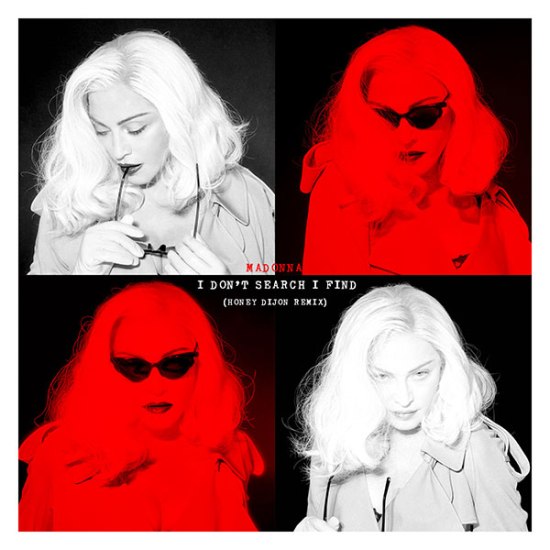
For the week ending January 18, 2020, Madonna’s I Don’t Search I Find climbs from #15 to #10 on Billboard’s Hot Dance Club Songs chart in the USA.

For the week ending January 18, 2020, Madonna’s I Don’t Search I Find climbs from #15 to #10 on Billboard’s Hot Dance Club Songs chart in the USA.
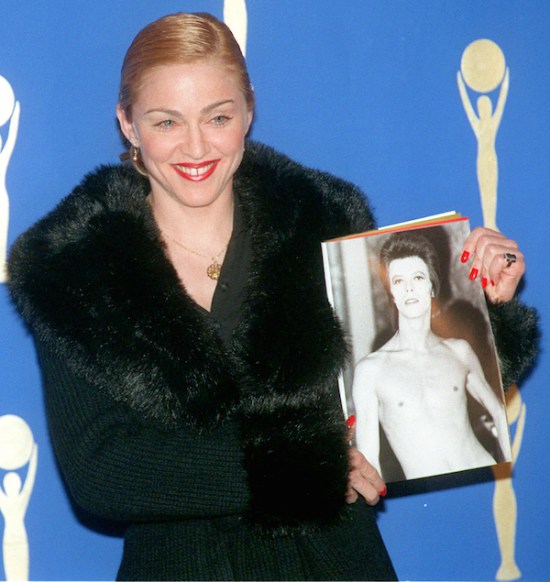
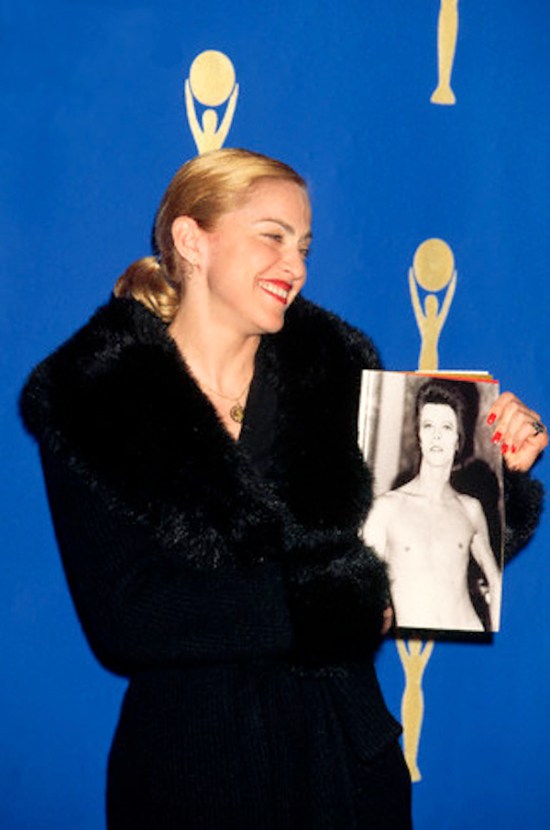
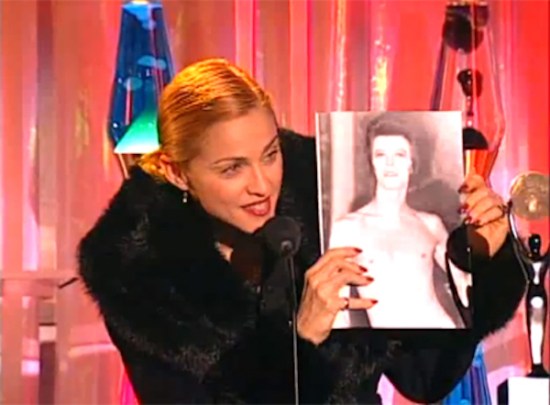
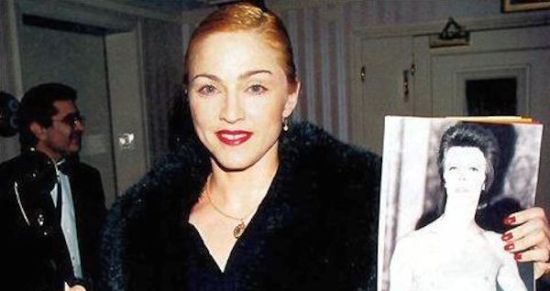
On January 17 1996, Madonna accepted David Bowie’s Rock and Roll Hall of Fame induction on his behalf.
During her speech, Madonna described how as a “normal, dysfunctional, rebellious teenager from the Midwest,” a David Bowie concert in June 1974 at Cobo Arena in Detroit changed her life for good:
“I don’t think that I breathed for two hours. It was the most amazing show that I’d ever seen, not just because the music was great, but because it was great theater. Here’s this beautiful, androgynous man, just being so perverse … as David Byrne so beautifully put it … so unconventional, defying logic and basically blowing my mind. Anyway, I came home a changed woman, as you can see, and my father was not sleeping and he knew exactly where I went, and he grounded me for the rest of the summer. But it was worth every minute that I sat and suffered in my house that summer.”
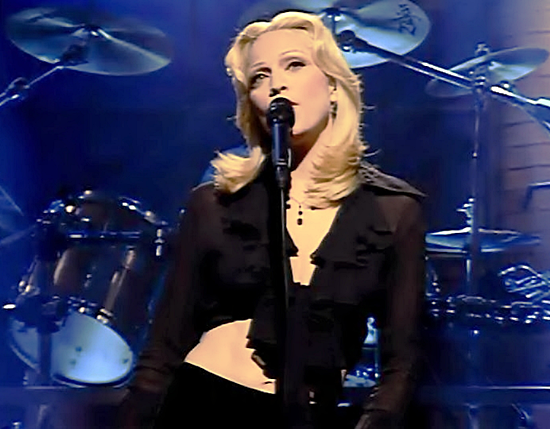
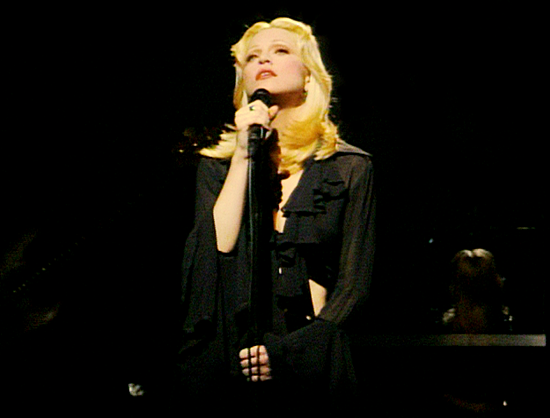
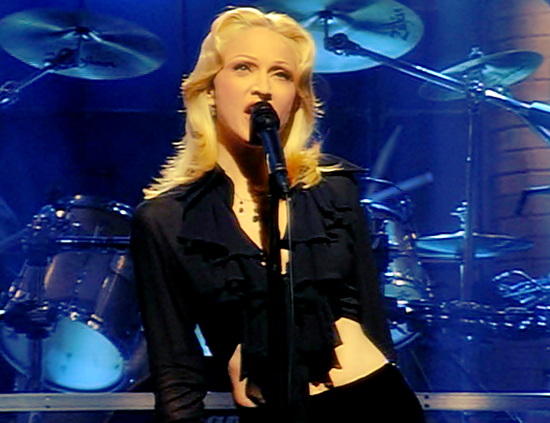

On January 16 1993, Madonna was musical guest on NBC-TV’s Saturday Night Live, performing Fever and Bad Girl. She also appeared in the show’s opening skit – a humorous homage to Marilyn Monroe – alongside the late comedians Phil Hartman and Jan Hooks.
Perhaps a little too into character or, more likely, a little too nervous – she managed to flub the show’s signature intro tag line during the live broadcast, with the mistake being subsequently edited out of all repeated airings of the episode.
Fortunately any nervous energy quickly dissipated once Madonna took to the musical stage, where she delivered a stunningly confident and nuanced vocal performance backed by an equally impressive new band (which included several members that would be recruited for her Girlie Show tour later in the year). It was Madonna’s only live performance of Bad Girl to date, and despite many appearances on SNL, her only inclusion as featured musical guest.
The episode was hosted by Harvey Keitel, who was only weeks away from working with Madonna again in the film Dangerous Game (then known as Snake Eyes) which began shooting in February.
Would you like to see Madonna return to SNL as musical guest?
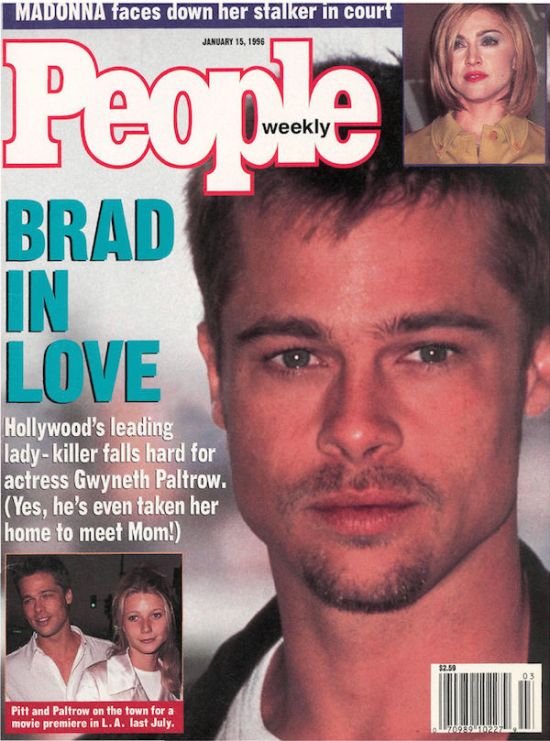
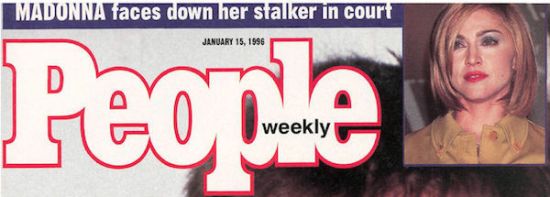
On January 15 1996, Madonna appeared on the cover of People magazine, with the title: Madonna faces down her stalker in court.
Here’s an excerpt from the issue:
At first glance, it looked like any other Madonna-centric media event, with scrambling news crews and ogling fans swarming around her black limousine. But as soon as she entered courtroom 116 in the L.A. Criminal Courts Building on Jan. 3, it became clear that this was no ordinary Madonna performance. Inside, a jury listened intently as the normally flamboyant singer, 37, dressed with subdued elegance in a black, knee-length suit, soberly delivered testimony against a 38-year-old drifter accused of stalking and threatening to kill her. “He was there to take me away; he wanted me to be his wife,” she said in measured tones. “If he couldn’t have me [he told my secretary], he would slit my throat, from ear to ear.”
Madonna’s hour-long testimony may bring to some kind of conclusion an unsettling series of events that began when Robert Dewey Hoskins was first found hanging around the singer’s Hollywood Hills estate. Hoskins showed up at Madonna’s home last April 7, jumping a security wall before being ejected from the 3.5-acre grounds by a private guard. (Madonna was not home at the time.) Returning from a bike ride with her personal trainer the following day, Madonna encountered Hoskins at her gate. “He looked homeless, dirty; his clothes were wrinkled, and he had a crazy look in his eyes,” she testified. His stare, she said, was “creepy…deranged. It was scary.” Hoskins said nothing but left a note that said, “I love you. You will be my wife for keeps.”
The appearances by Hoskins were unsettling enough, Madonna says, to persuade her to sell the estate, once the home of gangster Bugsy Siegel. Seven weeks later, while Madonna was in Florida, where she also owns a home, Hoskins was back, this time carrying a four-inch wooden heart with the oddly misspelled inscription “Love To My Wife Madnna.”

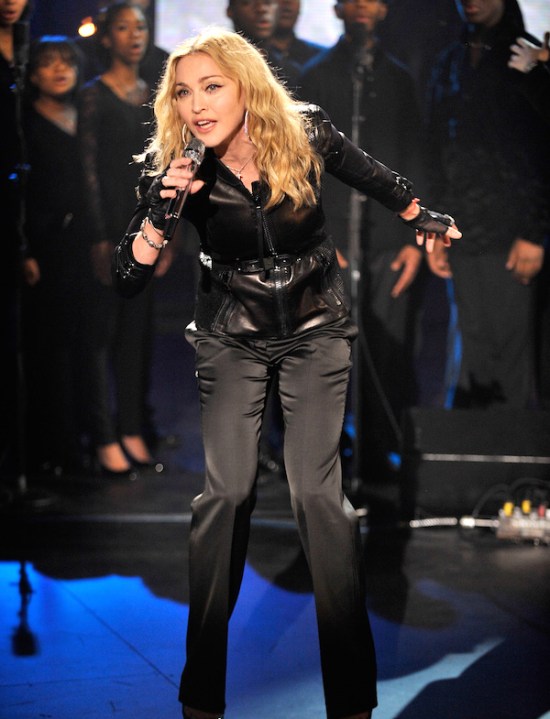
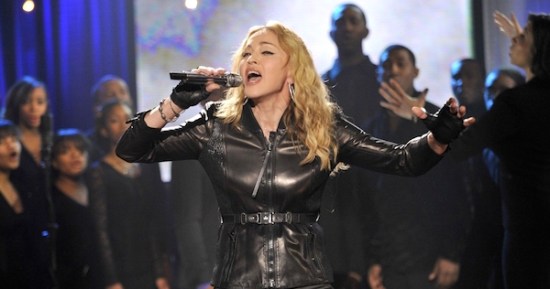
On January 14 2010, Madonna sent her condolences to the people in Haiti:
“My prayers are with the people of Haiti. I can’t imagine the terrible pain and suffering they are experiencing. Sadly the depths of the tragedy are just becoming known and the need for our support grows more urgent with every passing moment. I have given a donation of $250,000 to assist Haiti’s earthquake victims through Partner’s in Health (www.pih.org) one of Haiti’s leading health care providers. I urge all of my friends and fans around the world to join me collectively to match my contribution or give in any way you can. We must act now. Thank you for your support.”
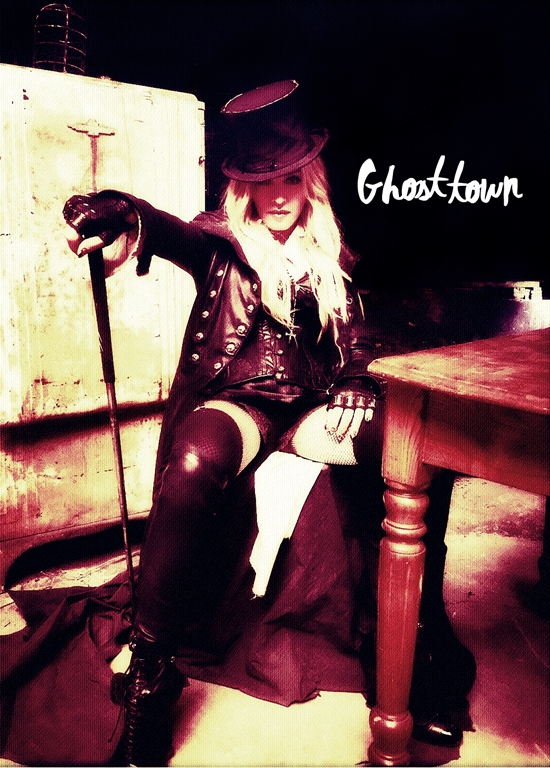
On January 13 2015, Billboard revealed that Michael Keaton’ son, Sean Douglas, worked on Ghosttown, one of the songs to be featured on Madonna’s Rebel Heart album. The songwriter said that the track was written in three days, after Madonna had personally requested some studio time.
“Madonna liked ‘Talk Dirty,’ actually, and so they put me and [co-writers] Jason Evigan and Evan Bogart in with her and we had this great session. I was incredibly nervous for obvious reasons, but she showed up, was super personable and was ready to work. I basically checked it off my life bucket list.”
Douglas is a successful pop songwriter whose credits include Top 40 hits for Jason Derulo, Demi Lovato and Fifth Harmony, among many others.
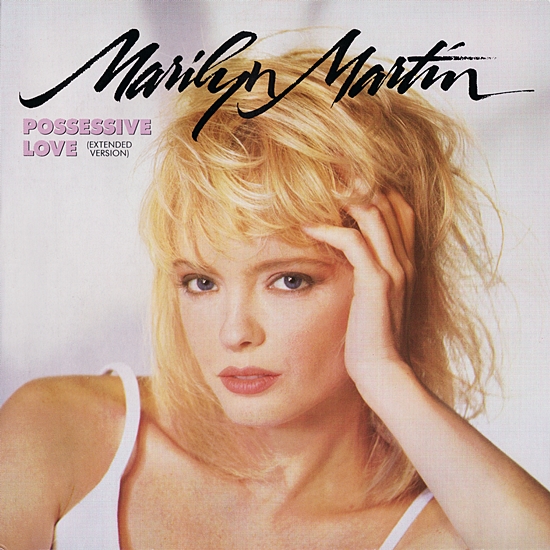
On January 12 1988, Possessive Love, a song written by Madonna, Patrick Leonard & Jai Winding and performed by Marilyn Martin was released as the lead single from Martin’s second album for Atlantic Records, This Is Serious. Martin is perhaps best known for her chart-topping duet with Phil Collins, Separate Lives. Though Possessive Love failed to make any chart impact, Madonna’s involvement in the song has kept it from being completely forgotten.
In an interview by Breathe Cast writer Timothy Yap, Martin was asked about the circumstances surrounding the song:
I met Pat Leonard when I began the search for a producer for my second album. He’s the one who approached Madonna with the idea of writing a song for me and she graciously agreed. Pat called me one day while he was working on her Like a Prayer album and asked if I would like to come and sing backgrounds [on Cherish]. Talk about an ‘Are you kidding?’ moment! That was the only time I met her. She was impressive to say the least. Very in charge. She absolutely knows her mind and insists on her music being true to her vision. She was very focused and a tad intimidating, but that’s not surprising given her amazing success over the years. I thought it was pretty cool that before agreeing to write Possessive Love for me to sing on my album she asked Pat Leonard if I was a nice person.”
Martin’s claim that the song was written specifically for her rather than being a leftover from one of Madonna’s album sessions is likely accurate, given the fact that Winding was never involved in songwriting sessions for any of Madonna’s albums. Winding’s involvement as a musician in the Who’s That Girl Tour suggests that the song may have been written at some point during the 1987 tour.
The sentiments expressed in Possessive Love appear to align with the issues Madonna was reportedly facing in her marriage to Sean Penn at the time, with reports of their initial separation dominating the tabloids in late 1987. Madonna would revisit and further elaborate on her marital woes on the Like A Prayer album track, Til Death Do Us Part, which was written later in 1988.
 Today In Madonna History