Today in Madonna History: July 12, 1986

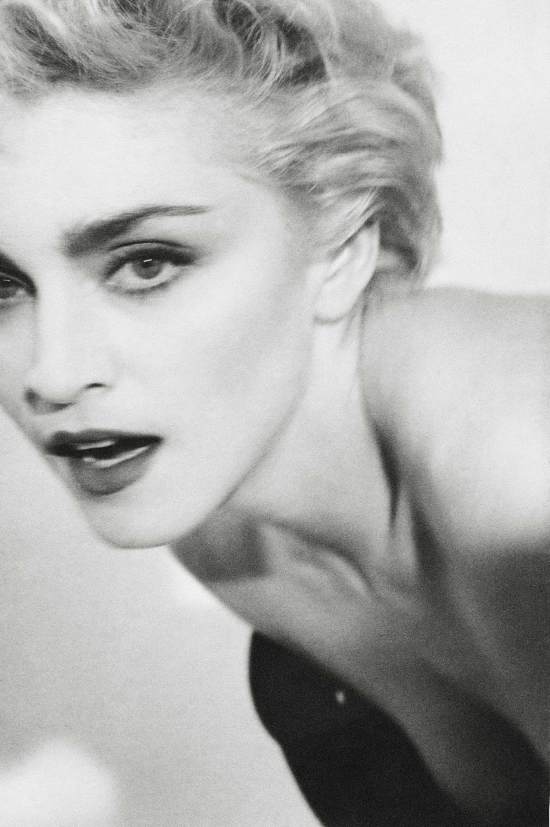
hb_tb-1On July 12 1986, Madonna’s third album, True Blue, debuted at #1 on the UK Albums Chart.

Here’s the AllMusic review of True Blue by Stephen Thomas Erlewine:

True Blue is the album where Madonna truly became Madonna the Superstar — the endlessly ambitious, fearlessly provocative entertainer that knew how to outrage, spark debates, get good reviews — and make good music while she’s at it. To complain that True Blue is calculated is to not get Madonna — that’s a large part of what she does, and she is exceptional at it, but she also makes fine music. What’s brilliant about True Blue is that she does both here, using the music to hook in critics just as she’s baiting a mass audience with such masterstrokes as “Papa Don’t Preach,” where she defiantly states she’s keeping her baby. It’s easy to position anti-abortionism as feminism, but what’s tricky is to transcend your status as a dance-pop diva by consciously recalling classic girl-group pop (“True Blue,” “Jimmy Jimmy”) to snag the critics, while deepening the dance grooves (“Open Your Heart,” “Where’s the Party”), touching on Latin rhythms (“La Isla Bonita”), making a plea for world peace (“Love Makes the World Go Round”), and delivering a tremendous ballad that rewrites the rules of adult contemporary crossover (“Live to Tell”). It’s even harder to have the entire album play as an organic, cohesive work. Certainly, there’s some calculation behind the entire thing, but what matters is the end result, one of the great dance-pop albums, a record that demonstrates Madonna’s true skills as a songwriter, record-maker, provocateur, and entertainer through its wide reach, accomplishment, and sheer sense of fun.
Today in Madonna History: July 4, 1987

july-4-wtg-tour-toronto-2a july-4-wtg-tour-toronto-2b july-4-wtg-tour-toronto-3

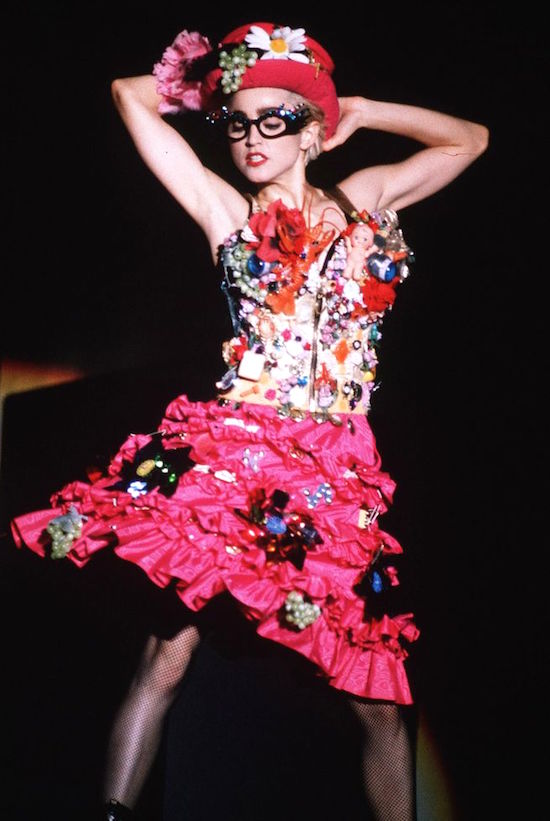
On July 4 1987, Madonna performed her Who’s That Girl show to a sold out crowd of 50,000 fans at the CNE Stadium in Toronto, Ontario.

Peter Goddard from the Toronto Star reviewed the concert and said:

“Madonna proved that she may be a lost girl in the roads of life, like her film, but she ain’t lost when she is singing. Especially during songs like ‘Papa Don’t Preach‘, her vocal prowess was substantially notable.”

Today in Madonna History: July 3, 2006

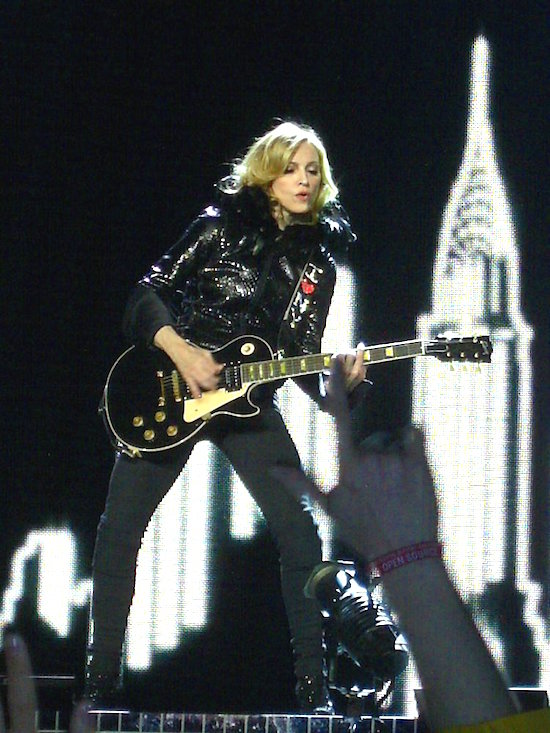
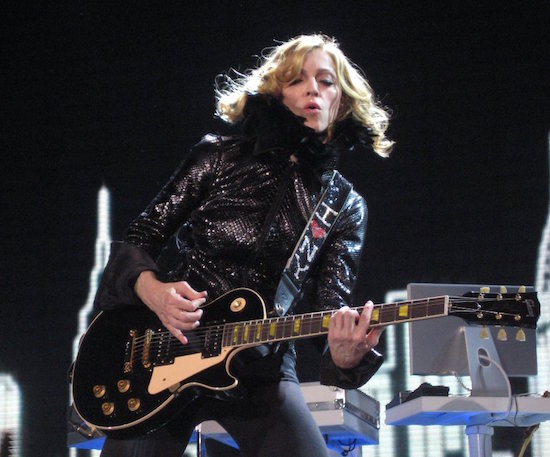
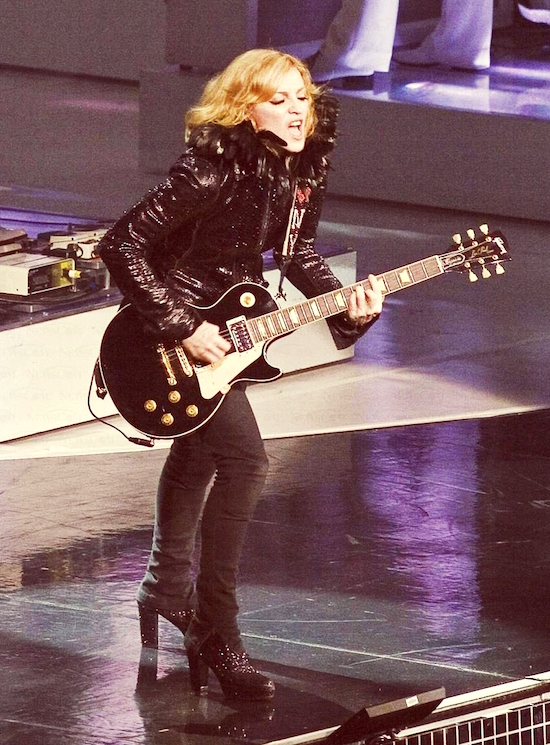
madonna_i_love_new_york-madison-1 madonna_i_love_new_york-madison-2 madonna_i_love_new_york-madison-9 madonna_i_love_new_york-madison-3 madonna_i_love_new_york-madison-10 madonna_i_love_new_york-madison-4 madonna_i_love_new_york-madison-8 madonna_i_love_new_york-madison-7 madonna_i_love_new_york-madison-6 madonna_i_love_new_york-madison-5

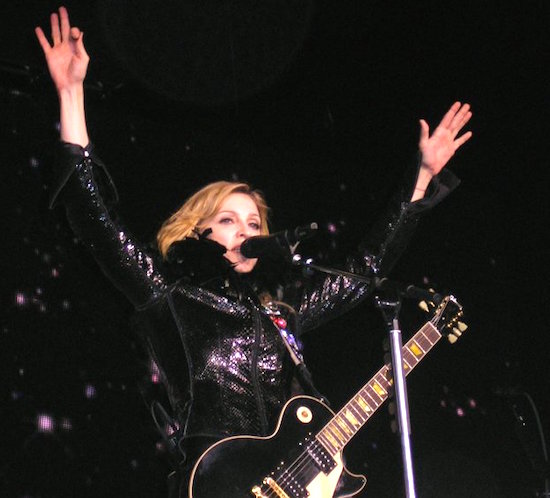
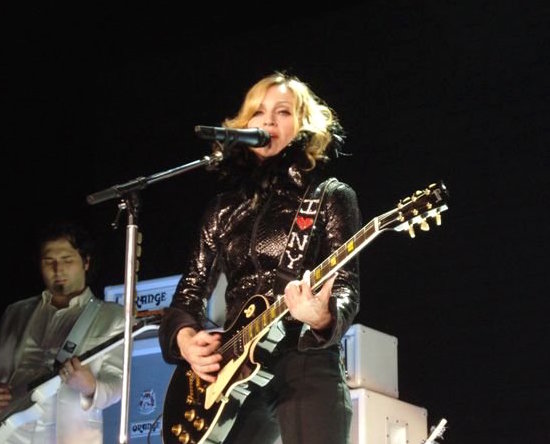
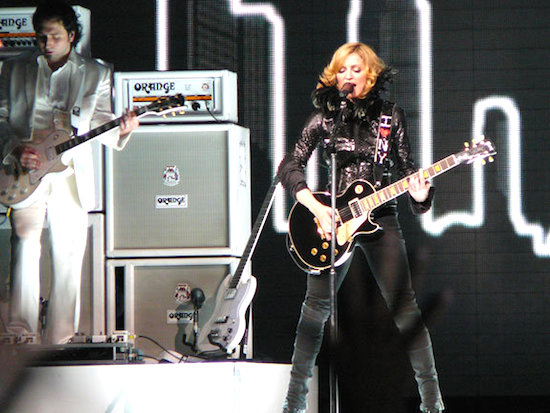
On July 3 2006, Madonna performed her Confessions Tour at Madison Square Gardens.

It was the last of four SOLD OUT shows at the Gardens (June 28, 29 July 2 and 3). In total Madonna performed in front of 91,841 fans in New York, generating $16,507,855 in ticket sales.

Today in Madonna History: July 2, 2005

madonna live8 8 550 madonna birhan woldu live8 550 madonna live8 5 550 madonna live8 backstage 550 madonna live8 550

On July 2 2005, Madonna performed Like A Prayer, Ray Of Light and Music in front of an audience of over 200,000 during the Live 8 benefit concert at London’s Hyde Park. Part of a series of concerts, many of which were held simultaneously at various locations around the world, Live 8 was broadcast live on television and radio to an estimated global audience of two billion.

Madonna is one of only eight acts – and the only female artist – to have been a headlining performer at both 1985’s Live Aid and 2005’s Live 8. Other returning performers were U2, Paul McCartney, Elton John, Sting, The Who, George Michael, and organizer, Bob Geldof. It took a bit of arm twisting on Geldof’s part to win Madonna’s commitment the second time around, as Madonna explained to MTV’s John Norris in a backstage interview after her performance:

Bob Geldof sent me a letter asking ‘will you do Live 8?’ and he didn’t really tell me anything and I went ‘Oh common dude, you gotta do better than that! Prove to me that it’s gonna make a difference and I’ll be there for you.’ And he did!”

In what turned out to be one of the event’s most moving moments, Madonna was introduced to the stage by Geldof with Birhan Woldu – the starving African child featured in the CBC News report twenty years earlier who had prompted Geldof to organize Live Aid. When Geldof had asked Woldu which artist she would like to appear with on stage, she immediately selected Madonna for the simple reason that she was the only artist on the bill that she had ever heard of. In a later interview, Woldu recalled the experience:

The crowd seemed to stretch for miles, but I’d been telling myself not to be nervous. There was just a huge picture of me as a child on the screen. That photo still upsets me. It was taken 20 years ago, when both my mother and sister died. I knew I must be strong for them but when I walked on I could feel my body shaking. Then Madonna took my hand and looked into my eyes, the crowd roared and I realised the world wanted to help my continent. I felt myself grow stronger.”

Madonna’s memorable performance at Live 8 was largely praised by mainstream media and fans alike.

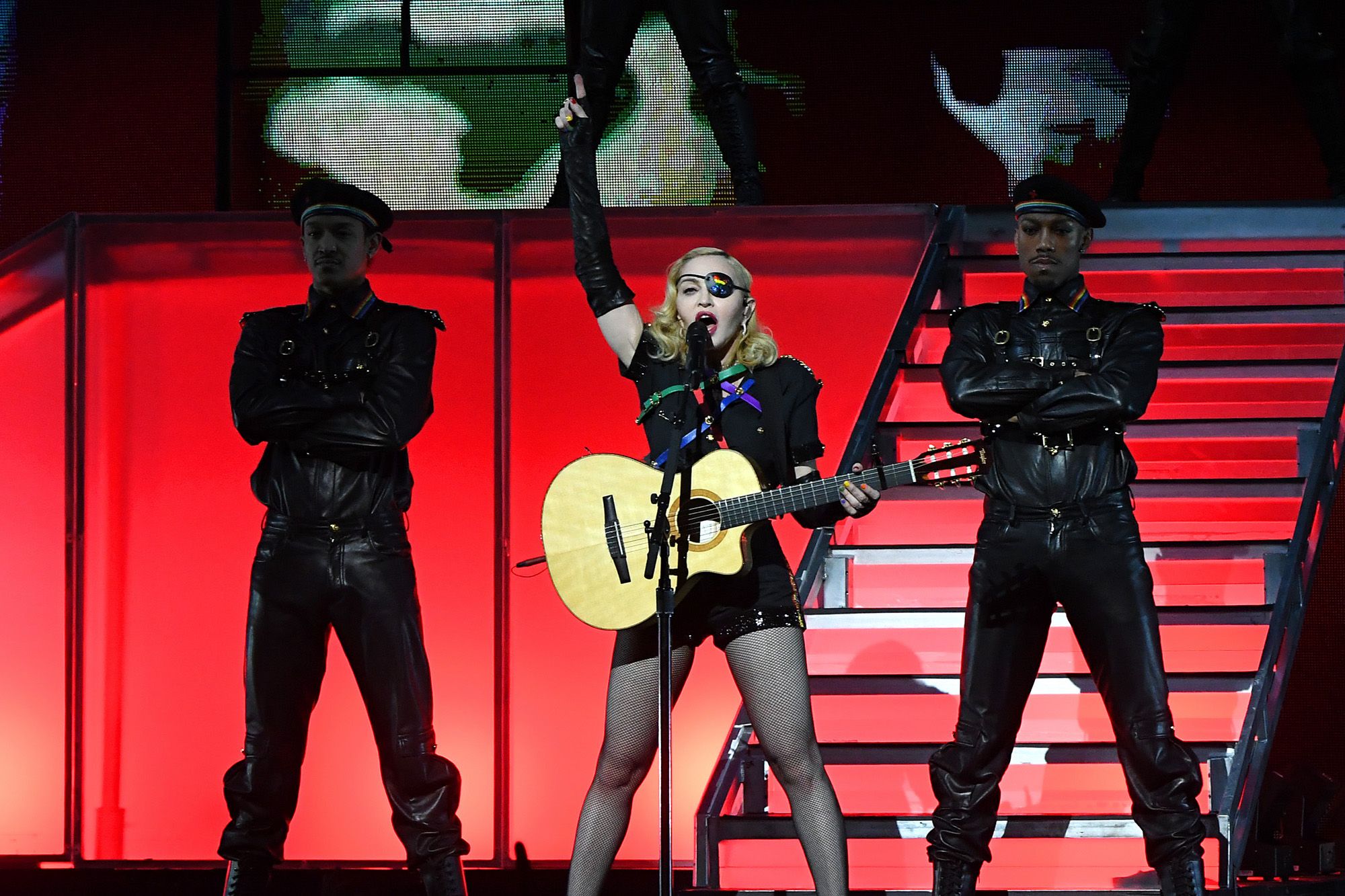
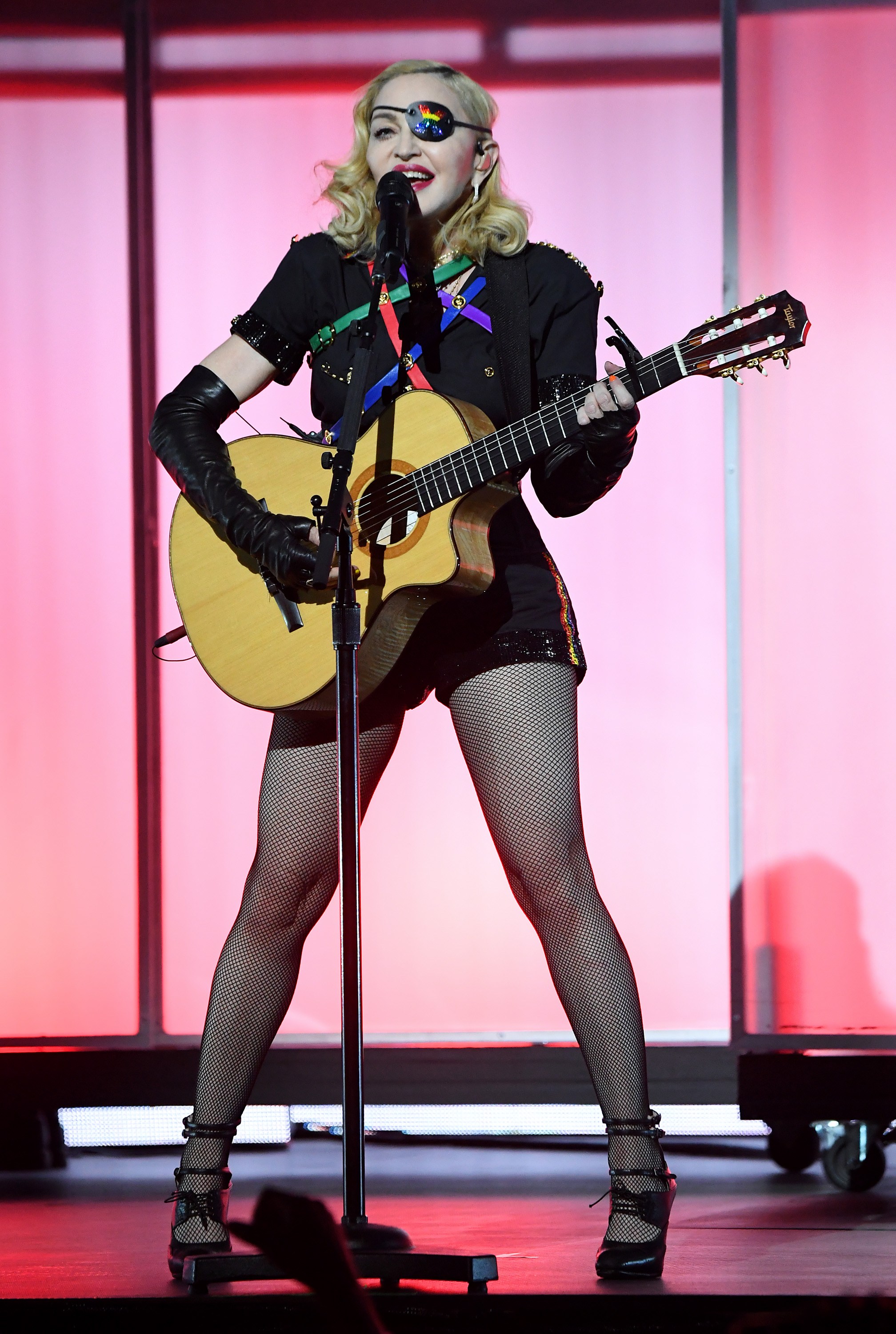
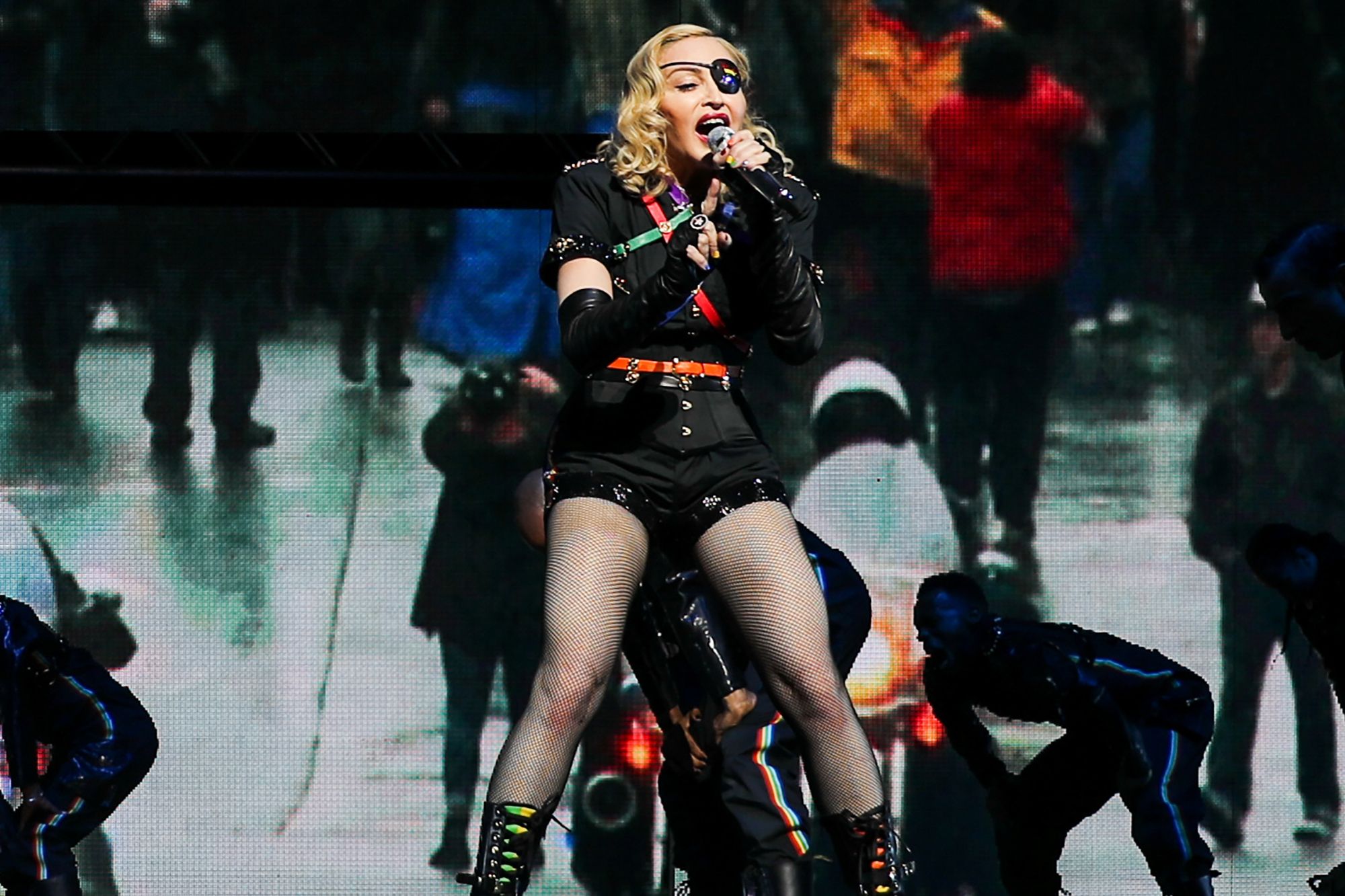
Today in Madonna History: July 1, 2019

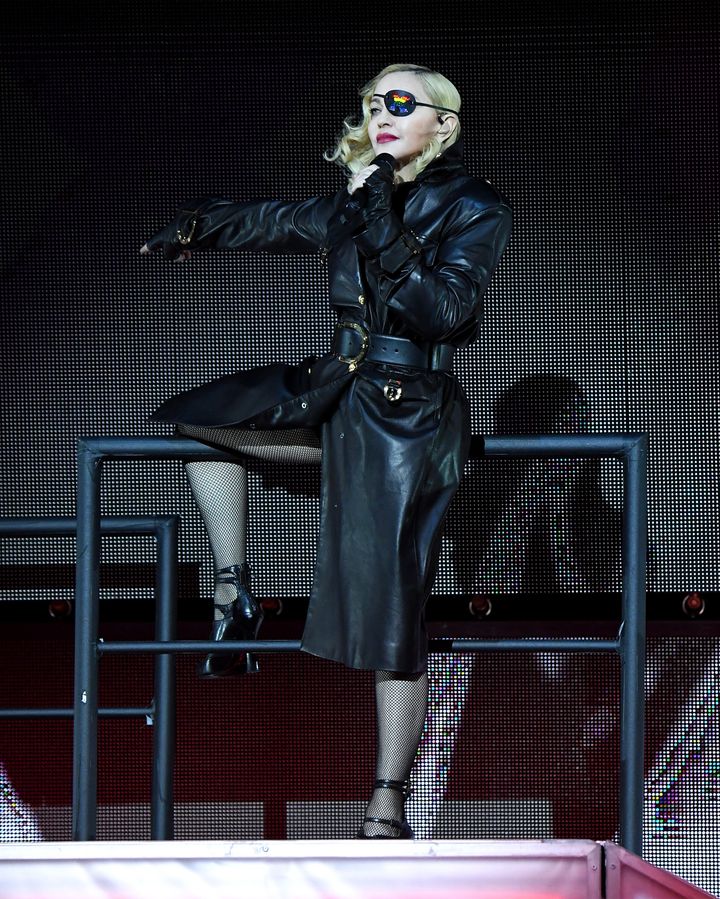
On July 1 2019, Billboard’s Joe Lynch reported on Madonna’s performance at the World Pride festivities in New York City the previous night:

Madonna opened with her Harlem ballroom scene-indebted smash Vogue and the audience response was deafening. After that, the musical shapeshifter brought out a single it’s safe to say no one expected to hear as part of a limited-length set: American Life. That being said, while it’s not one of her, say, 20 most renowned songs, the message of American Life has only grown more timely in the 16 years since its release, and its strangely compelling melange of squelching synths, strings and folk had the crowd rapt — especially when she dove head-first into the “soy latte” rap (which reals Stans in the crowd parroted back to her perfectly).

Midway through her wind-whipped set, Madge spoke to the historicity of the moment and the significance to her life. “Fifty years, people,” Madonna said. “Fifty years of freedom fighting. Fifty years of putting up with discrimination, hatred and intemperance. Fifty years of blood, sweat and tears. Fifty years of not bowing down to fear. We have been on this journey together, and I am so proud and honored to share this historical evening with you.”

Before returning to performing, she shouted-out her early NYC days. “You really don’t know. Since I came to New York as a wee little girl, I have always been embraced by queer nation. I always felt like an outsider but you made me feel like an insider. You must know how much I love and appreciate everyone here tonight.”

After that, the cops busted in — well, at least the police-themed dancers Madonna employs. They helped her create a visually powerful live performance of her Madame X highlight God Control, replete with detailed choreography and a disco groove that had the crowd gyrating and shimmying. She closed with I Rise, a powerful anthem for both gun control and LGBTQ rights, after which fireworks exploded over Pride Island as starry-eyed attendees headed home.

Source: Billboard.com

Today in Madonna History: June 30, 1997

On June 30 1997, Madonna began recording sessions for what would become her Ray Of Light album at Larrabee North Recording Studios, Universal City, Los Angeles.

Madonna had already spent several months writing songs and producing demos with Patrick Leonard, Rick Nowels and Babyface (although none of the Babyface material would make the final cut) by the time she entered the studio with co-producers William Orbit and Marius De Vries. Leonard would return to the project to assist with arrangements, earning him a co-producer’s credit on four of the album’s tracks. Madonna would add lyrics and melody to at least a half-dozen previously composed Orbit demos during these sessions as well, with six of their songs making the final cut.

One song that came very close to being included on the album, Has To Be, was dropped due to Madonna’s desire to limit the number of songs on the album to lucky number thirteen. In a final toss-up between Has To Be and To Have And Not To Hold, the former was nixed in favor of the latter. Has To Be would fortunately make it to the ears of fans, however, due to its inclusion as a bonus track on the Japanese edition of the Ray Of Light album, and as the international b-side to the Ray Of Light single.

Has To Be was born as a collaboration between Madonna and Patrick Leonard. Recently surfaced demos from their writing session include two early versions of the song – the first is a piano-based arrangement in a similar style to the previous Madonna/Leonard collaboration, Something To Remember, while the second demo is an experimental synth-based reworking.

After entering the studio with William Orbit, Madonna adapted Has To Be to one of Orbit’s previously composed electronic soundscapes. Although the original Orbit instrumental piece with celestial voices has never been commercially released, it had previously aired on Orbit’s weekly radio series, Stereo Odyssey, on California’s KCRW prior to his involvement with Madonna. A sound file of the original instrumental that has circulated among fans is a recording from one of these broadcasts.

Although the released version of Has To Be is substantially different from the early Leonard demos, enough elements from its original melody lines (which were based on Leonard’s piano phrases) were carried over to warrant a three-way publishing split between Madonna/Orbit/Leonard for its official release.

Despite its relative obscurity, in fan circles Has To Be often ranks among her most beloved ballads.

Today in Madonna History: June 29, 1998

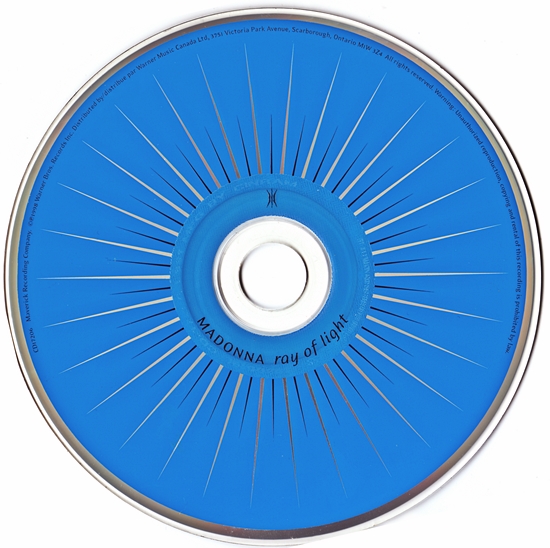
Ray of Light Canadian CD Single cover insert back Ray of Light Canadian CD Single tray insertRay of Light Canadian CD Single disc

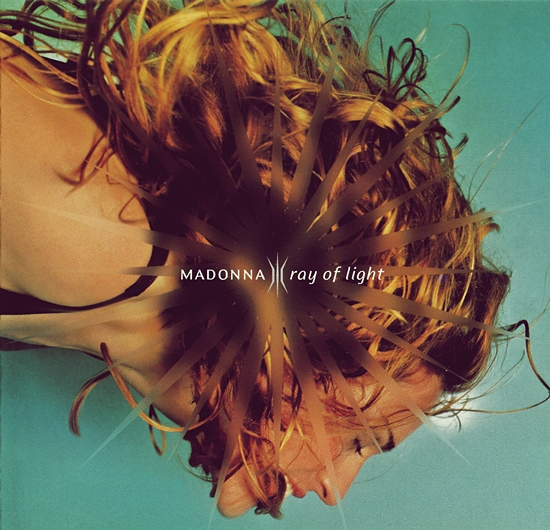
On June 29 1998, Madonna’s Ray of Light single peaked at #3 on RPM’s Top 100 Canadian Singles chart.

As with all the Canadian singles from the Ray of Light album, the title track was issued by Warner Music Canada as a 2-track CD single and as a CD maxi-single. In the U.S., the album’s CD singles were issued in cardboard sleeves with “draw pack” trays and the CD maxi-singles in “FLP digipak” cases, while in Canada the two configurations for each of the album’s four domestic singles were packaged in standard CD jewel cases with printed inserts.