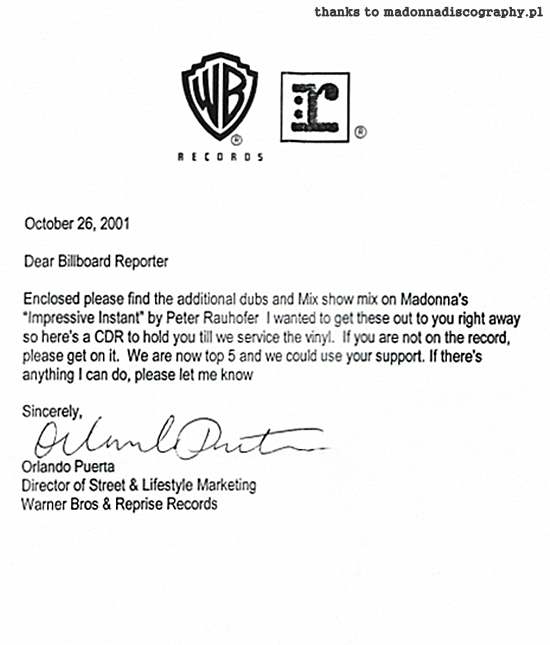
On November 17 2001, the promo-only remixes for Impressive Instant by Peter Rauhofer climbed to number-one on the Billboard Hot Dance Club Play chart in the US. It remained in the top spot for the week of November 24th.

On November 17 2001, the promo-only remixes for Impressive Instant by Peter Rauhofer climbed to number-one on the Billboard Hot Dance Club Play chart in the US. It remained in the top spot for the week of November 24th.

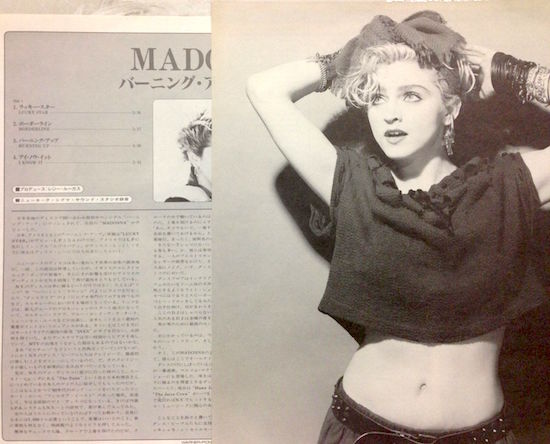
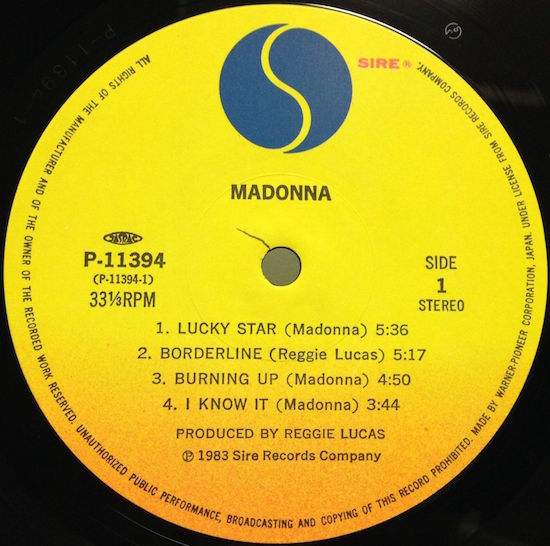

On November 16 1989, Madonna’s eponymous album was ranked #50 in Rolling Stone magazine’s list of The 100 Greatest Albums Of The 1980s.
Here’s what Rolling Stone had to say of Madonna’s debut album:
Five years after arriving in New York City from her hometown of Pontiac, Michigan, Madonna Louise Ciccone had little to show for a lot of work. By 1982, she had managed to get only a few gigs singing with drummer Stephen Bray’s band, the Breakfast Club, at clubs like CBGB and Max’s Kansas City, and the future looked far from bright.
“I had just gotten kicked out of my apartment,” Madonna says, “so the band let me live in their rehearsal space at the Music Building, on Eighth Avenue. Stephen had keys to all the rehearsal rooms, so when I decided to make my own demos, we’d go into other people’s studios at night and use their four-track machines.”
Armed with a tape, Madonna began making the rounds of New York’s dance clubs. “I had heard that a lot of A&R people hung out at the clubs,” she says, “and I thought trying to go see them at their offices would be a waste of time.” It proved a good strategy: Through Mark Kamins, the DJ at Danceteria, the tape found its way to Sire Records, and Madonna was signed by label president Seymour Stein. “Seymour was in the hospital at the time,” she says. “I got signed while he was lying in bed in his boxer shorts.”
The contract with Sire guaranteed just one single, but it had options for recording albums as well. With Kamins producing, Madonna cut the moody disco track Everybody as her debut single. But when Sire picked up its option to record an album, she decided to try a different producer. “I wanted someone who’d worked with a lot of female singers,” she says.
Reggie Lucas, the Grammy-winning songwriter who had produced Stephanie Mills and Roberta Flack, was selected. After recording the album’s second single, the Lucas-penned Physical Attraction, he and Madonna cut the rest of the album, with the exception of Holiday, which was produced by Jellybean Benitez.
“Things were very informal and casual,” Lucas says of the sessions. “It was my first pop project, and she was just a new artist. I had no idea it would be the biggest thing since sliced bread.”
Indeed, initial response to Madonna gave no indication of the mania to follow. It took a year and a half for the album to go gold. But its assured style and sound, as well as Madonna’s savvy approach to videos, helped the singer make the leap from dance diva to pop phenom, and it pointed the direction for a host of female vocalists from Janet Jackson to Debbie Gibson.
“It influenced a lot of people,” says Madonna, who cites Chrissie Hynde and Debbie Harry as her own musical heroes. “I think it stands up well. It just took a long time for people to pay attention to me —and I thank God they did!”
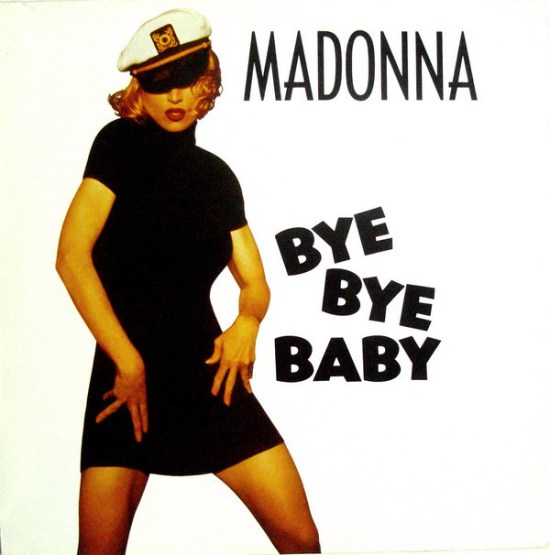
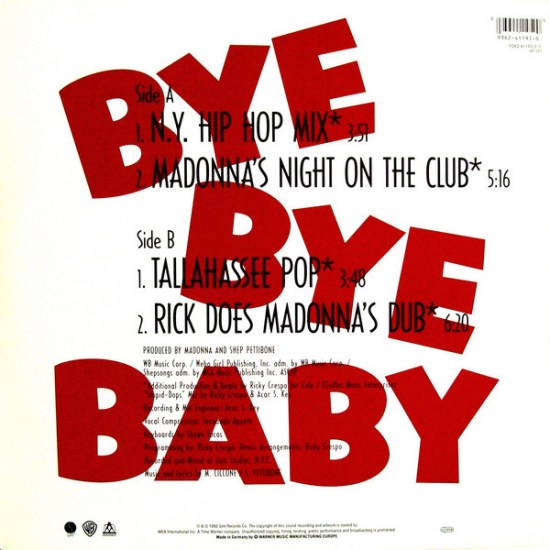
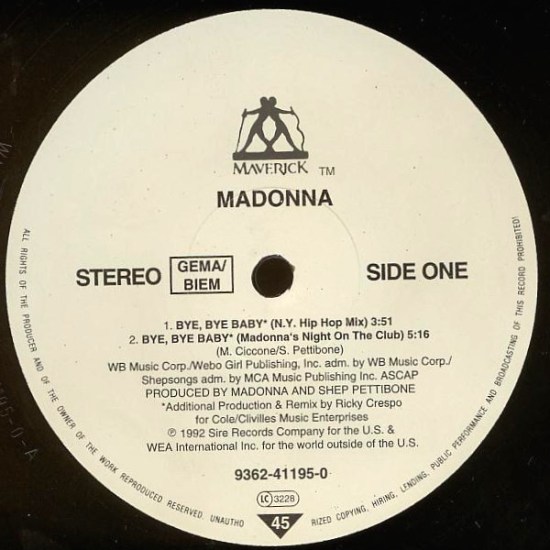
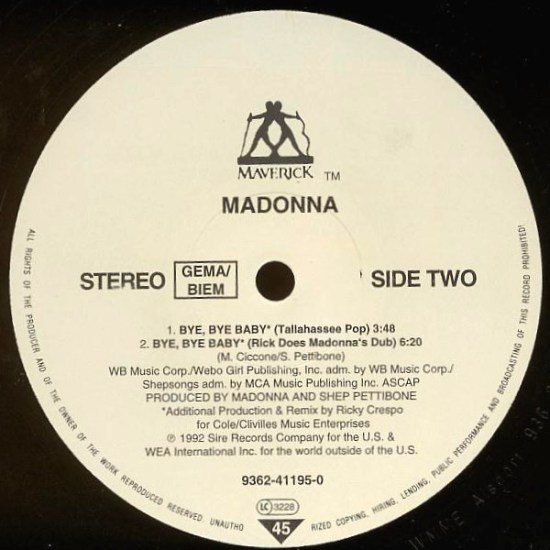
On November 15 1993, Madonna’s Bye Bye Baby was released as the sixth and final single from the Erotica album. The single was released to coincide with the start of the Australian leg of The Girlie Show World Tour. In addition to Australia, Bye Bye Baby was also given a limited release in Germany and Japan.
Bye Bye Baby was written by Madonna, Shep Pettibone and Anthony Shimkin and was produced by Madonna and Shep.
Official remixes for Bye Bye Baby include:

On August 25 1987, Causing a Commotion was released as the second single from the soundtrack album Who’s That Girl, by Sire Records. Causing a Commotion was written and produced by Madonna and Stephen Bray, the song was inspired by Madonna’s relationship with then husband Sean Penn, and his abusive and violent nature.
![drowned-world-substitute-for-love-uk-cassette-w0453c-[2]-1547-p](https://todayinmadonnahistory.com/wp-content/uploads/2014/08/drowned-world-substitute-for-love-uk-cassette-w0453c-2-1547-p.jpg)
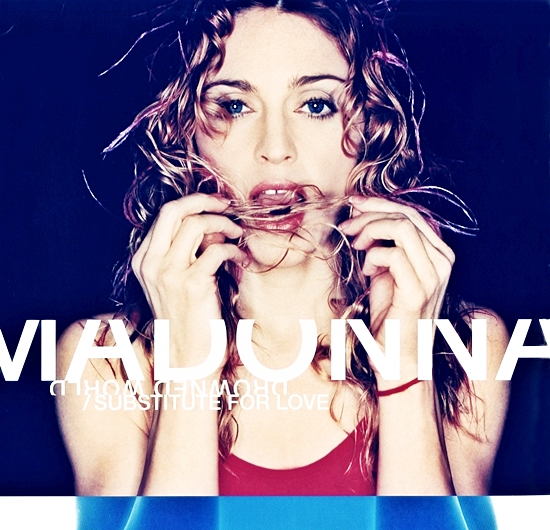
On August 24 1998, Drowned World/Substitute For Love was released as the third single from Ray Of Light in most major markets outside North America. The song was written by Madonna, William Orbit and David Collins (Rod McKuen and Anita Kerr were also credited for sampled use of their composition “Why I Follow The Tigers” performed by The San Sebastian Strings) and was produced by Madonna and Orbit.
With the album’s title track being issued as the second single in North America a month after its release in other markets, it was decided to release Drowned World/Substitute For Love to fill the gap until her next international single release, The Power Of Good-bye. The single peaked at number-ten in the UK, at number-five in Italy and at number-one in Spain. Despite not being released in Canada, the song managed to reach number eighteen on the Canadian singles chart based solely on sales of the European import single, and without any promotion from radio or music video stations. Club play of the imported single, which featured remixes of both Drowned World/Substitute For Love and its b-side, Sky Fits Heaven, prompted a brief appearance by the latter on the U.S. Hot Dance/Club Play Chart, peaking at number forty-one.
The music video, filmed in London by director Walter Stern, caused a minor controversy due to scenes of Madonna’s car being chased by paparazzi on motorcycles, an image still fresh in the public’s mind at the time due the circumstances surrounding the death of Princess Diana. Liz Rosenberg denied that the scene had anything to do with the late Princess, adding that the video was about Madonna’s own experience and relationship with fame.
The song is often ranked as a fan favorite and seems to be highly-regarded by Madonna as well, considering her 2001 concert tour was named after the song and it was used as the show’s opening number. It was also performed during 2006’s Confessions Tour and appeared on her second greatest hits collection, GHV2. An early demo version of the song believed to be produced with Patrick Leonard titled No Substitute For Love leaked online in the early 2000’s. The demo contains similar lyrics but a completely different musical backing track and melody. The music that was used on the final version of the song was a previously composed instrumental track by William Orbit.
Famous faces, far off places
Trinkets I can buy
No handsome stranger, heady danger
Drug that I can try
No ferris wheel, no heart to steal
No laughter in the dark
No one-night stand, no far-off land
No fire that I can spark
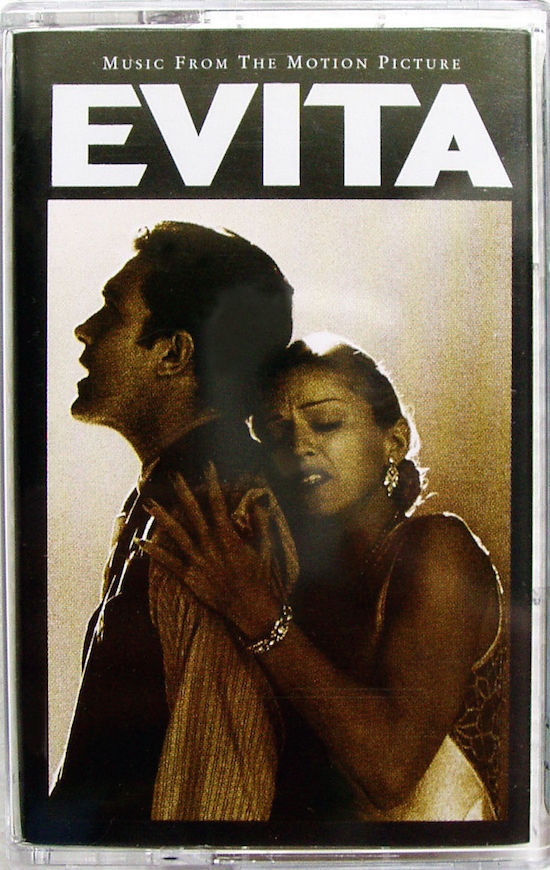
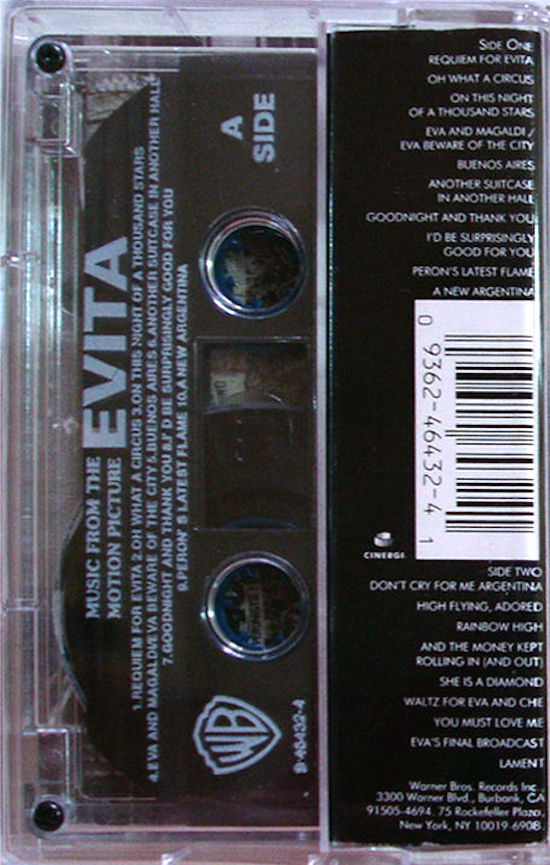
On August 23 1997, Evita: Music from the Motion Picture (the highlights disc) debuted at #168 on the Billboard Top 200 Albums Chart in the USA.
The highlights disc included 19 tracks from the film, and was released on July 29 1997 in North America to help promote the home video release. The single disc was released in select markets around the world in 1996 at the same time as the double disc complete soundtrack, but not in North America.
Evita: The Motion Picture Music Soundtrack featured all 34 tracks from the film, and was released on November 12 1996.
The highlights disc didn’t perform very well in the late summer of 1997 because it was released a full 8 months after the original release. No single was released to radio to promote it, and most die-hard fans had already secured an imported version of the single disc soundtrack the previous year. Why it was released at all in July 1997 remains a mystery. Why the single-disc set wasn’t released in North America in November 1996 is a better question. Why not release the double-disc set (expensive) and the single disc set (average price of a CD at the time) and appeal to the largest possible group of consumers? That was the approach around the world, but not in North America, we can’t help but wonder why? – Jay
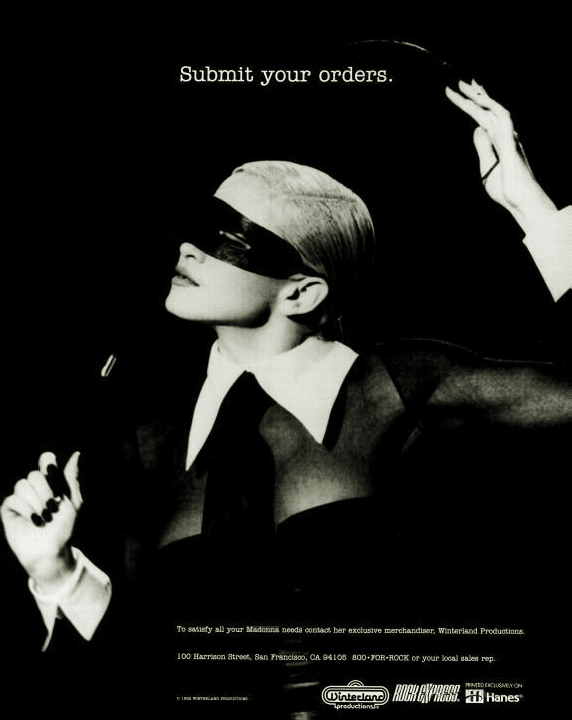

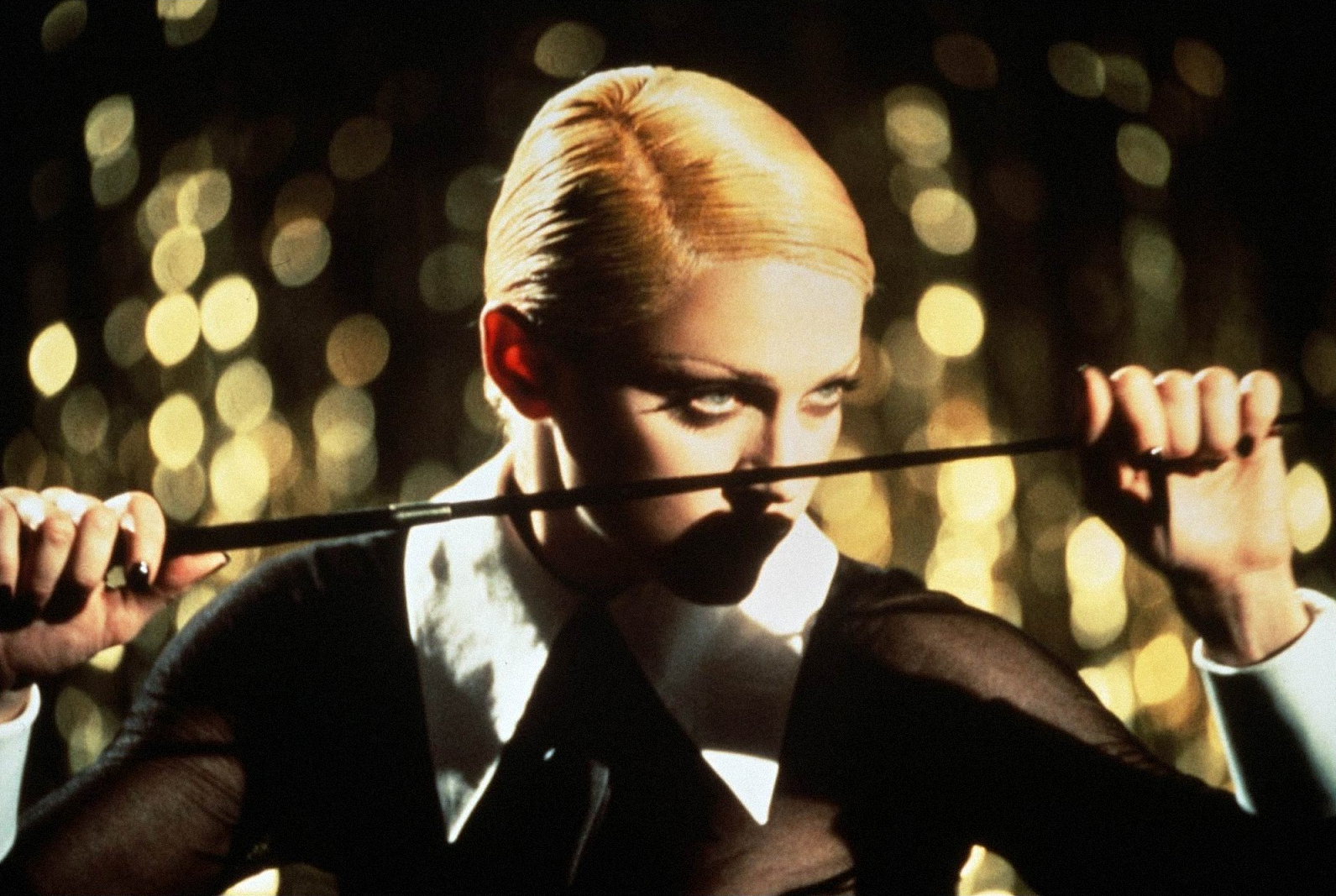
On August 22 1992, Madonna filmed scenes for the Erotica music video at The Kitchen in New York City with fashion photographer/director/designer Fabien Baron. These scenes consisted of Madonna in the character of her Sex book alter-ego, Dita, miming the lyrics to the song, and would be intercut with a selection of 8mm footage previously shot by Baron during the making of the Sex book.
Baron also served as art director for the Sex book, the Erotica album and single, and later for the Bedtime Stories album and its singles Secret and Take A Bow. He also directed the commercial for her fragrance, Truth Or Dare by Madonna, in 2012.
“She put that book out at the best moment. She timed it very well. She knows what she’s doing. And such drive. Some people want to lift stones and see what’s under it. She’ll be on a beach with millions of stones and want to lift every one of them.” – Fabien Baron
 Today In Madonna History