Today in Madonna History: January 5, 1995

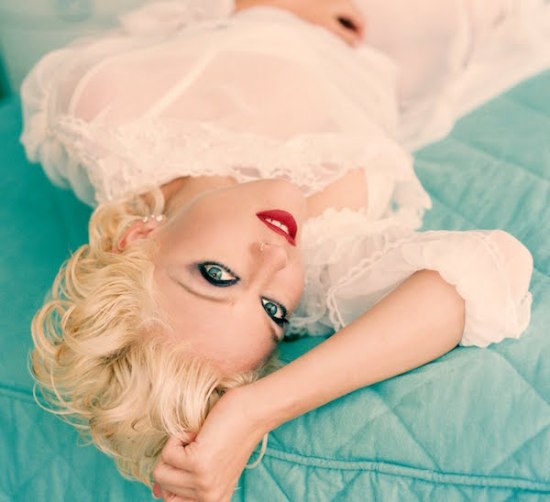
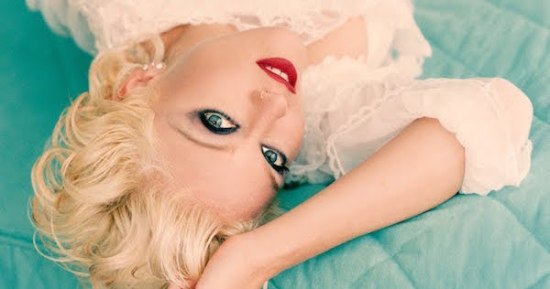
On January 5 1995, Madonna’s fabulous Bedtime Stories album was certified platinum (for shipment of 1 million units).

Barbara O’Dair reviewed the album for Rolling Stone magazine:

After the drubbing she has taken in the last few years, Madonna deserves to be mighty mad. And wounded anger is shot through her new album, Bedtime Stories, as she works out survival strategies. While always a feminist more by example than by word or deed, Madonna seems genuinely shocked at the hypocritical prudishness of her former fans, leading one to expect a set of biting screeds. But instead of reveling in raised consciousness, Bedtime Stories demonstrates a desire to get unconscious. Madonna still wants to go to bed, but this time it’s to pull the covers over her head.

Still, in so doing, Madonna has come up with some awfully compelling sounds. In her retreat from sex to romance, she has enlisted four top R&B producers: Atlanta whiz kid Dallas Austin, Kenneth “Babyface” Edmonds, Dave “Jam” Hall and Britisher Nellee Hooper (Soul II Soul), who add lush soul and creamy balladry. With this awesome collection of talent, the record verily shimmers. Bass-heavy grooves push it along when more conventional sentiments threaten to bog it down. Both aspects put it on chart-smart terrain.

A number of songs — “Survival,” “Secret,” “I’d Rather Be Your Lover” (to which Me’Shell NdegéOcello brings a bumping bass line and a jazzy rap) — are infectiously funky. And Madonna does a drive-by on her critics, complete with a keening synth line straight outta Dre, on “Human Nature”: “Did I say something wrong?/Oops, I didn’t know I couldn’t talk about sex (I musta been crazy).”

But you don’t need her to tell you that she’s “drawn to sadness” or that “loneliness has never been a stranger,” as she sings on the sorrowful “Love Tried to Welcome Me.” The downbeat restraint in her vocals says it, from the tremulously tender “Inside of Me” to the sob in “Happiness lies in your own hand/It took me much too long to understand” from “Secret.”

The record ultimately moves from grief to oblivion with the seductive techno pull of “Sanctuary.” The pulsating drone of the title track (co-written by Björk and Hooper), with its murmured refrain of “Let’s get unconscious, honey,” renounces language for numbness.

Twirled in a gauze of (unrequited) love songs, Bedtime Stories says, “Fuck off, I’m not done yet.” You have to listen hard to hear that, though. Madonna’s message is still “Express yourself, don’t repress yourself.” This time, however, it comes not with a bang but a whisper.
Today in Madonna History: November 26, 1992

On November 26 1992, Rolling Stone magazine published their review of Madonna’s Erotica album, written by Arion Berger:

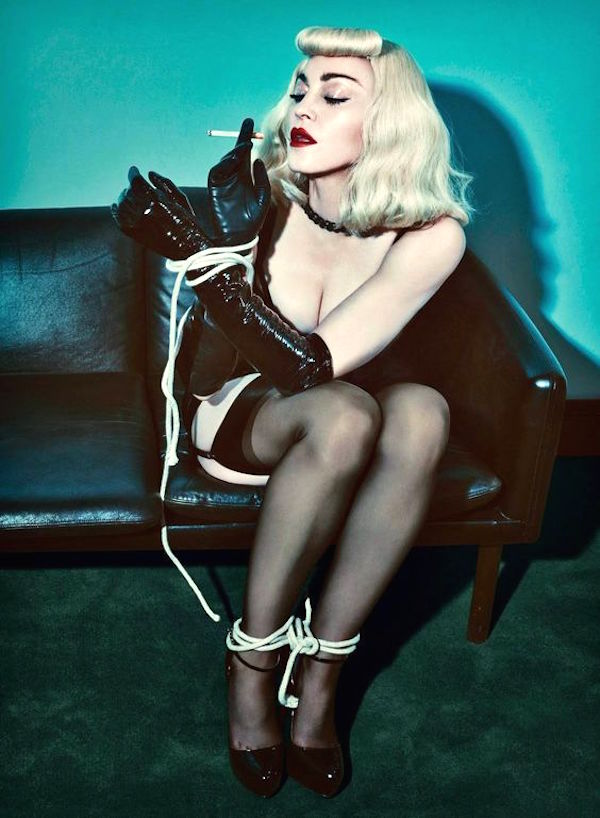
It took Madonna ten years, but she finally made the record everyone has accused her of making all along. Chilly, deliberate, relentlessly posturing. Erotica is a post-AIDS album about romance — it doesn’t so much evoke sex as provide a fetishistic abstraction of it. She may have intended to rattle America with hot talk about oral gratification and role switching, but sensuality is the last thing on the album’s mind. Moving claustrophobically within the schematic confines of dominance and submission, Erotica plays out its fantasies with astringent aloofness, unhumid and uninviting. The production choices suggest not a celebration of the physical but a critique of commercial representations of sex — whether Paul Verhoeven’s, Bruce Weber’s or Madonna’s — that by definition should not be mistaken for the real thing. It succeeds in a way the innocent post-punk diva of Madonna and the thoughtful songwriter of Like a Prayer could not have imagined. Its cold, remote sound systematically undoes every one of the singer’s intimate promises.

Clinical enough on its own terms when compared with the lushness and romanticism of Madonna’s past grooves, Erotica is stunningly reined in; even when it achieves disco greatness, it’s never heady. Madonna, along with co-producers Andre Betts and Shep Pettibone, tamps down every opportunity to let loose — moments ripe for a crescendo, a soaring instrumental break, a chance for the listener to dance along, are over the instant they are heard. Erotica is Madonna’s show (the music leaves no room for audience participation), and her production teases and then denies with the grim control of a dominatrix.

Against maraca beats and a shimmying horn riff, Erotica introduces Madonna as “Mistress Dita,” whose husky invocations of “do as I say” promise a smorgasbord of sexual experimentation, like the one portrayed in the video for Justify My Love. But the sensibility of Erotica is miles removed from the warm come-ons of Justify My Love, which got its heat from privacy and romance — the singer’s exhortations to “tell me your dreams.” The Madonna of Erotica is in no way interested in your dreams; she’s after compliance, and not merely physical compliance either. The song demands the passivity of a listener, not a sexual partner. It’s insistently self-absorbed — Vogue with a dirty mouth, where all the real action’s on the dance floor.

Look (or listen) but don’t touch sexuality isn’t the only peep-show aspect of this album; Erotica strives for anonymity the way True Blue strove for intimacy. With the exception of the riveting Bad Girl, in which the singer teases out shades of ambiguity in the mind of a girl who’d rather mess herself up than end a relationship she’s too neurotic to handle, the characters remain faceless. It’s as if Madonna recognizes the discomfort we feel when sensing the human character of a woman whose function is purely sexual. A sex symbol herself, she coolly removes the threat of her own personality.

Pure disco moments like the whirligig Deeper and Deeper don’t need emotional resonance to make them race. But the record sustains its icy tone throughout the yearning ballads (Rain, Waiting) and confessional moods (Secret Garden). Relieved of Madonna’s celebrity baggage, they’re abstract nearly to the point of nonexistence — ideas of love songs posing as the real thing. Even when Madonna draws from her own life, she’s all reaction, no feeling: The snippy Thief of Hearts takes swipes at a man stealer but not out of love or loyalty toward the purloined boyfriend, who isn’t even mentioned.

By depersonalizing herself to a mocking extreme, the Madonna of Erotica is sexy in only the most objectified terms, just as the album is only in the most literal sense what it claims to be. Like erotica, Erotica is a tool rather than an experience. Its stridency at once refutes and justifies what her detractors have always said: Every persona is a fake, the self-actualized amazon of Express Yourself no less than the breathless baby doll of Material Girl. Erotica continually subverts this posing to expose its function as pop playacting. The narrator of Bye Bye Baby ostensibly dumps the creep who’s been mistreating her, but Madonna’s infantile vocal and flat delivery are anything but assertive — she could be a drag queen toying with a pop hit of the past. Erotica is everything Madonna has been denounced for being — meticulous, calculated, domineering and artificial. It accepts those charges and answers with a brilliant record to prove them.


Today in Madonna History: October 12, 2021


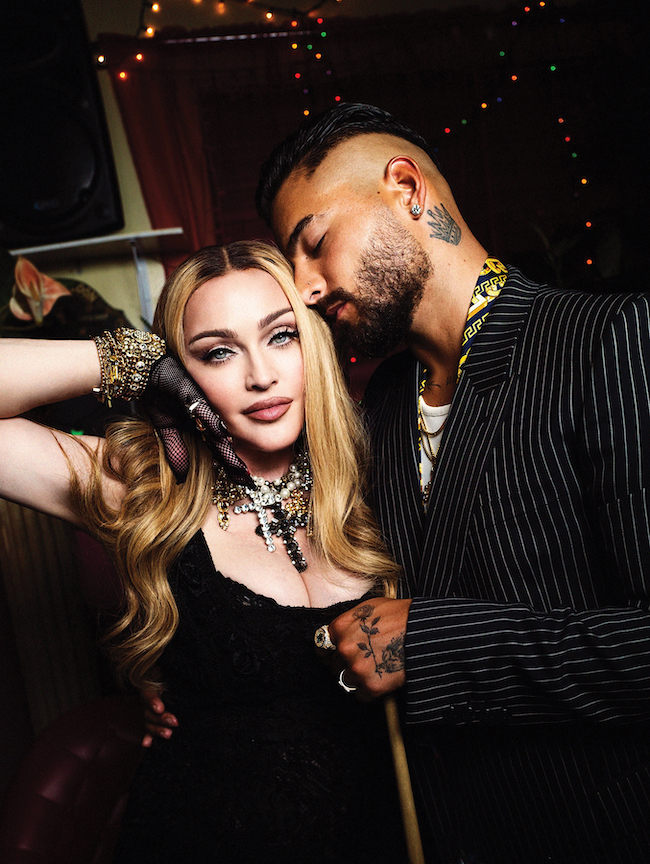
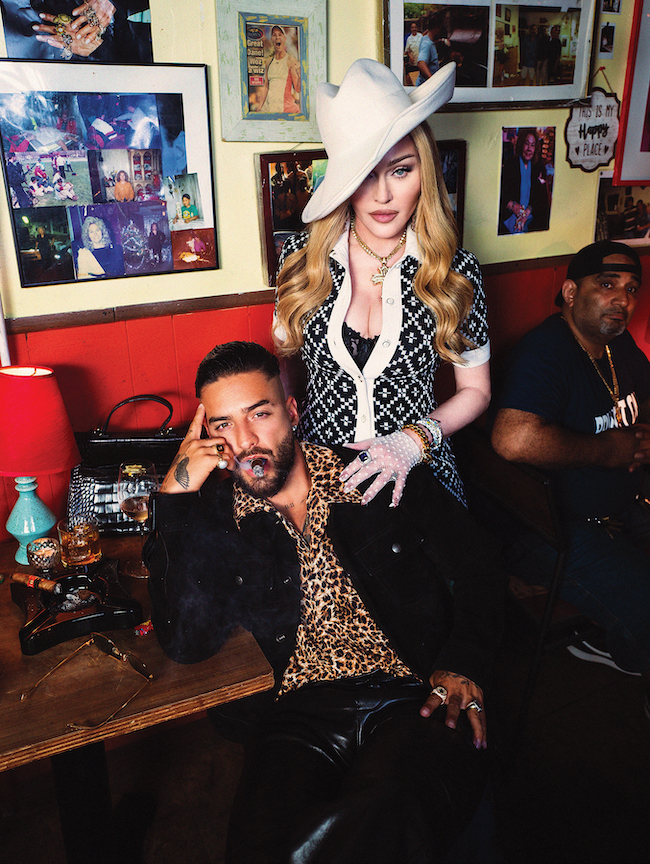
On October 12 2021, Madonna and Maluma appeared on the cover of Rolling Stone magazine.

Today in Madonna History: June 13, 1991

madonna-rolling-stone-june-13-1991-1 madonna-rolling-stone-june-13-1991-2 madonna-rolling-stone-june-13-1991-3 madonna-rolling-stone-june-13-1991-4 madonna-rolling-stone-june-13-1991-5 madonna-rolling-stone-june-13-1991-6 madonna-rolling-stone-june-13-1991-7 madonna-rolling-stone-june-13-1991-8 madonna-rolling-stone-june-13-1991-9

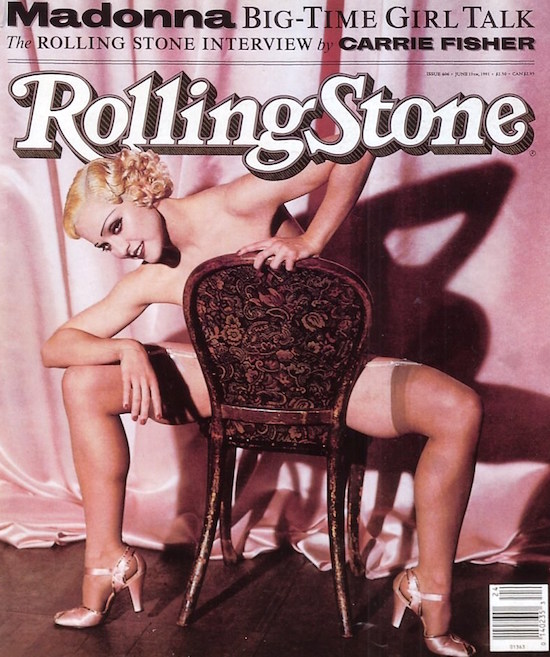
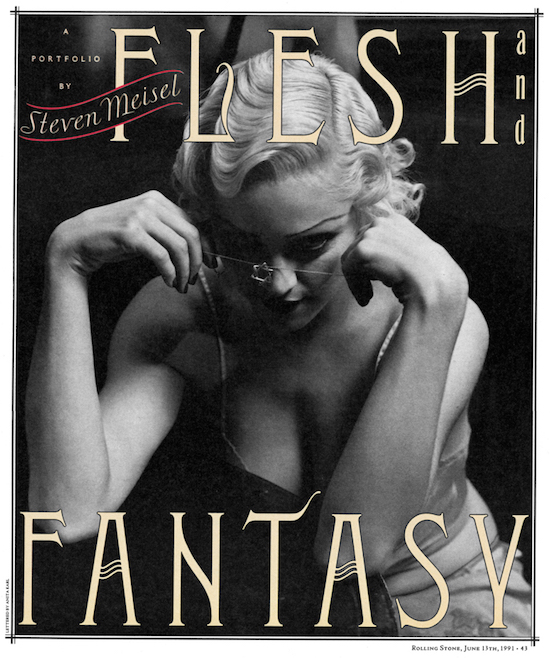
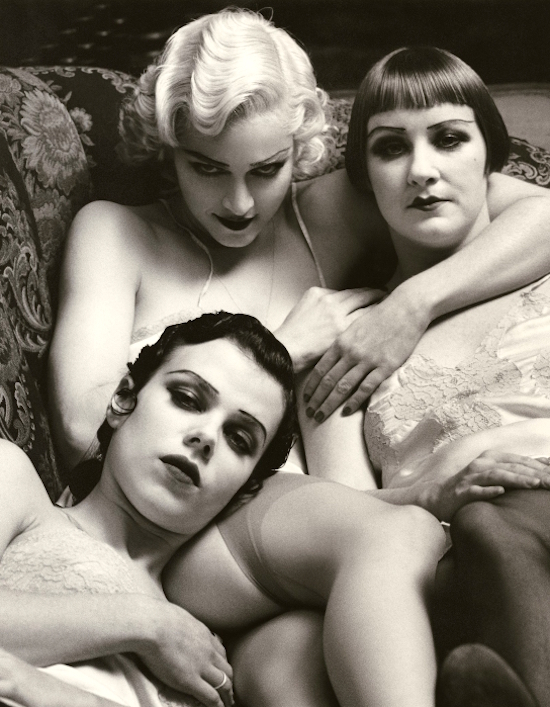
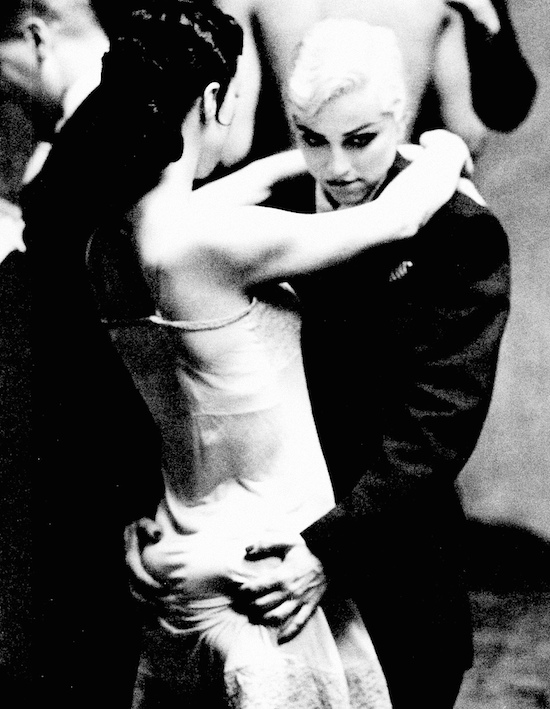
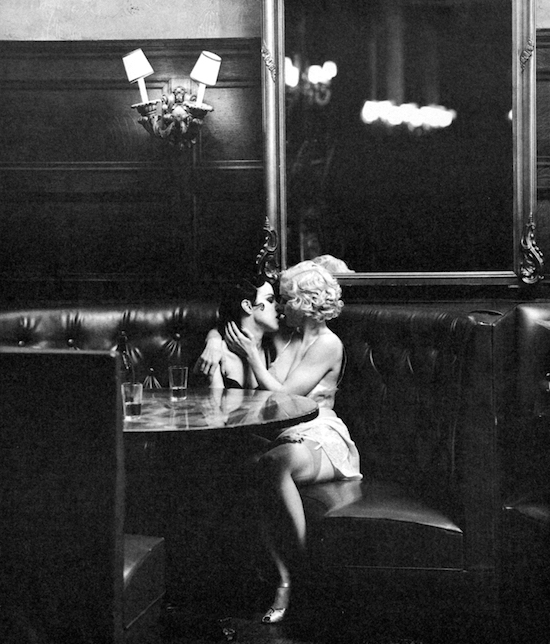
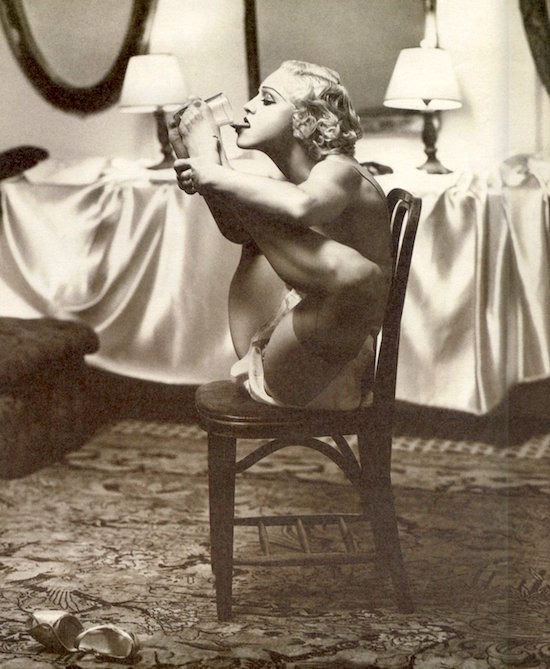
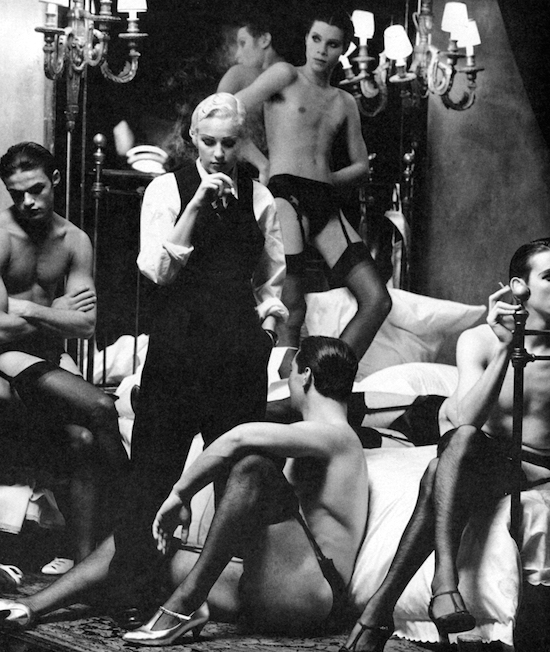
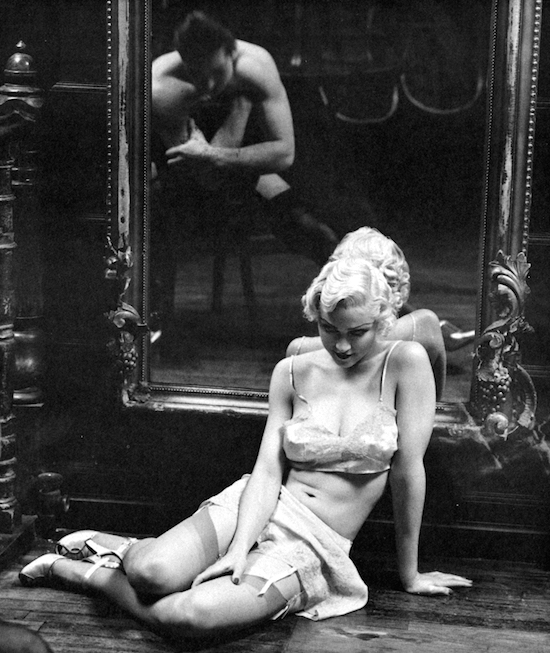
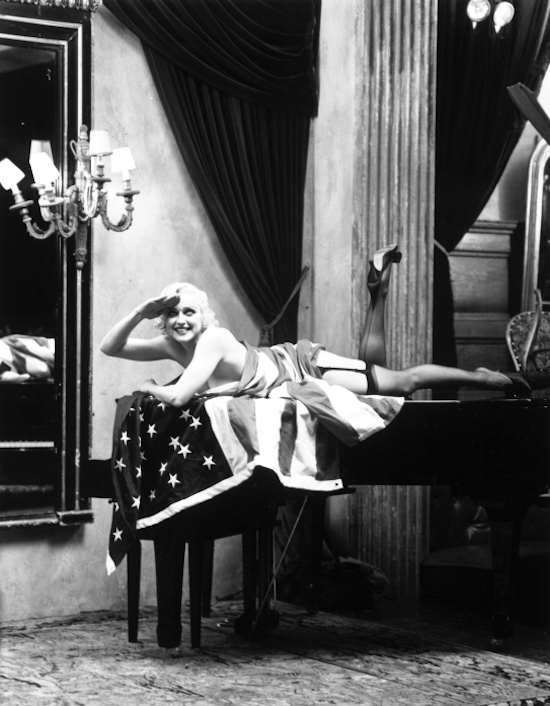
On June 13 1991, Madonna was featured on the cover of Rolling Stone magazine.  The feature included a photo spread shot by Steven Meisel.

Madonna has no equal at getting attention. She often seems to behave like someone who has been under severe restraint and can now say and do whatever she likes without fear of reprisal. She delights in being challenged, in telling more than she had planned, in going further than she had intended. And judging from her new film Truth or Dare, there is no “too far” for Madonna.

Today in Madonna History: May 25, 2004

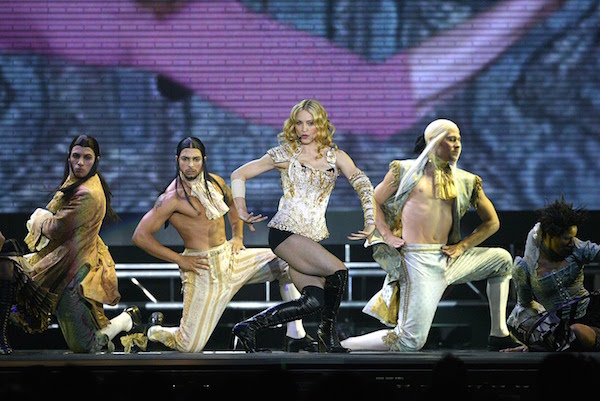
On May 25 2004, Rolling Stone magazine published a review of Madonna’s Re-Invention World Tour with the headline, “Madonna Reinvents herself. Amid images of war and peace, pop star shows she can sing.”

Here’s the review by Barry Walters:

After twenty years in the limelight, Madonna is expected to cause controversy and reinvent herself for every new tour. So for the May 24th Los Angeles opening of her Re-Invention world trek, Madonna did the most unexpected thing she could: She came back as a great concert singer.

Even the most diehard Madonna fan will concede that her live performances have almost without exception been plagued by a multitude of missed notes, breathy passages, and, as of late, fake British accents. But while Mariah and Whitney have of been losing the acrobatic vocal dexterity and lung power on which their reputations rest, forty-five-year-old Madonna, whom few have ever taken seriously as a musician, has never sounded better than she did during the first of several gigs in her adopted West Coast home. Whether rocking out with classic black Les Paul in hand during a metallic rendition of her early club hit “Burning Up,” or performing “Like a Prayer” behind a screen-projected gospel choir, Madonna belted, and did not once seemed strained. In the midst of a $1 million production festooned with a walkway that jutted out from the stage and over the audience, massive moving video screens, a dozen dancers, a bagpipe player, a stunt skateboarder and a whole lot of emotionally charged anti-war imagery, the focus was nevertheless on Madonna, and how she’s matured into a truly great pop singer.

Opening with a yoga-trained twist on her famous Louis XIV-inspired MTV Video Music Awards rendition of “Vogue” and ending on a kilt-wearing finale of “Holiday” against a video backdrop of national flags that eventually morphed into one, the show was thematically simpler and more focused than her last several productions.

The barbarism of war and the necessity of love were at the heart of the entire show, and both played off each other, sometimes for ironic and decidedly uneasy effect. The original military-themed video footage of “American Life” that the singer withheld at the start of the Iraq war was finally unveiled, and then expanded upon during “Express Yourself,” where Madonna sang her anthem of unbridled, intimate communication in front of dancers dressed as soldiers and goose-stepping with twirling rifles.

By contrast, Madonna closed an extended acoustic section of the show with a straightforward and thoroughly committed rendition of John Lennon’s “Imagine” as images of war and poverty-ravaged children eventually gave way to footage of a Muslim boy and his Israeli counterpart smiling as they walked with their arms wrapped around each other.

The heaviness of much of the imagery was balanced by Madonna’s own presence, which seemed remarkably fun-loving and self-assured for the opening night of her most technically complex production. Only when she strapped on an acoustic or electric guitar during several songs and repeatedly glanced at her left hand to make sure it was playing the proper chords did she seem at all nervous. “How many people out there really think that I am the Material Girl?” she asked during a break in her most iconic early smash as she strummed with much deliberation.

For the last several songs, Madonna and her dancers donned black and white kilts, an apparent nod to husband Guy Ritchie’s Scottish heritage, and black T-shirts that read “Kabbalists Do It Better,” a cheeky reference to both her religious studies and the “Italians Do It Better” T-shirt she wore during her video for “Papa Don’t Preach,” a song that was performed without the “near-naked pregnant women” described in pre-tour reports of the show. In a number dedicated for the “fans that’ve stood by me for the last twenty years,” she sang her earliest hit ballad, “Crazy For You,” earnestly and without contrivance.

Madonna’s continued relevance was impressive, but it was even more striking that she’s putting more love and genuine passion into her spectacle than ever.

Today in Madonna History: January 29, 2015

unapologeticreview-1

On January 29 2015, Rob Sheffield reviewed Madonna’s Unapologetic Bitch for Rolling Stone magazine’s singles review section (even though it was never released as a single):

Bitch, she’s Madonna. The queen of queens has given a taste of her upcoming album, Rebel Heart, with a few songs dropped in advance after an early leak of unfinished versions. And the girl’s in a feisty mood these days – Madonna writing herself a theme song called “Unapologetic Bitch” is like Springsteen doing one called “Jersey Guy Who Sweats a Lot.” These new songs range from the Nicki Minaj collabo “Bitch I’m Madonna” to the gospel-house pieties of “Living for Love” to the Yeezus-style industrial Kanye grind “Illuminati.” But “Unapologetic Bitch” is the standout: a breakup rant over a Diplo-produced dancehall groove, with Madonna shooting a few poison arrows into the heart of some dude who’s done her wrong.

unapologeticreview-end

Today in Madonna History: January 17, 1985

like-a-virgin-promo

On January 17 1985, Debbie Miller reviewed Madonna’s Like A Virgin album for Rolling Stone magazine. Here’s what she had to say (3 1/2 stars out of 5):

In the early Sixties, when girls were first carving their niche in rock & roll, the Crystals were singing about how it didn’t matter that the boy they loved didn’t drive a Cadillac car, wasn’t some big movie star: he wasn’t the boy they’d been dreaming of, but so what? Madonna is a more, well, practical girl. In her new song, Material Girl, she claims, “the boy with the cold hard cash is always Mr. Right/’Cause we’re living in a material world/And I am a material girl.” When she finds a boy she likes, it’s for his “satin sheets/And luxuries so fine” (Dress You Up). Despite her little-girl voice, there’s an undercurrent of ambition that makes her more than the latest Betty Boop. When she chirps, “You made me feel/Shiny and new/Like a virgin,” in her terrific new single, you know she’s after something. Nile Rodgers produced Like A Virgin, Madonna’s second LP; he also played guitar on much of it and brought in ex-Chic partners Bernard Edwards on bass and Tony Thompson on drums. Rodgers wisely supplies the kind of muscle Madonna’s sassy lyrics demand. Her light voice bobs over the heavy rhythm and synth tracks like a kid on a carnival ride. On the hit title song, Madonna is all squeals, bubbling over the bass line from the Four Tops’ “I Can’t Help Myself.” She doesn’t have the power or range of, say, Cyndi Lauper, but she knows what works on the dance floor. Still, some of the new tracks don’t add up. Her torchy ballad Love Don’t Live Here Anymore is awful. The role of the rejected lover just doesn’t suit her. Madonna’s a lot more interesting as a conniving cookie, flirting her way to the top, than as a bummed-out adult.