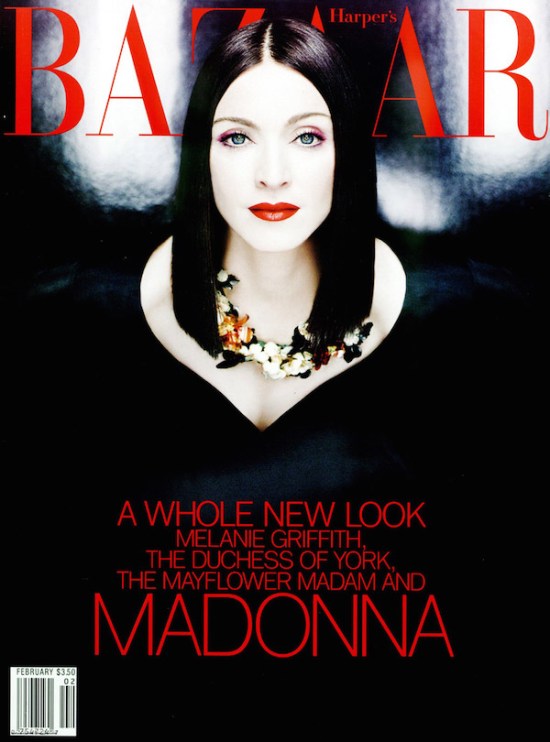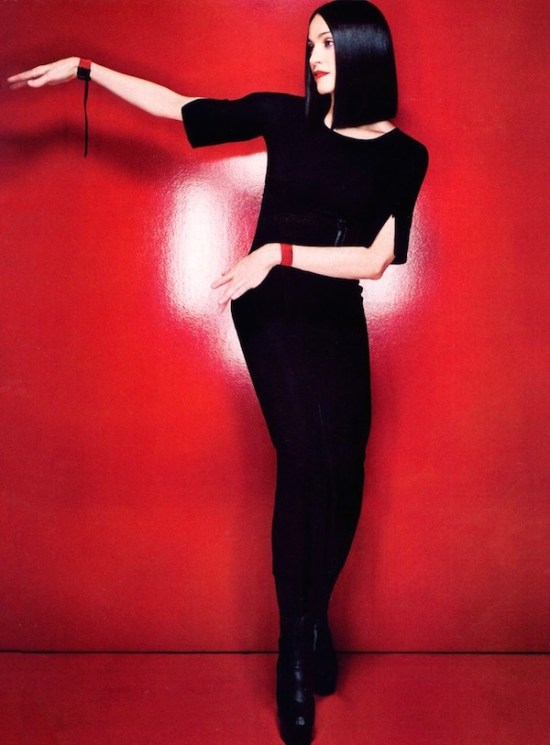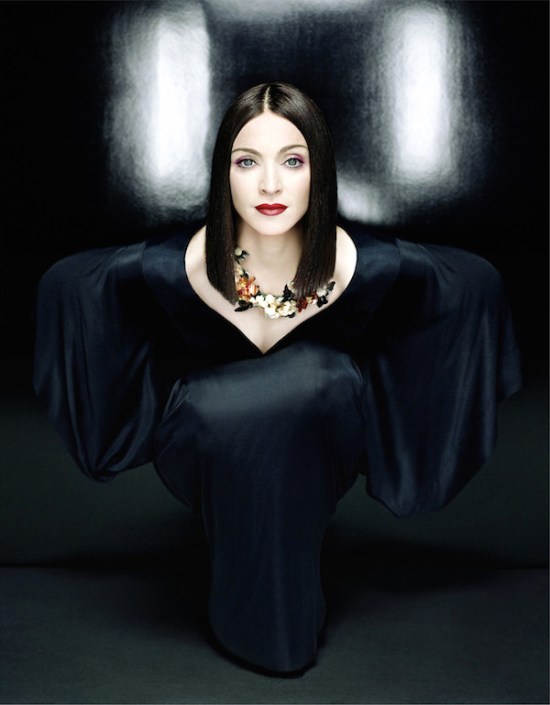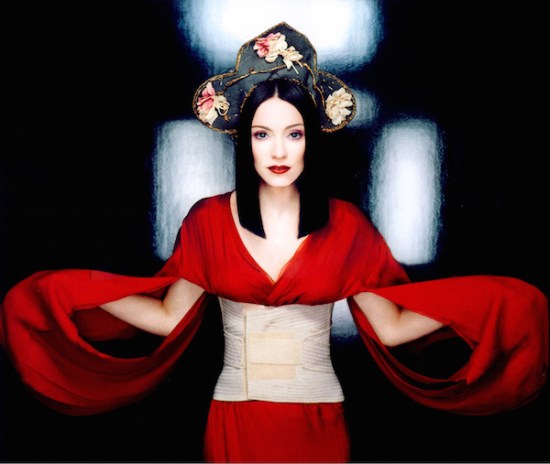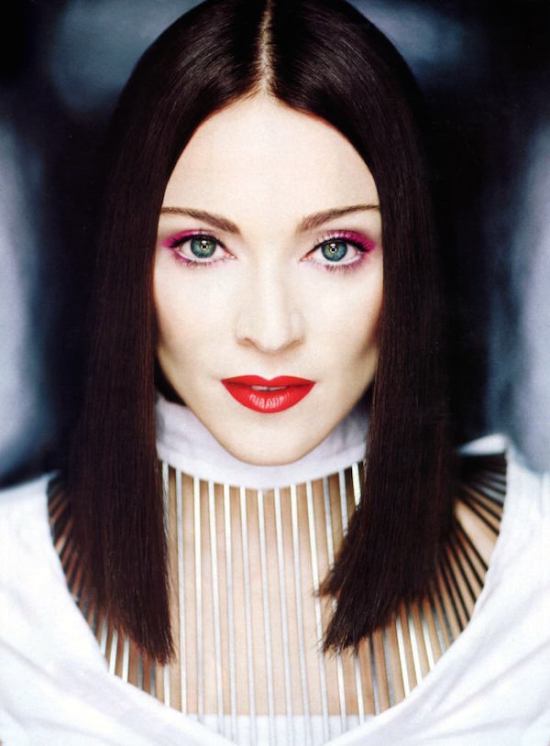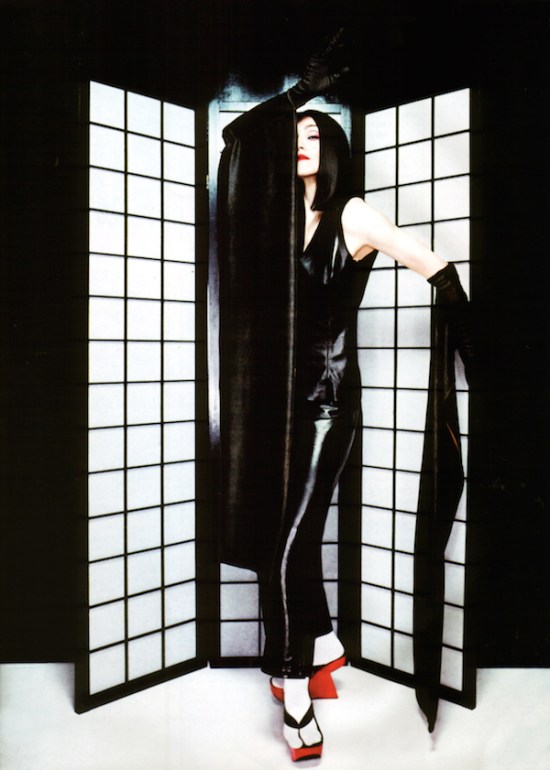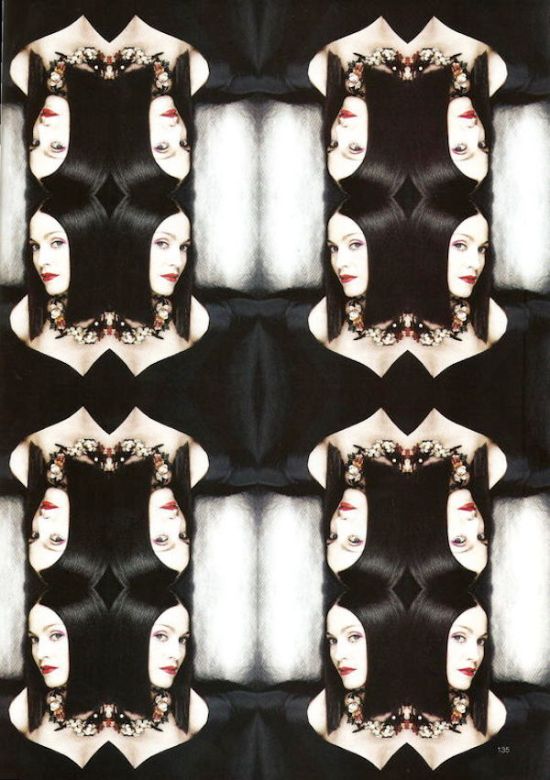
On February 1 1999, a geisha-inspired Madonna was featured on the cover of Harper’s Bazaar magazine in the USA, with photos by Patrick Demarchelier.


On February 1 1999, a geisha-inspired Madonna was featured on the cover of Harper’s Bazaar magazine in the USA, with photos by Patrick Demarchelier.


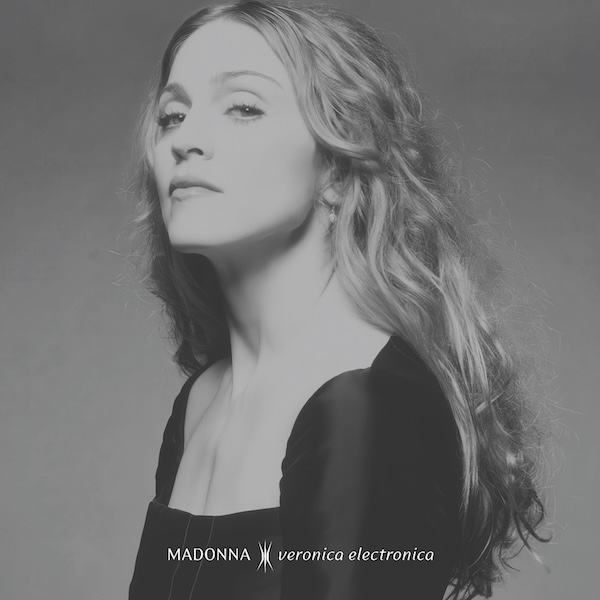
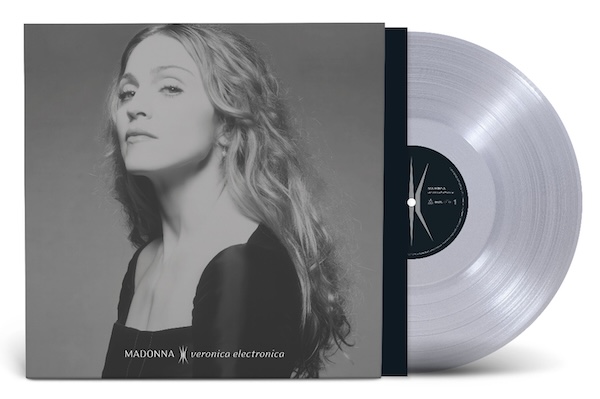
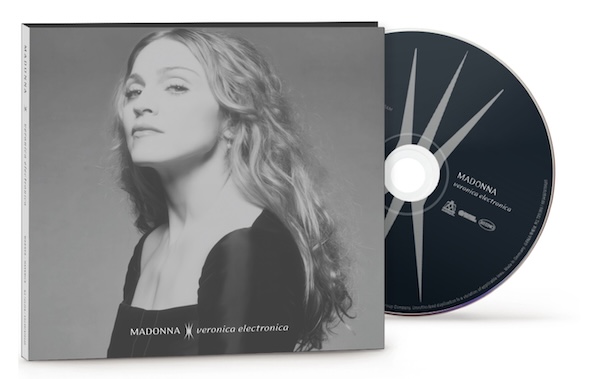
On October 10, 2025, the second pressing of Madonna’s Veronica Electronica companion EP for the Ray of Light album was released — expanded beyond its original vinyl-only run to include a CD edition for the first time ever.
Originally released July 25, 2025, Veronica Electronica first appeared on silver nugget metallic vinyl, exclusive to the original 2025 pressing. Conceived by Madonna in 1998 as a companion remix project under her “Veronica Electronica” alter ego, the long-rumoured collection finally emerged nearly three decades later, featuring newly edited versions of remixes by Peter Rauhofer, William Orbit, Sasha, BT, and Victor Calderone.
Following overwhelming fan demand, the EP returned on October 10 — re-pressed on ultra-clear vinyl in a silver-printed mylar jacket, and newly issued in Deluxe CD format for the first time.
Track List:
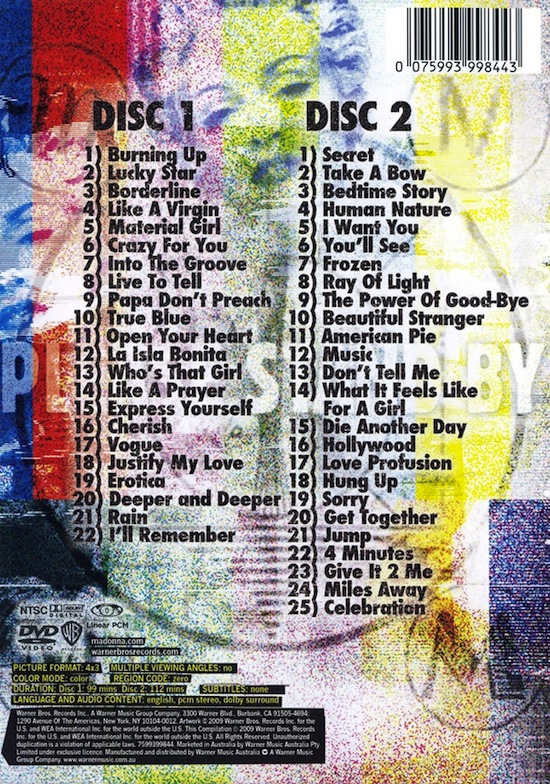
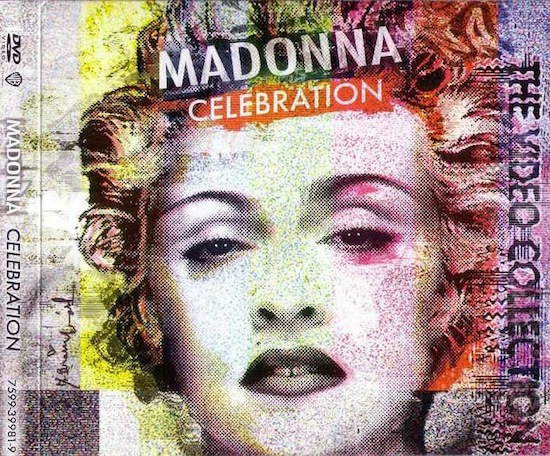
On September 29 2009, Madonna and Warner Bros. released Celebration: The Video Collection. The greatest videos DVD collection accompanied the Celebration greatest hits collection.
Celebration: The Video Collection continued on from Madonna’s other video compilations The Immaculate Collection and The Video Collection 93:99.
Celebration: The Video Collection debuted at the top of the Billboard Top Music Videos chart. It was certified platinum by the Recording Industry Association of America (RIAA) for shipment of 100,000 copies across United States.
The cover for Celebration: The Video Collection was created by street pop artist Mr. Brainwash who is best known for “throwing modern cultural icons into a blender and turning it up to eleven”.
The DVD collection was released in two different versions, both are double disc releases:
This video collection received mixed reviews from critics and fans when it was released. While the inclusion of videos that were left off her previous retrospectives were certainly appreciated, many felt that the set’s exclusion of several notable clips (with Oh Father, Bad Girl, Drowned World/Substitute For Love & Nothing Really Matters among its most glaring omissions) kept it from being the definitive overview it was touted to be.
Another point of contention was the use of cheaper single-layer versus double-layer DVD’s, the latter of which would have allowed for the inclusion of the three additional clips noted above (which would have rounded out the total number of clips to a nice even fifty) and corrected the compression issues that marred the image quality of many videos. Indeed, the varying picture quality from clip to clip and minimal effort given to ensuring overall quality control left the product with a distinctly “budget” feel that had some fans wondering whether the grainy, test-pattern-infused artwork for the set was perhaps a bit too fitting.
Surely, Madonna’s pioneering work in the medium and the perfectionist spirit that helped make these works so compelling deserve a comprehensive retrospective of the highest quality.
Did you feel this release was worthy of celebration or would you have made changes to it? With recent innovations in digital distribution, would you appreciate an official reissue of Madonna’s entire music video catalogue – from her first clip, Everybody, through to her latest, Batuka – as high quality digital downloads? Clips could be sold individually for a few dollars each or bundled into era sets that could be downloaded through Madonna’s official website, with proceeds benefiting one of her charities. Would you support such an initiative if the highest quality control standards were met and no corners were cut? Perhaps this would prove to be an ideal avenue for her to finally market long-requested, definitive versions of her previously unavailable or out-of-print live concert films as well.
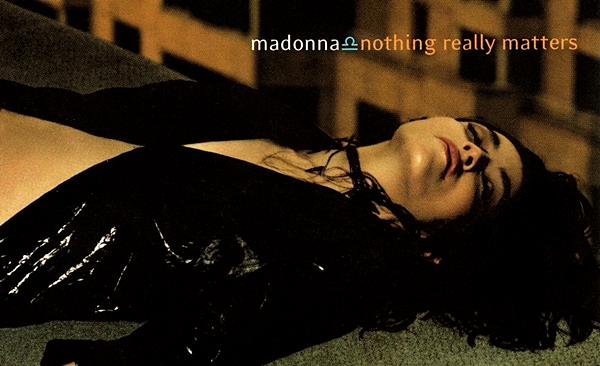
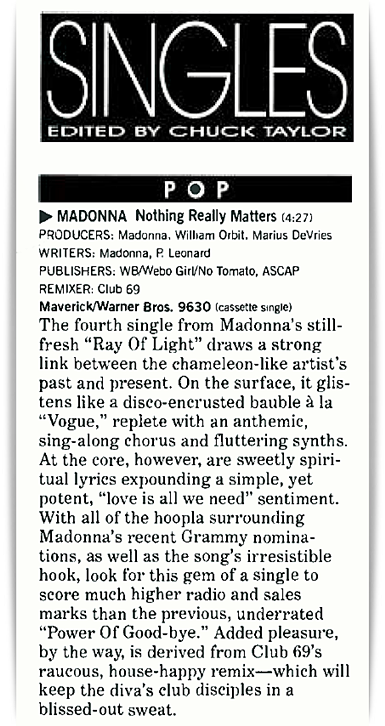
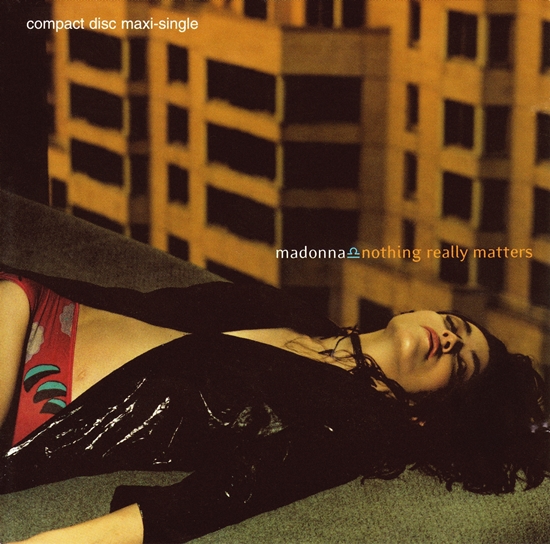
On February 13 1999, Madonna’s Nothing Really Matters single was reviewed by Billboard magazine.
The North American two-track single for Nothing Really Matters included the album version of To Have And Not To Hold as its b-side.
Prior to the release of the Ray Of Light album, it was reported that Madonna had fourteen tracks mastered but wanted to cut one, as she felt that thirteen was a lucky number. According to the article, Madonna’s final selection was between two songs: To Have And Not To Hold or Has To Be.
As we all know, Has To Be ended up being cut from the final track list (except in Japan, where it was included as a bonus track).
If you had to choose between including To Have And Not To Hold or Has To Be on Ray Of Light, which song would you include? Keep in mind, your selection should not simply be which individual track you prefer – Madonna would also have had to consider how her choice would affect the overall flow and emotional arc of the album, both musically and lyrically.
On November 2 1999, the Madonna: The Video Collection 1993-99 was released on home video and DVD.
Madonna: The Video Collection 1993-99 was released as a collection of Madonna’s favourite videos from 1993-1999. The collection contains 14 videos: Bad Girl, Fever, Rain, Secret, Take A Bow, Bedtime Story, Human Nature, Love Don’t Live Here Anymore, Frozen, Ray Of Light, Drowned World, The Power of Goodbye, Nothing Really Matters, and Beautiful Stranger.


On May 5, 2024, social media and news outlets buzzed with reports of Madonna’s historic concert the previous night. Madonna’s Celebration Tour culminated in a spectacular finale on Saturday night, electrifying Brazil’s Copacabana beach with an unprecedented show destined to carve its place in pop music history. As the sun dipped below Rio de Janeiro’s iconic skyline, an astonishing 1.6 million passionate fans gathered to experience the tour’s grand conclusion, turning the sandy beach into a vibrant wave of enthusiasm and adoration.
From die-hard enthusiasts who had staked their claim for prime viewing spots hours, even days in advance, to affluent aficionados who anchored their boats near the shore, every corner of Copacabana was abuzz with anticipation. Firefighters sprayed cooling mists to alleviate the sweltering heat, ensuring the comfort of the thronging masses as temperatures soared.
At precisely 10:40 p.m., the Queen of Pop herself, Madonna, took to the stage, casting her spell over the ecstatic multitude with an electrifying performance that spanned over two hours. Amidst a cacophony of cheers, she belted out timeless classics like “Like a Prayer,” “Vogue,” and “Express Yourself,” enrapturing the audience with her timeless charisma and boundless energy.
Madonna’s poignant words resonated deeply as she basked in the ethereal beauty of Rio, declaring, “Here we are, in the most beautiful place in the world, with the ocean, the mountains, Jesus. Magic.” Joined by Brazilian luminaries Anitta and Pabllo Vittar, as well as rising talents from local samba schools, Madonna orchestrated a mesmerizing symphony of music and spectacle, transcending boundaries of culture and geography.
As the final notes of “Live to Tell” reverberated into the night sky, accompanied by poignant imagery honoring those lost to AIDS, Madonna’s indelible legacy as the reigning Queen of Pop illuminated the hearts of her audience, serving as a beacon of inspiration for generations past, present, and future.
This historic event not only marked the culmination of Madonna’s monumental Celebration Tour but also etched a new pinnacle in her storied career. With an estimated 1.6 million attendees, surpassing all previous records, the magnitude of her influence and enduring appeal was unequivocally reaffirmed.
In terms of sales, the tour amassed an impressive $225,580,345 in revenue, with an average of $2,819,754 per show. A total of 1,127,658 tickets were sold, averaging 14,096 tickets per show. The average ticket price stood at $200.04, reflecting the demand and excitement surrounding Madonna’s performances. Additionally, all 80 shows reported sold-out crowds, further cementing Madonna’s status as a global icon.
Rio’s preparations for this monumental occasion underscored the economic and cultural significance of the event, with forecasts predicting a substantial boost to the local economy and a surge in tourism. Amidst the logistical challenges akin to New Year’s Eve festivities, stringent security measures ensured the safety of attendees, with a formidable contingent of military and police personnel deployed to maintain order.
Sponsored by Itaú Apresenta, Madonna’s free concert was a heartfelt gesture of gratitude to her legions of fans, a testament to her unwavering commitment to the artistry that has defined her illustrious career spanning four decades.
Full Set List:
Act I
Act II
Act III
Act IV
Act V
Act VI
Act VII
On February 13 1999, Madonna’s music video for Nothing Really Matters premiered on MTV.
The video was directed by Johan Renck and filmed in January 1999 at the Silvercup Studios in Long Island City, New York.
The kimono Madonna wore in the video was created by Jean-Paul Gaultier.
Madonna stated that the inspiration behind the video was from the 1996 novel Memoirs of a Geisha. Madonna later stated; “The whole idea of a geisha is a straight metaphor for being an [entertainer] because, on one hand you’re privileged to be a geisha, but on the other hand you’re a prisoner.” Madonna also choreographed her own moves on the video, as she stated “I don’t like how other people say how I should move, I’m my own best choreographer.”