Today in Madonna History: November 26, 1992

On November 26 1992, Rolling Stone magazine published their review of Madonna’s Erotica album, written by Arion Berger:

It took Madonna ten years, but she finally made the record everyone has accused her of making all along. Chilly, deliberate, relentlessly posturing. Erotica is a post-AIDS album about romance — it doesn’t so much evoke sex as provide a fetishistic abstraction of it. She may have intended to rattle America with hot talk about oral gratification and role switching, but sensuality is the last thing on the album’s mind. Moving claustrophobically within the schematic confines of dominance and submission, Erotica plays out its fantasies with astringent aloofness, unhumid and uninviting. The production choices suggest not a celebration of the physical but a critique of commercial representations of sex — whether Paul Verhoeven’s, Bruce Weber’s or Madonna’s — that by definition should not be mistaken for the real thing. It succeeds in a way the innocent post-punk diva of Madonna and the thoughtful songwriter of Like a Prayer could not have imagined. Its cold, remote sound systematically undoes every one of the singer’s intimate promises.

Clinical enough on its own terms when compared with the lushness and romanticism of Madonna’s past grooves, Erotica is stunningly reined in; even when it achieves disco greatness, it’s never heady. Madonna, along with co-producers Andre Betts and Shep Pettibone, tamps down every opportunity to let loose — moments ripe for a crescendo, a soaring instrumental break, a chance for the listener to dance along, are over the instant they are heard. Erotica is Madonna’s show (the music leaves no room for audience participation), and her production teases and then denies with the grim control of a dominatrix.

Against maraca beats and a shimmying horn riff, Erotica introduces Madonna as “Mistress Dita,” whose husky invocations of “do as I say” promise a smorgasbord of sexual experimentation, like the one portrayed in the video for Justify My Love. But the sensibility of Erotica is miles removed from the warm come-ons of Justify My Love, which got its heat from privacy and romance — the singer’s exhortations to “tell me your dreams.” The Madonna of Erotica is in no way interested in your dreams; she’s after compliance, and not merely physical compliance either. The song demands the passivity of a listener, not a sexual partner. It’s insistently self-absorbed — Vogue with a dirty mouth, where all the real action’s on the dance floor.

Look (or listen) but don’t touch sexuality isn’t the only peep-show aspect of this album; Erotica strives for anonymity the way True Blue strove for intimacy. With the exception of the riveting Bad Girl, in which the singer teases out shades of ambiguity in the mind of a girl who’d rather mess herself up than end a relationship she’s too neurotic to handle, the characters remain faceless. It’s as if Madonna recognizes the discomfort we feel when sensing the human character of a woman whose function is purely sexual. A sex symbol herself, she coolly removes the threat of her own personality.

Pure disco moments like the whirligig Deeper and Deeper don’t need emotional resonance to make them race. But the record sustains its icy tone throughout the yearning ballads (Rain, Waiting) and confessional moods (Secret Garden). Relieved of Madonna’s celebrity baggage, they’re abstract nearly to the point of nonexistence — ideas of love songs posing as the real thing. Even when Madonna draws from her own life, she’s all reaction, no feeling: The snippy Thief of Hearts takes swipes at a man stealer but not out of love or loyalty toward the purloined boyfriend, who isn’t even mentioned.

By depersonalizing herself to a mocking extreme, the Madonna of Erotica is sexy in only the most objectified terms, just as the album is only in the most literal sense what it claims to be. Like erotica, Erotica is a tool rather than an experience. Its stridency at once refutes and justifies what her detractors have always said: Every persona is a fake, the self-actualized amazon of Express Yourself no less than the breathless baby doll of Material Girl. Erotica continually subverts this posing to expose its function as pop playacting. The narrator of Bye Bye Baby ostensibly dumps the creep who’s been mistreating her, but Madonna’s infantile vocal and flat delivery are anything but assertive — she could be a drag queen toying with a pop hit of the past. Erotica is everything Madonna has been denounced for being — meticulous, calculated, domineering and artificial. It accepts those charges and answers with a brilliant record to prove them.

Today in Madonna History: July 31, 1993

madonna-rain-japan-mini-ep-1 madonna-rain-japan-mini-ep-3madonna-rain-japan-mini-ep-2

On July 31 1993, the fifth single from Madonna’s Erotica album, Rain, debuted at #7 on the UK Singles Chart.

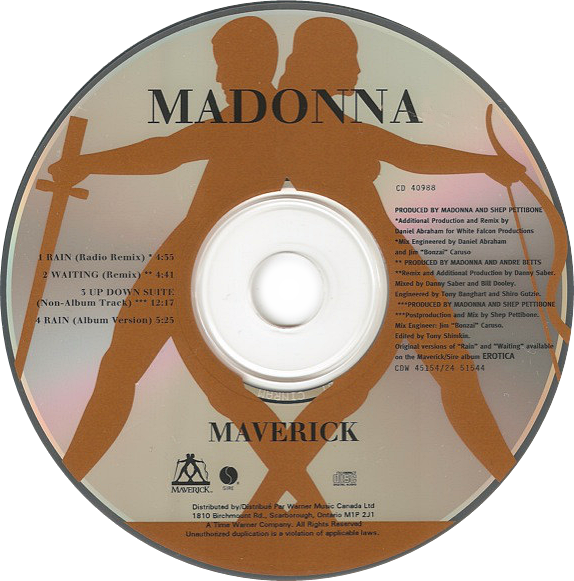
In Japan, a ten track Rain mini album or EP was later released to celebrate the single and the upcoming Girlie Show concerts.  As usual, Australia copied the release, but eliminated the obi-strip from their pressing.

The EP included the following tracks:

Rain (Radio Remix)
Waiting (Remix)
Up Down Suite
Rain (Album Version)
Bad Girl (Extended Mix)
Fever (Extended 12″)
Fever (Shep’s Remedy Dub)
Fever (Murk Boys Miami Dub)
Fever (Oscar G’s Dope Mix)
Rain (Video Edit)

Today in Madonna History: June 8, 1992

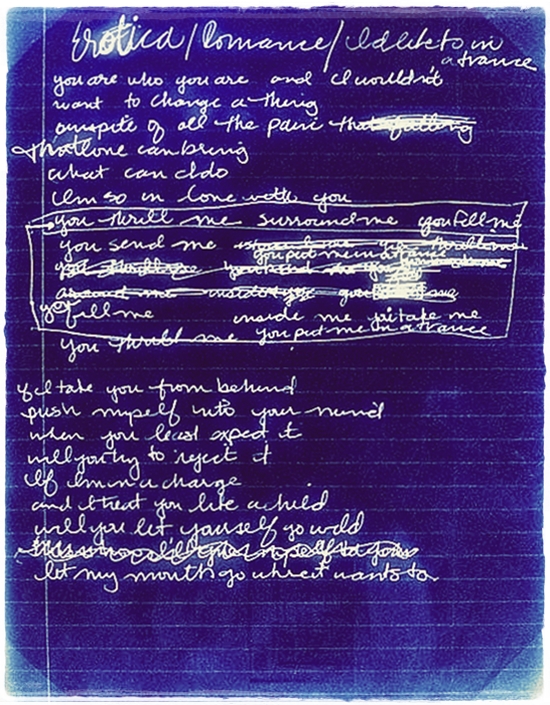
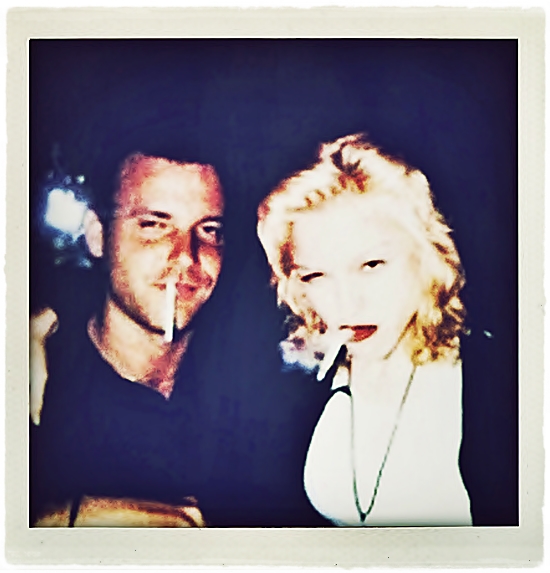
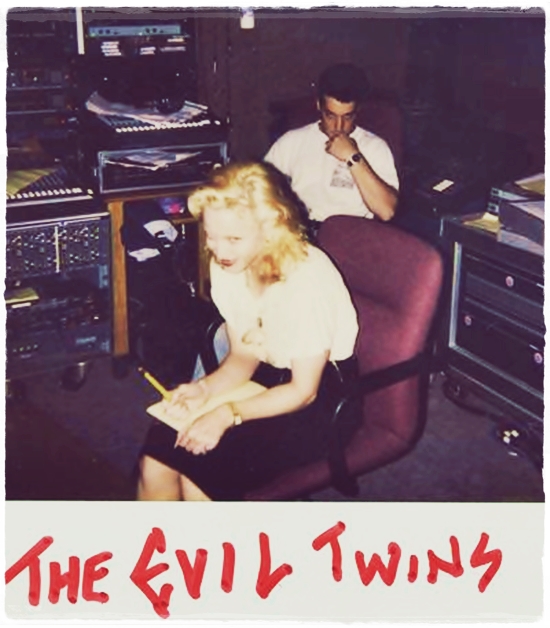
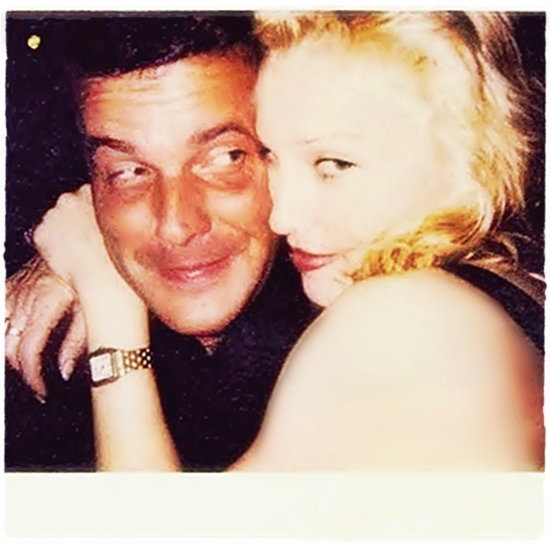
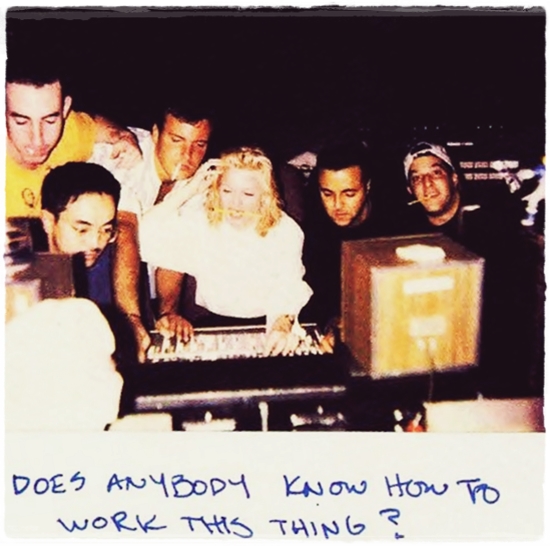
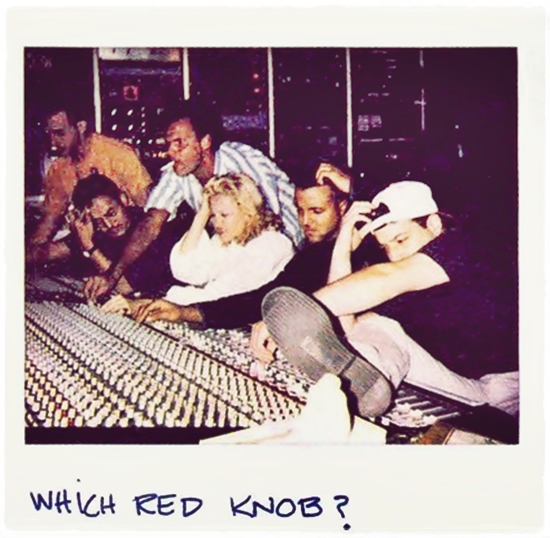
erotica early lyrics 2 erotica diaries 2 erotica diaries 3 erotica diaries 1 erotica diaries 4 erotica diaries 5

On June 8 1992, Madonna began recording sessions for the Erotica album at Soundworks, in New York.

While the writing and recording of Madonna’s previous albums had typically unfolded rather quickly, Erotica marked a change of pace in the creation of a Madonna record. Songwriting sessions for the set had occurred sporadically throughout the previous year with Shep Pettibone, Tony Shimkin and Andre Betts, in between movie projects and photo shoots for her upcoming coffee table book, Sex.

In contrast to the slick production qualities of the albums that preceded it, Madonna wanted Erotica to feature a darker, more gritty and less polished sound. This led to the decision to carry over many of the original demo vocals recorded during the songwriting process at Shep’s home studio to the final versions, with mainly lyrical additions/changes, musical overdubs, background vocals and final mixing taking place during the sessions at Soundworks.

One notable change that did occur in these final recording sessions was Madonna’s decision to swap her original lyrics for the song Goodbye To Innocence (which had gone through various incarnations in an attempt to keep the track off the cutting room floor) with the lyrics of the torch classic, Fever.  An earlier arrangement of Goodbye To Innocence with lyrics intact was later featured on the pro-choice compilation album, Just Say Roe, while a dub version of the same arrangement was retitled Up Down Suite when it appeared as a b-side on the Rain maxi-single. Another rough demo of the same track (streaming above), which is referred to as the “Straight Pass” mix on its original submission for copyright registration (which indicates that mixing of the track had not been finalized and that it is not mastered), leaked to file sharing services in February, 2008.

The “Straight Pass” mix bears some similarity to another unreleased track that was discarded early in the recording sessions, You Are The One. Aside from the lyrical paradox (with “You are the one” flipped to “I am the one”), both feature samples from Arabic singer Fairuz that would be reworked into the released version of the Erotica album’s title track and lead single.

Today in Madonna History: November 2, 1999

madonna-93-99-video-collection-1 madonna-93-99-video-collection-2

On November 2 1999, the Madonna: The Video Collection 1993-99 was released on home video and DVD.

Madonna: The Video Collection 1993-99 was released as a collection of Madonna’s favourite videos from 1993-1999. The collection contains 14 videos: Bad Girl, Fever, Rain, Secret, Take A Bow, Bedtime Story, Human Nature, Love Don’t Live Here Anymore, Frozen, Ray Of Light, Drowned World, The Power of Goodbye, Nothing Really Matters, and Beautiful Stranger.

Today in Madonna History: July 17, 1993

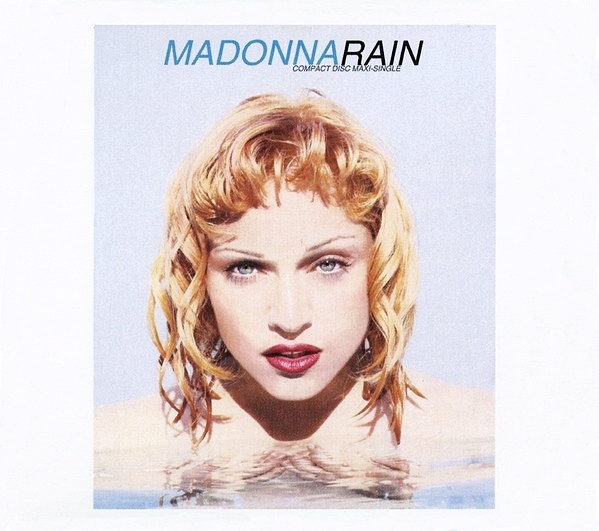
On July 17 1993, Rain was released as a single in North America. It was the fourth and final North American single from the Erotica album.

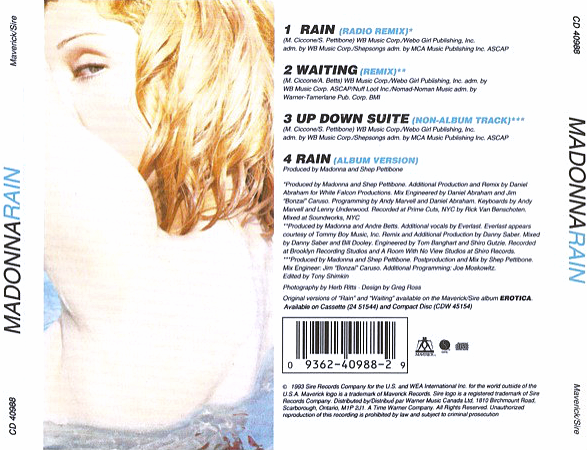
Following a cold reception to Madonna’s previous North American single – the bleak-but-beautiful Bad Girl Rain was given a glossy makeover by French record producer Daniel Abraham (who had recently completed a similar assignment with the video remix of Fever) to help ensure that it would receive a warmer welcome from radio programmers. The U.S. promotional CD that was serviced to radio by Maverick/Warner offered the choice between the sweetened “Radio Remix” (in full-length and edited form) or an edited album version, the latter of which was fittingly used in the song’s gorgeous music video.

As her label had correctly predicted, radio indeed favored the smoother sound of the “Radio Remix” over the darker, more dynamic (and in our opinion, more interesting) production-work of the album mix.

While not an all-out smash hit, Rain was the first single from the Erotica album to impact Billboard’s Hot AC chart, where it reached the Top 10, and it is generally viewed as an initial recovery step following the backlash Madonna had faced in the wake of the Sex book.

rain lyrics 550

Written and produced by Madonna & Shep Pettibone (unlike the majority of the tracks from Erotica, Tony Shimkin has not been added as co-writer, according to the Warner-Chappel publishing database), Rain was one of the earliest songs conceived during the Erotica album sessions. It appears as the first track on a two-cassette collection of demos from the album sessions submitted to the U.S. Library Of Congress for copyright registration.

The infamously sought-after set is often referred to by fans as The Rain Tapes because of the song’s prominent placement in its sequencing and also due to the likely unintentional visual prominence of the song’s title in the handwritten sleeve notes that accompanied the tapes.

Shep Pettibone created the song’s interesting use of panning percussion by digitally cutting and splicing samples of percussion breaks from an extended version of Scritti Politti’s 1985 hit, Perfect Way (and no, he was not involved with creating the remix). Although no sample credit was given on the album, considering the royalties the band would have earned for their inclusion on Madonna’s Who’s That Girl soundtrack, perhaps she figured that they owed her one.

Rain US Cassette Maxi Single Inner Sleeve

The Rain maxi-single was perhaps most notable for its inclusion of a non-album track, Up Down Suite, which was for all intents and purposes a dub remix of album outtake, Goodbye To Innocence (which remained unreleased at the time, aside from some vocal samples used in a promo-only remix of Fever). A new remix (featuring Everlast) of the Erotica album track, Waiting, was also included on the North American maxi-single, while its album version served as the single’s North American b-side.

With its poetically poignant and emotionally charged lyrics, percussive urgency and one of Madonna’s most ambitious uses of layered self-harmonization (not to mention it being accompanied by one of the most beautiful music videos ever created), it isn’t difficult to understand why Rain remains an enduring fan favorite.

“It’s strange
I feel like I’ve known you before
And I want to understand you
More and more and more
When I’m with you
I feel like a magical child
Everything strange
Everything wild

Waiting is the hardest thing
I tell myself that if I believe in you
In the dream of you
With all my heart and all my soul
That by sheer force of will
I will raise you from the ground
And without a sound you’ll appear
And surrender to me, to love”

Today in Madonna History: January 16, 1993

snl 1993 1 snl 1993 2 snl 1993 snl 1993 3

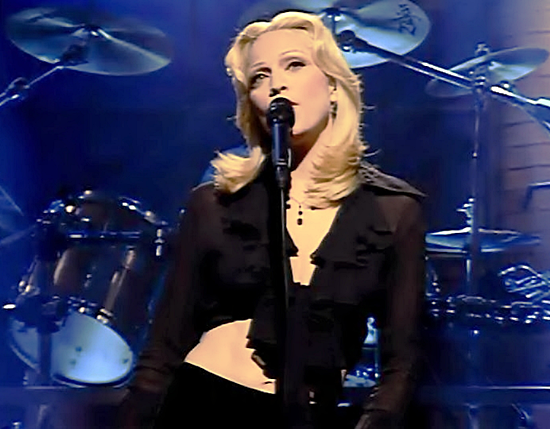
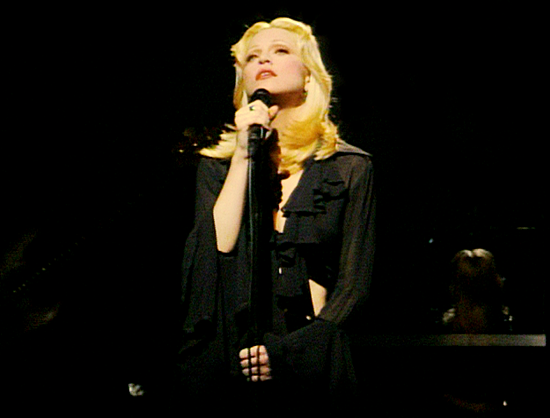
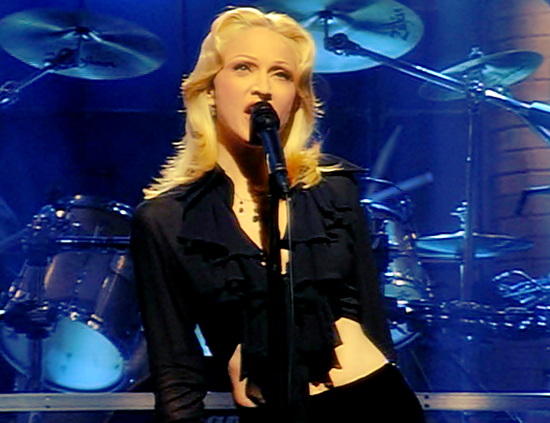
On January 16 1993, Madonna was musical guest on NBC-TV’s Saturday Night Live, performing Fever and Bad Girl. She also appeared in the show’s opening skit – a humorous homage to Marilyn Monroe – alongside the late comedians Phil Hartman and Jan Hooks.

Perhaps a little too into character or, more likely, a little too nervous – she managed to flub the show’s signature intro tag line during the live broadcast, with the mistake being subsequently edited out of all repeated airings of the episode.

Fortunately any nervous energy quickly dissipated once Madonna took to the musical stage, where she delivered a stunningly confident and nuanced vocal performance backed by an equally impressive new band (which included several members that would be recruited for her Girlie Show tour later in the year). It was Madonna’s only live performance of Bad Girl to date, and despite many appearances on SNL, her only inclusion as featured musical guest.

The episode was hosted by Harvey Keitel, who was only weeks away from working with Madonna again in the film Dangerous Game (then known as Snake Eyes) which began shooting in February.

Would you like to see Madonna return to SNL as musical guest?

Today in Madonna History: October 20, 1992

erotica-lp-1 erotica-lp-2 erotica-lp-3 erotica-lp-4 erotica-lp-7 erotica-lp-8 erotica-lp-5 erotica-lp-6 erotica-lp-9 erotica-lp-10 erotica-lp-11

On October 20 1992, Madonna’s fifth studio album, Erotica was released by Maverick Records.

Music critic Sal Cinquemani commented on the album’s impact:

By 1992, Madonna was an icon—untouchable, literally and figuratively—and Erotica was the first time the artist’s music took on a decidedly combative, even threatening tone, and most people didn’t want to hear it. Erotica’s irrefutable un-sexiness probably says more about the sex=death mentality of the early ’90s than any other musical document of its time. This is not Madonna at her creative zenith. This is Madonna at her most important, at her most relevant. No one else in the mainstream at that time dared to talk about sex, love, and death with such frankness and fearlessness.