


On January 22 1983, Madonna’s Everybody peaked on Billboard’s Bubbling Under singles chart in the U.S., spending the first of three consecutive weeks at #107. Although the song managed to bubble under for a total of eight weeks, it didn’t gain enough support from mainstream radio to break into the Hot 100.
Tag Archives: Charts
Today in Madonna History: January 18, 1986


On January 18 1986, Madonna Live: The Virgin Tour hit #1 on Billboard’s Top Music Videos chart in the US. It went on to become the country’s top-selling music video of 1986.
Today in Madonna History: January 16, 1999

On January 16 1999, The Power of Good-Bye spent its sixteenth and final week on the Billboard Hot 100 Airplay chart at #75. The song had peaked at #26 on the Hot 100 Airplay chart during the week of November 28, 1998.

Today in Madonna History: January 7, 1995


On January 7 1995, Take A Bow slid to #21 on the UK Singles chart after reaching a peak of #16 on December 24th, 1994.
While Take A Bow remains her longest-running #1 hit in the US, its disappointing UK chart performance marked an end to Madonna’s spectacular run of 35 consecutive top-ten UK singles from 1984’s Like A Virgin to 1994’s Secret. Take a bow, indeed!
Today in Madonna History: December 29, 2001


On December 29 2001, megamixes issued to promote Madonna’s second greatest hits collection, GHV2, made their debut on Billboard’s Hot Dance Music/Club Play chart in the U.S. at #29.
Several promo-only singles were issued by Maverick/Warner featuring megamixes by Thunderpuss, Tracy Young and Johnny Rocks with Mac Quayle and charted collectively under the title Madonna Megamix.
An additional marketing push to club DJ’s came in the form of GHV2 Remixed: The Best of 1991-2001 – a promo-only companion collection issued on CD and vinyl that compiled full-length remixed versions of songs featured on GHV2.
Today in Madonna History: December 26, 1987
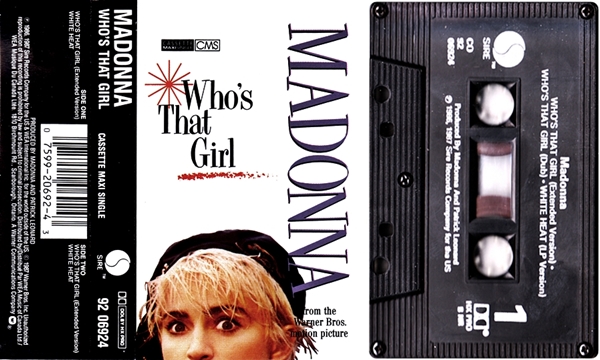
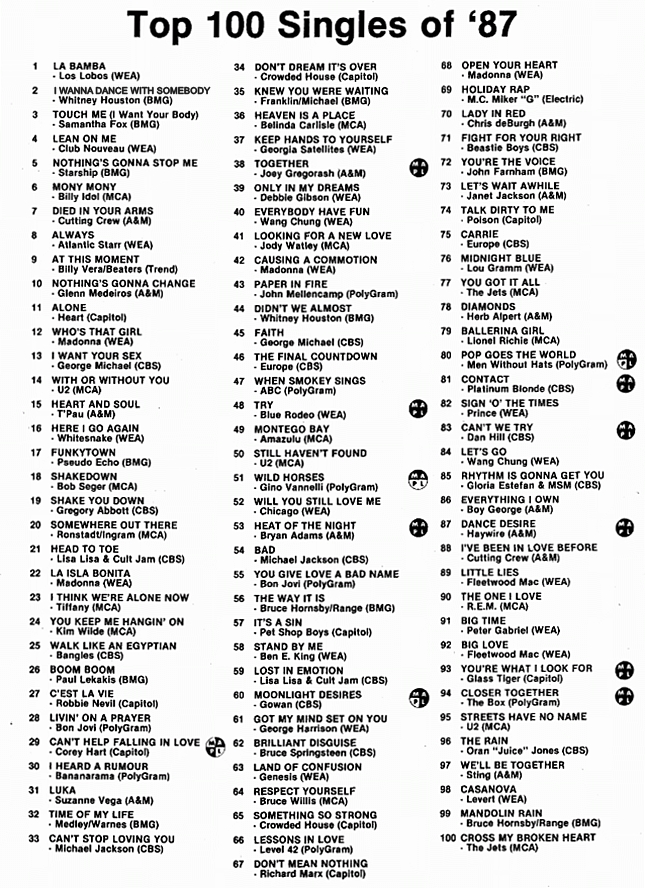
On December 26 1987, RPM magazine – Canada’s definitive music industry publication at the time – issued its year-end singles tally.
All four of Madonna’s eligible Canadian singles charting in 1987 made the list:
- Who’s That Girl – #12
- La Isla Bonita – #22
- Causing A Commotion – #42
- Open Your Heart – #68
Today in Madonna History: December 3, 2005






On December 3 2005, Confessions On A Dance Floor entered the Billboard 200 album chart at number-one with sales of of over 350,000. It was her third consecutive studio album to reach the top and her sixth chart-topping album overall in the US.
Internationally the album hit number-one in 40 countries, including Canada, the UK, Germany, France, Italy, Spain, Poland, Brazil and Australia.

