Today in Madonna History: August 24, 1998

drowned-world-substitute-for-love-uk-cassette-w0453c-[2]-1547-p

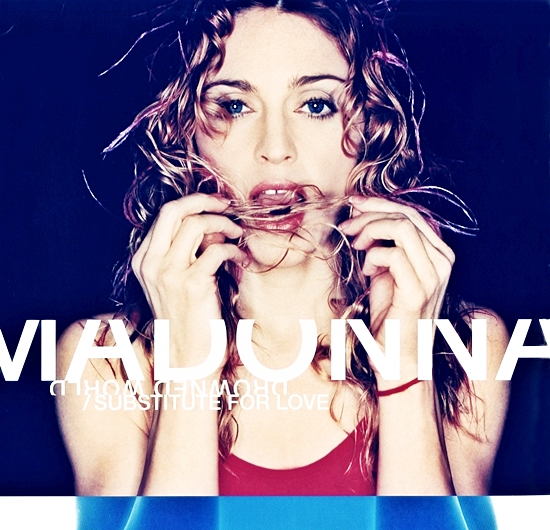
On August 24 1998, Drowned World/Substitute For Love was released as the third single from Ray Of Light in most major markets outside North America. The song was written by Madonna, William Orbit and David Collins (Rod McKuen and Anita Kerr were also credited for sampled use of their composition “Why I Follow The Tigers” performed by The San Sebastian Strings) and was produced by Madonna and Orbit.

With the album’s title track being issued as the second single in North America a month after its release in other markets, it was decided to release Drowned World/Substitute For Love to fill the gap until her next international single release, The Power Of Good-bye. The single peaked at number-ten in the UK, at number-five in Italy and at number-one in Spain. Despite not being released in Canada, the song managed to reach number eighteen on the Canadian singles chart based solely on sales of the European import single, and without any promotion from radio or music video stations. Club play of the imported single, which featured remixes of both Drowned World/Substitute For Love and its b-side, Sky Fits Heaven, prompted a brief appearance by the latter on the U.S. Hot Dance/Club Play Chart, peaking at number forty-one.

The music video, filmed in London by director Walter Stern, caused a minor controversy due to scenes of Madonna’s car being chased by paparazzi on motorcycles, an image still fresh in the public’s mind at the time due the circumstances surrounding the death of Princess Diana. Liz Rosenberg denied that the scene had anything to do with the late Princess, adding that the video was about Madonna’s own experience and relationship with fame.

The song is often ranked as a fan favorite and seems to be highly-regarded by Madonna as well, considering her 2001 concert tour was named after the song and it was used as the show’s opening number. It was also performed during 2006’s Confessions Tour and appeared on her second greatest hits collection, GHV2. An early demo version of the song believed to be produced with Patrick Leonard titled No Substitute For Love leaked online in the early 2000’s. The demo contains similar lyrics but a completely different musical backing track and melody. The music that was used on the final version of the song was a previously composed instrumental track by William Orbit.

Famous faces, far off places
Trinkets I can buy
No handsome stranger, heady danger
Drug that I can try
No ferris wheel, no heart to steal
No laughter in the dark
No one-night stand, no far-off land
No fire that I can spark

Today in Madonna History: May 13, 1983

madonnafunhouse1983-andywarhol 550pmadonna funhouse may 13 1983 550

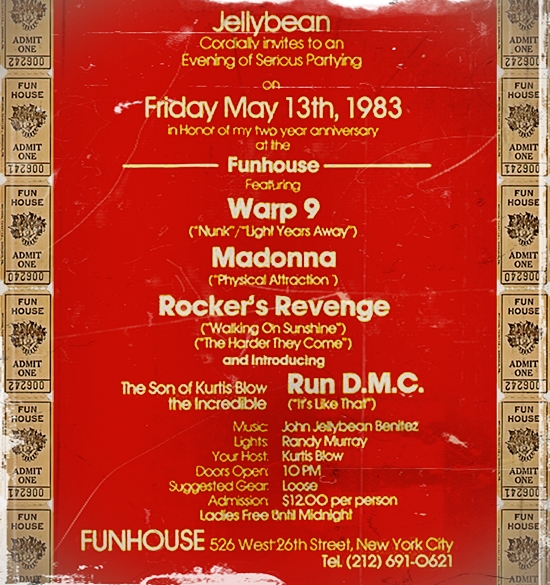
On May 13 1983, Madonna performed Physical Attraction during a track date at the FunHouse in New York City.

Located at 526 West 26th St, the FunHouse (1979-1985) was a breeding ground for the new electronic sounds of the street and helped to make its resident disc jockey, Jellybean Benitez, one of dance music’s first superstar DJ’s.

Of course, Jellybean’s close association with Madonna certainly didn’t hinder his growing popularity either. His first working collaboration with Madonna was to remix Physical Attraction, the b-side to her sophomore single on Sire Records, Burning Up/Physical Attraction, which may explain why it was chosen over the more frequently performed lead track for her performance at the FunHouse. The same remix of Physical Attraction was later used on her debut album, together with new remixes Jellybean provided for Burning Up and Lucky Star alongside his first full production for Holiday.

Today in Madonna History: April 30, 1983

On April 30 1983, Madonna’s second single – the double A-side Burning Up/Physical Attraction – moved into the Top 10 on Billboard’s Dance/Disco Top 80 chart (now known as Hot Dance/Club Play), leaping from #18 to #9.

Interestingly, the release charted as Physical Attraction/Burning Up throughout its run on the Dance chart. When two songs are promoted together to dance clubs, Billboard will generally position the track that earns the higher number of spins first in its Dance chart entry.

The same Billboard issue also saw some early radio support for Madonna, as New York City’s WKTU-FM featured Physical Attraction among their top playlist adds for the week.

Today in Madonna History: March 26, 1983

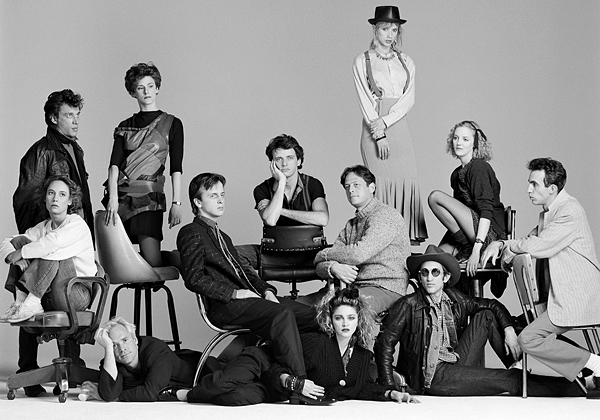
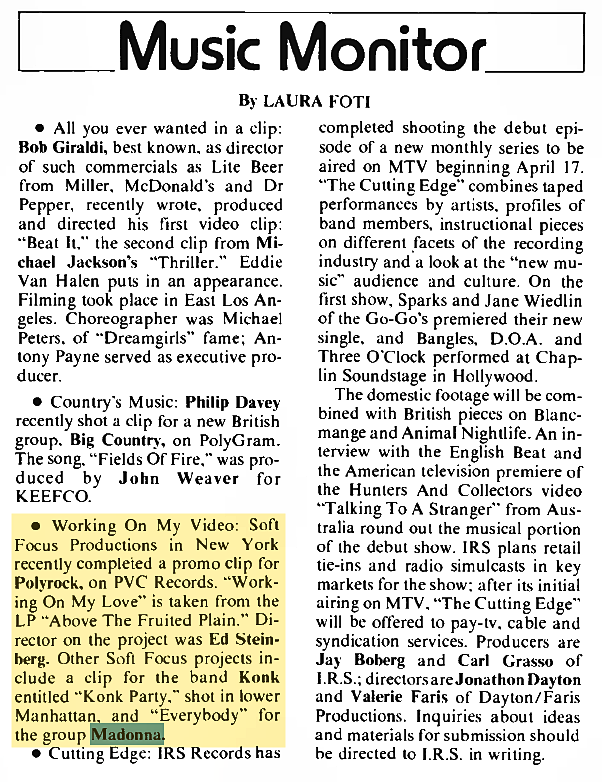
On March 26 1983, the music video for Madonna’s Everybody was briefly mentioned in Billboard magazine along side the music video for Konk’s Konk Party, noting that both videos were directed by Ed Steinberg of Soft Focus Productions. What is not mentioned and likely not known to the columnist (considering they think Madonna is the name of a group!) is that Madonna appears as an extra in Konk Party along with her pals Erika Belle and Martin Burgoyne. Original Sonic Youth drummer and member of Konk, Richard Edson, is also featured in the video. Edson would later appear in the film Desperately Seeking Susan, holding open a newspaper box for Madonna, and is pictured prominently next to Madonna in the film’s cast photo – which is unusual considering the brevity of his time on-screen. He worked with Madonna again in 1988, playing the character of Johnny Crackow in the film, Bloodhounds Of Broadway.

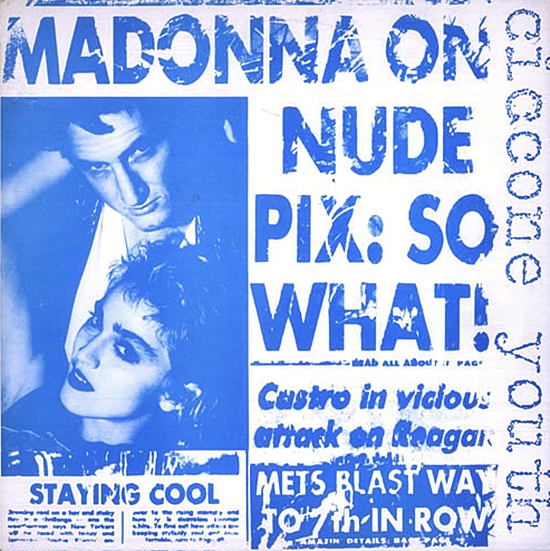
Sonic Youth would explore their own fascination with Madonna with their side project, Ciccone Youth. In liner notes for Sonic Youth’s reissue of their landmark album, Daydream Nation (1988), the band revealed that they had given an advance copy of Ciccone Youth’s The Whitey Album (1988) to Madonna’s sister, who was working in Warner’s art department at the time, seeking Madonna’s approval for the use of her image on the album cover (her songs Into The Groove & Burning Up were also covered & sampled). Word came back that Madonna had no issues with it, adding that she remembered the band from their early days in New York.

Sonic Youth made humourous references to Madonna’s place in popular culture in their promotional artwork throughout the 80’s – typically designed by bassist/vocalist/guitarist and visual artist, Kim Gordon. They were even known to use Madonna’s music as interludes during guitar changes at their shows in the 80’s, bewildering audience members who were not privy to their shared origins as part of the early 80’s underground music scene in NYC.

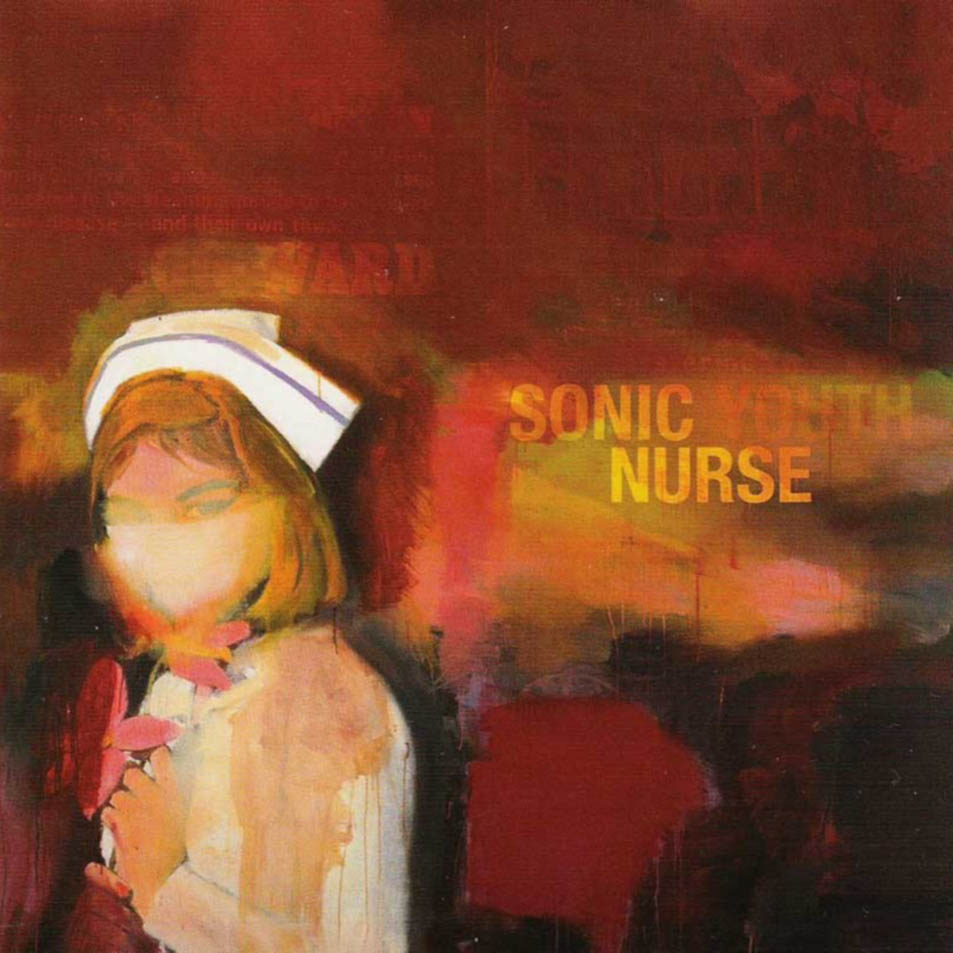
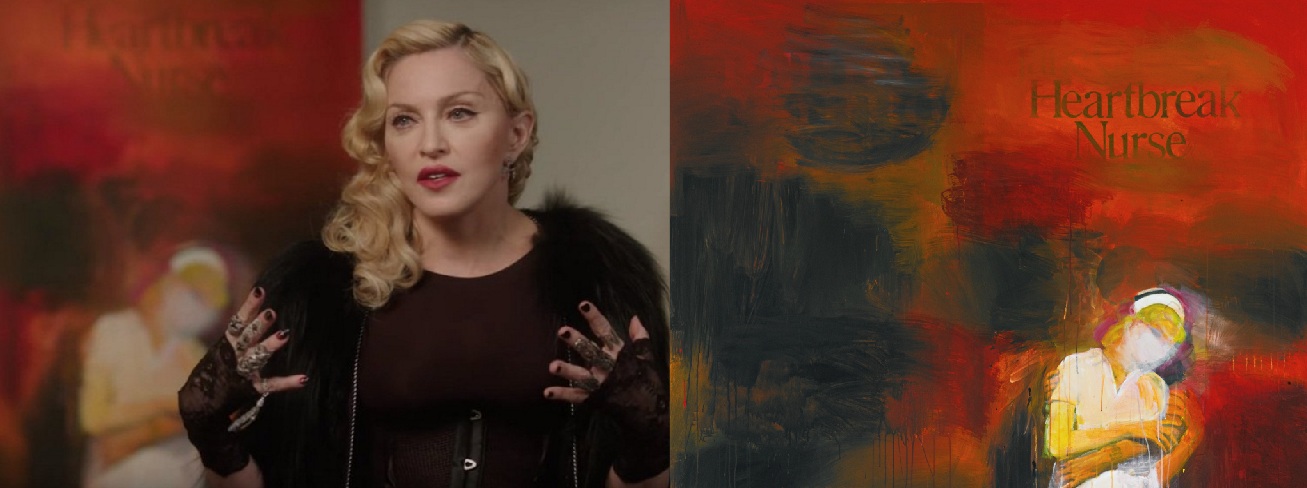
In another connection, Sonic Youth’s 2004 album, Sonic Nurse, featured artwork from Richard Prince’s acclaimed Nurse Paintings series. In 2015, Madonna used a rotating selection of paintings from her own art collection as backdrops for a series of press junket interviews to promote her Rebel Heart album. One of the paintings displayed was Prince’s Heartbreak Nurse from his Nurse Paintings series.

Today in Madonna History: January 1, 1983

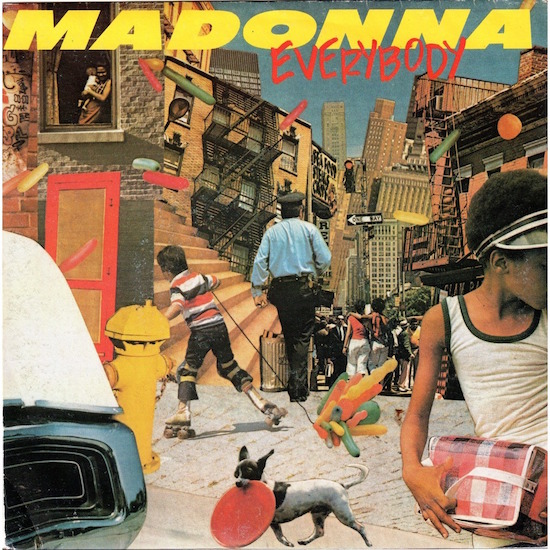
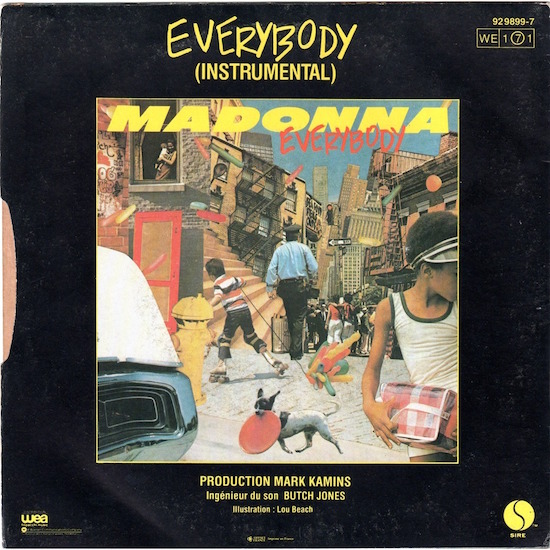
madonna-everybody-january-1-1 madonna-everybody-january-1-2

On January 1 1983, Madonna’s first single, Everybody, climbed to #4 on the Billboard Hot Dance Music/Club Play chart in the USA after 9 weeks on the chart.

Madonna talking about hearing Everybody for the first time on radio:

“I was living on the Upper West Side, 99th and Riverside, and about 7:00 at night I had the radio on in my bedroom, on WKTU, and I heard ‘Everybody’. I said ‘Oh, my God, that’s me coming out of that box.’ It was an amazing feeling.”

Today in Madonna History: October 13, 1983

camden-palace-2 camden-palace-4

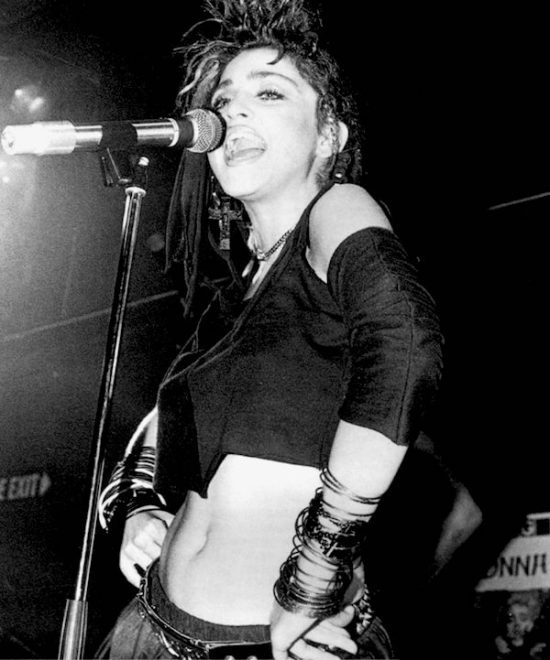
On October 13 1983, Madonna performed Burning Up, Everybody and Holiday at Camden Palace’s Thursday Party Night in London, England.

The following article about Madonna’s performance was originally published on October 15 1983 by The Guardian:

This could be the way pop promotion is going – new artists launched not with a full concert, but with the live equivalent of a video clip.

The scene at the Camden Palace in the early hours was like something from a British version of Flashdance. The place was packed with the usual exotically dressed clientele – there to see and be seen rather than just listen to the music – when the dancing was interrupted by what’s known on the American disco scene as a “track date.”

Pioneered by the likes of Grace Jones, this is a cut-price promotion device in which a disco artist suddenly appears for half an hour, singing live to backing tapes.

This demonstration was by a white girl in her early twenties, known simply as Madonna, a dancer who moved to New York from the Mid-West as an ambitious teenager and is currently the most important new figure in the American dance scene.

She succeeded partly because she makes great records and partly because she has turned the boring idea of a track date into an exotic event.

Dressed in holocaust chic – black top, black skirt and leggings, lots of bare midriff, and hair in ringlets – she sang well, with a husky, black-sounding voice, and danced even better. She hurtled around the stage, mostly swivelling her hips like a belly-dancer while performing her songs like Lucky Star and the stirring Holiday.

Given a full set and a live band behind her, Madonna would seem to have the makings of a major star, so it’s no wonder she is now being managed by the man who guided Michael Jackson’s recent career.

camden-palace-5

Today in Madonna History: September 28, 1983

On September 28 1983, Billboard magazine reported that the music video for Madonna’s second single, Burning Up, had been added into MTV rotation during the preceding week. The video marked Madonna’s introduction to MTV audiences, as the channel had not previously aired the low-budget clip produced for Everybody.

Although the Burning Up/Physical Attraction single had already been out for six months by the time a video finally surfaced, it featured a new mix of the song (which differed from both the 12″ single and from the version that appeared on original vinyl pressings of the album) and was seemingly intended to promote her debut album as a whole rather than the song itself, given that Burning Up had not been actively promoted to radio by her label. Just weeks before the video’s release, Sire/Warner had issued promotional 12-inch copies of Lucky Star/Holiday to gauge public interest for her next single release, and were apparently caught off guard by the swift success of the latter track, as no video or remixes had been readied to promote it.

Indeed, the label’s somewhat haphazard early steps in marketing the album gave very little indication of its impending success.