
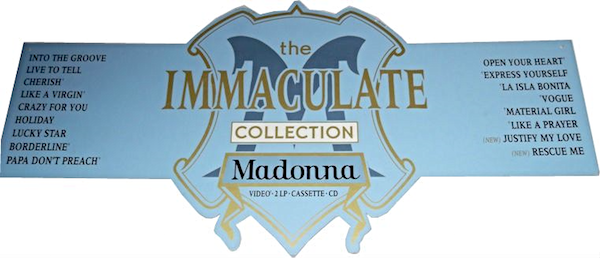
On September 20 1993, Madonna’s The Immaculate Collection (her first collection of greatest hits) was certified 4x platinum for shipment of 4 million units in the USA.

On September 20 1993, Madonna’s The Immaculate Collection (her first collection of greatest hits) was certified 4x platinum for shipment of 4 million units in the USA.


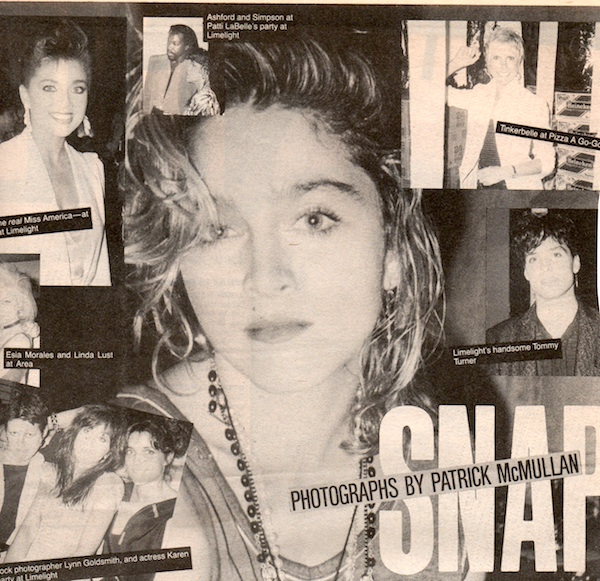
On September 12 1984, Madonna attended Dallas Boesendahl’s party for the Orion Pictures movie release of Amadeus at the Limelight club in New York.
In 2003, photographer Patrick McMullan released a coffee table book called: So80’s: A Photographic Diary of a Decade. In the book he said this of Madonna:
I was at this Dallas Boesendahl party for Amadeus at Limelight, and a publicist named Reid Rosefelt said to me, “You should come meet this girl Madonna.” I said, “Sure, I’m very happy to meet her,” but I didn’t know who she was. So I met her and took a few pictures of her. She couldn’t have been sweeter. It was just a very simple, unguarded moment.

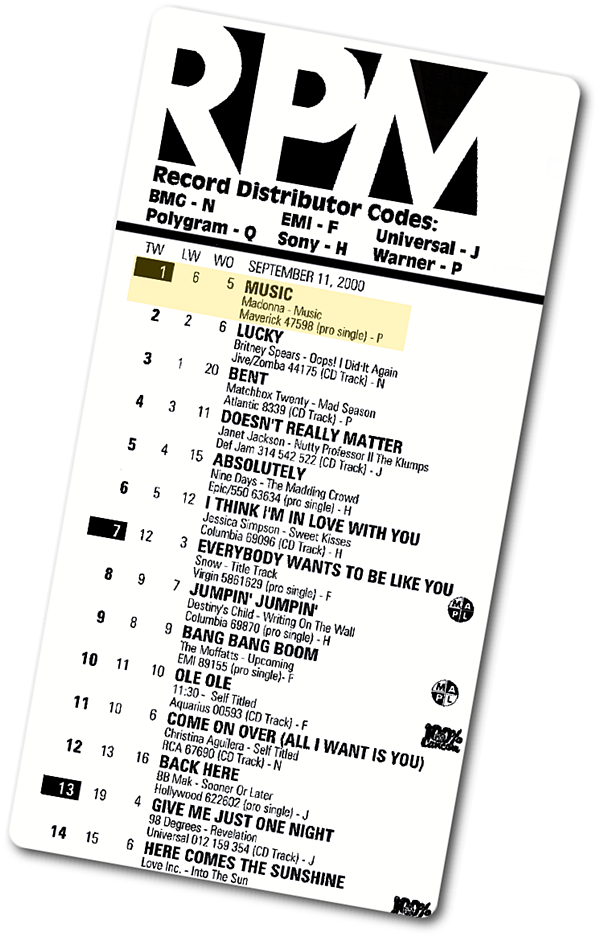
On September 11 2000, Madonna’s Music single hit #1 on the Top Canadian Singles chart in RPM magazine. The single spent an incredible nine weeks at #1 on the chart, making it Madonna’s biggest hit during the RPM chart era in Canada.
Music also holds the distinction of being the final song ever to reach the top of the RPM Top Canadian Singles chart, as the magazine ceased publication during the song’s ninth week at #1. RPM served as the voice of the Canadian music industry and its official chart authority for over thirty-five years.
Madonna’s Music album also hit #1 on RPM’s Top Albums chart during the first two weeks of October, 2000.
In an unusual move, Warner Canada chose to issue the Music single commercially in three different CD configurations: a two-track with non-album b-side Cyberraga, a standard CD maxi-single with full-length remixes, and finally as a set of remix edits – something that would more commonly be reserved for radio in promo-only form.
Both the song and much of the album of the same title bore the fruit of Madonna’s first collaboration with French electronic artist, Mirwais Ahmadzaï. His second solo album, Production, released a few months earlier, featured Madonna’s Paradise (Not For Me) – which would also resurface on Music.
Mirwais worked with Madonna collaborators Jean-Baptiste Mondino (Naïve Song) and Stéphane Sednaoui (Disco Science & I Can’t Wait) on music videos for the Production album, while the latter director also photographed its cover. Madonna, meanwhile, selected Mondino to shoot the cover of her Music album and to direct the video for its second single (Don’t Tell Me).
Several years before directing her Fever video, Sednaoui first captured Madonna as a photographer on the set of the Justify My Love video – directed by Mondino.


On September 10 1992, Madonna’s This Used To Be My Playground was certified gold (for shipment of 500,000 units) in the USA.

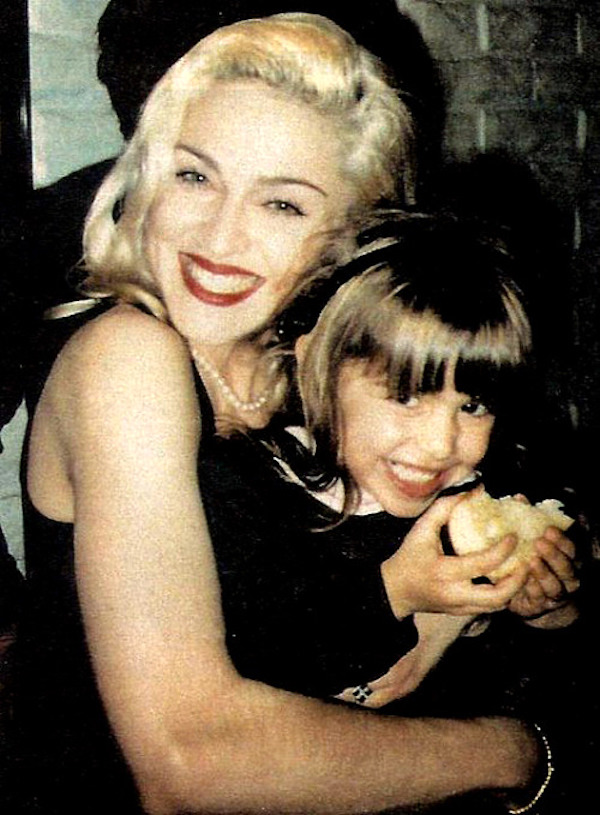
On September 9 2015, Huffington Post interviewed Patrick Leonard and asked about the possibility of them working together again:
If Madonna called you up for her next album, do you think you’re still in a mindset where you could direct her tour?
No. No, I couldn’t because the paths that our lives took are appropriate for what they are. When we met and did the work that we did, I was still in my 20s, or maybe my early 30s as we walked into Like a Prayer. I was still really interested in the pop form. I’m not disinterested in it now, but for the last few years I’ve been working with Leonard Cohen and writing piano music. I’m more of a composer. I just wouldn’t be interested in it, and I don’t think she’d be interested in my ideas anymore. I think we could still write a great song — I don’t think there’s any question about that. But my head just isn’t there at all. It would be fun to see her and fun to think together for a minute, because we were good at that at one point. But that was a long time ago, almost 30 years. I think she deserves better than what I would give her right now, for sure. If she wanted to write an opera, I’d be her guy.
Do you have a favorite Madonna memory?
Yes. When we were on tour. We were in London and it was her birthday. There was a private party in a club, and all these people wanted to dance with her and hang out with her, and Jessie, my daughter, was with us on tour at that time. She was right around 2 years old. You can find things in the press that are still out there — Madonna sat her up on the bar and put half a glass of champagne in her, or a couple of sips or whatever it was, and danced with her pretty much all night. Jessie stood in the middle of the dance floor and spun in her dress, and the next day you saw all these things in all these tabloids with all these faces of celebrities who wanted to dance with her, and Jessie was their foil all night.That was really fun to just see her embrace my daughter and have fun like that. It was really, really special. There are a lot of memories. She’s a good girl. Madonna is a good girl.
Read the full interview here.

On September 8 1986, Madonna’s third album, True Blue, was certified double platinum (for shipment of 2 million units) in the USA.
Here’s a snippet of Davitt Sigerson’s review of True Blue from Rolling Stone (July 17, 1986):
Madonna’s sturdy, dependable, lovable new album remains faithful to her past while shamelessly rising above it. True Blue may generate fewer sales and less attention than Like a Virgin, but it sets her up as an artist for the long run. And like every other brainy move from this best of all possible pop madonnas, it sounds as if it comes from the heart.
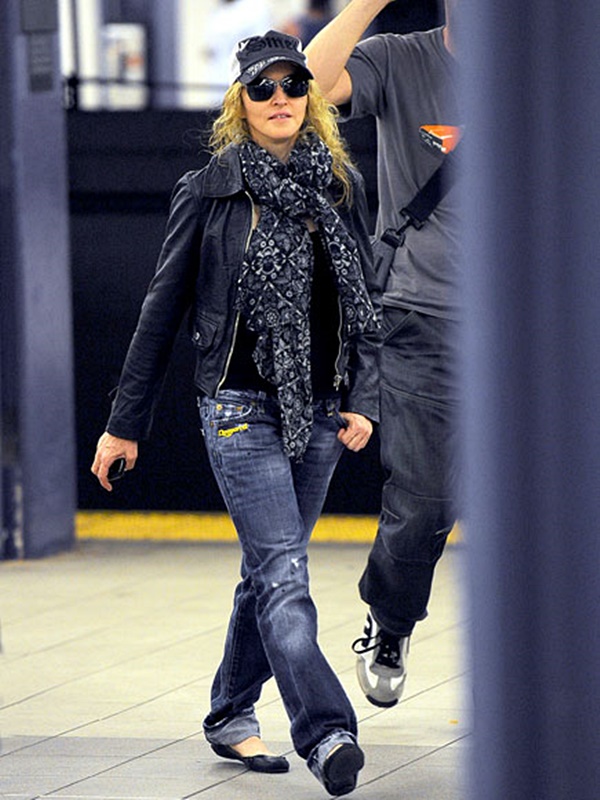
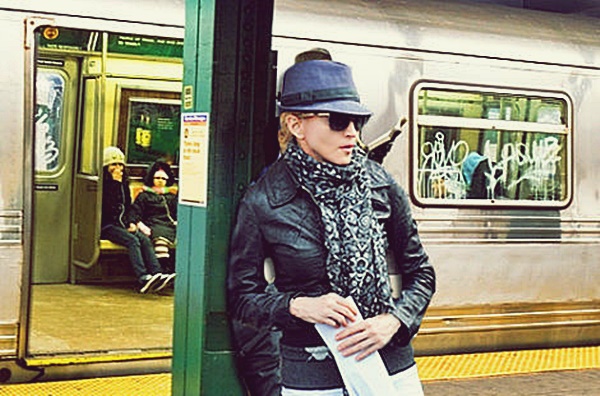
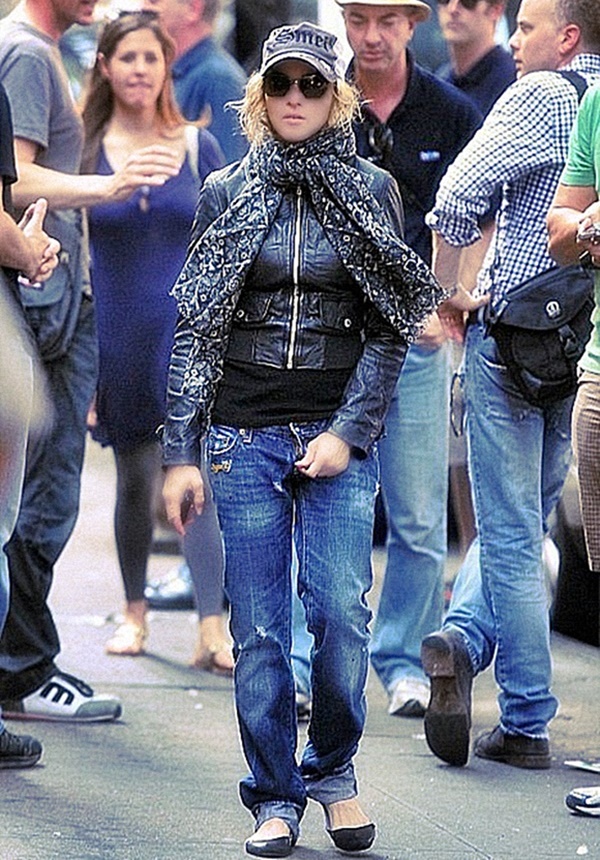

On September 7 2010, Madonna and director Nathan Rissman were captured riding the subway in NYC while scouting scene locations for her second directorial effort, W.E.
 Today In Madonna History