Today in Madonna History: August 22, 1992

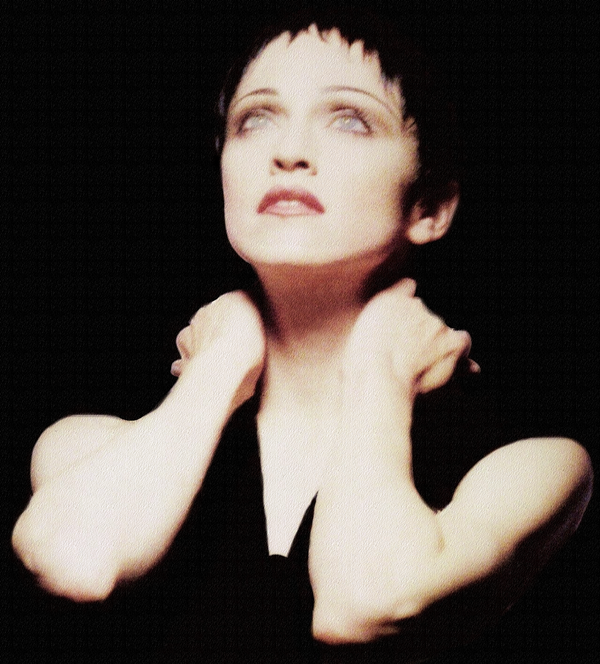
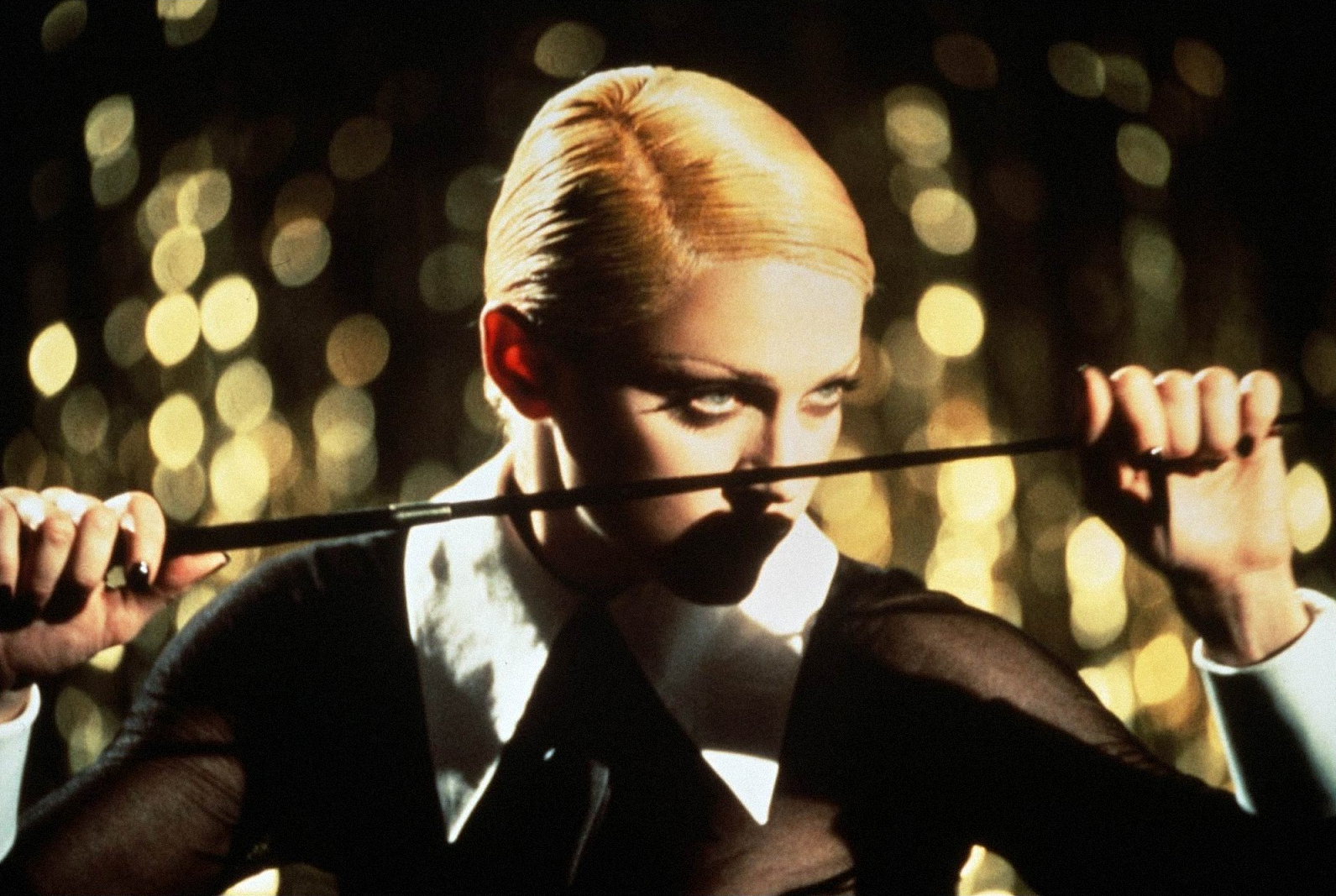
On August 22 1992, Madonna filmed scenes for the Erotica music video at The Kitchen in New York City with fashion photographer/director/designer Fabien Baron. The scenes filmed consisted of Madonna in the character of her Sex book alter-ego, Dita, miming the lyrics to the song. The remainder of the video consisted of a selection of 8mm footage previously shot by Baron during the making of the Sex book.

Baron also served as art director for the Sex book, the Erotica album and single, and later for the Bedtime Stories album and its singles Secret and Take A Bow. He also directed the commercial for her fragrance, Truth Or Dare by Madonna, in 2012.

“She put that book out at the best moment. She timed it very well. She knows what she’s doing. And such drive. Some people want to lift stones and see what’s under it. She’ll be on a beach with millions of stones and want to lift every one of them.”            – Fabien Baron

Today in Madonna History: August 21, 1993

On August 21 1993, Billboard magazine interviewed director Mark Romanek for a feature article about Madonna’s music video for Rain:

One rarely finds the use for such adjectives as “Zen-like,” spare, and sentimental in describing an outrageous, outspoken, and extreme performer like Madonna. Yet the artist’s new Maverick -Sire-Warner Bros. video “Rain,” directed by Mark Romanek for Satellite Films, conjures those very images against the understated elegance of a tenderly soothing ballad. The result is a Madonna who is chic yet vulnerable, glamorous yet sweet.

“The contradiction you face in shooting a Madonna video is that people expect something rather grand from her, and yet the feeling of the times is that things need to be simplified and stripped away,” says Romanek. The director admits he was a bit intimidated by the prospect of shooting a video that would mark a departure from Madonna’s ostentatious antics of the past. “The song is a bit sentimental, and you just can’t do something psychosexual and subversive with it,” he notes. “My challenge was to come up with something that seems glamorous and expensive, yet is spare and Zen-like at the same time.” Romanek chose to interpret “Rain” as an exercise in media manipulation and image-making. The clip is reeled as a video-within-a-video, as Madonna, the doe-eyed ingenue, performs for a Japanese film crew.

Music buffs may recognize the “director” in the clip as the photogenic composer Ryuichi Sakamoto. “By making it a Japanese thing, we made Madonna more vulnerable; she’s away from home, more out-of-place,” says Romanek. “It creates a nice subtext and makes her more sympathetic.” And by shooting a “crew” shooting a clip, Romanek created the kind of prefab, artificial scenario that would underscore the true emotion of “Rain.”

“We knew we needed some rain, but we didn’t want the clip to be too clichéd or too literal,” he notes. “So we figured if we have to have rain, let’s have fake rain.” That fake rain was contained in two tall “walls” that stand on either side of a simply clad Madonna. One shot looks deceptively plain, but as Romanek explains, “the amount of equipment, pipes, and lights that are hidden in that image, so that the walls appear to stand as simply as possible and look aesthetically correct, was huge.”

To further capture the crystalline essence of the song, Romanek and cinematographer Harris Savides chose to lens a number of rare, color closeups of Madonna’s face and features. But they were faced with the technical challenge of updating the traditional “Garbo lighting” used since film’s earliest days to flatter a star’s most arresting features. Madonna agreed to undergo a half day of camera tests, after which a new German lighting fixture was chosen to achieve a thoroughly modern, yet classic, effect. Icy blue eyes stare directly into the camera as full, lush lips sing the lyrics into an old-fashioned microphone. Of all the sequences in the “Rain” video, Romanek says he is proudest of these close-ups. It’s one of the hardest things to make something as simple as that possible,” the director says. “You need that kind of icon, like Madonna, to make a shot like that work.”

The Satellite crew spent four days making sure such aesthetically correct shots would work, including a windswept storm sequence on a stage, and an overhead shot of Madonna surrounded by a bed of open, black umbrellas. In nearly every shot, the graphic image is so compelling that the camera need never move.

Romanek, a founding director of Satellite, shares credit for “Rain” with producer Krista Montagna, stylist David Bradshaw, and editors John Murray and Jim Haygood. The clip’s cinematographer Savides and art director Jan Peter Flack have been nominated for an MTV Video Music Award.

Today in Madonna History: August 20, 2001

On August 20 2001, Sal Cinquemani published this review of Madonna’s Music album in Slant magazine:

After her hugely successful and critically-lauded Ray Of Light, Madonna could have gone in one of several possible directions: (1) a more hardcore trance route, enlisting a world-class DJ like Sasha (who remixed a few tracks from Ray Of Light and whom Madonna allegedly dismissed after collaborating on several tracks early in the recording process of this new album); (2) staying in safe territory by writing and recording once again with William Orbit, the mastermind behind Ray Of Light; or (3) a weird, more experimental direction, commissioning someone like French electronica guru Mirwais Ahmadzai. Madonna once told producer Shep Pettibone “You can never do the same thing twice…ever,” but two new collaborations with Orbit, “Runaway Lover” and “Amazing,” prove that when you do, it will probably be completely uninteresting. “Runaway Lover” sounds like a Ray Of Light outtake with uninspired couplets like “It doesn’t pay to give away what you lack/You’ll never get your money back.” But amid the clichés, Madonna throws in profound food for thought like “You get your education from your lovers.” “Amazing” is incredibly catchy and has a Supremes-like melody but that’s where it ends. The track borrows the drum loop Orbit used in “Beautiful Stranger” (which was originally the loop from his “Ray Of Light” remix), and proves that he may not have had enough tricks up his sleeve for an entire new album anyway (and perhaps Madonna knew that).

As such, Madonna enlisted Mirwais for most of the rest of the album in question, Music. The title track, a retro hands-in-the-air club song reminiscent of Debbie Deb’s “When I Hear Music” and Madonna’s own “Into The Groove,” is the singer’s best dance floor-beckoning track since “Vogue.” She sings “Music makes the people come together” like a track off of her debut album, and as an added bonus she uses words like “bourgeoisie” and “acid-rock” with equal abandon. If you can get past the initial horror of hearing Madonna’s voice get the Cher “Believe” treatment on “Nobody’s Perfect,” another Mirwais collaboration, you’ll find a brilliant song full of genuine sorrow. The track opens with an intentionally imperfect and somber “I feel so sad,” and it is indeed believable. Lyrics like “What did you expect? I’m doing my best” are sung with an intriguing juxtaposition of human emotion and mechanically detached vocalizations. Though hard to swallow at first (like most on the album), the track is one of the singer’s best creations. With its distorted vocals and grinding electronic burps, “Paradise (Not For Me)” is another distinctive Mirwais production. At a turning point in the song, Madonna awkwardly struggles to speak the words “There is a light above my head/Into your eyes my face remains” while strings swell and bring the song to a climax. It is at this point that “Paradise” resembles the cinematic grandeur of tracks like “Frozen,” and it is also one of the few moments throughout Music that recalls the spiritual introspection of Ray Of Light.

Two tracks take a striking folk direction. “I Deserve It” finds Madonna once again singing with a warm yet detached voice, but this time her vocals are completely untouched by effects. “Gone” ends the album and is possibly one of Madonna’s best performances. In the vein of “Live To Tell,” the song seems to sum up everything Madonna has tried to tell us about being the most famous woman in the world. Earlier attempts have seemed obvious and sometimes trite (“Goodbye To Innocence,” “Survival,” “Drowned World”), but this song seems to be particularly telling. It is also, perhaps, the most human she has ever been. Self-deprecation and vulnerability have never been Madonna’s strong-suits, but the way she sings “I won’t let it happen again/I’m not very smart” could make you wonder. Music seems more like a collection of songs than a cohesive album, and it is an unexpected answer to Ray Of Light. But strangely, in an attempt to make a “fun,” less-introspective album, Madonna has revealed more of herself than ever. No longer shrouded with pedantic spirituality, she has become even more human, exposing her fears on tracks like “Nobody’s Perfect” and “Paradise,” her soul on “Don’t Tell Me” and “What It Feels Like For A Girl,” and revealing her joys on “Impressive Instant” and “Music.”

Today in Madonna History: August 19, 1989

On August 19 1989, Cherish entered the Billboard Hot 100 at #37 in the U.S.

Today in Madonna History: August 16, 2018

On August 16 2018, Madonna celebrates her 60th birthday!

In honour of this special milestone, Madonna recently launched a campaign calling on her fans to make a donation to her charity, Raising Malawi:

“I have an unwavering commitment to providing vulnerable children with a loving home. For my birthday, I can think of no better gift than connecting my global family with this beautiful country and the children who need our help most. Every dollar raised will go directly to meals, schools, uniforms and healthcare. I want to come together with my friends, fans and supporters to change the lives of Malawian children and let them know they are nurtured, protected and loved. Through their generous commitment to this organization, Ripple will match each dollar donated to this campaign.” – Madonna

We can’t think of a more fitting and helpful way for fans to show their love and appreciation to Madonna on this special day than by making a donation. Not only will you be helping to make Madonna’s birthday wish come true, you will be providing valuable support to vulnerable children in Malawi. And with all donations to the campaign being matched by Ripple, your gift will have twice the impact! Show Madonna your dedication – make a donation!

Speaking of dedication – Madonna, we thank you for the music, for the art, for the rebel, for the heart, for the magic, and for the many years of creative inspiration. Here’s to many more!

Happy Birthday Madonna!

Today in Madonna History: August 15, 1992

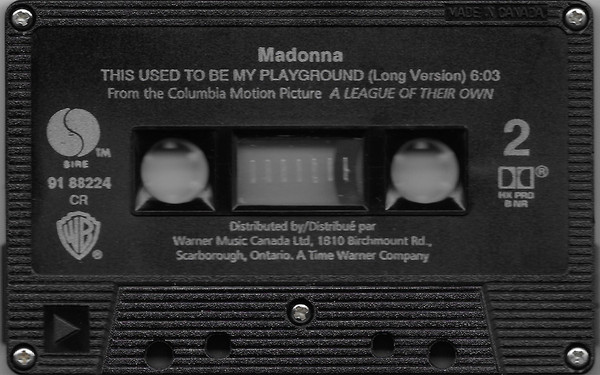
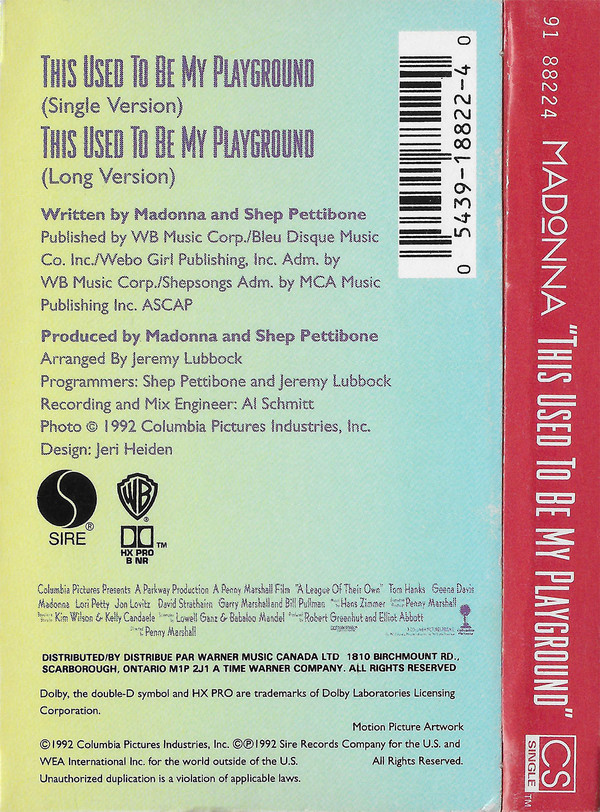
On August 15 1992, This Used To Be My Playground spent the first of three weeks at #1 on the RPM Canadian Top 100 Singles chart. In RPM’s year-end tally of the biggest hits of 1992 in Canada, the hit placed at #8.

This Used To Be My Playground was written by Madonna, Shep Pettibone & Tony Shimkin (although he was not originally credited) and produced by Madonna & Pettibone.

In an interview with the fan site MadonnaTribe, Shimkin recalled a last-minute dash to complete the recording of the song’s orchestral parts:

“When we recorded it with Al Schmidt at Ocean Way studio in L.A., we had a 30-piece orchestra and Jeremy Lubbock did the string arrangements, (but) we never included the demo that had the solo string part in it when we had him chart everything out for the orchestra,” revealed Shimkin. “On the day we were recording, we thought we were done and realized we forgot the solo. I quickly sang the part to the copyist, who then charted it out for the violin players, and they got it recorded with one minute to spare on the clock. When you have a thirty piece orchestra, it can be super expensive to roll into a second hour of their time!”

Today in Madonna History: August 14, 1984

madonna-thefirstalbum1983albumcover2 Madonna1_lg

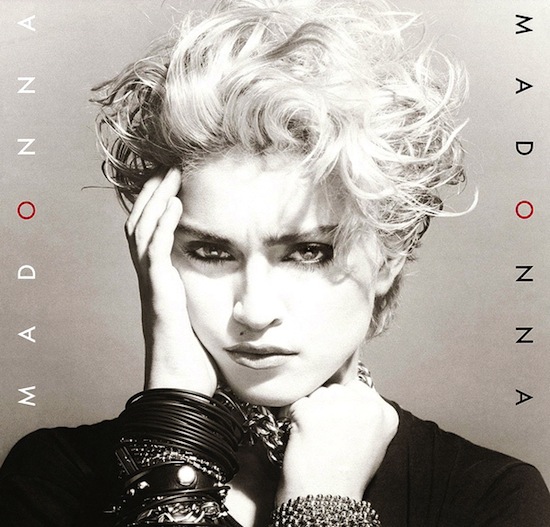
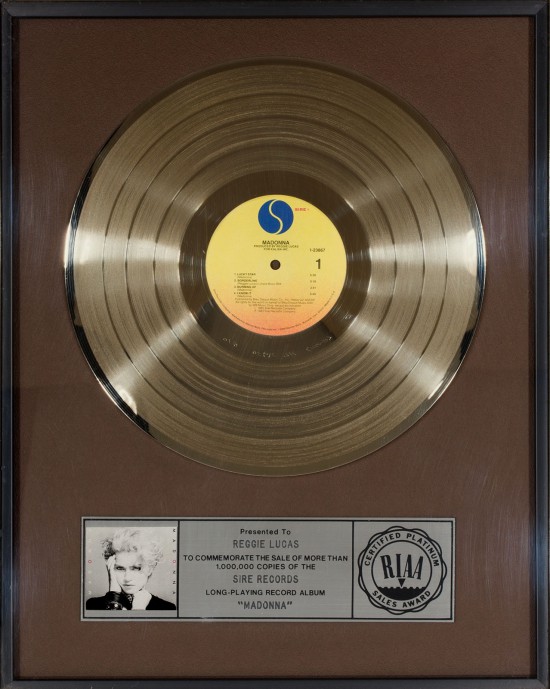
On August 14 1984, Madonna’s self-titled debut album was certified platinum by the RIAA to commemorate U.S. sales of more than one-million copies.

The album would eventually be certified five times platinum in the U.S.