Today in Madonna History: September 29, 2009

madonna-september-29-a madonna-september-29-b madonna-september-29-c madonna-september-29-d madonna-september-29-e madonna-september-29-f

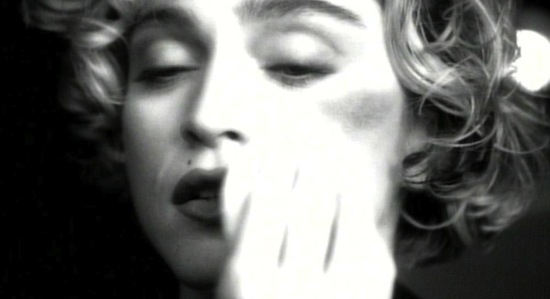
On September 29 2009, Madonna and Warner Bros. released Celebration: The Video Collection.  The greatest videos DVD collection accompanied the Celebration greatest hits collection.

Celebration: The Video Collection continued on from Madonna’s other video compilations The Immaculate Collection and The Video Collection 93:99.

Celebration: The Video Collection debuted at the top of the Billboard Top Music Videos chart.  It was certified platinum by the Recording Industry Association of America (RIAA) for shipment of 100,000 copies across United States.

The cover for Celebration: The Video Collection was created by street pop artist Mr. Brainwash who is best known for “throwing modern cultural icons into a blender and turning it up to eleven”.

The DVD collection was released in two different versions, both are double disc releases:

  • Keep case — DVD size packaging
  • DVD Digipak — CD size packaging

This video collection received mixed reviews from critics and fans when it was released.  While the inclusion of videos that were left off her previous retrospectives were certainly appreciated, many felt that the set’s exclusion of several notable clips (with Oh Father, Bad Girl, Drowned World/Substitute For Love & Nothing Really Matters among its most glaring omissions) kept it from being the definitive overview it was touted to be.

Another point of contention was the use of cheaper single-layer versus double-layer DVD’s, the latter of which would have allowed for the inclusion of the three additional clips noted above (which would have rounded out the total number of clips to a nice even fifty) and corrected the compression issues that marred the image quality of many videos. Indeed, the varying picture quality from clip to clip and minimal effort given to ensuring overall quality control left the product with a distinctly “budget” feel that had some fans wondering whether the grainy, test-pattern-infused artwork for the set was perhaps a bit too fitting.

Surely, Madonna’s pioneering work in the medium and the perfectionist spirit that helped make these works so compelling deserve a comprehensive retrospective of the highest quality.

Did you feel this release was worthy of celebration or would you have made changes to it? With recent innovations in digital distribution, would you appreciate an official reissue of Madonna’s entire music video catalogue – from her first clip, Everybody, through to her latest, Batuka – as high quality digital downloads? Clips could be sold individually for a few dollars each or bundled into era sets that could be downloaded through Madonna’s official website, with proceeds benefiting one of her charities. Would you support such an initiative if the highest quality control standards were met and no corners were cut? Perhaps this would prove to be an ideal avenue for her to finally market long-requested, definitive versions of her previously unavailable or out-of-print live concert films as well.


Today in Madonna History: September 15, 2014

On September 15 2014, Vice magazine’s blog THUMP published an article in which Stuart Price recalled his time spent collaborating with Madonna on her 2005 album, Confessions On A Dance Floor:

“Right before we made Confessions on a Dance Floor, I had made a record with a girl named Juliet [2005’s Random Order]; we had made that album over Thanksgiving in New York, when the city was completely dead, and it was just the two of us concentrating on working on it. [I went] straight from that to Madonna, and I assumed that would be a much different experience, but she completely surprised me.

The real eye-opener was about how focused she was on avoiding the kind of over-the-top, excessive, entourage-in-the-studio environment that I had expected. It was the total opposite, really. She helped to create an environment where we were like two kids working together in a studio. It was exactly the same feeling as it was when I was working with Juliet. She was really… I don’t want to say ‘smart,’ but she was really honest about music. She’s really instinctive in understanding that dance music comes from a very minimal way of working. It doesn’t come from throwing lots of money on a lavish production.

We spent five or six weeks in my apartment; the studio used to be upstairs in the loft. I would work on a track overnight, then she would come in and we’d start messing around. She would do vocal melodies and I would come up with a few ideas, and then she’d go, ‘Okay, I’m gonna go home and think about it.’ Then she’d come back the next day and have the hook for Hung Up or the chorus for Sorry. Then I would carry on working on more tracks to keep us going. It was more of a really fluid and almost childlike environment than anything that seemed too serious.

They always say that an album sounds like the time that you had making it. I know that with that album, it was a super-productive time, but it was also really fun and natural. And I think that comes across in the way it sounds.

It’s surprising that Madonna has such a simple work mode. I would have expected her to come in with her full entourage and play the diva, at least to some extent.

Well, don’t get me wrong—I think in a lot of parts of her life, she is the big-entourage person. But when it comes to being creative, she’s unexpectedly low-key. She’s great to work with, and I really mean that.”

Today in Madonna History: September 8, 1983

lucky-star-1

On September 8 1983, Madonna’s Lucky Star single was released in the UK.

Although Lucky Star was issued promotionally as a double A-side with Holiday in the US in September 1983, it was not released commercially in North America until August 1984 when it was issued as the final single from Madonna’s self-titled debut album.

Lucky Star was written by Madonna and produced by Reggie Lucas, with additional remixing by Jellybean Benitez. It is the most successful of her North American singles that were entirely self-written, reaching #4 on the U.S. Hot 100 and #8 in Canada (RPM Top 100). It was also her first Top-5 single in the U.S.

In the U.K., her self-written single Gambler was a bigger hit, reaching #4 in the fall of 1985, while Lucky Star peaked at #14.

Madonna wrote the song in 1982 after landing her first recording contract with Sire Records. It was rumoured to have been written about Mark Kamins, although we’re unsure whether that has ever been confirmed by Madonna herself.

Today in Madonna History: September 7, 1995

1995-mtv-video-music-awards 10 550

On September 7 1995, Madonna won Best Female Video for “Take A Bow” at the 12th annual MTV Video Music Awards at Radio City Music Hall, New York, NY. Madonna also presented the award for Best Rap Video.

Later, a post-show chat with Kurt Loder to promote her upcoming ballads collection Something To Remember quickly went off the rails when Courtney Love infamously interrupted the interview. While it may have been Liz Rosenberg’s worst nightmare, the hilarious encounter certainly gave viewers something to remember!

Today in Madonna History: September 6, 1989

vmas 1989 3 550vmas 1989 4 550

On September 6 1989, Madonna performed Express Yourself  at the 6th annual MTV Video Music Awards at the Universal Amphitheatre, Los Angeles, CA. The Express Yourself music video picked up awards for Best Direction, Best Art Direction, Best Cinematography, while Like A Prayer won the Viewer’s Choice Award.

Serving as a sneak preview for 1990’s Blond Ambition Tour, the performance marked the first of many to feature the vocal trio of Madonna, Donna De Lory and Niki Haris. De Lory and Haris had previously toured with Madonna during the 1987 Who’s That Girl Tour, but had been joined by a third background vocalist, Debra Parsons. The pair would be more heavily featured as vocalist/dancers from this point forward, rather than simply band members who rarely left the confines of their microphone stand.

It was during rehearsals for the 1989 VMA performance that Niki Haris brought voguing to Madonna’s attention, and stylized poses were then fittingly incorporated into the performance’s choreography. While the performance is relatively simple compared to her numerous VMA performances in the years that followed, this puts the focus on the trio’s excellent live vocals and kick-ass choreography (keeping in mind that vocally, Express Yourself is quite a workout even without the dancing!). I consider this a great example of how sometimes less is more, and I would definitely consider this among her best awards show performances.

Today in Madonna History: September 5, 1986

On September 5 1986, Madonna was honoured with the Video Vanguard Award for her visionary videos at the 3rd annual MTV Video Music Awards at the Palladium in New York City.

Madonna found immense popularity by pushing the boundaries of lyrical content in mainstream popular music and imagery in her music videos, which became a fixture on MTV. Her videos depicted controversial subjects such as teen pregnancy, racism, religion, sex and violence.  She received the Video Vanguard Award for her contributions to the world of music video.

While there’s no denying Madonna was an early innovator in the art of music video, little did MTV – or those of us watching – know at the time that her most artistically groundbreaking work in the medium was yet to come.

Two things we did know at the time, however:

  1. Madonna’s insistence on sending Nikki Finn to collect awards on her behalf during this period was cute and everything, but mostly it just seemed…well…reductive.
  2. Madonna really liked that dress. But was it a dress?

Today in Madonna History: August 22, 1992


On August 22 1992, Madonna filmed scenes for the Erotica music video at The Kitchen in New York City with fashion photographer/director/designer Fabien Baron. These scenes consisted of Madonna in the character of her Sex book alter-ego, Dita, miming the lyrics to the song, and would be intercut with a selection of 8mm footage previously shot by Baron during the making of the Sex book.

Baron also served as art director for the Sex book, the Erotica album and single, and later for the Bedtime Stories album and its singles Secret and Take A Bow. He also directed the commercial for her fragrance, Truth Or Dare by Madonna, in 2012.

“She put that book out at the best moment. She timed it very well. She knows what she’s doing. And such drive. Some people want to lift stones and see what’s under it. She’ll be on a beach with millions of stones and want to lift every one of them.”            – Fabien Baron