Today in Madonna History: November 27, 1991

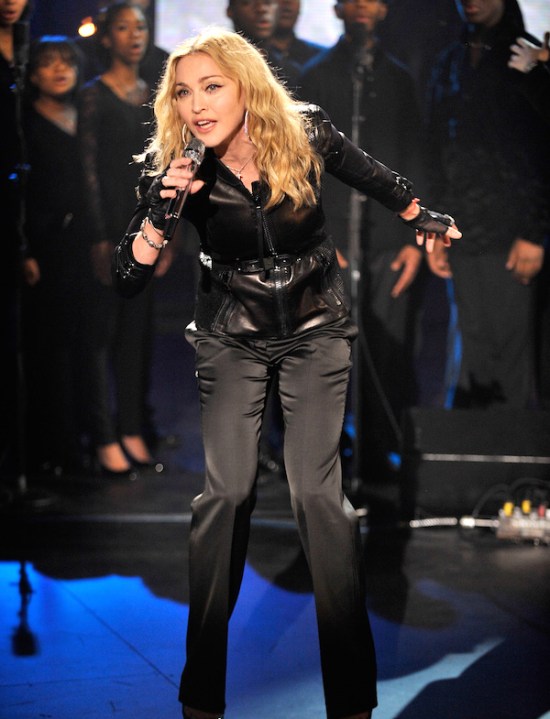
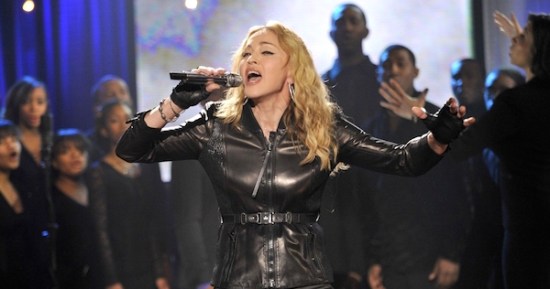
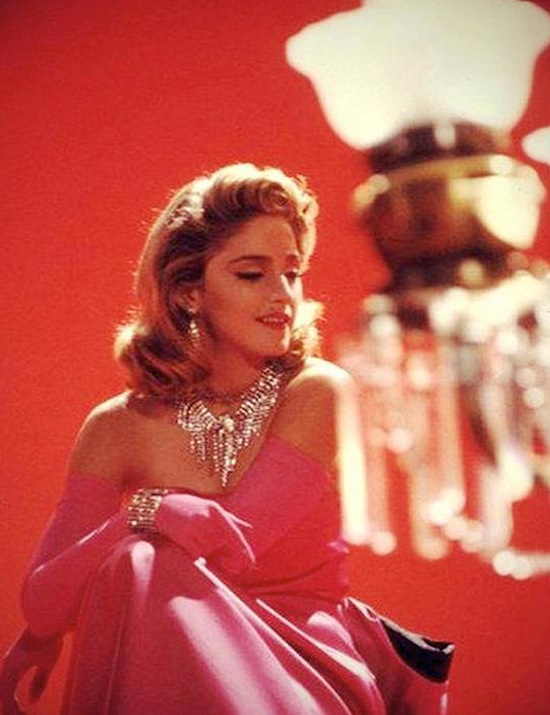
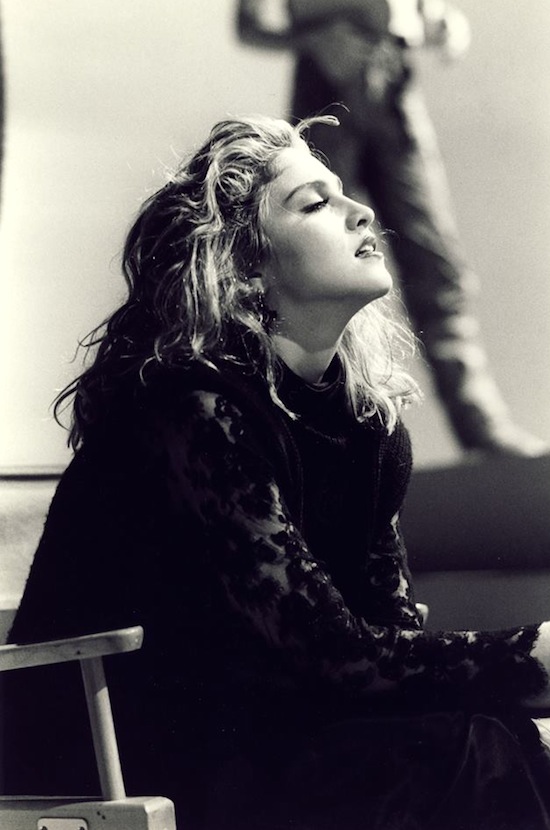
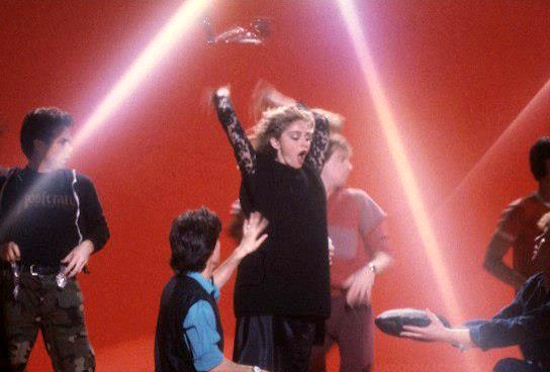
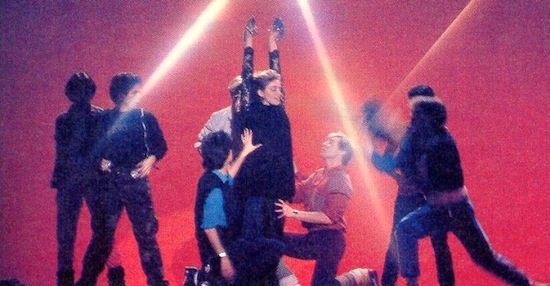
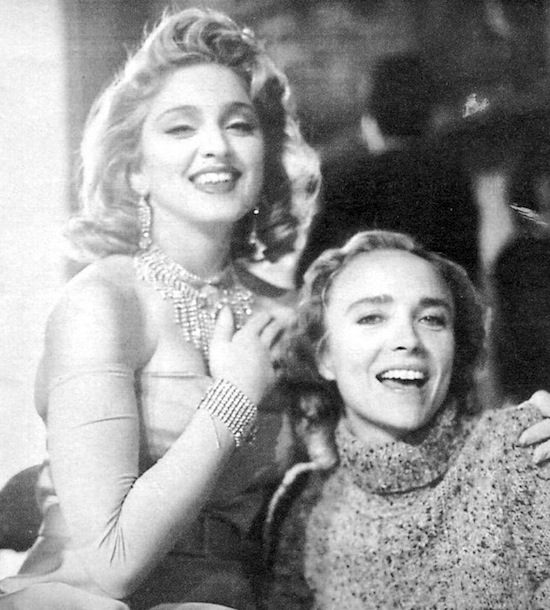
On November 27 1991, Madonna contributed a pre-taped monologue for the MTV 10th Anniversary – Money for Nothing special that aired on ABC-TV. Madonna’s segment was filmed by Alek Keshishian.

The following quote is how Madonna started her monologue:

I’m here because I wanted to talk to you about us.

And all that we’ve been through.

I wanted to talk about me and you.

I remember when we first met.

You didn’t know who you were yet.

I didn’t know who I was.

We grew up together.

Today in Madonna History: November 26, 1992

On November 26 1992, Rolling Stone magazine published their review of Madonna’s Erotica album, written by Arion Berger:

It took Madonna ten years, but she finally made the record everyone has accused her of making all along. Chilly, deliberate, relentlessly posturing. Erotica is a post-AIDS album about romance — it doesn’t so much evoke sex as provide a fetishistic abstraction of it. She may have intended to rattle America with hot talk about oral gratification and role switching, but sensuality is the last thing on the album’s mind. Moving claustrophobically within the schematic confines of dominance and submission, Erotica plays out its fantasies with astringent aloofness, unhumid and uninviting. The production choices suggest not a celebration of the physical but a critique of commercial representations of sex — whether Paul Verhoeven’s, Bruce Weber’s or Madonna’s — that by definition should not be mistaken for the real thing. It succeeds in a way the innocent post-punk diva of Madonna and the thoughtful songwriter of Like a Prayer could not have imagined. Its cold, remote sound systematically undoes every one of the singer’s intimate promises.

Clinical enough on its own terms when compared with the lushness and romanticism of Madonna’s past grooves, Erotica is stunningly reined in; even when it achieves disco greatness, it’s never heady. Madonna, along with co-producers Andre Betts and Shep Pettibone, tamps down every opportunity to let loose — moments ripe for a crescendo, a soaring instrumental break, a chance for the listener to dance along, are over the instant they are heard. Erotica is Madonna’s show (the music leaves no room for audience participation), and her production teases and then denies with the grim control of a dominatrix.

Against maraca beats and a shimmying horn riff, Erotica introduces Madonna as “Mistress Dita,” whose husky invocations of “do as I say” promise a smorgasbord of sexual experimentation, like the one portrayed in the video for Justify My Love. But the sensibility of Erotica is miles removed from the warm come-ons of Justify My Love, which got its heat from privacy and romance — the singer’s exhortations to “tell me your dreams.” The Madonna of Erotica is in no way interested in your dreams; she’s after compliance, and not merely physical compliance either. The song demands the passivity of a listener, not a sexual partner. It’s insistently self-absorbed — Vogue with a dirty mouth, where all the real action’s on the dance floor.

Look (or listen) but don’t touch sexuality isn’t the only peep-show aspect of this album; Erotica strives for anonymity the way True Blue strove for intimacy. With the exception of the riveting Bad Girl, in which the singer teases out shades of ambiguity in the mind of a girl who’d rather mess herself up than end a relationship she’s too neurotic to handle, the characters remain faceless. It’s as if Madonna recognizes the discomfort we feel when sensing the human character of a woman whose function is purely sexual. A sex symbol herself, she coolly removes the threat of her own personality.

Pure disco moments like the whirligig Deeper and Deeper don’t need emotional resonance to make them race. But the record sustains its icy tone throughout the yearning ballads (Rain, Waiting) and confessional moods (Secret Garden). Relieved of Madonna’s celebrity baggage, they’re abstract nearly to the point of nonexistence — ideas of love songs posing as the real thing. Even when Madonna draws from her own life, she’s all reaction, no feeling: The snippy Thief of Hearts takes swipes at a man stealer but not out of love or loyalty toward the purloined boyfriend, who isn’t even mentioned.

By depersonalizing herself to a mocking extreme, the Madonna of Erotica is sexy in only the most objectified terms, just as the album is only in the most literal sense what it claims to be. Like erotica, Erotica is a tool rather than an experience. Its stridency at once refutes and justifies what her detractors have always said: Every persona is a fake, the self-actualized amazon of Express Yourself no less than the breathless baby doll of Material Girl. Erotica continually subverts this posing to expose its function as pop playacting. The narrator of Bye Bye Baby ostensibly dumps the creep who’s been mistreating her, but Madonna’s infantile vocal and flat delivery are anything but assertive — she could be a drag queen toying with a pop hit of the past. Erotica is everything Madonna has been denounced for being — meticulous, calculated, domineering and artificial. It accepts those charges and answers with a brilliant record to prove them.
Today in Madonna History: November 18, 1994

girlie-show-callaway-book-1 girlie-show-callaway-book-1b girlie-show-callaway-book-1c girlie-show-callaway-book-5 girlie-show-callaway-book-6 girlie-show-callaway-book-2 girlie-show-callaway-book-3 girlie-show-callaway-book-4 girlie-show-callaway-book-8

On November 18 1994, Madonna released her second coffee table book, The Girlie Show, with 70-pages of photographs from the tour and a 3-song live CD, which included Like A Virgin, In This Life and Why’s It So Hard.

The book was published in the US by Callaway.  The book sold 140,000 copies (the book is now out of print). The Girlie Show was also published in the UK, France, Germany and Japan.

Today in Madonna History: November 17, 1984

On November 17 1984, the title-track and lead single from Madonna’s Like A Virgin album entered the Billboard Hot 100 at #48 – the week’s highest debut – hot on the heels of its commercial release as a 7-inch single in the preceding sales week. A commercial 12-inch single was also issued in North America during the chart week ending November 17th, with Like A Virgin pouncing onto the Hot Dance/Disco Sales chart at #26 in the November 24th issue of Billboard.

Created by the successful pop songwriting team of Tom Kelly & Billy Steinberg and produced by Nile Rodgers, the demo of Like A Virgin – sung by Kelly – was initially introduced to Madonna by Warner Bros. Records’ A&R rep Michael Ostin (son of then-CEO of Warner, Mo Ostin).

In a 2009 interview for Rolling Stone magazine, Madonna recalled her impressions upon first listening to the demos of Like A Virgin and its follow-up single, Material Girl:

“I liked them both because they were ironic and provocative at the same time but also unlike me. I am not a materialistic person, and I certainly wasn’t a virgin, and, by the way, how can you be like a virgin? I liked the play on words; I thought they were clever. They’re so geeky, they’re cool. I never realized they would become my signature songs, especially the second one.”

As audio engineer Jason Corsaro noted in a 2007 interview with Sound On Sound magazine, although she officially ceded production credit to Rodgers, Madonna was actively engaged in all aspects of the recording sessions for the album and title-track:

“Nile was there most of the time, but she was there all of the time. She never left.”

Like A Virgin made a high-profile debut via live performance during the first annual MTV Video Music Awards on September 14th, 1984.

With previous single Lucky Star still ascending the North American charts, however, the official release of Like A Virgin was held back by Warner Bros. Records in a bid to allow the former (along with its parent album) to reach its full chart potential. This strategy proved successful, with Madonna earning her first U.S. Top-5 single with Lucky Star in the October 20th issue of Billboard, while Like A Virgin would reach #1 in the December 22nd issue.

Today in Madonna History: November 16, 1996

On November 16 1996, Madonna’s You Must Love Me (the lead single from the EVITA soundtrack) debuted at #24 on the Billboard Hot 100 Single Sales chart in the USA.

Today in Madonna History: November 15, 2005

confessions album sheet music COADF Promo 550 coadf north american sell sheet

On November 15 2005, Madonna’s tenth studio album, Confessions On A Dance Floor, was released in North America by Warner Bros Records. The majority of the album was co-produced and co-written by Madonna & Stuart Price, with additional contributions by Mirwais, Bloodshy & Avant, Joe Henry and Anders Bagge & Peer Åström. It featured the singles Hung Up, Sorry, Get Together and Jump.

Madonna performed a small club show at Koko in London, UK on November 15th to celebrate the album’s release, with the set being streamed online to fans around the world. The live webcast was preceded by an exclusive mini-documentary titled Confessions…On A Promo Tour.


Today in Madonna History: November 14, 2004

On November 14 2004, Michael Colombier – the composer/arranger who produced the beautiful string arrangements for Madonna’s songs Die Another Day, Don’t Tell Me & Easy Ride, and composed the soundtrack for Swept Away (perhaps the film’s most memorable attribute) – passed away at age 65.

Colombier was one of the most prolific and versatile French musicians of his generation. Besides his career as a film composer scoring over 100 feature, cable and television films since the early 1960’s – Colombier was a prolific songwriter and arranger who worked with artists such as Joni Mitchell, Prince, Serge Gainsbourg, The Beach Boys, Herbie Hancock, Air, Barbra Streisand & Earth Wind And Fire.

michel-columbier-note

As a film composer, Michel Colombier scored many French and American films, including The Golden Child, Ruthless People, New Jack City, How Stella Got Her Groove Back and The Money Pit. His background in jazz was evident in the majority of his film scores, and his ability to compose original score music that merged seamlessly with pop songs made him the perfect composer for 1980’s films with song-heavy soundtracks, including White Nights, Against All Odds and Purple Rain (which won a Grammy Award as well as an Academy Award for Best Original Score).