
On October 18 1986, Madonna’s True Blue debuted at #27 on the Billboard Hot 100 Single Sales chart. True Blue spent 10 weeks on the chart, eventually peaking at #4 on November 15.

On October 18 1986, Madonna’s True Blue debuted at #27 on the Billboard Hot 100 Single Sales chart. True Blue spent 10 weeks on the chart, eventually peaking at #4 on November 15.

On June 24 1989, Madonna’s Express Yourself single debuted at #21 on the Billboard Hot Dance Music/Maxi Single Sales chart.
The 12″ maxi single included the following:
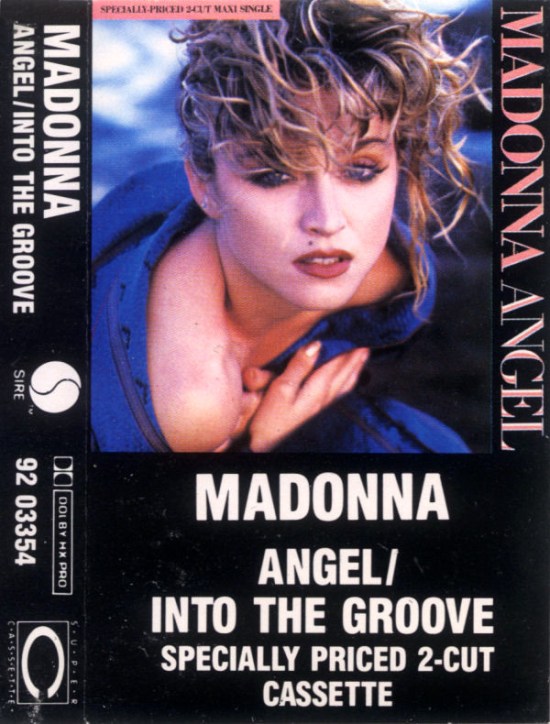
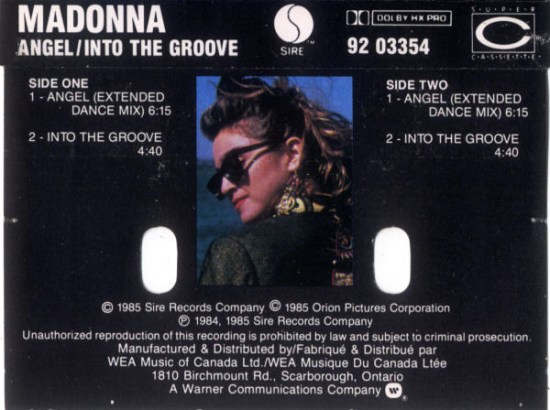
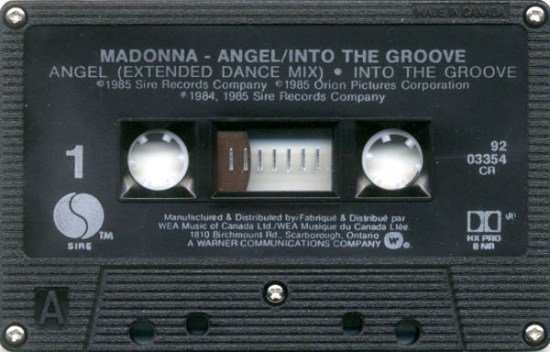
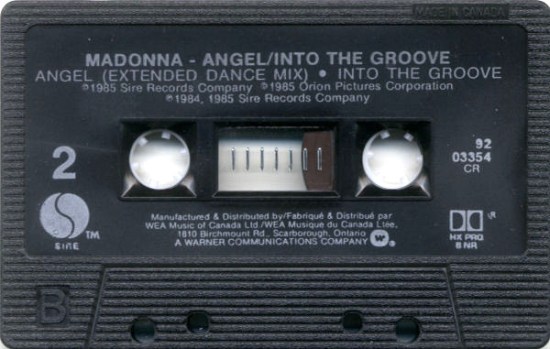
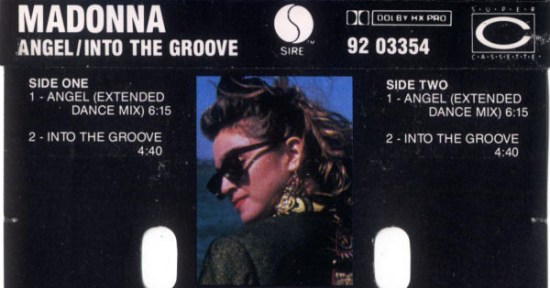
On June 15 1985, Madonna’s Angel peaked at #5 on the Canadian Top 100 Singles Chart (RPM magazine).
Angel was written by Madonna and Stephen Bray and produced by Nile Rodgers for the Like A Virgin album.

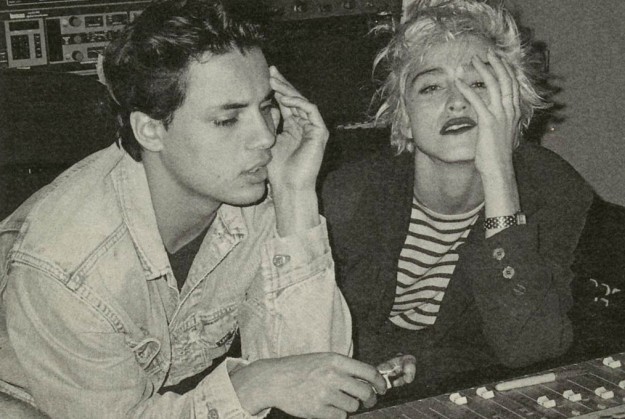


On May 9 1987, Nick Kamen’s self-titled debut album – featuring the Madonna/Steve Bray written & produced track, Each Time You Break My Heart – was reviewed in Billboard.
Madonna’s opinion of Nick Kamen in 1986? “I said, ‘wow, this guy’s got everything’,” she told the BBC’s Simon Bates in December that year. “He [Stein] sent me a tape of four of his songs and the Levi commercial and a demo video that he [Kamen] had done,” Madonna told Bates. “You know, he’s got so much charm and charisma and there’s something there in the eyes…”
Kamen’s debut single, Each Time You Break My Heart, on which Madonna also performed backing vocals – was an international hit in the autumn of 1986. “I called Seymour up and said ‘how about if I produce the record because if I don’t…they might change the character of it…and I want it to be really good…and he said, ‘I would have asked you but, I mean, I didn’t think you’d have the time’, but I figured it was only one song so it would only take about a week if we really organize ourselves.”
The video for the single had other Madonna connections, as it was directed by Jean-Baptiste Mondino and featured her Open Your Heart video co-star, Felix Howard, while the U.S. maxi-single was remixed by future Madonna collaborator, Shep Pettibone.
Each Time You Break My Heart was originally demoed during the sessions for Madonna’s True Blue album but sadly did not make the final cut. Kamen’s version featured the same musicians and backing vocalists (including Siedah Garrett & Edie Lehmann) from those sessions. A low-quality recording of Madonna’s original demo leaked to the internet in the early 2000’s.
Madonna fans would certainly welcome a deluxe edition of the True Blue album featuring Madonna’s version of this excellent cut and other outtakes of the era!

On April 11 1990, the Keep It Together single was certified gold for sales of 500,000 units in the USA.
Written and produced by Madonna and Stephen Bray, the main inspiration behind Keep It Together was Madonna’s relationship with her family—whom she dearly missed after her divorce from actor Sean Penn.
Keep It Together became the last Madonna single release to feature a collaboration with Bray—a partnership that had begun romantically when Madonna & Stephen were college students at the University of Michigan. Madonna later persuaded Bray to join her in New York where he became the drummer for her band, Emmy. After briefly falling out over Madonna’s decision to work with more established producers after signing to Sire Records in 1982, the pair quickly made amends and went on to write and produce some of Madonna’s most memorable 80’s hits.
A final collaboration between Madonna & Bray, Get Over, was reworked by Madonna and Shep Pettibone for possible inclusion as one of the new tracks on The Immaculate Collection, but was instead given to Warner Bros artist Nick Scotti to record in 1991. Although Madonna’s background vocals are featured prominently in Scotti’s versions of the song, a full Madonna vocal version has yet to surface.
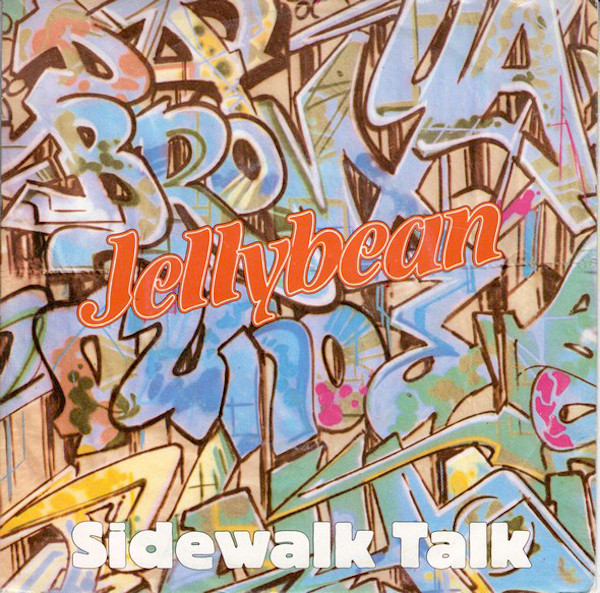


On December 22 1985, John “Jellybean” Benitez’ Sidewalk Talk (featuring Madonna) debuted at #48 on the Billboard Hot Dance/Disco chart (not to be confused with the Hot Dance Music/Maxi-Single Sales chart). The hit dance single peaked at #1 on the Dance/Disco chart on February 2 1986.
Sidewalk Talk was written by Madonna, arranged by Jellybean and Stephen Bray and mixed by Jellybean.

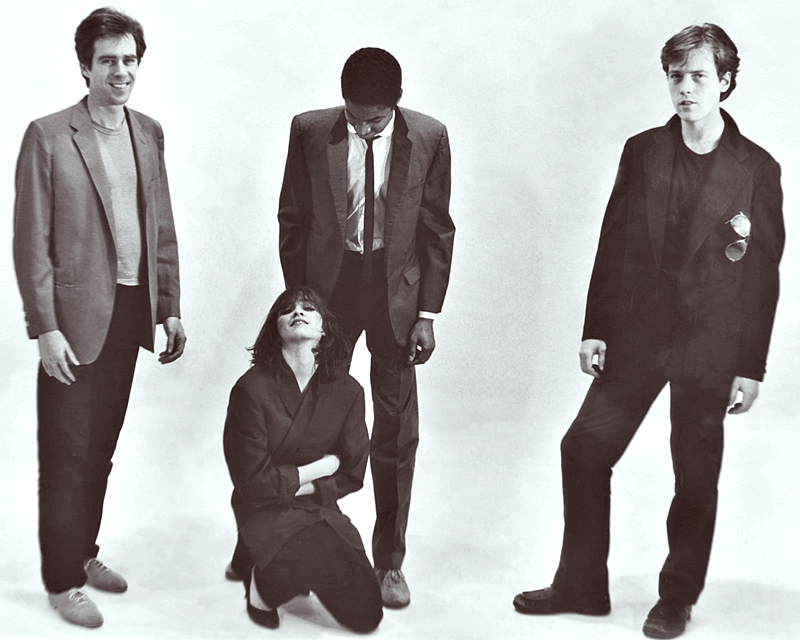


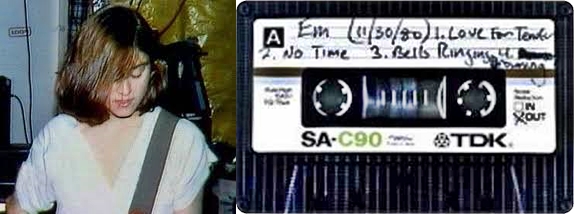

On November 30 1980, Madonna’s band, Emmy, recorded a four-song studio demo which was later distributed on TDK cassettes around New York City.
Band member and songwriting partner, Stephen Bray, was asked to describe what he remembered from these songs in a 1998 interview with Bruce Baron for Goldmine magazine, and he commented on each this way:
 Today In Madonna History