
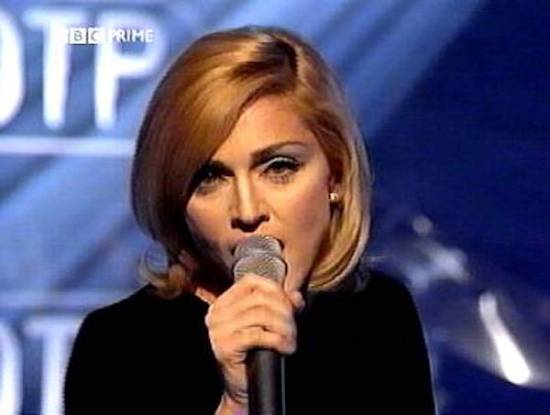

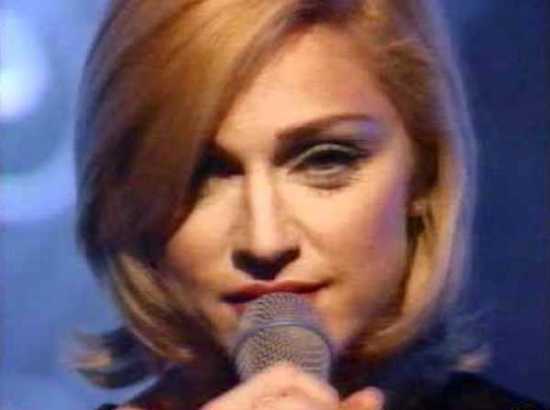
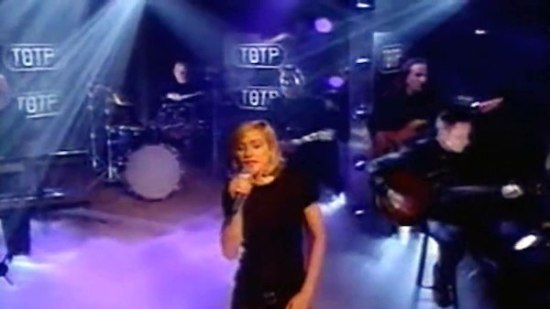
On November 2 1995, Madonna performed You’ll See (from her greatest ballads collection, Something To Remember) at the Top Of The Pops show on the BBC.

On November 2 1995, Madonna performed You’ll See (from her greatest ballads collection, Something To Remember) at the Top Of The Pops show on the BBC.


On October 2 1995, the music video for I Want You made its world premiere on VH1 in the U.S.
Shot on August 5th and 6th in Long Island City, New York by director Earle Sebastien, the video was inspired by the short story A Telephone Call – A Terrible Day Tomorrow by American author, Dorothy Parker.
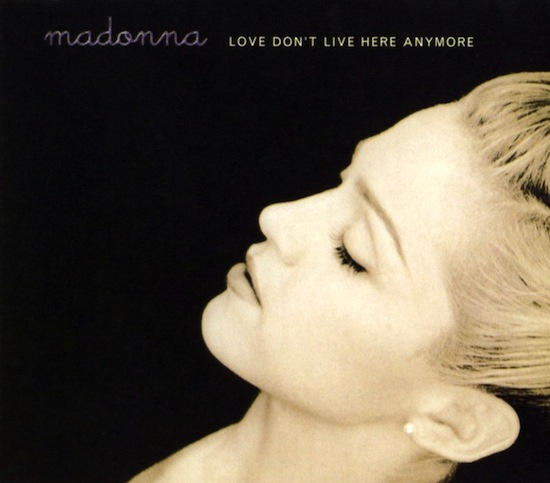
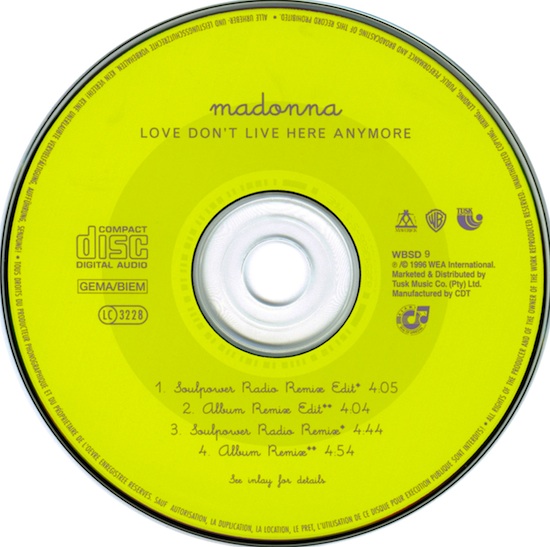

On March 19 1996, Madonna’s cover of Rose Royce’s Love Don’t Live Here Anymore was released as the fourth single from her Something To Remember greatest ballads collection.
The song originally appeared on the Like A Virgin album.
The idea to cover the song was Michael Ostin’s (head of the A&R department at Warner Bros. Records).
In author Warren Zane’s book Revolutions in Sound: Warner Bros. Records, the First 50 Years, he recalled:
“I had the good fortune of finding material that Madonna really responded to, Love Don’t Live Here Anymore for instance, which was the old Rose Royce record. I was driving into work one day and heard it on the radio, I called producer Nile Rodgers and Madonna, they were in the studio. I said, ‘I have an idea, you know the old Rose Royce record, ‘Love Don’t Live Here Anymore‘? Why don’t you try and record a version of it for Like a Virgin?” Initially both Rodgers and Madonna were apprehensive of tackling an already well-known ballad, but in the last minute they decided that if Madonna wanted to bring diversity to the album, there could be no better song than ‘Love Don’t Live Here Anymore’.

On December 24 1995, Oh Father was released as the second UK single from Madonna’s ballads retrospective, Something To Remember.
Warner had initially declined the option to release Oh Father in most European markets when it became the fourth North American single from Like A Prayer in late 1989, instead opting for a more by-the-numbers portrait of childhood innocence with the release of Dear Jessie. Why it was determined to be a better idea in 1995, following its poor showing on the U.S. charts, is anyone’s guess. One possibility is that Oh Father‘s brilliant preexisting music video provided an easy, cost-free means of promoting the song while Madonna remained unavailable due to her recording commitments for the Evita soundtrack.
While I would personally rank Oh Father among Madonna’s very best musical and lyrical efforts, and its music video an underrated classic – it never had the makings of a commercial hit. And history repeated itself when the song’s dark subject matter once again stunted its ability to gain momentum on radio for its British release. It became only her third UK single at the time to peak outside the top-ten when it stalled at #16 in its first charting week. It fared better in Finland and Italy, however, reaching #6 in both countries.

On November 25 1995, Madonna’s greatest ballads collection, Something To Remember, hit #6 on the Billboard Top 200 albums chart in the USA.
Madonna worked with David Foster on two of the three new songs for the collection: You’ll See and One More Chance.
Foster had this to say about working with Madonna:
“She had an amazing work ethic. She was on time every day and was really co-producing the songs with me. A lot of artists want to produce just because they can, and they don’t do a thing for the credit, which I really hate. But Madonna worked as hard as any producer I know … I liked the whole experience of working with her—the punctuality, the professionalism, and the sexiness.”


On June 30 1997, Madonna began recording sessions for what would become her Ray Of Light album at Larrabee North Recording Studios, Universal City, Los Angeles.
Madonna had already spent several months writing songs and producing demos with Patrick Leonard, Rick Nowels and Babyface (although none of the Babyface material would make the final cut) by the time she entered the studio with co-producers William Orbit and Marius De Vries. Leonard would return to the project to assist with arrangements, earning him a co-producer’s credit on four of the album’s tracks. Madonna would add lyrics and melody to at least a half-dozen previously composed Orbit demos during these sessions as well, with six of their songs making the final cut.
One song that came very close to being included on the album, Has To Be, was dropped due to Madonna’s desire to limit the number of songs on the album to lucky number thirteen. In a final toss-up between Has To Be and To Have And Not To Hold, the former was nixed in favor of the latter. Has To Be would fortunately make it to the ears of fans, however, due to its inclusion as a bonus track on the Japanese edition of the Ray Of Light album, and as the international b-side to the Ray Of Light single.
Has To Be was born as a collaboration between Madonna and Patrick Leonard. Recently surfaced demos from their writing session include two early versions of the song – the first is a piano-based arrangement in a similar style to the previous Madonna/Leonard collaboration, Something To Remember, while the second demo is an experimental synth-based reworking.
After entering the studio with William Orbit, Madonna adapted Has To Be to one of Orbit’s previously composed electronic soundscapes. Although the original Orbit instrumental piece with celestial voices has never been commercially released, it had previously aired on Orbit’s weekly radio series, Stereo Odyssey, on California’s KCRW prior to his involvement with Madonna. A sound file of the original instrumental that has circulated among fans is a recording from one of these broadcasts.
Although the released version of Has To Be is substantially different from the early Leonard demos, enough elements from its original melody lines (which were based on Leonard’s piano phrases) were carried over to warrant a three-way publishing split between Madonna/Orbit/Leonard for its official release.
Despite its relative obscurity, in fan circles Has To Be often ranks among her most beloved ballads.


On May 6 1996, dance remixes of Love Don’t Live Here Anymore by Markus Schulz & C.L. McSpadden were released to clubs by Maverick Records on promotional twelve-inch vinyl & CD in the U.S.
Additional club remixes of the track by Mark Picchiotti were also issued in the U.K. as a twelve-inch white-label promo.

