Today in Madonna History: May 25, 2004

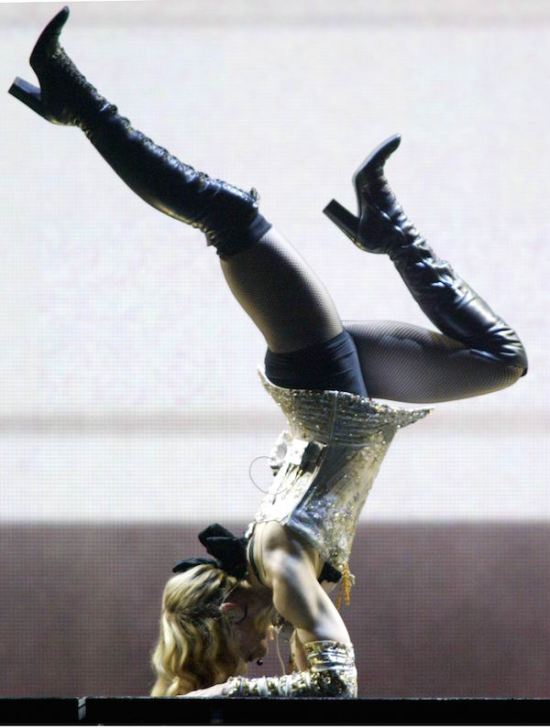
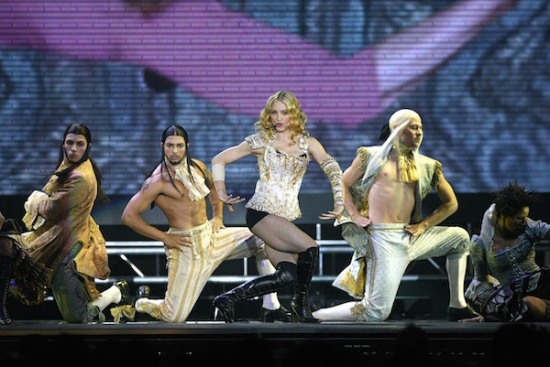
On May 25 2004, Rolling Stone magazine published a review of Madonna’s Re-Invention World Tour with the headline, “Madonna Reinvents herself. Amid images of war and peace, pop star shows she can sing.”

Here’s the review by Barry Walters:

After twenty years in the limelight, Madonna is expected to cause controversy and reinvent herself for every new tour. So for the May 24th Los Angeles opening of her Re-Invention world trek, Madonna did the most unexpected thing she could: She came back as a great concert singer.

Even the most diehard Madonna fan will concede that her live performances have almost without exception been plagued by a multitude of missed notes, breathy passages, and, as of late, fake British accents. But while Mariah and Whitney have of been losing the acrobatic vocal dexterity and lung power on which their reputations rest, forty-five-year-old Madonna, whom few have ever taken seriously as a musician, has never sounded better than she did during the first of several gigs in her adopted West Coast home. Whether rocking out with classic black Les Paul in hand during a metallic rendition of her early club hit “Burning Up,” or performing “Like a Prayer” behind a screen-projected gospel choir, Madonna belted, and did not once seemed strained. In the midst of a $1 million production festooned with a walkway that jutted out from the stage and over the audience, massive moving video screens, a dozen dancers, a bagpipe player, a stunt skateboarder and a whole lot of emotionally charged anti-war imagery, the focus was nevertheless on Madonna, and how she’s matured into a truly great pop singer.

Opening with a yoga-trained twist on her famous Louis XIV-inspired MTV Video Music Awards rendition of “Vogue” and ending on a kilt-wearing finale of “Holiday” against a video backdrop of national flags that eventually morphed into one, the show was thematically simpler and more focused than her last several productions.

The barbarism of war and the necessity of love were at the heart of the entire show, and both played off each other, sometimes for ironic and decidedly uneasy effect. The original military-themed video footage of “American Life” that the singer withheld at the start of the Iraq war was finally unveiled, and then expanded upon during “Express Yourself,” where Madonna sang her anthem of unbridled, intimate communication in front of dancers dressed as soldiers and goose-stepping with twirling rifles.

By contrast, Madonna closed an extended acoustic section of the show with a straightforward and thoroughly committed rendition of John Lennon’s “Imagine” as images of war and poverty-ravaged children eventually gave way to footage of a Muslim boy and his Israeli counterpart smiling as they walked with their arms wrapped around each other.

The heaviness of much of the imagery was balanced by Madonna’s own presence, which seemed remarkably fun-loving and self-assured for the opening night of her most technically complex production. Only when she strapped on an acoustic or electric guitar during several songs and repeatedly glanced at her left hand to make sure it was playing the proper chords did she seem at all nervous. “How many people out there really think that I am the Material Girl?” she asked during a break in her most iconic early smash as she strummed with much deliberation.

For the last several songs, Madonna and her dancers donned black and white kilts, an apparent nod to husband Guy Ritchie’s Scottish heritage, and black T-shirts that read “Kabbalists Do It Better,” a cheeky reference to both her religious studies and the “Italians Do It Better” T-shirt she wore during her video for “Papa Don’t Preach,” a song that was performed without the “near-naked pregnant women” described in pre-tour reports of the show. In a number dedicated for the “fans that’ve stood by me for the last twenty years,” she sang her earliest hit ballad, “Crazy For You,” earnestly and without contrivance.

Madonna’s continued relevance was impressive, but it was even more striking that she’s putting more love and genuine passion into her spectacle than ever.


Today in Madonna History: February 25, 1992

blond-ambition-laser-disc-1

On February 25 1992, the Pioneer LaserDisc-only release Madonna: Blond Ambition World Tour Live won Best Music Video–Long Form at the 34th annual Grammy Awards at Radio City Music Hall, New York.

Although Madonna had received four Grammy nominations in previous years (Best Female Pop Vocal in 1986 & 1987; Best Original Song From A Motion Picture in 1988; Best Music Video–Short Form in 1991 for Oh Father), Madonna: Blond Ambition Tour Live represented her very first Grammy Award win. Ironically, the lack of a VHS edition or of any subsequent DVD/Blu-Ray reissue of the title meant that only those in possession a pricey LaserDisc player were afforded the opportunity to purchase and enjoy the award-winning release.

Madonna would receive three more Grammy nominations for Best Music Video–Long Form in the years that followed; she was nominated in 1995 and 2007 for The Girlie Show–Live Down Under and I’m Going To Tell You A Secret, respectively, before finally winning the award a second time for The Confessions Tour in 2008.

Today in Madonna History: January 10, 1987

papa-dont-preach-video-madonna-january

On January 10 1987, Madonna’s Papa Don’t Preach was honoured as America’s Most Popular Video and the World’s Favourite Video at the 1st annual World Music Video Awards, produced by Canada’s MuchMusic and Europe’s Sky Channel.

Today in Madonna History: December 27, 1986

Madonna tbt-ebluue-hr-2 tbt-ebluue-hr-3

On December 27 1986, Billboard’s year-end issue hit newsstands with Madonna appearing on the following 1986 chart rankings:

  • Top Pop Artist: #2
  • Top Pop Album: “True Blue” #37
  • Top Pop Album: “Like A Virgin” #52
  • Top Pop Album Artist: #6
  • Top Pop Album Artist – Female: #3
  • Top Pop Singles Artist: #3
  • Top Pop Singles Artist – Female: #2
  • Top Pop Single: “Papa Don’t Preach” #29
  • Top Pop Single: “Live To Tell” #35
  • Top Pop Single: “True Blue” #76
  • Top Pop Compact Disc: “True Blue” #25
  • Top Adult Contemporary Artist: #9
  • Top Adult Contemporary Single: “Live To Tell” #12
  • Top Dance Club Play Single: “Papa Don’t Preach” #43
  • Top Dance Sales Artist: #3
  • Top Dance Sales 12-Inch Single: “Papa Don’t Preach” #29
  • Top Dance Sales 12-Inch Single: “Live To Tell” #37
  • Top Music Video: “Madonna Live: The Virgin Tour” #1

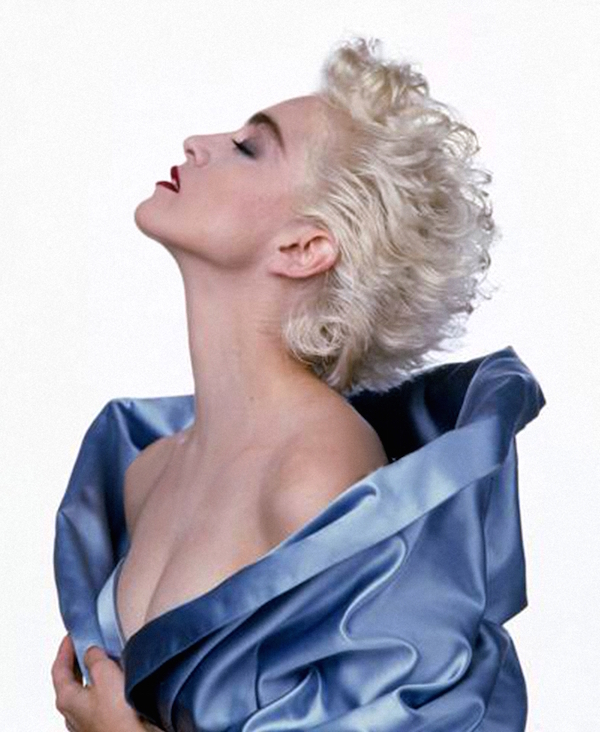
true-blue-herb-ritts

Today in Madonna History: August 9, 1986

papa-dont-preach-new-single papa-dont-preach-2

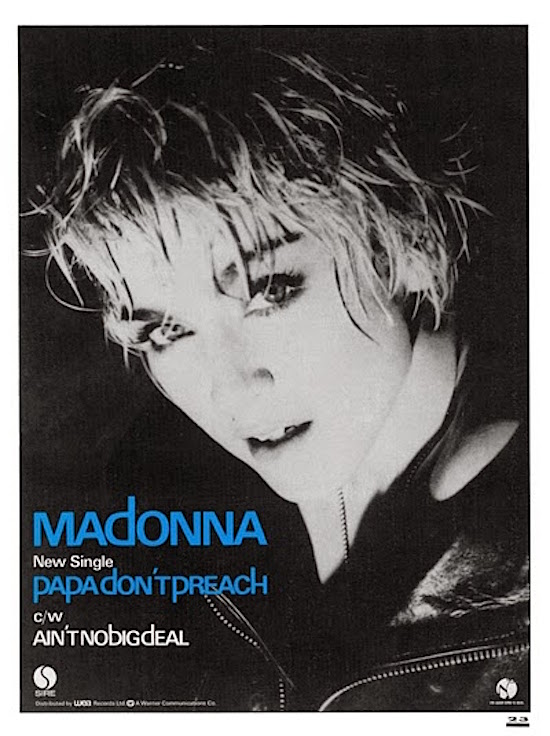
On August 9 1986, Madonna’s Papa Don’t Preach spent the first of two weeks at #1 on the Top 100 Canadian Singles Chart.

Today in Madonna History: August 5, 1990

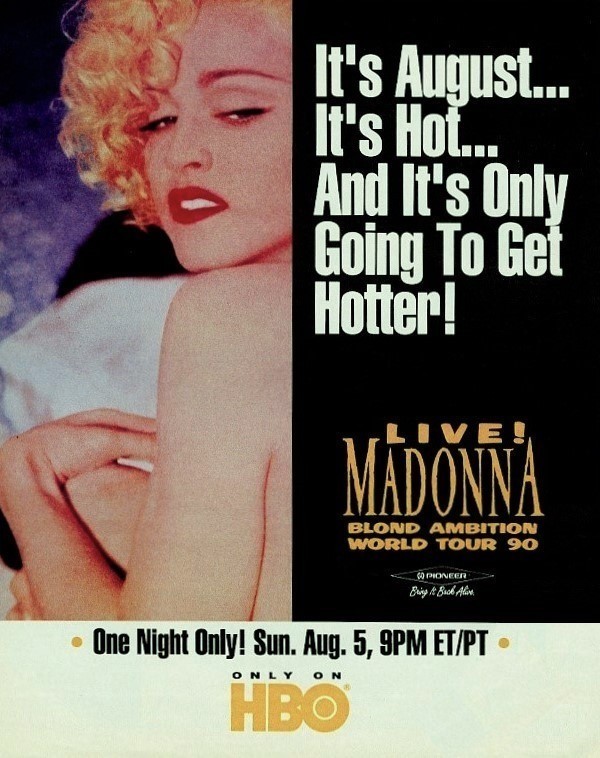
On August 5 1990, Madonna – Live! Blond Ambition World Tour 90 was broadcast live on HBO-TV from Stade de l’Ouest, Nice, France and seen in more than 4.3 million households – it was the most-watched entertainment special in the network’s 18-year history (at the time).

Today in Madonna History: July 12, 1986

On July 12 1986, Madonna’s third album, True Blue, debuted at #1 on the UK Albums Chart.

Here’s the AllMusic review of True Blue by Stephen Thomas Erlewine:

True Blue is the album where Madonna truly became Madonna the Superstar — the endlessly ambitious, fearlessly provocative entertainer that knew how to outrage, spark debates, get good reviews — and make good music while she’s at it. To complain that True Blue is calculated is to not get Madonna — that’s a large part of what she does, and she is exceptional at it, but she also makes fine music. What’s brilliant about True Blue is that she does both here, using the music to hook in critics just as she’s baiting a mass audience with such masterstrokes as “Papa Don’t Preach,” where she defiantly states she’s keeping her baby. It’s easy to position anti-abortionism as feminism, but what’s tricky is to transcend your status as a dance-pop diva by consciously recalling classic girl-group pop (“True Blue,” “Jimmy Jimmy”) to snag the critics, while deepening the dance grooves (“Open Your Heart,” “Where’s the Party”), touching on Latin rhythms (“La Isla Bonita”), making a plea for world peace (“Love Makes the World Go Round”), and delivering a tremendous ballad that rewrites the rules of adult contemporary crossover (“Live to Tell”). It’s even harder to have the entire album play as an organic, cohesive work. Certainly, there’s some calculation behind the entire thing, but what matters is the end result, one of the great dance-pop albums, a record that demonstrates Madonna’s true skills as a songwriter, record-maker, provocateur, and entertainer through its wide reach, accomplishment, and sheer sense of fun.