Today in Madonna History: January 7, 2004

madonna-remixed-revisited-january-1 madonna-remixed-revisited-january-2

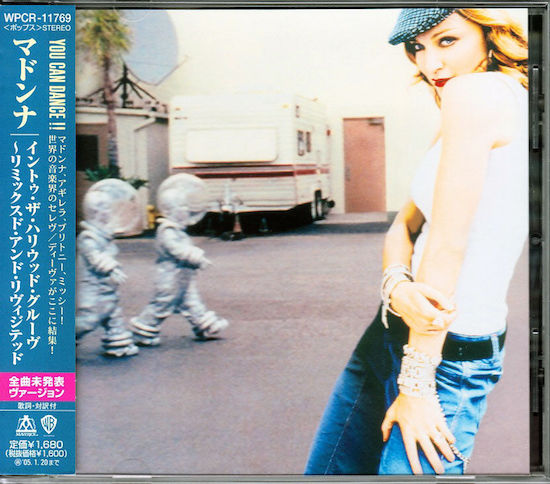
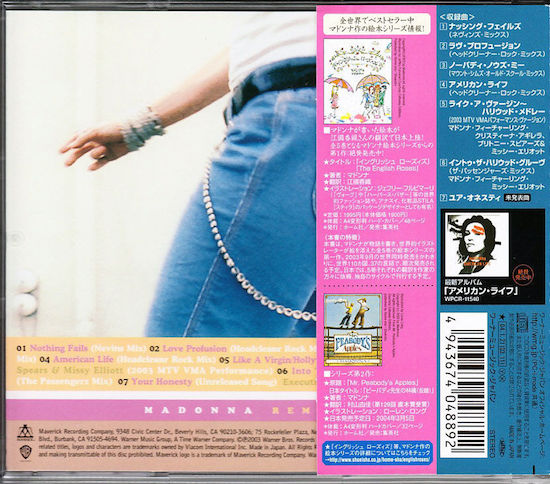
On January 7 2004, Rolling Stone magazine reviewed Madonna’s Remixed & Revisited EP:

Instead of the twenty-year retrospective originally planned for the holiday season, Madonna fans get a measly half-hour of mishmash marginalia. Of the four remixes from American Life, only one clicks: Headcleanr’s rock mix of Love Profusion, which replaces Mirwais’ electrofolk with Strokes-like guitars and drums that flatter an overlooked but fantastic song. The live medley of Like a Virgin and Hollywood, with Britney Spears and Christina Aguilera, falls flat without the infamous kisses, and the Gap commercial with Missy Elliott just sounds cheap and nasty. Your Honesty, an outtake from 1994’s Bedtime Stories, recalls the post-disco funkiness of Madonna’s 1983 debut. Bet it would’ve worked better in a box set. – Barry Walters

Today in Madonna History: November 18, 1994

girlie-show-callaway-book-1 girlie-show-callaway-book-1b girlie-show-callaway-book-1c girlie-show-callaway-book-5 girlie-show-callaway-book-6 girlie-show-callaway-book-2 girlie-show-callaway-book-3 girlie-show-callaway-book-4 girlie-show-callaway-book-8

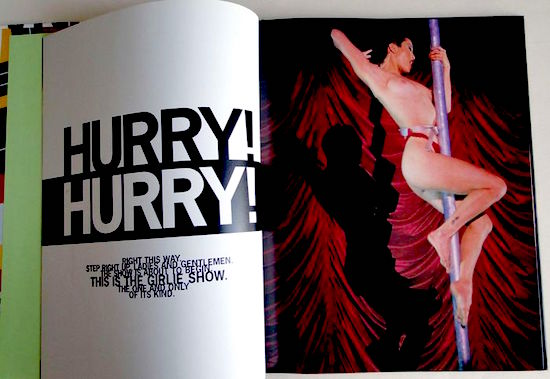
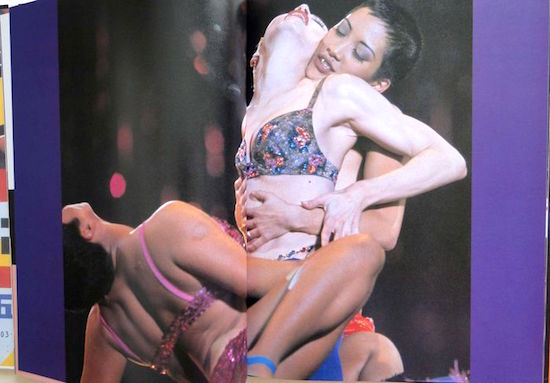
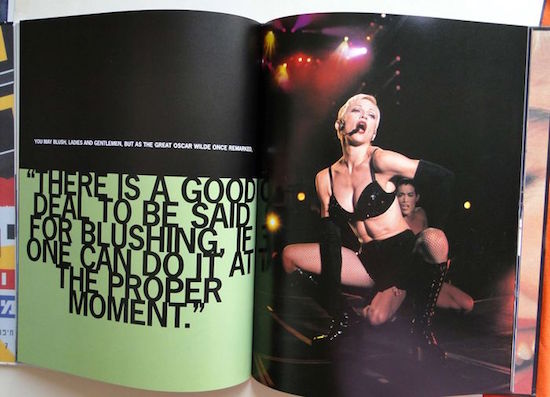
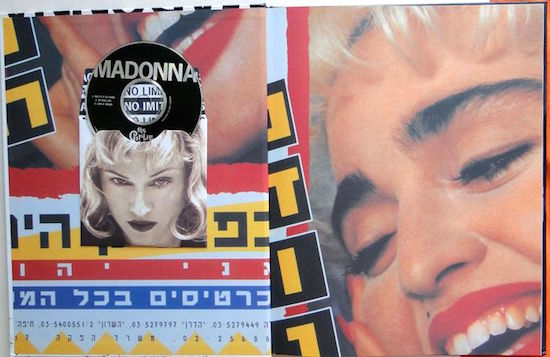
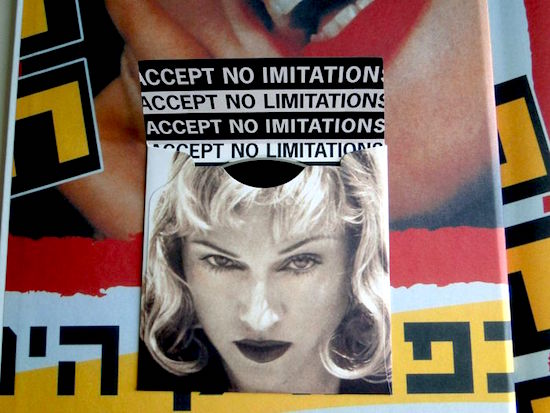
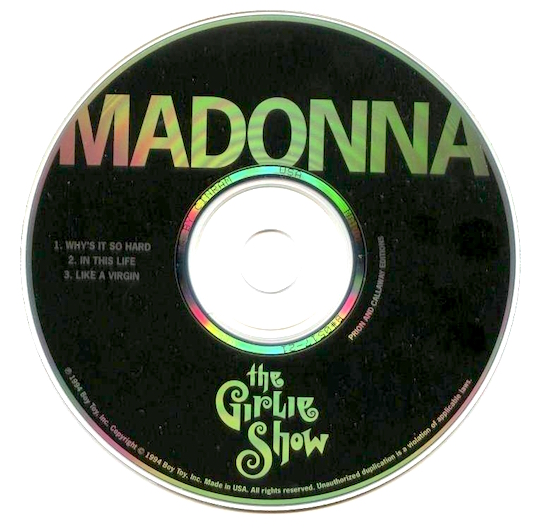
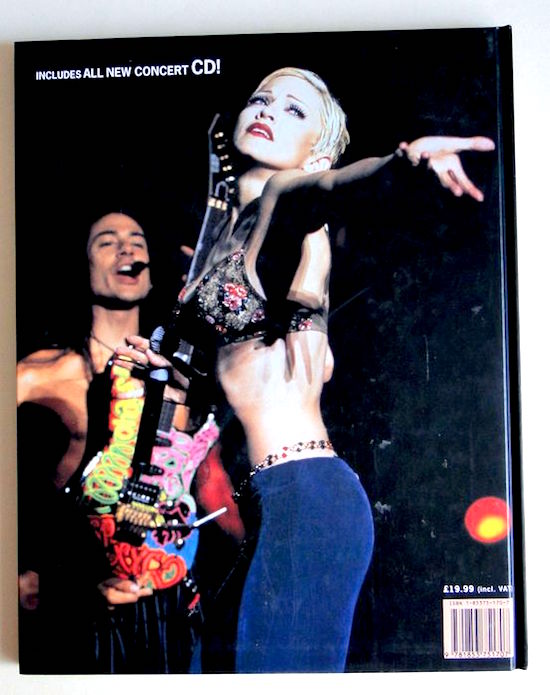
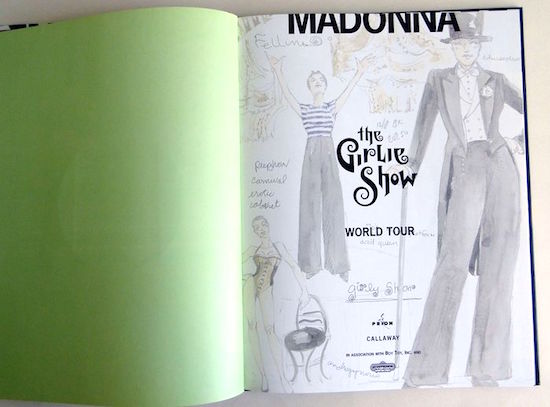
On November 18 1994, Madonna released her second coffee table book, The Girlie Show, with 70-pages of photographs from the tour and a 3-song live CD, which included Like A Virgin, In This Life and Why’s It So Hard.

The book was published in the US by Callaway.  The book sold 140,000 copies (the book is now out of print). The Girlie Show was also published in the UK, France, Germany and Japan.

Today in Madonna History: November 6, 1984

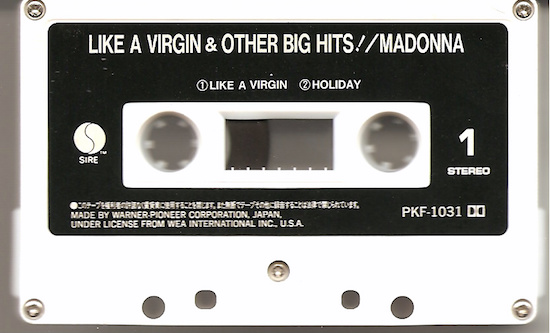
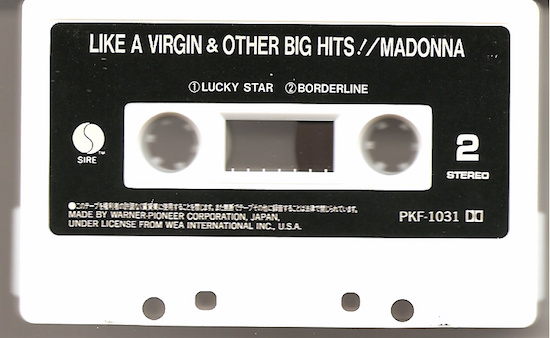
like-a-virgin-madonna-other-big-hits-1 like-a-virgin-madonna-other-big-hits-2 like-a-virgin-madonna-other-big-hits-3 like-a-virgin-madonna-other-big-hits-4

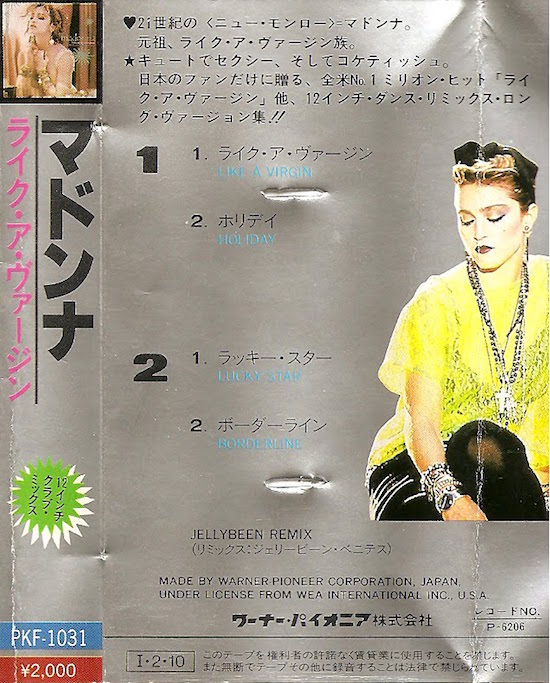
On November 6 1984, Madonna’s Like A Virgin was released as the lead single from the album of the same name.  The b-side for Like A Virgin was Stay.

Billy Steinberg reflected on the recording process and commented that:

“When Madonna recorded it, even as our demo faded out, on the fade you could hear Tom (Kelly) saying, “When your heart beats, and you hold me, and you love me…” That was the last thing you heard as our demo faded. Madonna must have listened to it very, very carefully because her record ends with the exact same little ad-libs that our demo did. That rarely happens that someone studies your demo so carefully that they use all that stuff. We were sort of flattered how carefully she followed our demo on that.

Today in Madonna History: June 1, 1990

madonna-herb-ritts-interview madonna-herb-ritts-interview-c madonna-herb-ritts-interview-b madonna-herb-ritts-interview-a madonna-herb-ritts-interview-d

On June 1 1990, Madonna was controversially featured grabbing her crotch and breast on the cover of Interview magazine.

Madonna was interviewed by Glenn O’Brien at the Disney Studios, where she was rehearsing the Blond Ambition Tour. Here’s a snippet from the interview:

Glenn: Let’s talk about your show.

Madonna: Let’s not. Today was a horrible day. That was the worst rehearsal.

Glenn: Well, I liked it, but I haven’t seen it when you thought it was good. I loved the number where you’re lying on the piano singing a torch song.

Madonna: You saw only one segment of the show. I’ve created five different worlds, and the set is all based on hydraulics. One is going down and another is coming up. The world changes completely. I think of it more as a musical than as a rock concert. There is a straightforward Metropolis section, like my Express Yourself video – that set with all the gears and machinery; it’s very hard and metallic. That’s the heavy-duty dance music. Then the set changes and it’s like a church. We call it the temple ruins. It’s all these columns, trays of votive candles, a cross. I do Like a Virgin on a bed, but we changed the arrangement, so it sounds Indian. Then I’m being punished for masturbation on this bed, which is, as you know, what happens. Then we do the more serious, religious-type material – Like a Prayer, Papa Don’t Preach… Then it changes to what you saw, this Art Deco ’50s-musical set. That’s when we do three songs from Dick Tracy, and then after that we do what I call the camp section. Then it gets really serious again and we go into our Clockwork Orange cabaret set.

Today in Madonna History: May 9, 1991

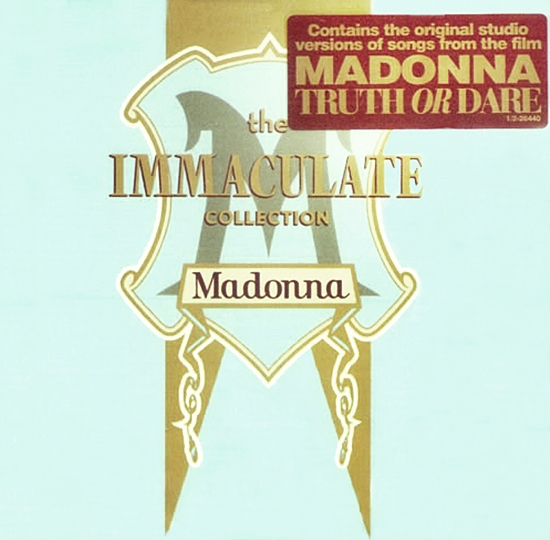
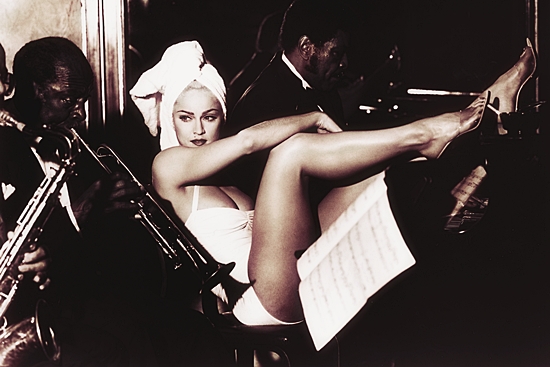
truth or dare press group 1 550Immaculate Collection Truth Or Dare Sticker 550 Truth or Dare Outtake 1 550

On May 9 1991, a new music video for Like A Virgin featuring live and behind-the-scenes footage was released exclusively to MTV in the U.S. to promote the film Truth Or Dare. Outside the U.S., video channels were instead serviced with a live video for Holiday (which was eventually issued within the U.S. as well).

The Truth Or Dare clip for Like A Virgin was nominated for two MTV Video Music Awards in 1991: Best Choreography and Best Female Video. It marked the third time that a video for Like A Virgin had been nominated for an MTV Video Music Award for Best Choreography. The original video received three nominations in 1985 including a nod for best Choreography, and another live clip (which was also released exclusively to MTV) to promote the home video release of The Virgin Tour was also nominated in the category in 1986. Despite the numerous nominations, none of the three videos for Like A Virgin garnered any trophies from MTV.

Today in Madonna History: April 6 1990

madonna-vogue-april5-1 madonna-vogue-april5-2 madonna-vogue-april5-3

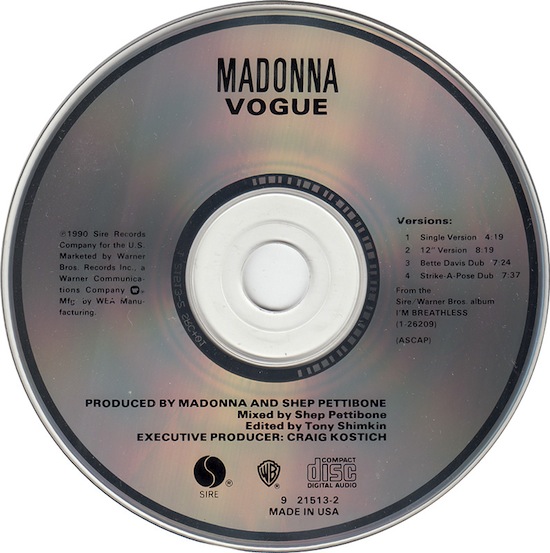
On April 6 1990, Madonna’s Vogue maxi single was released.

Here is the allmusic.com review of the maxi single:

Vogue, the first single from Madonna’s Dick Tracy-inspired 1990 album I’m Breathless, was arguably one of her crowning artistic achievements (both song-wise and video-wise), one of the biggest all-time house music hits (spending three weeks atop the U.S. pop charts), and her second proper U.S. maxi-single release. The single includes four versions: the single version, the 12″ version, the Bette Davis Dub, and the Strike-A-Pose Dub. The song’s most definitive version, that being the album/video version, is not on the single. The single version, where she asks “what are you looking at,” begins with drumbeats and goes straight into the song, as opposed to the album version’s minute-long introduction. Besides the different intros, however, the rest is the same. The 12″ version is, naturally, quite longer, and just as good. The “Bette Davis Dub” begins with the extended album intro, but, save for the chorus and the “rap,” is virtually instrumental, as is the last mix, which cleverly uses samples from Like a Virgin. This disc’s main selling point is the fact that it’s a collection piece, and for collectors and diehards, it’s nice to have the single edit and 12″ mix. But if one is a casual fan, go with the album version.

Today in Madonna History: March 16, 1995

immaculatecollection-album-cover-1 immaculatecollection-album-cover-2 immaculatecollection-album-cover-3

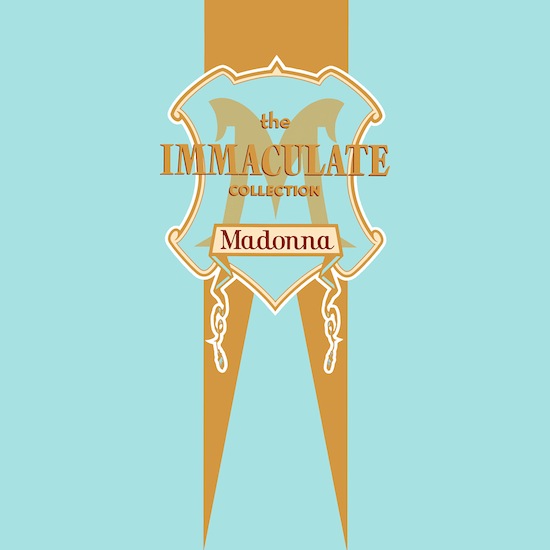
On March 16 1995, Madonna’s The Immaculate Collection was certified 6x platinum (6 million units) in the USA.

Review by Stephen Thomas Erlewine (allmusic.com):

On the surface, the single-disc hits compilation The Immaculate Collection appears to be a definitive retrospective of Madonna’s heyday in the ’80s. After all, it features 17 of Madonna’s greatest hits, from Holiday and Like a Virgin to Like a Prayer and Vogue. However, looks can be deceiving. It’s true that The Immaculate Collection contains the bulk of Madonna’s hits, but there are several big hits that aren’t present, including Angel, Dress You Up, True Blue, Who’s That Girl and Causing a Commotion. The songs that are included are frequently altered. Everything on the collection is remastered in Q-sound, which gives an exaggerated sense of stereo separation that often distorts the original intent of the recordings. Furthermore, several songs are faster than their original versions and some are faded out earlier than either their single or album versions, while others are segued together. In other words, while all the hits are present, they’re simply not in their correct versions. Nevertheless, The Immaculate Collection remains a necessary purchase, because it captures everything Madonna is about and it proves that she was one of the finest singles artists of the ’80s. Until the original single versions are compiled on another album, The Immaculate Collection is the closest thing to a definitive retrospective.