Today in Madonna History: November 2, 1992

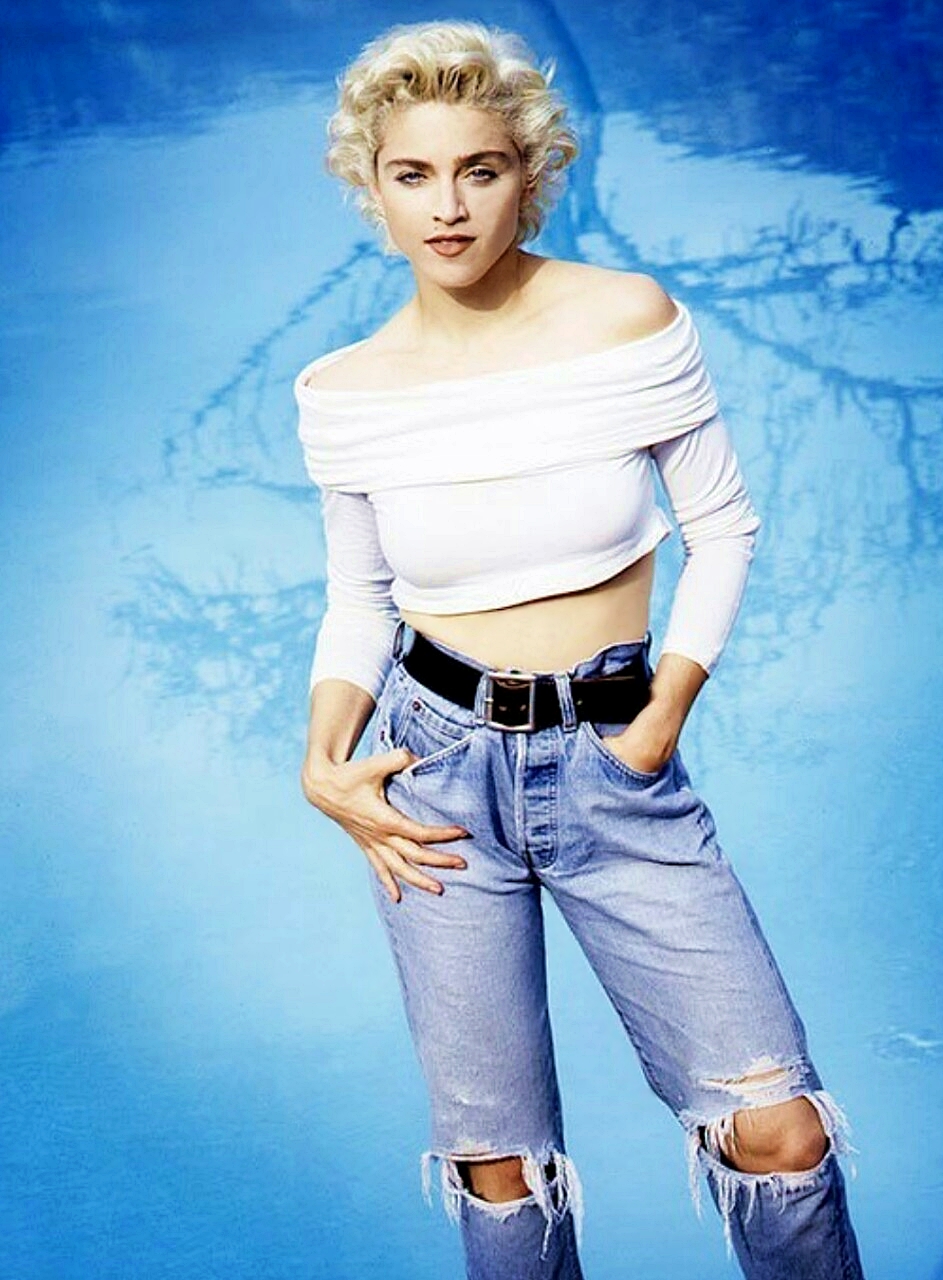
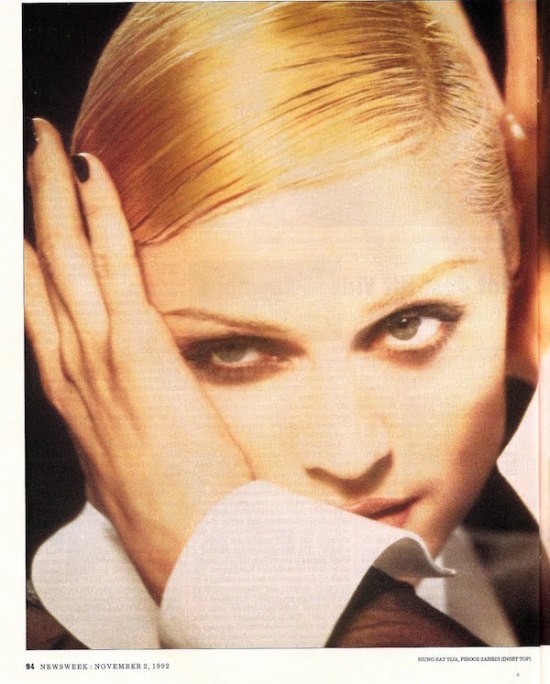
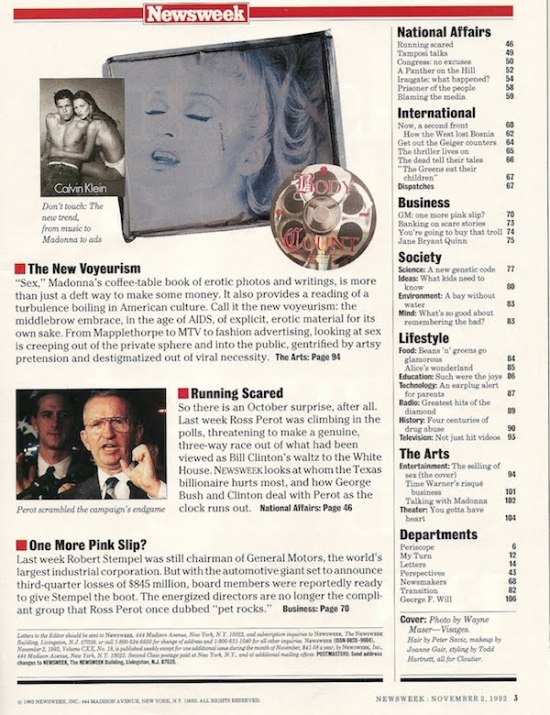
On November 2 1992, Madonna appeared on the cover of Newsweek magazine, with the headline: The Selling of Sex – The New Voyeurism.

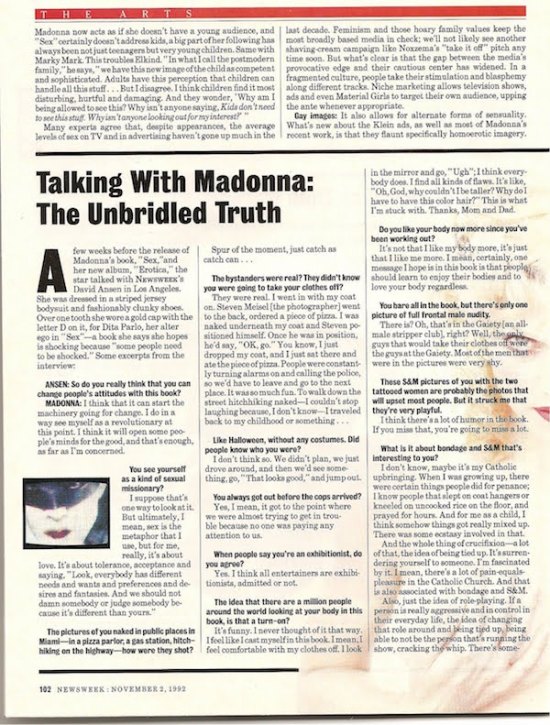
Here’s a snippet of the article inside, written by John Leland:

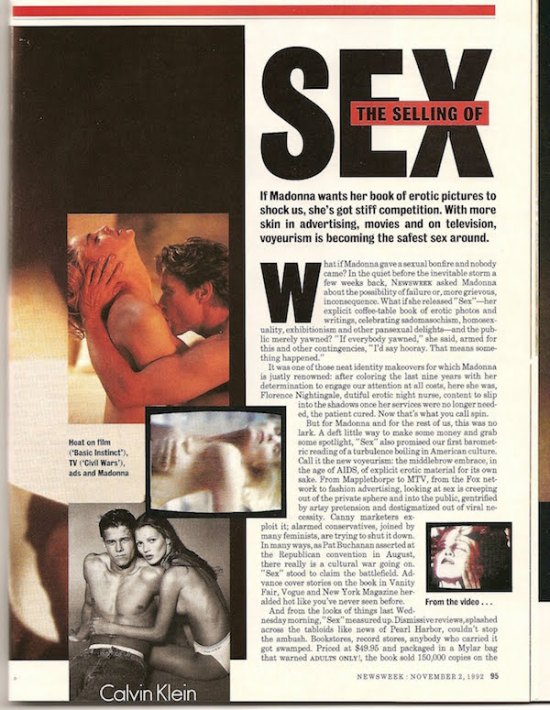
What if Madonna gave a sexual bonfire and nobody came? In the quiet before the inevitable storm a few weeks back, NEWSWEEK asked Madonna about the possibility of failure or, more grievous, inconsequence. What if she released “Sex“—her explicit coffee-table book of erotic photos and writings, celebrating sadomasochism, homosexuality, exhibitionism and other pansexual delights-and the public merely yawned? “If everybody yawned,” she said, armed for this and other contingencies, “I’d say hooray. That means something happened.”

It was one of those neat identity makeovers for which Madonna is justly renowned: after coloring the last nine years with her determination to engage our attention at all costs, here she was, Florence Nightingale, dutiful erotic night nurse, content to slip into the shadows once her services were no longer needed, the patient cured. Now that’s what you call spin.

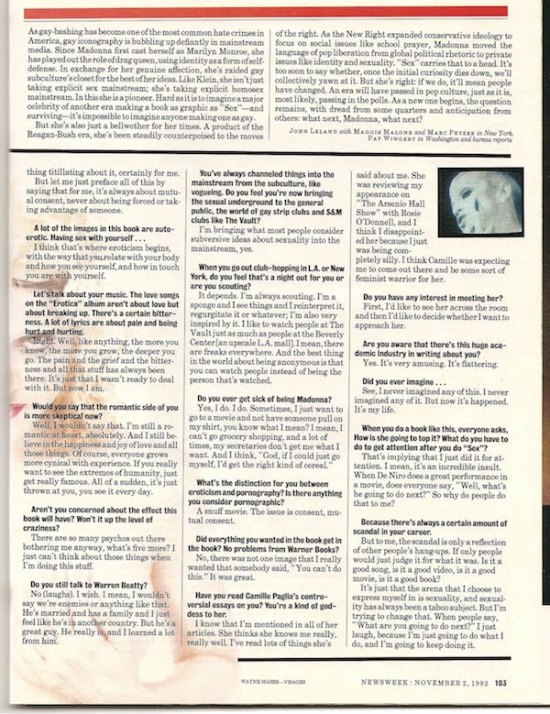
But for Madonna and for the rest of us, this was no lark. A deft little way to make some money and grab some spotlight, “Sex” also promised our first barometric reading of a turbulence boiling in American culture. Call it the new voyeurism: the middlebrow embrace, in the age of AIDS, of explicit erotic material for its own sake. From Mapplethorpe to MTV, from the Fox network to fashion advertising, looking at sex is creeping out of the private sphere and into the public, gentrified by artsy pretension and de-stigmatized out of viral necessity. Canny marketers exploit it; alarmed conservatives, joined by many feminists, are trying to shut it down. In many ways, as Pat Buchanan asserted at the Republican convention in August, there really is a cultural war going on. “Sex” stood to claim the battlefield. Advance cover stories on the book in Vanity Fair, Vogue and New York Magazine heralded hot like you’ve never seen before.

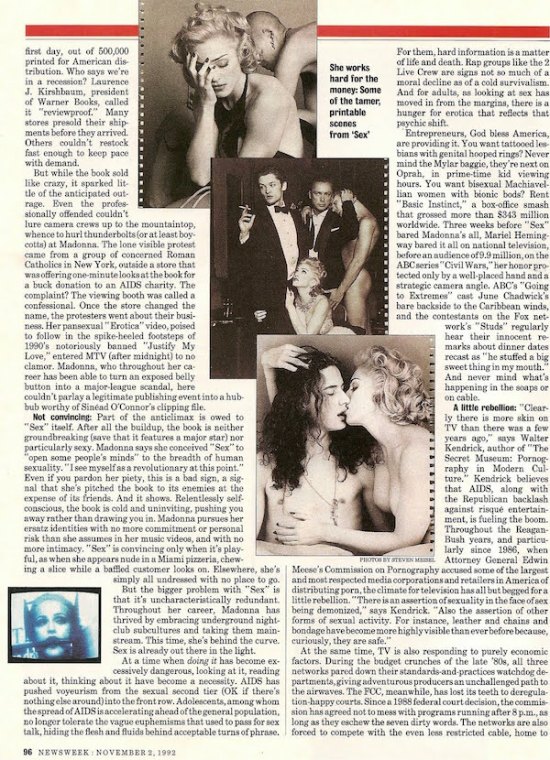
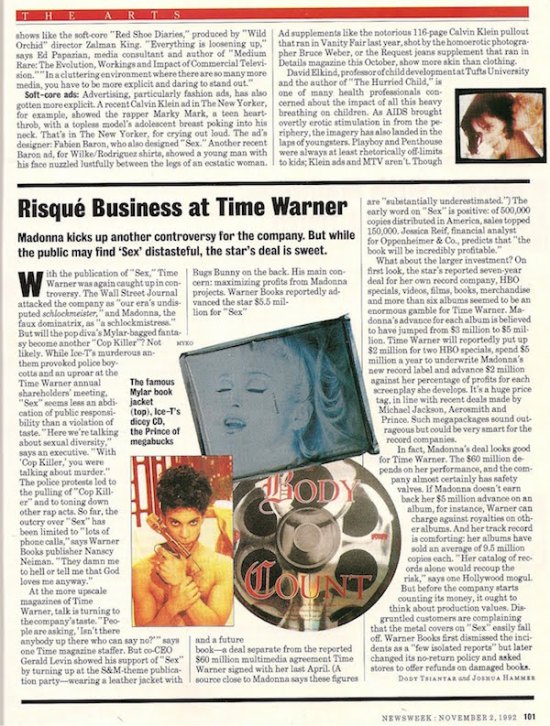
And from the looks of things last Wednesday morning, “Sex” measured up. Dismissive reviews, splashed across the tabloids like news of Pearl Harbor, couldn’t stop the ambush. Bookstores, record stores, anybody who carried it got swamped. Priced at $49.95 and packaged in a Mylar bag that warned ADULTs ONLY!, the book sold 150,000 copies on the first day, out of 500,000 printed for American distribution. Who says we’re in a recession? Laurence J. Kirshbaum, president of Warner Books, called it “review-proof.” Many stores pre-sold their shipments before they arrived. Others couldn’t restock fast enough to keep pace with demand.
Today in Madonna History: November 30, 2002

Die Another Day (Remixes) 3 550

On November 30 2002, Die Another Day (Remixes) spent the first of two weeks at number-one on the Hot Dance Music/Club Play chart in US. It was Madonna’s 28th single to top the dance charts.

Today in Madonna History: November 29, 2005

Madonna & Andrew G press photo 550

On November 29 2005, Andrew G’s spirited interview with Madonna aired on pay-TV Channel [V] in Australia. The interview was recorded in London during a press junket to promote Confessions On A Dance Floor.

Madonna had hoped to bring her 2006 Confessions Tour to Australia during its final leg, which saw her perform her first full concerts in Japan since 1993. Shows in Australia, however, did not materialize during the tour.

Today in Madonna History: November 28, 1998

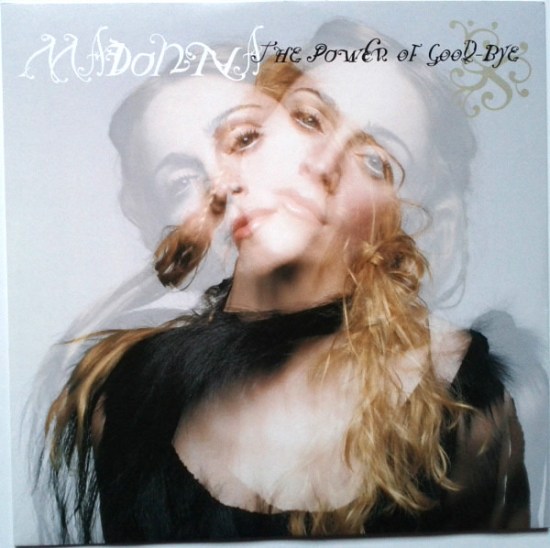
On November 28 1998, Madonna’s The Power Of Good-Bye hit #11 on the Billboard Hot 100 Singles Chart in the USA. The hit single from Ray Of Light was written by Madonna and Rick Nowels; produced by Madonna, William Orbit and Patrick Leonard.

Rick Nowels had this to say about his experience writing the song with Madonna:

It was a career-changing experience for me. Before that I had always done my co-writing with friends. But working with Madonna. It was the first time I had ever written one-on-one with a great artist/writer. After that I changed gears a little, and now I mostly collaborate directly with artists.

Today in Madonna History: November 27, 1991

On November 27 1991, Madonna contributed a pre-taped monologue for the MTV 10th Anniversary – Money for Nothing special that aired on ABC-TV. Madonna’s segment was filmed by Alek Keshishian.

The following quote is how Madonna started her monologue:

I’m here because I wanted to talk to you about us.

And all that we’ve been through.

I wanted to talk about me and you.

I remember when we first met.

You didn’t know who you were yet.

I didn’t know who I was.

We grew up together.

Today in Madonna History: November 26, 1992

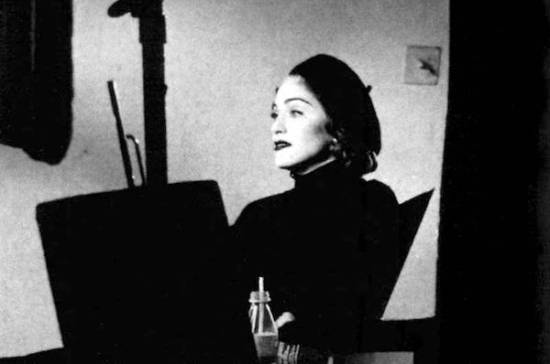
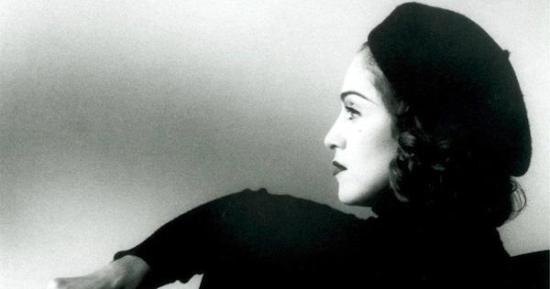
On November 26 1992, Rolling Stone magazine published their review of Madonna’s Erotica album, written by Arion Berger:

It took Madonna ten years, but she finally made the record everyone has accused her of making all along. Chilly, deliberate, relentlessly posturing. Erotica is a post-AIDS album about romance — it doesn’t so much evoke sex as provide a fetishistic abstraction of it. She may have intended to rattle America with hot talk about oral gratification and role switching, but sensuality is the last thing on the album’s mind. Moving claustrophobically within the schematic confines of dominance and submission, Erotica plays out its fantasies with astringent aloofness, unhumid and uninviting. The production choices suggest not a celebration of the physical but a critique of commercial representations of sex — whether Paul Verhoeven’s, Bruce Weber’s or Madonna’s — that by definition should not be mistaken for the real thing. It succeeds in a way the innocent post-punk diva of Madonna and the thoughtful songwriter of Like a Prayer could not have imagined. Its cold, remote sound systematically undoes every one of the singer’s intimate promises.

Clinical enough on its own terms when compared with the lushness and romanticism of Madonna’s past grooves, Erotica is stunningly reined in; even when it achieves disco greatness, it’s never heady. Madonna, along with co-producers Andre Betts and Shep Pettibone, tamps down every opportunity to let loose — moments ripe for a crescendo, a soaring instrumental break, a chance for the listener to dance along, are over the instant they are heard. Erotica is Madonna’s show (the music leaves no room for audience participation), and her production teases and then denies with the grim control of a dominatrix.

Against maraca beats and a shimmying horn riff, Erotica introduces Madonna as “Mistress Dita,” whose husky invocations of “do as I say” promise a smorgasbord of sexual experimentation, like the one portrayed in the video for Justify My Love. But the sensibility of Erotica is miles removed from the warm come-ons of Justify My Love, which got its heat from privacy and romance — the singer’s exhortations to “tell me your dreams.” The Madonna of Erotica is in no way interested in your dreams; she’s after compliance, and not merely physical compliance either. The song demands the passivity of a listener, not a sexual partner. It’s insistently self-absorbed — Vogue with a dirty mouth, where all the real action’s on the dance floor.

Look (or listen) but don’t touch sexuality isn’t the only peep-show aspect of this album; Erotica strives for anonymity the way True Blue strove for intimacy. With the exception of the riveting Bad Girl, in which the singer teases out shades of ambiguity in the mind of a girl who’d rather mess herself up than end a relationship she’s too neurotic to handle, the characters remain faceless. It’s as if Madonna recognizes the discomfort we feel when sensing the human character of a woman whose function is purely sexual. A sex symbol herself, she coolly removes the threat of her own personality.

Pure disco moments like the whirligig Deeper and Deeper don’t need emotional resonance to make them race. But the record sustains its icy tone throughout the yearning ballads (Rain, Waiting) and confessional moods (Secret Garden). Relieved of Madonna’s celebrity baggage, they’re abstract nearly to the point of nonexistence — ideas of love songs posing as the real thing. Even when Madonna draws from her own life, she’s all reaction, no feeling: The snippy Thief of Hearts takes swipes at a man stealer but not out of love or loyalty toward the purloined boyfriend, who isn’t even mentioned.

By depersonalizing herself to a mocking extreme, the Madonna of Erotica is sexy in only the most objectified terms, just as the album is only in the most literal sense what it claims to be. Like erotica, Erotica is a tool rather than an experience. Its stridency at once refutes and justifies what her detractors have always said: Every persona is a fake, the self-actualized amazon of Express Yourself no less than the breathless baby doll of Material Girl. Erotica continually subverts this posing to expose its function as pop playacting. The narrator of Bye Bye Baby ostensibly dumps the creep who’s been mistreating her, but Madonna’s infantile vocal and flat delivery are anything but assertive — she could be a drag queen toying with a pop hit of the past. Erotica is everything Madonna has been denounced for being — meticulous, calculated, domineering and artificial. It accepts those charges and answers with a brilliant record to prove them.


Today in Madonna History: November 25, 1987

On November 25 1987, The Look of Love was released as the third and final single from the Who’s That Girl soundtrack in Europe.

The Look Of Love was also released as a single in Japan in January, 1988.