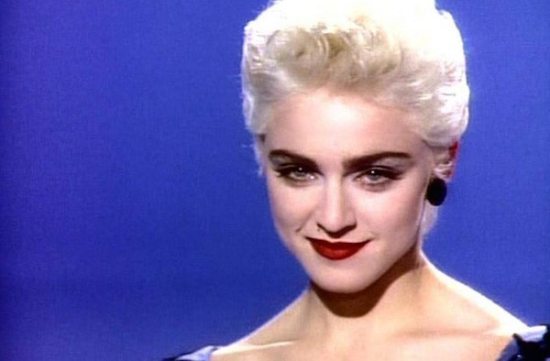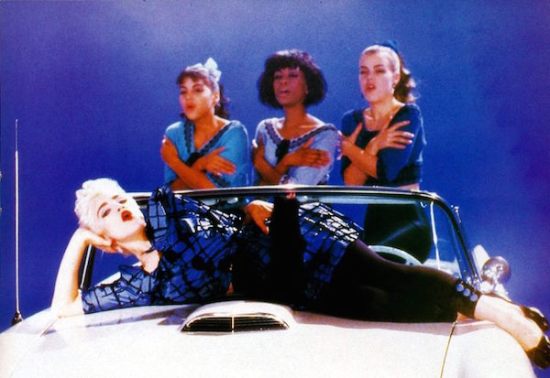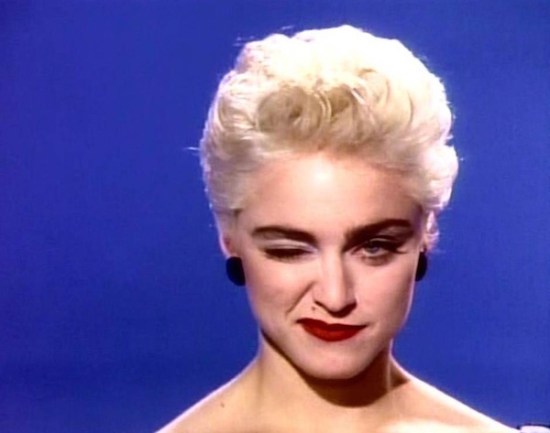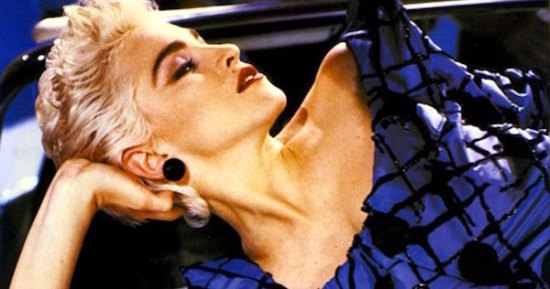
On August 23 1986, Papa Don’t Preach spent the first of two weeks at #1 on Billboard’s Hot Maxi-Singles Sales chart.
Despite being more of a pop/rock song than a club-oriented cut – both in its original form and in Stephen Bray’s extended remix version – Papa Don’t Preach nevertheless managed to reach #4 on Billboard’s August 30th Hot Dance/Club Play chart due to the massive buzz surrounding the song and its undeniable crossover appeal.
On July 12 1986, Madonna’s Papa Don’t Preach reached #1 in the UK and stayed there for 3 weeks.
Madonna’s first-ever CD single was for Papa Don’t Preach. The single was produced in the UK for distribution in the USA. The rare gold disc CD single featured 3 audio tracks as well as the official video for Papa Don’t Preach in NTSC format.
On June 30 1986, Madonna’s True Blue album was released by Sire Records. She worked with Stephen Bray and Patrick Leonard on the album while co-writing and co-producing all the songs.
True Blue was an immediate global success, reaching number one in then record-breaking 28 countries across the world, including Australia, Canada, France, Germany, the United Kingdom and the United States. It spent 34 consecutive weeks at the top of the European Top 100 Albums chart, longer than any other album in history. It became the world’s top-selling album of 1986, as well the biggest selling album of the 1980s by a woman and remains one of the best-selling albums of all time with sales of more than 25 million copies worldwide. All five singles released from the album reached the top five on the Billboard Hot 100, with Live to Tell, Papa Don’t Preach, and Open Your Heart peaking at number one.
On June 28 1986, Billboard magazine reported that Madonna made a surprise appearance at WEA International’s annual manager’s meeting with Seymour Stein in New York earlier that month where she previewed tracks from her forthcoming album, True Blue.
On June 11 1986, Madonna’s Papa Don’t Preach single was released.
The single and its music video, which made its debut a week later, caused controversy due to its focus on the issue of teenage pregnancy. Perhaps if the media had paid a little closer attention to the video, they would have found that it contained a few other points of interest. While Danny Aiello’s inclusion in the video was duly reported, the same can’t be said for Madonna’s breasts, which also made several brief cameo appearances in the clip.
We imagine Madonna must have had a good laugh over the fact that these scenes flew under the radar of MTV, the media, and by all but the most perceptive of fans at the time.
On June 7 1986, Madonna’s Live To Tell hit #1 in the USA. Live To Tell was written and produced together by Madonna and Patrick Leonard.
Speaking of Patrick Leonard, one of our all-time favourite Madonna collaborators — he currently has a Kickstarter campaign going for a new album called Bring The Circus Home, a collection of re-visited and re-imagined songs (piano-only, no vocals) that he and Madonna worked on and released together. Please check out Patrick’s Kickstarter campaign and donate/pledge if you can — this is an all-or-nothing campaign. He will not be able to proceed with the album if the goal is not met by Wednesday July 4.
Jay’s Note: I’m going to pledge $100 so I can get one of the limited edition vinyl releases! Woo-hoo vinyl!
This beautiful video shows Madonna collaborator Patrick Leonard playing a solo piano version of Live To Tell:
On May 31 1986, Madonna’s Live To Tell hit #1 for 3 weeks on US Hot Adult Contemporary singles chart.
The song was Madonna’s third number-one single on the Billboard Hot 100, and her first number-one on the Adult Contemporary chart.
In an interview about the song, Madonna said, “I thought about my relationship with my parents and the lying that went on. The song is about being strong, and questioning whether you can be that strong but ultimately surviving.”
In a review of the album True Blue, Stephen Thomas Erlewine from Allmusic called it a “tremendous ballad that rewrites the rules of adult contemporary crossover”.
Jim Farber from Entertainment Weekly called the song “her best ballad to date”.
In a review of her compilation album The Immaculate Collection, David Browne from Entertainment Weekly magazine called it “one of her few successful shots at being a balladeer”.
Alfred Soto from Stylus Magazine felt that “the song’s set of lyrics remain her best” and that the vocals “seethes with a lifetime’s worth of hurts which she nevertheless refuses to share”.
Sal Cinquemani from Slant Magazine called the song “striking” adding that it “rewrote the rules of what a pop song was supposed to sound like”.
Edna Gundersen from USA Today called the song “a moody heart-tugger, may be her best song ever.”