Author Archives: sonicboy19
Today in Madonna History: October 3, 1985
Today in Madonna History: October 2, 1992
On October 2 1992, Madonna’s Erotica video premiered on MTV.
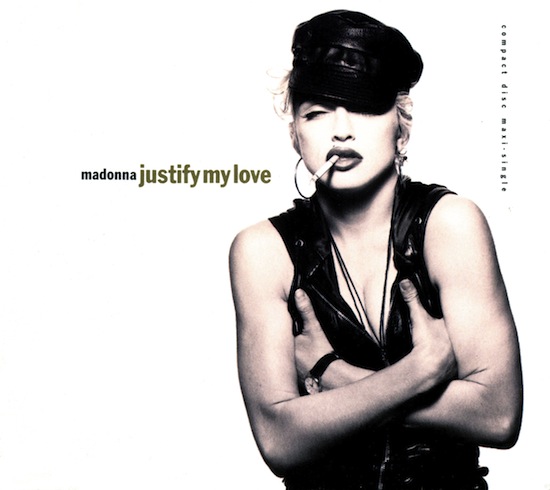
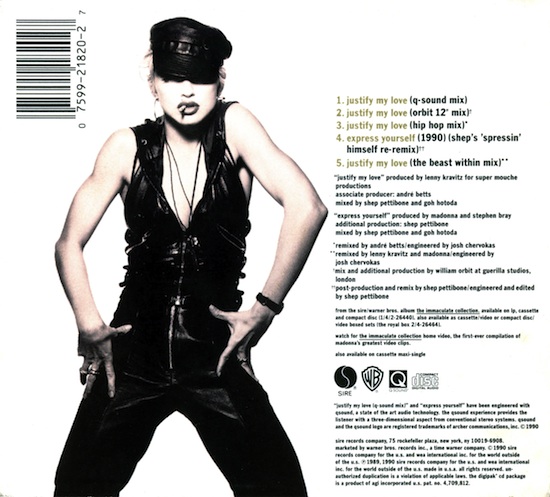
The Erotica video was directed by fashion photographer Fabien Baron, and featured a masked Madonna in a dominatrix costume. It also featured celebrities such as Naomi Campbell, Isabella Rossellini and Big Daddy Kane. The video was highly controversial, being aired by MTV a total of three times, before becoming Madonna’s second video to be banned, after Justify My Love in 1990.
MTV spokeswoman Linda Alexander said, “The themes of the video are clearly aimed at a more adult audience. It is not appropriate for a general viewing audience”.
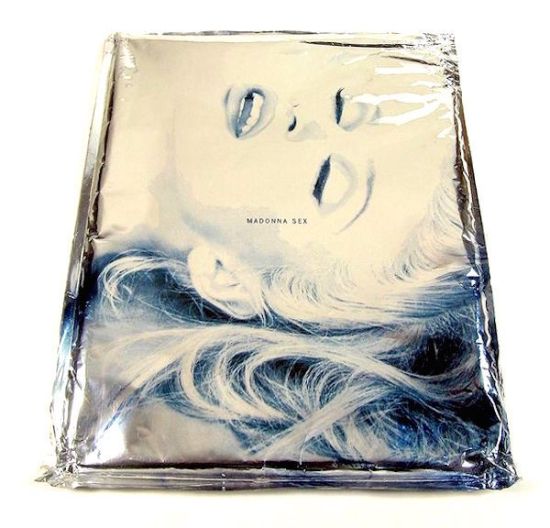
The footage of Madonna lip-synching the song in her S&M dominatrix costume was filmed on August 22, 1992 at The Kitchen in New York City, while the rest of the footage for the video was shot during the photo sessions for Madonna’s Sex book.
In order to imitate the look of old home-made movies, the entire video was shot with Super 8 film.
Today in Madonna History: October 1, 1983
On October 1 1983, Madonna appeared on her first magazine cover for Island magazine, shot by Curtis Knapp. The black & white cover image stands out from the many other Madonna photographs of the era due to its minimalist feel, focusing solely on Madonna’s facial features.
The magazine also featured an exclusive Q&A with Madonna:
Interviewer: Madonna.
Madonna: What?
Interviewer: Let’s go deep into your personal life.
Madonna: No way.
Interviewer: Come on. What do you like? Start with fashion. You’re a girl. You always wear all these great clothes on stage.
Madonna: No I don’t.
Interviewer: Everybody has the Madonna look now.
Madonna: I know. Crotchless jeans, (laughter). Most of the clothes I wear look the way they do because they’re so worn out.
Interviewer: Where’s that stage style from?
Madonna: It’s pseudo-Puerto Rican punk rock freak out. A Motorcycle baby. It’s a combination of my two oldest fantasies. One was to be Nancy Sinatra; the other was to be a nun.
Interviewer: Do you ever do that song “These Boots are Made for Walkin’”?
Madonna: I used to do it in front of the mirror in my uniform skirt.
Interviewer: You went to Catholic school?
Madonna: Uh-huh. The Sacred Heart Academy.
Interviewer: What do you want to achieve now?
Madonna: Stardom.
Interviewer: Make lots of records, or make lots of money?
Madonna: I want to make a lot of love. (whistle in the background) I don’t think about money. It just gets there. Up until a year ago I was still broke and living on the street. But I still feel the same way. Money will never be a problem for me. If you worry about it, it’s a problem.
Interviewer: Did you draw when you were a kid?
Madonna: Phallic symbols. You know Catholics. I used to draw people naked all the time in my art class and my nun teachers used to tell me I had to put clothes on them. So I just drew lines around their bodies. See-through clothes.
Interviewer: Had you ever seen a naked body at that time?
Madonna: No. I never saw naked bodies. I never saw my parents naked. Gosh, when I was seventeen I hadn’t seen a penis.
Interviewer: So were you shocked when you saw the first one?
Madonna: Yeah. I thought it was really gross (laughter). And I’m not saying anymore.
Interviewer: Did you ever fall in love?
Madonna: I’m always falling in love. But I get in trouble because I think it’s love then I realize it’s not, but the other person is in love and then I have this problem til I think it’s love again and have the courage to get out of the last one.
Interviewer: Your songs are very fantasy. Maybe they help people think they’re in love when they’re not. Is that okay?
Madonna: Yeah. Fantasies are essential. Without fantasies I would have died of starvation.
Interviewer: In New York it’s difficult to be polite sometimes. Do you think being polite is a virtue? Or is it something you don’t have to think about?
Madonna: I think it’s a virtue. I’m sincere to people who are sincere.
Interviewer: What about people like the president of Warner Brothers Records?
Madonna: I’m just charming.
Interviewer: That makes sense. Your new manager is also Michael Jackson’s manager. And you’re planning you first tour with a band?
Madonna: Yeah I’m madly in love with my manager. And you can print that. I’m rehearsing now with singers and dancers, and I’ll have two guitarists, and two synthesizers, the drums and bass will be pre-recorded. We’re doing an American tour, and European track dates. Not til the beginning of the year.
Interviewer: You were talking before about reincarnation. What were your past lives like?
Madonna: I don’t really…I only have images and feelings, no specific chronological events or anything like that. I do feel really transient in a way. I feel like when I meet people I can absorb their character and be them. And I find that no matter what I’m doing I’m always doing the same thing. Basically. What ever it looks like on the outside. And it just makes me feel..I don’t know…I can’t really describe it verbally because no one’s ever asked me this before, no one really cares. Haha! People just want to hear me sing.
Interviewer: How come you do soul music…soul pop?
Madonna: Because I have soul. Because you can dance to it. Cause you can, you know. I grew up in an all black neighborhood and I wanted to be a black girl. I really did. There was something about me that was so much freer than the white kids I knew and they didn’t go to the Catholic schools I went to. They went to other schools and they wore short dresses and they didn’t have to take baths all the time and their knees were always dirty…I liked the fact that they could braid their hair and it would be sticking up…that’s not why I’m braiding my hair right now…First of all, all the black girls in my neighborhood had these dances in their yard where they had these little turntables with 45 records and they’d play all this Motown stuff and they would dance, just dance, all of them dancing together and none of the white kids I knew would ever do that. They were really boring and stiff. And I wanted to be part of the dancing. I didn’t like my friends. I had to be beaten up so many times by these little black girls before they would accept me and finally one day they whipped me with a rubber hose till I was like, lying on the ground crying. And then they just stopped doing it all of a sudden and let me be their friend, part of their group.
Today in Madonna History: September 30, 1995
On September 30 1995, Billboard magazine featured an exclusive interview with Madonna in a piece by Timothy White to promote her upcoming ballads collection, Something To Remember. Focusing primarily on the connection between Madonna’s introspective ballads and the loss of her mother, the article (which appears in an abridged version below) was titled “‘Something’ In the Way She Grieves.”
“Listening to this record took me on my own journey,” says Madonna with a sad smile, shifting on the couch in her apartment overlooking Central Park. “Each song is like a map of my life. I don’t really listen to my records once I’ve done them, I’m onto the next thing. And I think most of the time when my records come out, people are so distracted by so much fanfare and controversy that nobody pays attention to the music. But this is, for the most part, a retrospective, and I just wanted to put it out in a very simple way. The songs, they choke me up, and I wrote them. Isn’t that weird? I can’t tell you how painful the idea of singing Like A Virgin or Material Girl is to me now. I didn’t write either of those songs and wasn’t digging deep then. I also feel more connected emotionally to the music I’m writing now, so it’s more of a pleasure to do it.”
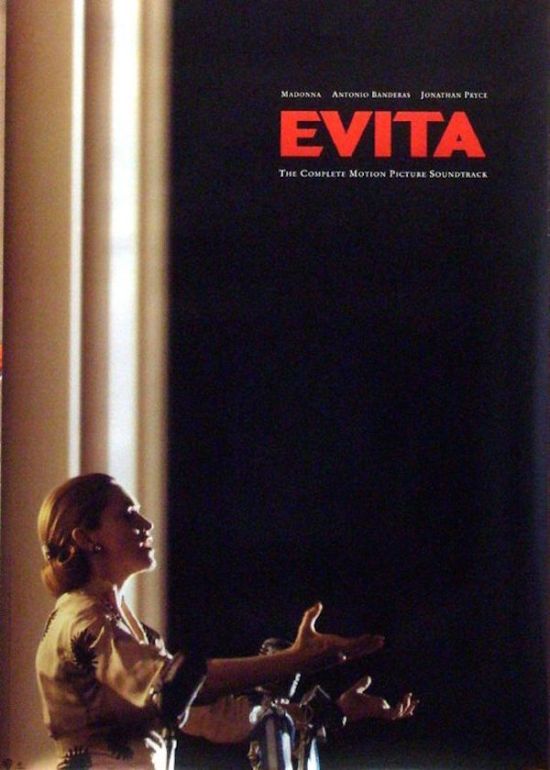
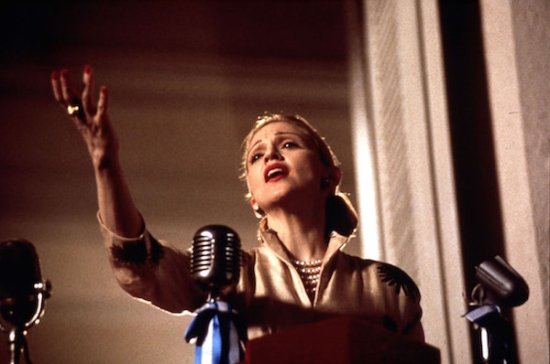
Madonna has included three new songs on Something To Remember: a moody cover of Marvin Gaye’s 1976 hit I Want You, which was suggested and subsequently produced by Nellee Hooper and features Massive Attack, and two bittersweet serenades (You’ll See and One More Chance), co-created with David Foster during the third weekend of September in a whirlwind writing/recording session. Shortly after this talk, she was to leave for London to start recording the music for the film version of Evita, the musical that was the toast of Broadway in 1979–the year Madonna wrote her first song in the basement of a dormant Queens, NY synagogue.
“I remember calling up my father back in Detroit and making him hear it on the tape recorder over the phone,” she confides, blushing. “He said, ‘Oh, that’s very nice.’ I felt proud. The song was called Tell The Truth.”
A self-assessed “roller-coaster Catholic,” Madonna grew up sharing the middle bunk in a three-tier bed with two of her sisters. “I didn’t have any free time as a child,” she says. “My mother died of breast cancer when I was 7, and then my father remarried when I was 10. I had a lot of responsibility, taking care of my younger brothers and sisters.”
Like her siblings, Madonna was obliged to study music, specifically piano. “But I couldn’t sit still, and I begged my father to let me take dance lessons,” which served as a means of escape. Madonna was in the church choir and acted in school musicals, while sharing her mother’s mantra-like habit of idly intoning her favorite tunes. “As a teenager, I loved Aretha Franklin’s A Natural Woman, and in high school I worshiped Joni Mitchell and sang everything from Court And Spark, my coming-of-age record.”
But her pivotal developmental trial was the death of her mother, and as Madonna passes this fall afternoon discussing the themes behind her often acutely wistful ballads, she ultimately says, “My mother is part of a lot of my music.”
Although love songs, such as Live To Tell, One More Chance and I’ll Remember, also invoke the early fever of a failed marriage to Sean Penn, tensions with a stepmother who could not replace her lost parent, or later relationships that fell short, a larger phantom overshadows each mourning of life’s missed linkages.
“I think about my mother and a certain emptiness–a longing–in my songs. There are tragic, traumatic moments where I think ‘I wish that I could call my mother.’ It’s this primal thing that has been a springboard for the work I do.”
How did she learn her mother was gone?
“I was at my grandmother’s house. The phone rang, and it was my father, and he told my grandmother that my mother had died. I’d just seen her in the hospital. The rest of the day I blocked out–I probably went outside and played. I was majorly into denial and didn’t really understand. And it unfortunately wasn’t something that my father ever really prepared us for or discussed afterward. I suddenly developed a strange throwing-up disease, where every time I would leave the house, I would throw up. If I was away from my father, I threw up. It was a nervous condition.”
In recent years, when Madonna was under attack for her frank Erotica album and Sex book, the artist says she drew strength from her late parent’s nonjudgmental “fervor” for fulfilling one’s personal vision: “She had an unbelievable level of tolerance and forgiveness. She was tremendously religious in a really passionate–almost sexual–way, like she was in love with God. If you read the letters she wrote, even when she was sick and dying, she was completely happy about everything. It was frightening, there was just that faith of hers. My mother loved to take care of people. My older brothers and I were sometimes brutal to her, and she never complained.”
It sounds like the materfamilias had an essential serenity. “Exactly,” says her daughter. “And I could probably use more of it in my life.”
A brisk September breeze catches the leafy scent rising from the freshly mowed lawns of Central Park, the tangy end-of-season smell betokening the coming solstice. Madonna shivers slightly as she sips the last of her tea.
“I think my mother made people angry, because they couldn’t shake her beliefs,” she concludes in a near whisper. “And she was just 32 when she died–just a baby, Madonna Louise. So basically, I’m here to take her place.”
Today in Madonna History: September 29, 2009
On September 29 2009, Madonna and Warner Bros. released Celebration: The Video Collection. The greatest videos DVD collection accompanied the Celebration greatest hits collection.
Celebration: The Video Collection continued on from Madonna’s other video compilations The Immaculate Collection and The Video Collection 93:99.
Celebration: The Video Collection debuted at the top of the Billboard Top Music Videos chart. It was certified platinum by the Recording Industry Association of America (RIAA) for shipment of 100,000 copies across United States.
The cover for Celebration: The Video Collection was created by street pop artist Mr. Brainwash who is best known for “throwing modern cultural icons into a blender and turning it up to eleven”.
The DVD collection was released in two different versions, both are double disc releases:
- Keep case — DVD size packaging
- DVD Digipak — CD size packaging
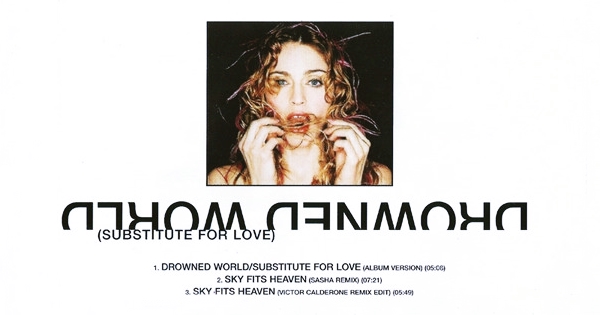
This video collection received mixed reviews from critics and fans when it was released. While the inclusion of videos that were left off her previous retrospectives were certainly appreciated, many felt that the set’s exclusion of several notable clips (with Oh Father, Bad Girl, Drowned World/Substitute For Love & Nothing Really Matters among its most glaring omissions) kept it from being the definitive overview it was touted to be.
Another point of contention was the use of cheaper single-layer versus double-layer DVD’s, the latter of which would have allowed for the inclusion of the three additional clips noted above (which would have rounded out the total number of clips to a nice even fifty) and corrected the compression issues that marred the image quality of many videos. Indeed, the varying picture quality from clip to clip and minimal effort given to ensuring overall quality control left the product with a distinctly “budget” feel that had some fans wondering whether the grainy, test-pattern-infused artwork for the set was perhaps a bit too fitting.
Surely, Madonna’s pioneering work in the medium and the perfectionist spirit that helped make these works so compelling deserve a comprehensive retrospective of the highest quality.
Did you feel this release was worthy of celebration or would you have made changes to it? With recent innovations in digital distribution, would you appreciate an official reissue of Madonna’s entire music video catalogue – from her first clip, Everybody, through to her latest, Batuka – as high quality digital downloads? Clips could be sold individually for a few dollars each or bundled into era sets that could be downloaded through Madonna’s official website, with proceeds benefiting one of her charities. Would you support such an initiative if the highest quality control standards were met and no corners were cut? Perhaps this would prove to be an ideal avenue for her to finally market long-requested, definitive versions of her previously unavailable or out-of-print live concert films as well.
Today in Madonna History: September 21, 2015

On September 21 2o15, Sal Cinquemani (of Slant) published an article called, “10 Things I Learned at Madonna’s Rebel Heart Tour.”
Here’s Sal’s list:
Over 30 years into her career, Madonna is still acting like a virgin. “I’ve never performed in Brooklyn before,” she coyly told a sold-out crowd at the Barclays Center in Prospect Heights Saturday night. The Rebel Heart Tour, which kicked off in Montreal two weeks ago and landed in the borough for one night after two performances across the river at Madison Square Garden, is the singer’s 10th stage show. While she’s finally warmed up to her ’80s hits after years of ignoring all but a handful, she still insists on challenging her fans, who, I suppose I shouldn’t have been surprised to see, are still dressing up like her. Only now it’s the men. Here are 10 other things I learned at the show:
1. Yes, Madonna can sing.
As her shows have increasingly required her to be hoisted, flung, and swung around in the air for close to two hours every night, Madonna has in recent years relied, perhaps too heavily, on lip-synching. But she can carry a tune far better than she’s typically given credit for. Despite a mouthful of those pesky gold-and-diamond-encrusted grillz, she flawlessly serenaded old pal Debi Mazar, who stood in the audience singing along, with “True Blue,” and delivered an impassioned rendition of the blistering Rebel Heart ballad “HeartBreakCity.” Perched on the edge of a stage platform, playfully swinging her leg, she even belted out “La Vie En Rose” with relative ease.
2. Fifty-seven is the new 27.
At one point, Madonna dabbed her forehead with a towel and joked that sitting down to strum a ukulele was her favorite part of the show, but she barely missed a beat or broke a sweat throughout the 21-song setlist. With her dirty-blond extensions cascading around her shoulders, dark roots exposed, fingerless gloves, and jewel-encrusted blazer and ankle boots, she was the spitting image of the title character from Desperately Seeking Susan, in which she made her big-screen debut an astonishing three decades ago.
3. “Deeper and Deeper” belongs among Madonna’s classics.
With a catalogue as deep and wide as Madonna’s, it would be easy for gems like Erotica’s “Deeper and Deeper” to get lost to pop history. So it was a pleasant surprise to spot this one on the setlist and, aside from some amped-up EDM beats and a simplified flamenco guitar solo, hear it performed so faithfully.
4. Being Madonna (and working for her) is dangerous business.
As they say in Texas, everything is bigger on a Madonna tour…including the liability and personal injury insurance policy. Coverage must include, but isn’t limited to, performers being thrown off spiral staircases and tossed down giant LED screens, scaling and hanging precariously from poles, swinging back and forth from 10-foot stilts, and wearing capes with a recent history of violently yanking superstars to the ground from behind in front of an audience of millions.
5. Madonna really likes “Candy Shop.”
Though the Hard Candy opener was never released as a single, Madonna has a peculiar fondness for the track, having performed it during all of her last three tours. The singer’s tenacity and obvious enthusiasm for the song has practically willed it into becoming a staple, fitting inconspicuously between her signature hits “Music” and “Material Girl.”
6. Madonna really hates “Take a Bow.”
Madge dusted off her ’80s hits “True Blue” and “Who’s That Girl” for the first time in 28 years. But some of her biggest ’90s ballads, from “This Used to Be My Playground” to “I’ll Remember” to “Take a Bow” (her longest running #1 hit ever), have still, to this day, never been performed on tour. Sure, they don’t fit obviously into the pop star’s latter-day dance-floor-driven output, but if the queen of reinvention isn’t willing to find a way to put a new spin on these old chestnuts, there must be a good reason. With songs as timeless as these, it’s just hard to imagine what that could possibly be.
7. You’re never too old to take a “Holiday.”
The only song to be performed during all or part of every Madonna tour aside from one, “Holiday” reclaimed its rightful place as the closing number during the Rebel Heart Tour. Over the years, Madonna’s first bona fide smash has been reimagined as everything from a disco bauble to an ironic military march to an EDM banger, but while a Latin-style medley of “Dress You Up,” “Into the Groove,” and “Lucky Star” proves she isn’t exactly becoming a purist, she refreshingly played it straight for her perennial call for a little celebration.
8. Madonna is more comfortable on stage than ever.
Madonna is a self-proclaimed showgirl, but despite a show clearly choreographed down to each flick of a wrist, she’s never seemed more unscripted. From the call-and-response exchanges with the audience during an acoustic version of “Who’s That Girl” to the addition of a new song to the setlist (a stirring, if pitchy, rendition of shoulda-been-a-sleeper-hit “Ghosttown,” which brought seemingly genuine tears to her eyes, a development that seemed to surprise even her), the Queen of Pop never looked so unguarded and at ease.
9. Madonna might be running out of ideas.
You’d be forgiven for thinking Madonna had already staged a show with scantily clad nuns twerking on cross-shaped stripper poles. From that perhaps too on-the-nose provocation to the multimedia prologue and guitar-wielding riot-grrrl shtick, Madonna seems to be recycling themes and concepts in ways that, while her contemporaries remained dogged in their adherence to formula, she managed to successfully avoid for the first few decades of her career.
10. …But she’s still the greatest performer of our time.
“It’s lonely at the top, but it ain’t crowded,” Madonna quipped, tongue in cheek, during a jazz-infused version of “Music.” As far back as 1990’s iconic, game-changing Blond Ambition Tour, her shows have always been theatrical, blending traditional rock-concert tropes with narrative storytelling; Rebel Heart, though, takes it to another level, equal parts Cirque du Soleil, Broadway musical, and burlesque—an immersive experience that redefines the meaning of maximalism.