Today in Madonna History: June 6, 2006

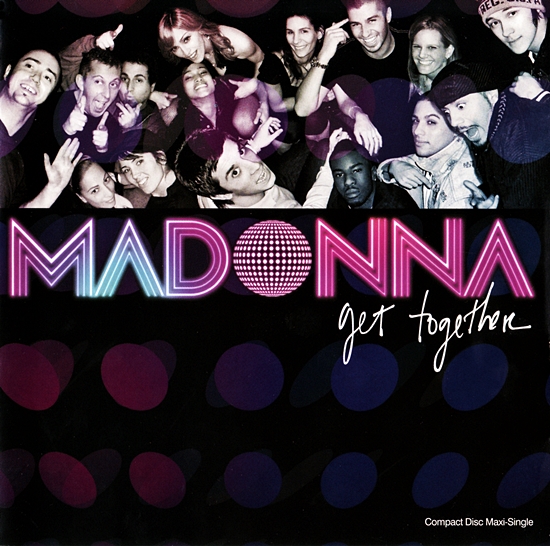
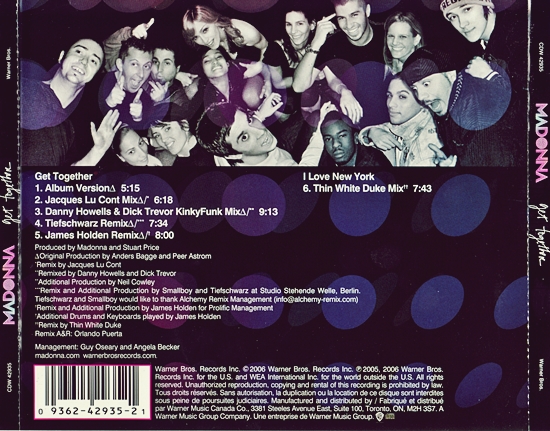
get together canadian maxi single cover 550 get together canadian maxi single back cover 550

On June 6 2006, Get Together was released as the third international single from the album Confessions On A Dance Floor on Warner Bros. Records.

The initial marketing strategy for Confessions On A Dance Floor included plans to release Jump as its third single. Plans shifted when Get Together proved to be the most popular digital download from the album (excluding its previous two singles, Hung Up and Sorry), warranting its release ahead of Jump, which became the fourth single.

Get Together was written by Madonna, Anders Bagge, Peer Åström & Stuart Price with production by Madonna & Price. The final version also includes a small sampling of string elements from the song’s original production (which only became evident once the original demos leaked to the internet several years later), hence the unusual “Original Production by Bagge & Åström” credit inclusion in the liner notes of the album and single.

Today in Madonna History: March 16, 2004

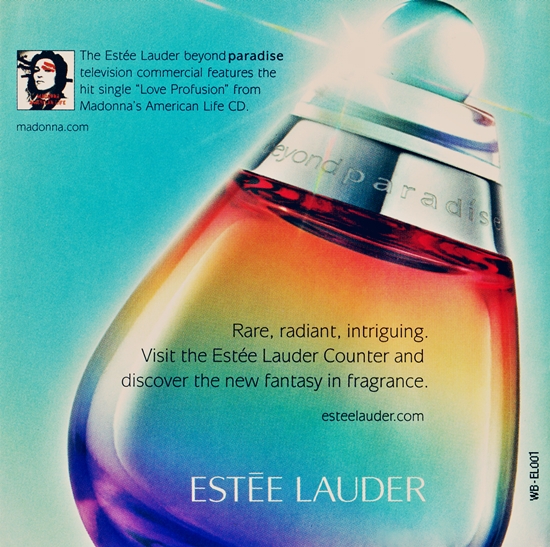
Love Profusion CD maxi-single full cover Love Profusion Beyond Paradise Sampler

On March 16 2004, Love Profusion was commercially released in North America on CD maxi-single. In the U.S., a double 12″ vinyl edition of the maxi-single was also released one week later, on March 23rd. Written & produced by Madonna & Mirwais Ahmadzaï, Love Profusion was the fourth and final North American single release from the American Life album. In the UK, Warner chose to issue the song instead of Nothing Fails as the album’s third and final single in December, 2003.

Though lack of radio support kept Love Profusion from charting on the Hot 100 in the U.S., it nevertheless managed to top the Hot Dance/Club Play chart. North of the border, the track peaked at #3 on the Canadian singles chart.

North American pressings of the CD maxi-single included a fold-out tester square of the Estée Lauder fragrance Beyond Paradise. The television commercial for the fragrance featured the song Love Profusion – and although Madonna was replaced by supermodel Carolyn Murphy, it used the same computer-generated imagery as the music video’s “daylight” scenes. Both the video and the commercial were created simultaneously by director Luc Besson.

Today in Madonna History: February 23, 1998

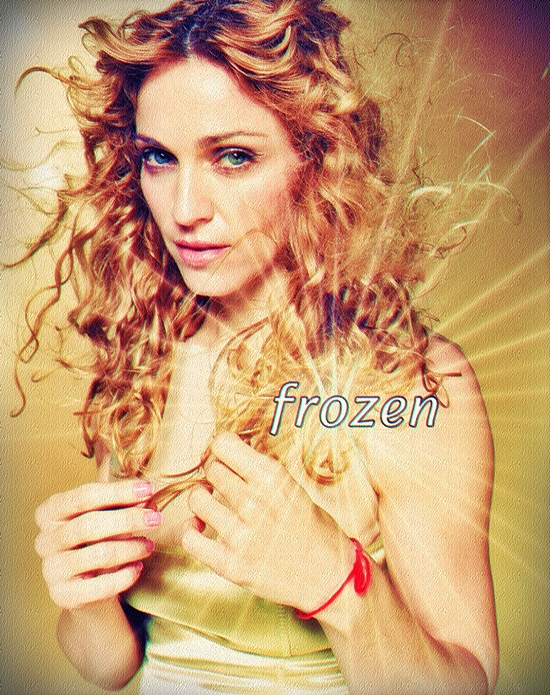
frozen testino 1998 outtake 2 550

On February 23 1998, Frozen was released by Maverick records as the lead single from Madonna’s seventh studio album, Ray of Light. The song was written by Madonna & Patrick Leonard and was produced by Madonna, Leonard & William Orbit.

Madonna has mentioned that she considers Frozen as part of a thematic trilogy with The Power Of Good-Bye and To Have And Not To Hold. In an interview with Barry Walters for Spin magazine, Madonna commented on the inspiration behind the song:

“I was so obsessed with the movie The Sheltering Sky and that whole Moroccan/orchestral/super-romantic/man-carrying-the-woman-he-loves-across-the-desert vibe. So I told [Patrick Leonard] that I wanted something with a tribal feel, something really lush and romantic. When he started playing some music, I just turned the DAT on and started free-associating and came up with the melody.”

Initially unsure of which song should be released as the album’s first single, Madonna was eventually convinced by Warner Bros. executives that Frozen would be a perfect way to bridge the Adult Contemporary leanings of her most recent hits (Take A Bow, You’ll See and the singles from Evita) with the more cutting-edge, electronic sounds of Ray Of Light.

Today in Madonna History: February 13, 1995

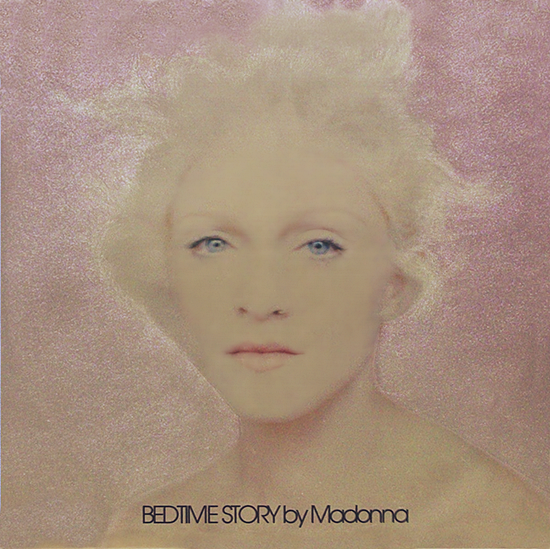
Bedtime Story UK 12inch 550

On February 13 1995, Bedtime Story was released in Europe by Maverick Records as the third single from the album Bedtime Stories. In North America, the single was delayed until April due to the sleeper success of Take A Bow, which continued its slow-but-steady climb to the top of the Hot 100.

Bedtime Story was written by Björk, Marius De Vries & Nellee Hooper and was produced by Hooper & Madonna. Björk’s original demo, titled Let’s Get Unconscious, was reworked by Hooper & DeVries and renamed Bedtime Story for its submission to Madonna. Björk later revisited elements of the song’s lyrics in Sweet Intuition–a b-side from her 1995 single, Army Of Me.

In a 2001 interview for NYLON magazine, writer James Servin asked Björk whether it was true that she had written the lyrics to Bedtime Story for Madonna because she liked the idea of her expressing a viewpoint that was paradoxical to her controlled public image:

“I think at the time, yes. But that’s like six years ago, when everything about [Madonna] seemed very controlled. I think she’s a very intuitive person, and definitely her survival instincts are incredible. They’re like, outrageous. At the time, the words I thought she should say were, ‘I’m not using words anymore, let’s get unconscious honey. Fuck logic. Just be intuitive. Be more free. Go with the flow.’ Right now, she seems pretty much to be going with the flow.”

This prompts me to ask Björk if she thinks she might have put those mellowing-out thoughts into Madonna’s head. “Well, I wouldn’t credit myself for that,” she says. “Not at all. That’s a question for you to ask her.”

I sent a fax to Madonna via her publicist Liz Rosenberg, with the question: “Did singing the lyrics Björk wrote for Bedtime Story lead you in the direction of going more with the flow?” A day or two later, I receive this e-mail from Liz Rosenberg: “I wish I could get an answer from Madonna for you. She’s deep into rehearsals for her tour, and I can’t get any info from her for a while. I can tell you that Madonna certainly thinks Björk is inspiring and a brilliant artist. Madonna is a huge fan of her music. I’ve never thought Madonna was a ‘go with the flow’ person before or after recording Bedtime Story. She goes with a flow – but it’s a flow of her own creation, if you know what I mean.”

Today in Madonna History: January 16, 2001

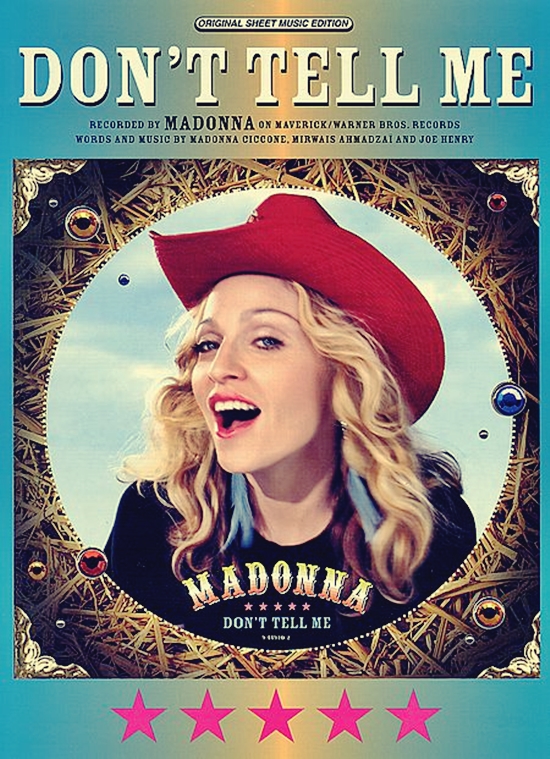
don't tell me sheet music 550

On January 16 2001, Don’t Tell Me was released commercially in North America as the second single from Music.

Written by Madonna, Mirwais & Joe Henry, the song was Madonna’s first collaboration with her brother-in-law, whom she had known since high school. Henry sent a demo (then titled Stop) to Madonna after his wife, Melanie, insisted that her sister would love the song. Madonna & Mirwais drastically altered the music and melody and renamed the song Don’t Tell Me. Henry released his version on his eighth studio album, Scar, in May 2001.

The maxi-single featured remixes by Thunderpuss, Timo Mass, Victor Calderone, Richard “Humpty” Vission and Tracy Young. Don’t Tell Me was the last Madonna release to be issued on cassette single in the U.S. and was also available on 2-track CD single, CD Maxi-Single (enhanced with the music video) and as a double 12″ vinyl set. In Canada, it was released only on CD maxi-single.

Today in Madonna History: December 12, 1986

open your heart promo 550 Open Your Heart Canada CMS 550

On December 12 1986, Open Your Heart was released in North America as the fourth single from True Blue. The song was written by Madonna, Gardner Cole & Peter Rafelson and produced by Madonna & Patrick Leonard.

The single’s worldwide b-side, White Heat, an album track from True Blue, developed a relatively high profile due to its inclusion as the flip-side to two of Madonna’s #1 hits–the aforementioned Open Your Heart and 1987’s Who’s That Girl, released only six months apart. Gaining further exposure as a set-list staple during the Who’s That Girl Tour, the live performance of White Heat foreshadowed some of the dramatic elements that Madonna would expand upon in future tours.

White Heat’s original submission for copyright was registered to Madonna & Leonard under the working title Get Up, Stand Tall with a 1985 date of creation. Notes from the registration on file also list the title Dangerous–but it is likely just another working title that was being considered rather than a separate recording.  White Heat is thought to have been among the earliest songwriting collaborations between Madonna & Leonard to be completed, coming shortly after their first composition, Love Makes The World Go Round, surfaced during Live Aid in the summer of 1985. The sequence of the registration numbers for the two songs suggests that they may they have been completed within a month or two of each other. Madonna’s version of Open Your Heart (which she revised from the Cole/Rafelson demo) is also thought to have been recorded with Leonard during the same time period.

The liner notes of True Blue dedicated White Heat to actor James Cagney, who in 1949 played ruthless, deranged gang leader Arthur “Cody” Jarrett in the Warner Brothers film, White Heat. Several clips of Cagney’s dialogue from the original motion picture were used in the song for dramatic effect.

Today in Madonna History: October 24, 1989

oh father usa sheet music 550oh father set 11 550

On October 24 1989, Oh Father was released in North America as the fourth single from the Like A Prayer album. France, Japan and Australia also opted to issue the single in 1989, while other European markets waited for Madonna’s 1995 ballads compilation, Something To Remember, to promote the song. Oh Father was written and produced by Madonna & Patrick Leonard.

Leonard recalled the recording of the track in a 2014 interview with Billboard Magazine:

My favorite thing that we ever recorded, ever – or wrote – is Oh Father. That to me is the best thing we ever did. So, it didn’t surprise me because we knew when we did it, that there was something about this that was in a way kind of the most real thing.

For that song, the ‘record’ button was only pressed three times. It was pressed to do the track, live, with her singing live. Then we did the orchestra. And then we did a double of her vocal when we were mixing. That’s it. So it’s real. It’s something that I really wanted to do and she was kind enough to say “let’s try this,” and it was not easy.

There’s two or three guitar players playing. I’m playing keyboards. Jai Winding was playing keyboards. There was a percussionist and a drummer – and she’s singing – all at the same time.

These days, people go “wow, that seems crazy.” Those days it wasn’t uncommon for everybody to be playing together even though you’re not a band. But it was one of those things where the arrangement was tricky enough, that it really took some working out to get it all right.

Even all those weird synth overdubs and things – all those things were being done live. We worked out all the parts, had all the sounds. I remember that we cut it live, and then put the orchestra on. You’re not doubling the orchestra, so it’s one pass for the orchestra.

When I say [the ‘record’ button was] pressed three times, it might have gotten pressed 10 [times] that day, but it was ultimately one that stayed there. If you see what I’m saying. When we were mixing it, [mixer] Bill Bottrell suggested that we double the choruses. I remember even being a little upset about it (Laughs). Like, look, “we’ve got an amazing record that we only pressed the record button twice – can’t we leave it?” He said, “three isn’t exactly shameful.” We doubled the lead vocal on the choruses, and that was it.