Today in Madonna History: December 3, 2005

COADF Disco 1 550COADF Glass 1 550COADF Lights 6 550COADF Lights 1 550COADF Text 1 550COADF Red 1 550

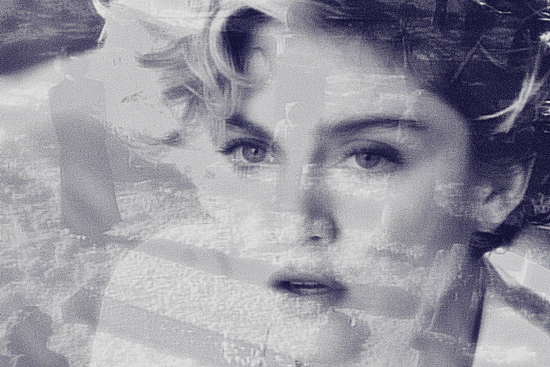
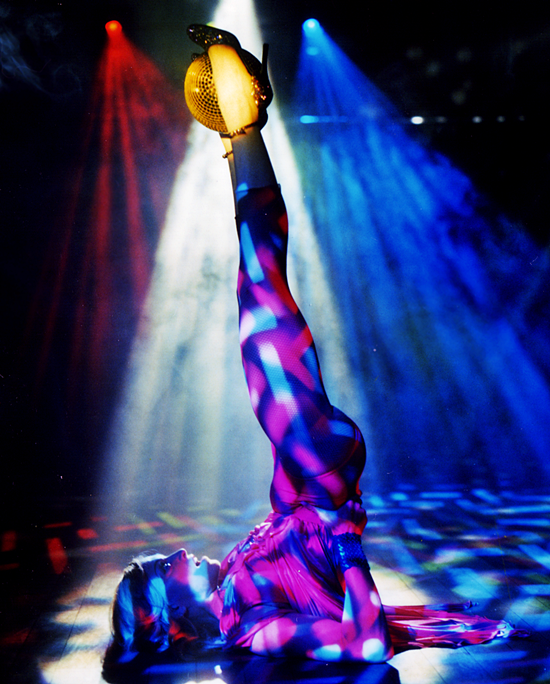
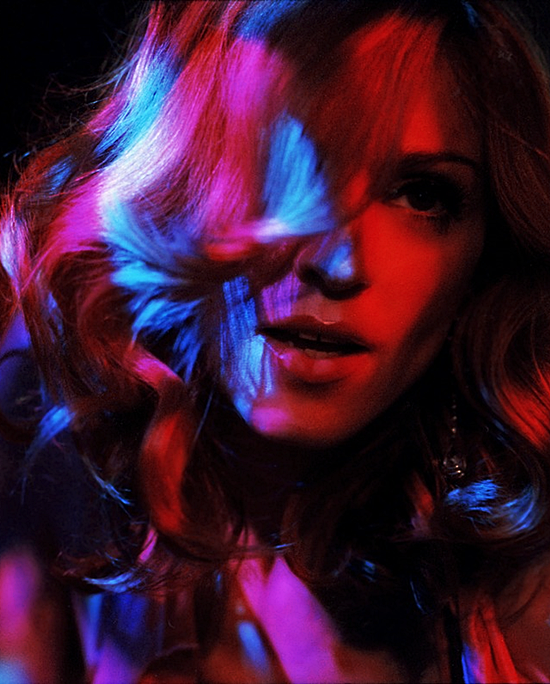
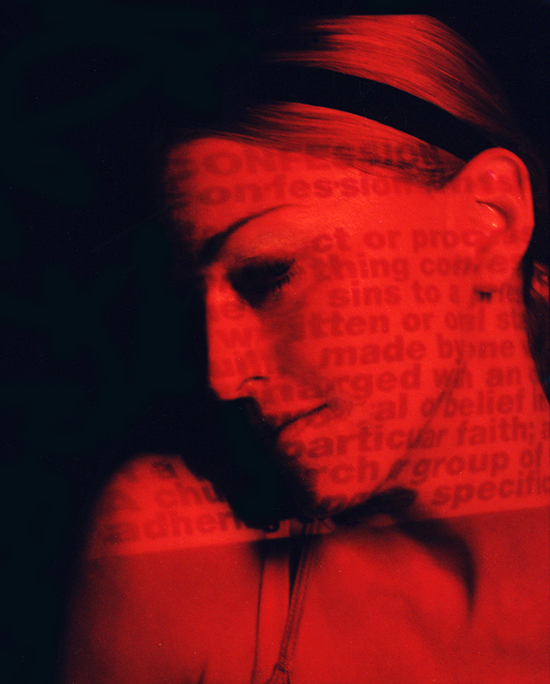
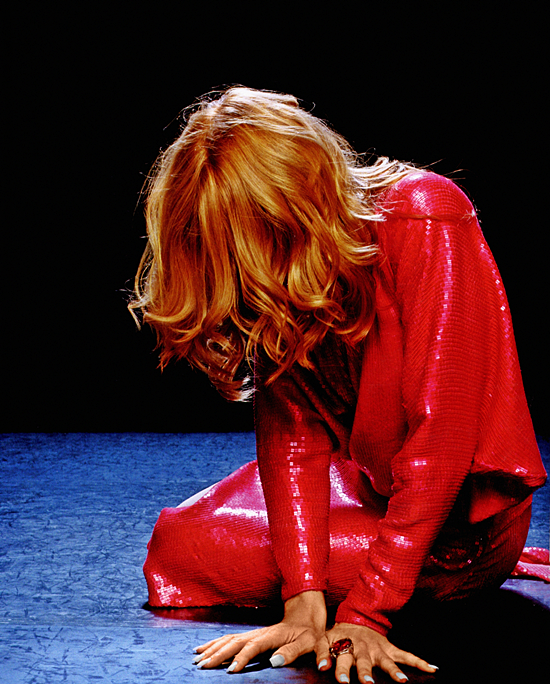
On December 3 2005, Confessions On A Dance Floor entered the Billboard 200 album chart at number-one with sales of of over 350,000. It was her third consecutive studio album to reach the top and her sixth chart-topping album overall in the US.

Internationally the album hit number-one in 40 countries, including Canada, the UK, Germany, France, Italy, Spain, Poland, Brazil and Australia.

Today in Madonna History: November 30, 2002

Die Another Day (Remixes) 3 550

On November 30 2002, Die Another Day (Remixes) spent the first of two weeks at number-one on the Hot Dance Music/Club Play chart in US. It was Madonna’s 28th single to top the dance charts.

Today in Madonna History: November 28, 2006

Jump 550

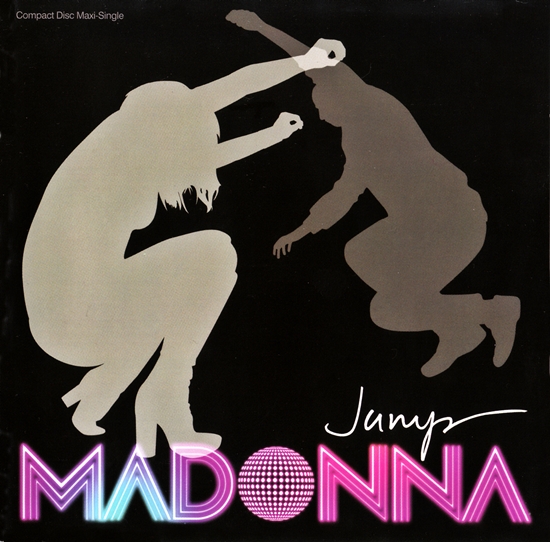
On November 28 2006, Jump peaked at #20 on the Austrian Ultratop 40 singles chart. The song was the fourth international single from Confessions On A Dance Floor.

The maxi-single featured remixes by Stuart Price (under the pseudonym Jacques Lu Cont), Axwell and Junior Sanchez; an Extended Album Version and Radio Edit (the US vinyl edition also added the “unmixed” Album Version); and a previously unreleased b-side, History, written and produced by Madonna & Stuart Price.

Recorded during the Confessions On A Dance Floor sessions, the released version of History was in actuality an uncredited Stuart Price remix of the otherwise shelved original production. An alternate version of the Price remix streamed on Madonna’s official website for a brief period but has yet to surface in quality above streaming grade. More of the song’s history came to light when an incomplete clip of the final non-remixed version, as well as several complete demo takes (featuring nixed chorus lyric “I thought that we were related” instead of “Defined by our greed and hatred”), leaked online in 2007 and 2008 respectively.

While the remix of History is a sparse and stripped-down slice of electro-house that recalls some of Stuart Price’s earlier solo work as Les Rythmes Digitales, the pulsating urgency of the original production with its heedfully hopeful bridge make it the more definitive rendering of the song.

Today in Madonna History: November 20, 1993

On November 20 1993, Madonna – Live Down Under: The Girlie Show (taped November 19th at Sydney Cricket Ground) was broadcast on HBO-TV. In Australia, Madonna postponed a scheduled concert at the Sydney Cricket Ground due to severe rain.

Recording of the November 19th show had been intended to serve as both a practice run for the following night, and as a safety show in the event of technical difficulties or cancellation of the November 20th concert. With Madonna apparently satisfied with the safety footage captured on the 19th, neither the December 3rd show at the Cricket Ground nor the rescheduled date (December 4th) served to provide supplemental footage for the eventual VHS/laserdisc release. The only notable differences between the HBO broadcast and the released version were some alternate camera angles and additional audio mixing.

Today In Madonna History: November 17, 2001

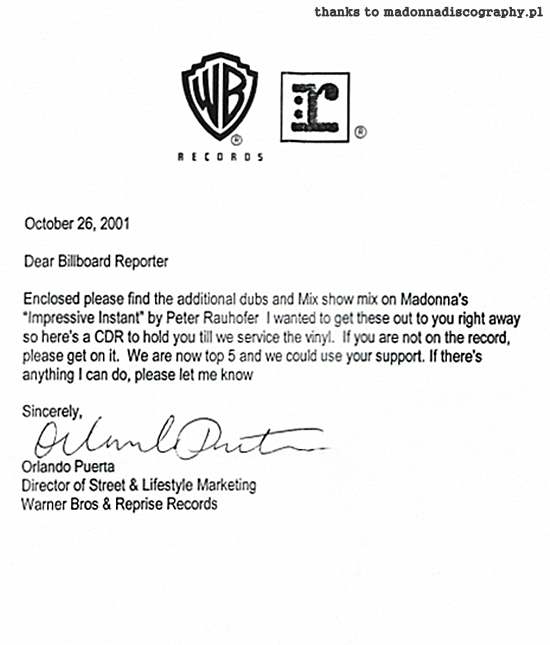
On November 17 2001, the promo-only remixes for Impressive Instant by Peter Rauhofer climbed to number-one on the Billboard Hot Dance Club Play chart in the US. It remained in the top spot for the week of November 24th.

Today In Madonna History: November 15, 1998

POG Luuk 2POG Luuk 3POG Luuk 1

On November 15 1998, Madonna performed The Power Of Good-Bye and was interviewed by Luuk TV in Stockholm, Sweden.

Though the song was mimed, Madonna still had plenty to showcase in a performance that was both distinctly European – and distinctly Madonna!    

Today in Madonna History: November 11, 1989

Oh Father [Cassette Single] 550oh father set 4 2oh father set 7oh father set 3oh father set 5oh father set 6 oh father 3 550

On November 11 1989, the music video for Oh Father premiered on MTV in the US. Filmed at Culver Studios, California in late October, 1989 by director David Fincher, the black & white clip drew cinematic influence from the 1941 Orson Welles film, Citizen Kane. Its narrative expanded on darker elements from Madonna’s life – focusing on the death of her mother, her relationship with her father and the recurring effects of childhood trauma in her adult life. The clip’s icily detached symbolism and heavy subject matter are counter-balanced by overarching themes of forgiveness and inner-strength.

In a 2009 interview with The Guardian, Fincher recalled:

“I had kinda talked Madonna into releasing Oh Father as a single and we did this video and were very happy with the video – but nobody ever saw it because the song wasn’t a hit.”

Although the video was put into rotation on MTV, the channel had requested that Madonna remove a scene that displayed a close-up of the deceased mother’s lips sewn shut – a request that she refused to consider. Compounded by a tepid response to the song from radio, where its bleak overtones clashed with playlists of the day, the single stalled at number twenty in the US – her lowest peak on the Hot 100 at the time (excluding her first two singles, neither of which broke into the Hot 100). In Canada the video was put into heavy rotation and the release fared slightly better on the charts, peaking at number fourteen.

Despite its relative lack of commercial appeal, the song and video are frequently cited as a creative triumph for Madonna by fans and critics alike.